Quick Summary
- Start with the rules register and the quality system, because later points depend on them.
- Every point needs proof you can open in two minutes, not just a tick.
- Data integrity, CAPA follow-up and supplier agreements are common gaps.
- Review the list yearly and whenever you add a product, site or supplier.
A pharmaceutical compliance checklist is only useful when it matches how inspectors and partners actually look at a company: the quality system first, then records, then proof that people followed the procedures. I use the twelve points below when I start a pharmaceutical compliance consulting project, and I see small biotechs and established manufacturers slip on the same few items.
Treat the list as a working tool. Each point says what to have, what proof to keep and where companies usually stumble. The table gives the full list first. Scope varies by what you make and where you sell, so confirm applicable rules with your regulatory counsel.
The 12 Points at a Glance
| Point | What to have | Proof to keep |
|---|---|---|
| 1. Applicable rules | A register of the rules that apply to your products and activities | Dated register with owners |
| 2. Quality system | Documented quality system with management responsibility | Quality manual and review minutes |
| 3. Controlled documents | Approved, current procedures with version history | Document index and change records |
| 4. Training | Role-based training before people do the work | Training matrix and completion records |
| 5. Facilities and equipment | Qualified, calibrated and maintained equipment | Qualification files and calibration logs |
| 6. Production and testing records | Complete, contemporaneous batch and lab records | Reviewed records with sign-off |
| 7. Data integrity | Controls that keep records attributable, accurate and complete | Access lists and audit trail reviews |
| 8. Deviations and CAPA | Investigation, root cause and action tracking | Closed CAPA with effectiveness checks |
| 9. Change control | Assessed and approved changes before they go live | Change records with impact review |
| 10. Suppliers and contractors | Qualification, quality agreements and audits | Approved supplier list and agreements |
| 11. Supply chain and distribution | Controls for storage, shipping and product tracing | Distribution records and trading partner files |
| 12. Promotion and interactions | Review process for claims and healthcare professional interactions | Approval records and review logs |
For the process that keeps the checklist alive, read pharmaceutical compliance management. The checklist itself starts below.
1. Write Down Which Rules Apply to You
A distributor, a contract packager and a brand owner face different expectations. List your products, sites, markets and activities, then match each to the rule sets that cover it. Current good manufacturing practice is a core set for manufacturers, and the FDA publishes it on its CGMP regulations page.
Ask counsel to confirm the list and check the current status of each item before you rely on it. Rules change, and a register with no review date goes stale quickly.
2. Document the Quality System and Management Duties
A quality system needs defined responsibilities, a quality unit with real authority and a regular management review. Write who can approve or reject materials and products, who can stop a process and who reports to whom.
I check for authority first. A quality head who cannot say no, or whose objections get overruled without a record, is a finding waiting to happen.
- Quality responsibilities in writing
- Management review at least yearly
- Quality metrics reported to senior leaders
3. Control Your Documents
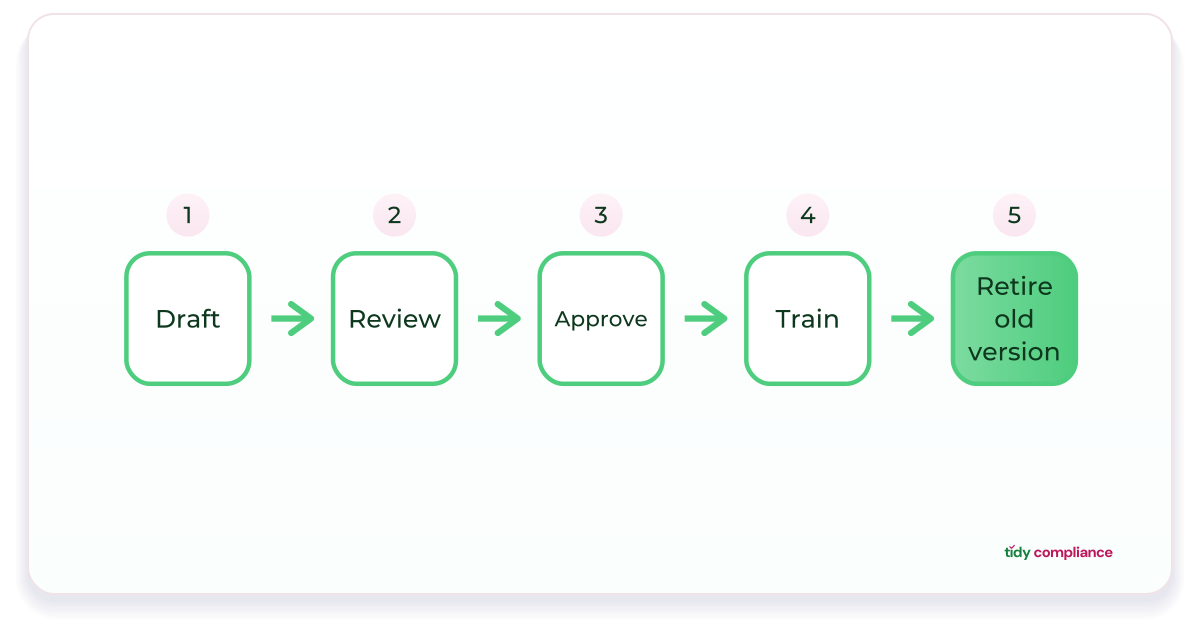
Only current, approved procedures should be in use. That means version control, an approval signature, a review date and removal of old copies from the floor. Paper binders and shared drives both work if the rules are clear.
The usual slip is a procedure that was updated in the system while an older printout stays pinned to a wall. Walk the floor and compare.
4. Train by Role and Prove It
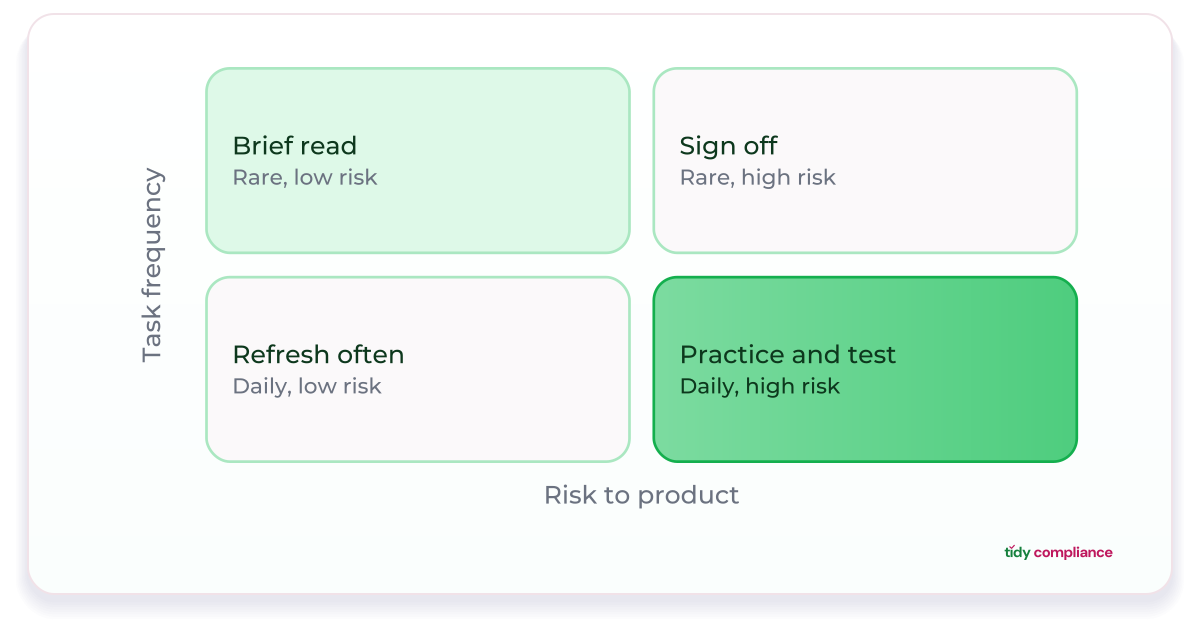
Staff must be trained on the procedures they use before they do the work alone. Build a matrix from roles to procedures, and update it when procedures change. Record the date, trainer and a short check of understanding.
In reviews I have seen, the training was fine but the proof was missing for temporary staff and for retraining after a revision. Add both to your routine.
5. Qualify and Maintain Facilities and Equipment
Equipment should be fit for its use, qualified before routine work, calibrated on schedule and cleaned and maintained as written. Keep logs that show each of those steps and who did them.
Check that overdue calibration stickers are not a regular sight. An instrument out of calibration raises questions about every result produced since its last good check.
6. Keep Complete Production and Testing Records
Batch records, laboratory notebooks and test results should be complete, signed at the time of the work and reviewed before release. Reviewers should look for blanks, overwrites, unexplained changes and results that do not match specifications.
Set a review standard and a target time between batch completion and record review. Slow review hides problems until it is too late to fix them cheaply.
- Entries made at the time of the work
- Corrections single-lined, dated and explained
- Second-person review before release
7. Protect Data Integrity
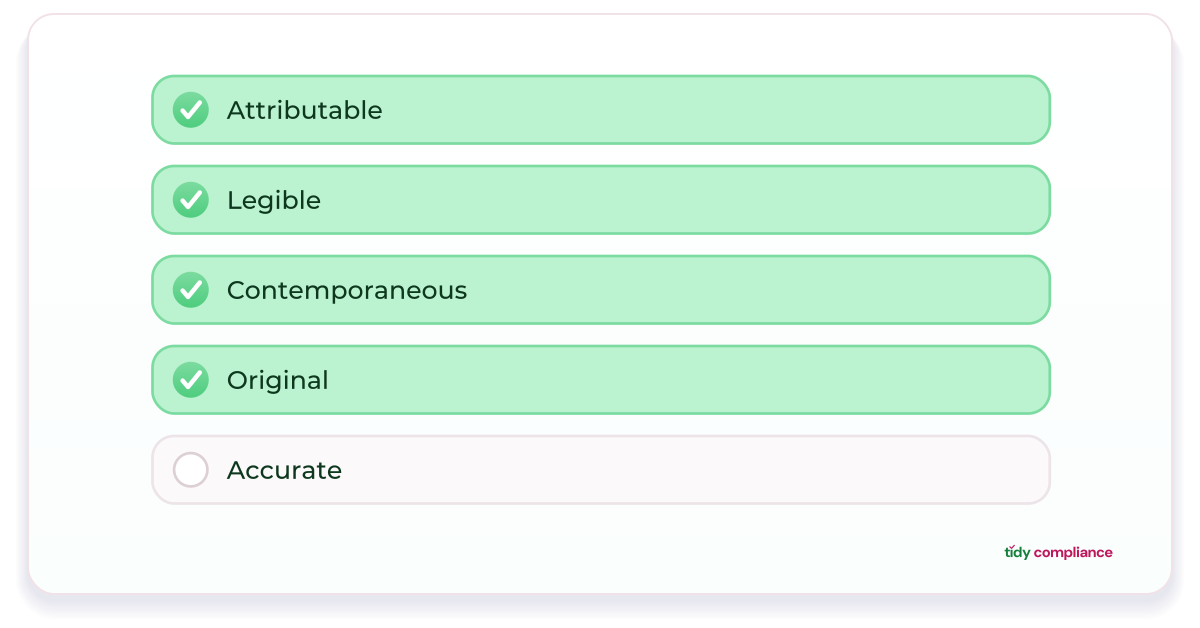
Records should be attributable, legible, contemporaneous, original and accurate, a set of ideas people often shorten to ALCOA. For computerized systems that means unique logins, restricted access, audit trails that are reviewed and electronic signatures that meet the rules. The FDA describes its expectations for electronic records in its Part 11 guidance.
Shared logins on laboratory instruments are the most common problem I meet. They break attribution at the source. Fix them before anything else on this point, and when you evaluate new systems, see my ranking of pharmaceutical compliance software.
8. Handle Deviations and CAPA Properly
Record every deviation, investigate with a root cause, assess product impact, assign actions and check later that they worked. A closed CAPA with no effectiveness check is a half-finished job.
Aim for closure within your own written time limits and track overdue items in a visible list. Repeat deviations on the same equipment or step show that earlier root causes were guesses.
9. Control Changes Before They Happen
New suppliers, formula changes, software updates and process tweaks need an impact assessment and approval before they go live. Ask who is affected, what must be validated and what must be communicated.
Emergency changes happen. Allow them, but document the reason and review them afterwards. Many findings come from small changes that were never formally assessed.
| Change type | Typical questions | Records |
|---|---|---|
| Supplier or material | Is the new source qualified? Do specifications change? | Qualification file, updated agreement |
| Process or equipment | Is revalidation needed? Are procedures updated? | Impact assessment, validation summary |
| Software or system | Does the validated state hold? | Release notes, test evidence |
| Label or claim | Has it been reviewed and approved? | Approval record |
10. Qualify Suppliers and Contractors
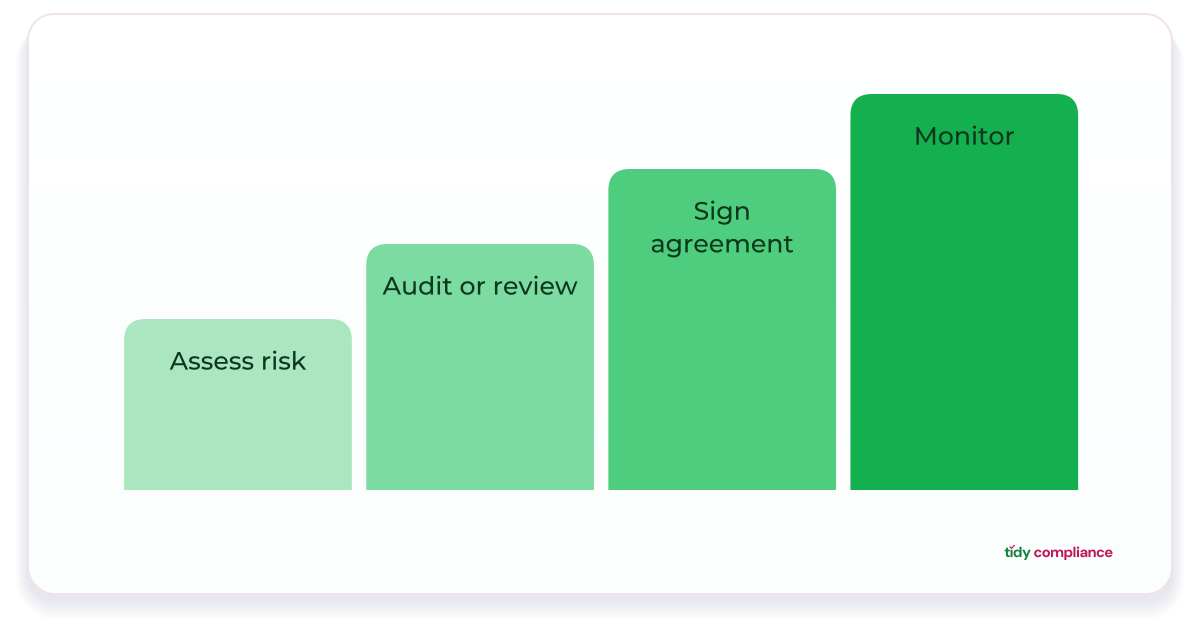
Contract manufacturers, laboratories, packagers and raw material suppliers need qualification, a written quality agreement and a monitoring plan. Audit critical suppliers on a risk basis and track their findings like your own.
You remain responsible for outsourced work. A quality agreement that says who handles deviations, changes and release decisions is one of the cheapest protections you can buy.
11. Secure the Supply Chain and Distribution
Storage and shipping conditions, distributor qualification and product tracing all belong here. In the United States, supply chain security rules under the Drug Supply Chain Security Act cover trading partner verification and product tracing, and the FDA explains them on its DSCSA page. Check the current status and your role in the chain.
Keep records of who you buy from and sell to, plus procedures for suspect or returned product. A temperature excursion with no record is hard to defend.
12. Control Promotion and Interactions With Healthcare Professionals
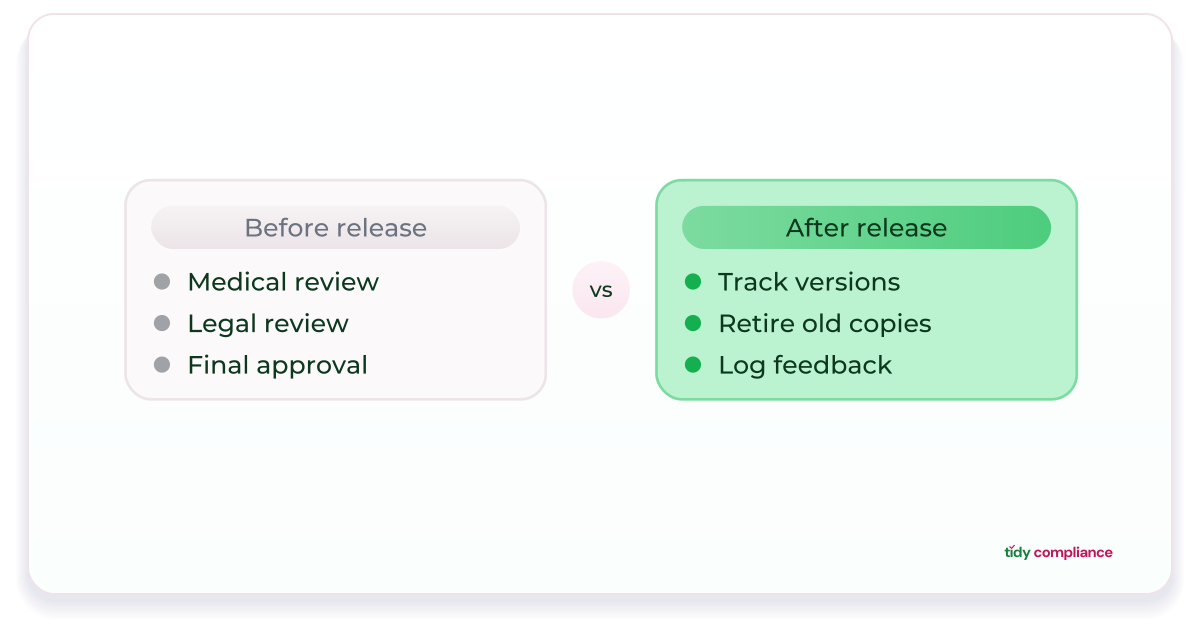
Claims must match approved labeling and be reviewed before use. Set up a review process with medical, regulatory and legal input, keep approval records and train commercial staff. Payments, gifts, meals and speaker programs involving healthcare professionals need written rules and records.
Commercial teams often move faster than the review process. A simple tracker with dates and owners keeps material from going out without sign-off. For legal interpretation, rely on counsel.
Where the Proof Should Live
Proof that sits in ten places is proof nobody finds in time. Pick one index, even a simple spreadsheet, that lists each of the twelve points, the owner, the location of the evidence and the date of the last review. When a partner or inspector asks for something, the index tells you where to go in seconds. Keep the index itself under document control, and review it at the monthly compliance meeting so entries do not decay.
A Sensible Order of Work
You cannot do all twelve points at once. Later points use the output of earlier ones, so the order matters. This table shows the sequence I suggest to teams starting from a thin base.
| Months | Focus | Result you can show |
|---|---|---|
| 1 | Rules register, quality system and document control | Register and approved procedure index |
| 2 to 3 | Training matrix, equipment records and data integrity fixes | Training records and access review |
| 3 to 4 | Deviation and CAPA process, change control | Closed CAPAs and change records |
| 4 to 5 | Supplier qualification and distribution controls | Approved supplier list and agreements |
| 5 to 6 | Promotion review and an internal check of all points | Check report and updated plan |
Expect delays. Supplier agreements and data integrity fixes depend on other people and systems. Give each a named owner and chase it weekly. The second cycle is lighter because you only update what changed.
How to Use the Checklist Without Fooling Yourself
Ticking a box without proof is the quickest way to false comfort. Ask for proof next to each point and have someone outside the team sample three items a year. Where proof is missing, the item is open, whatever the box says.
- Each point has a named owner.
- Each point has a dated record you can open in under two minutes.
- Open items sit in a CAPA or action list with dates.
- An outsider samples your evidence at least once a year.
To test the list against the real thing, run an internal pharmaceutical compliance audit once the first cycle is done.
Sources
FDA: CGMP Regulations, FDA: Part 11 Electronic Records Guidance, FDA: Drug Supply Chain Security Act.
Questions About the Pharmaceutical Compliance Checklist
What Are the Main Areas of Pharmaceutical Compliance?
The main areas are quality systems and good manufacturing practice, records and data integrity, deviations and CAPA, change control, suppliers, supply chain security and promotion. The twelve points group them into a working order.
How Often Should I Review My Checklist?
Review the whole list at least once a year and again when you add products, sites, suppliers or systems. Items such as training and CAPA deserve a monthly look.
Is There an Official Pharmaceutical Compliance Certification?
No single body certifies a company as compliant. Inspections, audits and certificates from third parties show effort, but your own records are what count in a review.
Do Small Companies Need Every Point?
The rules apply regardless of size, but effort scales. A small company can meet the points with simpler tools and shorter documents, provided the records are real.
What Do Inspectors Usually Ask for First?
In my experience quality system documents, recent deviation and CAPA records, training files and supplier agreements. Keep those four easy to find.
Does the Checklist Replace Legal Advice?
No. It helps you organize compliance work. Questions about which rules apply or how to interpret them belong with your regulatory counsel.
Can I Complete the Checklist Myself?
Many companies do, especially small ones. The hard parts are honest root cause analysis and proof of follow-through. A consultant can review your work or run the assessment, and your team still owns the routine.
Disclaimer: This article is for general information only and isn’t legal, financial or tax advice. Treat figures as estimates from typical work and confirm details with your providers before you act.
Was this guide helpful?
Thanks for your feedback.
Odessa Whitfield
Odessa leads the Tidy editorial team and works with the compliance consultants to turn real client projects into practical guides on regulations, frameworks, policies and audit preparation. Before joining Tidy, she worked in compliance and risk roles, writing and maintaining policy sets for regulated organizations. Every article goes through a consultant who has done the work in practice, and she updates guides when a rule, framework or tool changes. She works remotely from the United States.