Quick Summary
- Pharma compliance fails when nobody owns the whole picture, so name one owner per rule area.
- Write procedures from how work is really done, then train and track by role.
- Test your controls with short internal checks every quarter.
- Fix issues at the root cause and review the whole program once a year.
Pharmaceutical compliance management is the daily work of keeping a drug company in step with the rules that apply to it: quality systems, data integrity, supply chain, promotion and interactions with healthcare professionals. Most companies I meet do this in pieces. Quality owns the procedures, commercial owns the claims, supply chain owns the distributors, and nobody owns the picture. In my pharmaceutical compliance consulting work, the fix is rarely a new tool. It is a clear owner, a calendar and a few routines that run on schedule.
This guide lays out how I would run a program from scratch, in five phases. The table gives the whole path first. Each phase then says what to do, what to record and where programs usually stall.
Five Phases in Brief
| Phase | Goal | What you can show afterwards |
|---|---|---|
| 1. Scope the obligations | Know which rules apply to your products, sites and activities | Obligations register with owners |
| 2. Assign ownership | One accountable person per area and a place to escalate | Roles and decision rights chart |
| 3. Build the controls | Procedures, records and training that match daily work | Approved procedures and training matrix |
| 4. Monitor and test | Metrics, internal checks and supplier oversight | Dashboard, check reports and supplier audits |
| 5. Fix and improve | Close issues, learn from them and refresh the program | CAPA records and yearly management review |
If you want a list to tick off while you build, use my pharmaceutical compliance checklist. The phases below explain the thinking behind it.
Phase 1: Scope What Actually Applies to You
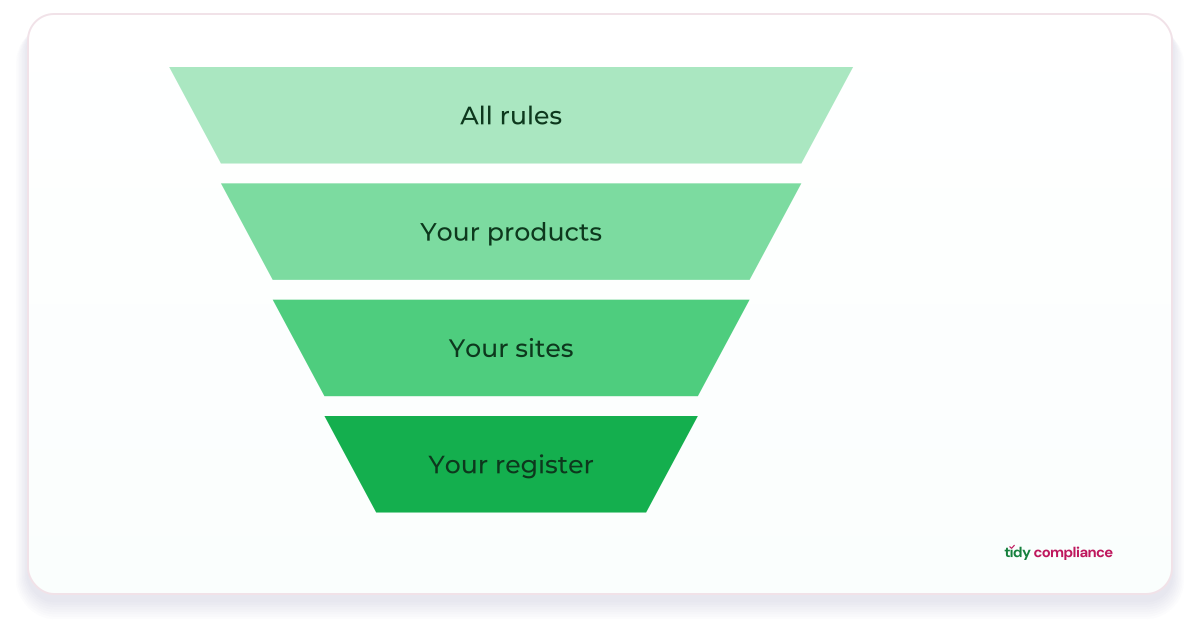
A drug maker, a distributor, a repackager and a marketing-only company face different rules. Start with a one-page description of what your company does: which products, which sites, which markets, which partners. Then list the rule sets that touch each activity. For manufacturing that includes current good manufacturing practice, which the FDA describes on its CGMP regulations page. For distribution it includes supply chain security rules. For commercial teams it includes promotional review and rules on interactions with healthcare professionals.
Do not copy a list from a textbook. Ask each department what rules they believe they follow and where their procedures live. The gaps between those answers show where nobody is looking. Ask your regulatory counsel to confirm the list, because deciding which rules apply is a legal judgment, and check each item for the current status before you rely on it.
Phase 2: Give Every Area One Owner
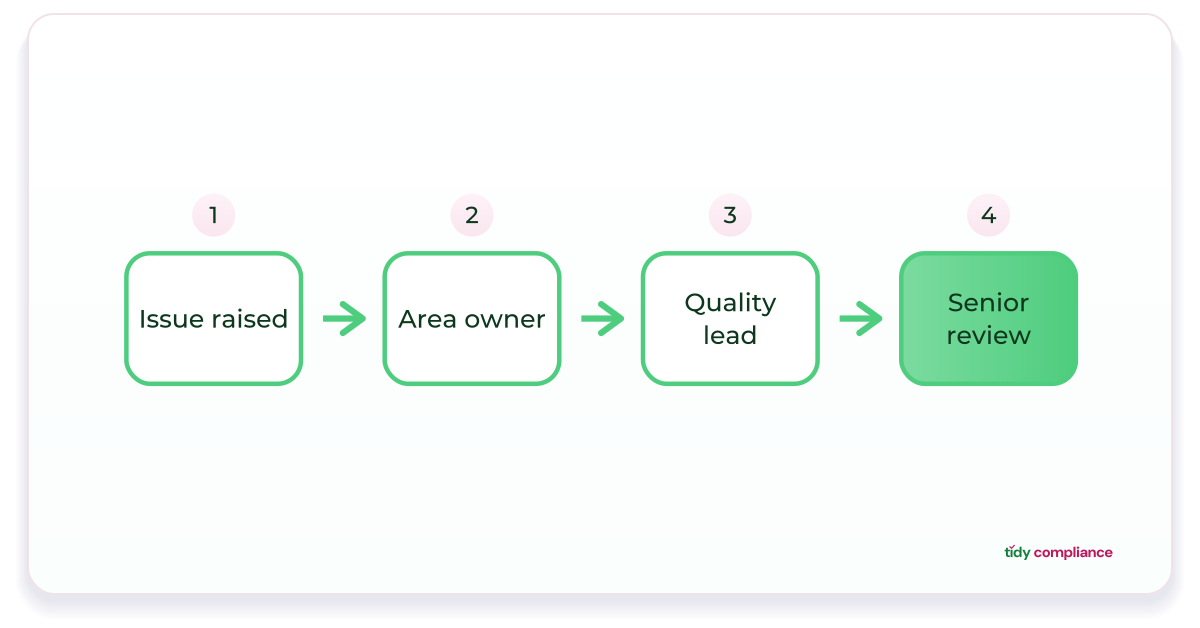
Programs stall when ownership is shared. Name one accountable person for quality systems, one for supplier oversight, one for promotional review and one for training. In a small company one person may hold several roles, and that is fine if you write it down.
Add a simple escalation path. When a deviation could affect a released batch or a claim looks doubtful, who decides, and how fast? The best answer I have seen was a one-line rule: any quality issue that may affect patients goes to the head of quality the same day, in writing. Decide the same for commercial, supply chain and data integrity issues.
- Named owner for each rule area, with a backup
- Written decision rights for release, recall and promotional approval
- Monthly compliance meeting with minutes
Phase 3: Build Controls People Will Follow
Controls are the procedures, records, systems and training that turn a rule into daily behavior. The test is simple: could a new employee follow the procedure and produce the record without asking anyone? If not, the procedure is not finished.
Write procedures from how work is done today, not how it was meant to be done. Walk the process with the people who do it and note every step, form and system. Then fix what the rule requires and leave the rest. Procedures that describe a perfect process nobody follows create findings in an inspection.
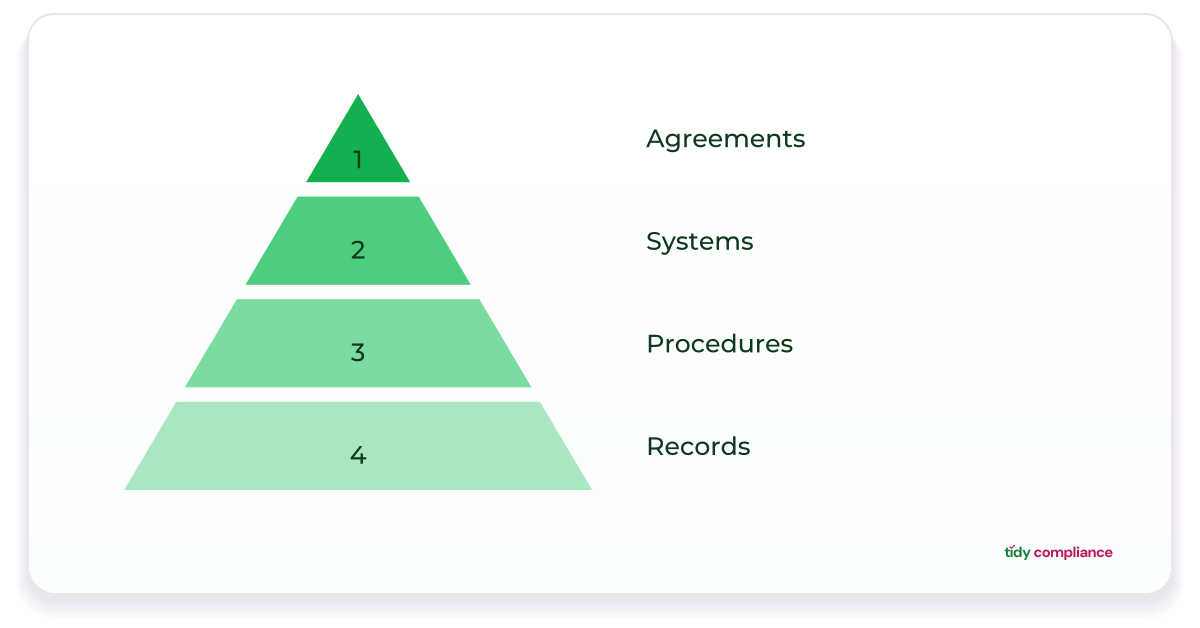
Training sits next to procedures. Build a matrix that shows which roles need which procedures, and track completion. Computerized systems that hold GxP records need extra care for access control, audit trails and electronic signatures, and the FDA explains its expectations for electronic records in its Part 11 guidance. If you plan to buy a quality system, see my overview of pharmaceutical compliance software before you request demos.
| Control type | Example | Typical weak spot |
|---|---|---|
| Procedure | Deviation handling SOP | Written for an ideal process |
| Record | Batch review and release record | Missing signatures or late entries |
| System | Electronic document control | Shared logins or weak audit trails |
| Training | Role-based matrix | Completion not tracked |
| Agreement | Quality agreement with a contract manufacturer | Out of date or unsigned |
Phase 4: Monitor, Test and Watch Your Suppliers
A control you never test is a hope. Pick a handful of measures that show the program is alive: deviations opened and closed on time, overdue training, overdue CAPA actions, supplier audits completed and complaints handled within your own targets. Keep the list short enough to read in five minutes at the monthly meeting.
Add internal checks. Once a quarter, sample a few records and walk them end to end: from the batch record back to the training of the person who signed. Findings from these checks should look like small, boring corrections. If they look dramatic, your controls are weaker than you thought. The method for a deeper review is in my guide to the pharmaceutical compliance audit.
Suppliers deserve their own line. Contract manufacturers, testing labs, packagers and distributors work on your behalf, and you remain responsible for the result. Keep a qualified supplier list, written quality agreements and an audit schedule based on risk. A supplier that makes a critical material needs a closer look than one that supplies office goods.
Phase 5: Fix, Learn and Refresh
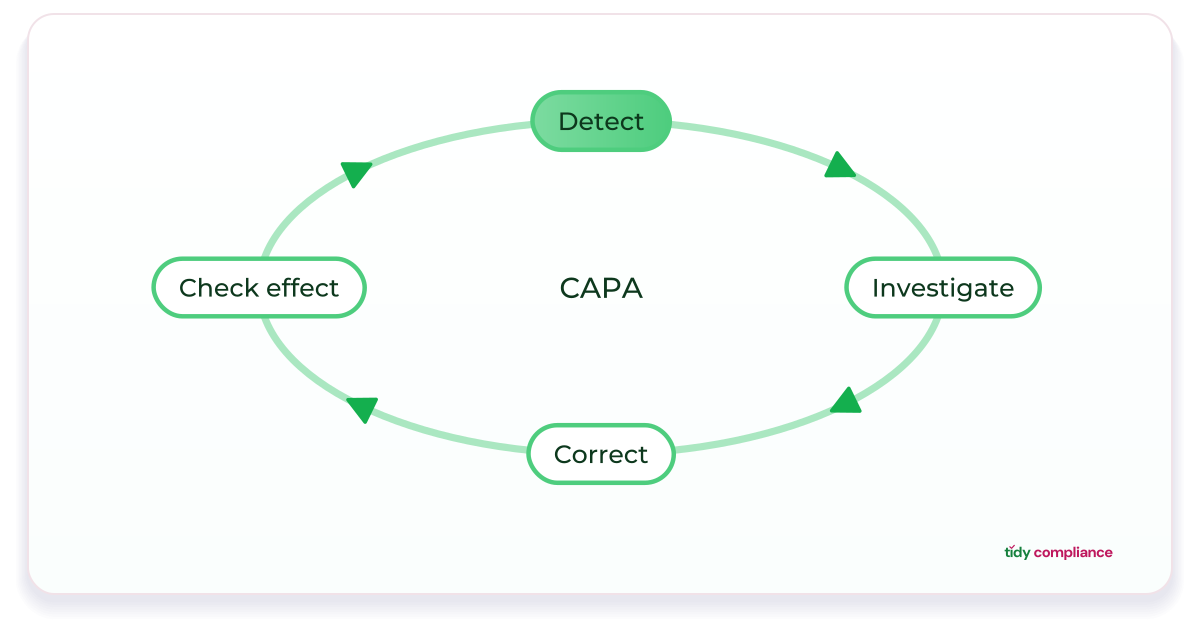
Issues will appear. What counts is how you handle them. Record each one, find the root cause, decide on a corrective and preventive action, assign an owner and a date, and check later that it worked. A CAPA that only retrains the person involved is often a symptom of a missing root cause.
Once a year, hold a management review. Look at metrics, check results, complaints, supplier performance and changes in the rules or in your business. Decide what to change and write it down. This is also the moment to retire procedures nobody uses. Programs that only grow become impossible to follow.
- Root cause recorded for every significant deviation
- CAPA owners and due dates tracked in one list
- Effectiveness check scheduled for each CAPA
- Yearly management review with minutes
Culture and Communication Decide Whether Controls Hold
Procedures and metrics only work when people feel safe reporting problems. If staff expect blame, deviations get reported late or not at all, and your data looks better than the truth. Make it normal to raise an issue early, and respond to the first few reports with thanks and action, not with a search for someone to punish.
Leaders set the tone. When senior managers attend the monthly meeting, ask about open issues by name and fund the fixes, staff see that compliance is part of the job. When leaders only appear after a bad inspection, the program is seen as paperwork. In my client work the companies with the calmest inspections were rarely the ones with the most procedures. They were the ones where an operator could tell a supervisor about a mistake in the morning and see it logged by lunch.
Small habits support the culture. Share closed issues in team meetings as short lessons, publish the status of open actions where people can see it and recognize teams that find problems early. Keep the message steady: finding a gap is the system working. Repeat it often, and back it up the first time someone reports a mistake that could have stayed hidden, because staff watch how the first few reports are treated and remember it for years.
Running the Program at Different Company Sizes
An early-stage company with one product and a contract manufacturer needs a lean program: a quality lead, a small set of procedures, strong supplier oversight and clear records. A mid-sized company adds a compliance calendar, a training matrix and a formal internal check program. A large company needs a committee structure, escalation rules and a system to keep many sites aligned.
In my client work the common mistake at the small end is buying a large system before the processes are clear. At the large end it is the reverse: strong systems but weak ownership across sites. Match the weight of the program to the risk, and revisit it when you add a product, a site or a market.
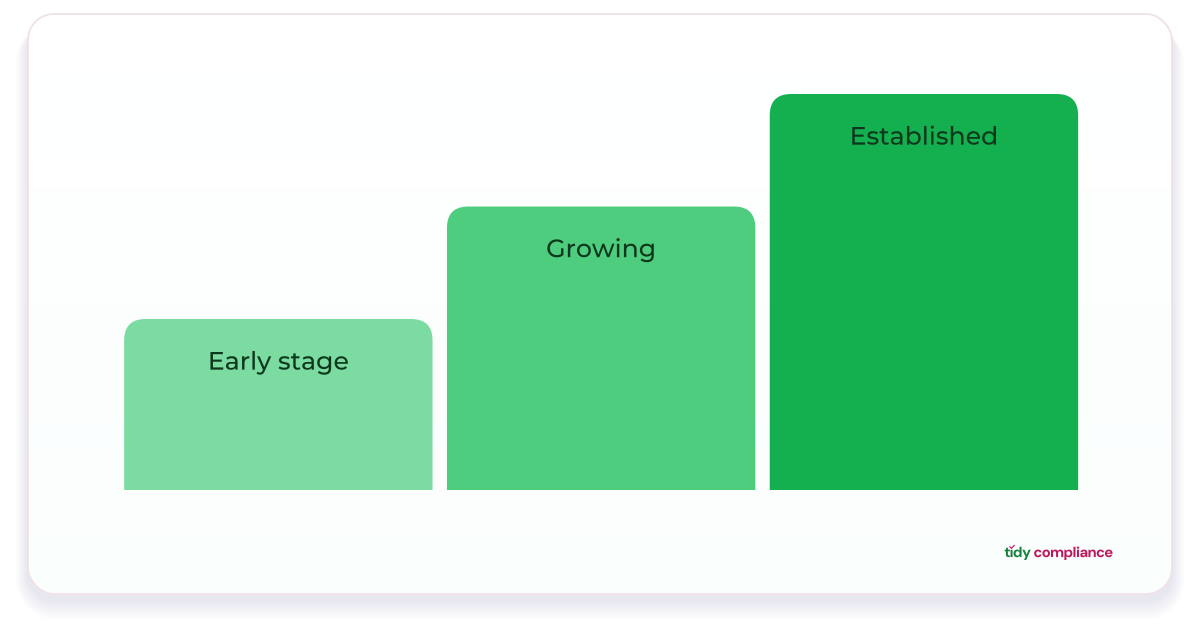
| Company stage | Priority | What to postpone |
|---|---|---|
| Early-stage, outsourced manufacturing | Supplier oversight, document control, training | Complex committees and heavy tools |
| Growing, own site | Internal checks, CAPA discipline, data integrity | Global harmonization projects |
| Established, several sites | Common standards, management review, supplier risk tiers | Nothing basic; keep the core current |
How to Know the Program Is Working
A working program feels boring. Issues are found early, closed on time and rarely repeat. Inspectors and partners get documents within hours. New hires learn the procedures in their first weeks and follow them. If you see surprises in every audit, the program is on paper only.
- You can name the owner of every rule area without looking it up.
- The obligations register changed at least once this year.
- Open CAPAs are fewer than a year ago, or older ones are closed.
- An outsider sampled your records in the last twelve months.
If you want that outside view, a gap assessment ranks what is missing and gives you a plan with owners and dates.
Sources
FDA: CGMP Regulations, FDA: Part 11 Electronic Records Guidance.
Questions About Running Pharmaceutical Compliance
What Does Pharmaceutical Compliance Management Involve?
It covers knowing which rules apply to you, assigning owners, writing procedures, training staff, overseeing suppliers, testing controls and fixing issues. It runs as a routine, not a one-time project.
Who Should Own Compliance in a Pharma Company?
Each rule area needs an accountable owner, such as quality for the quality system and a medical or commercial lead for promotional review. A senior sponsor ties them together and chairs a regular meeting.
How Often Should We Review the Program?
Hold a short monthly meeting for metrics and open issues, internal checks every quarter and a full management review at least once a year. Also review when you add products, sites or markets.
What Should Be in an Obligations Register?
List each rule that applies, the activity it affects, the owner, the procedure that covers it and the date of the last review. Have counsel confirm which rules apply to you.
How Do We Manage Contract Manufacturers and Other Suppliers?
Qualify them, sign written quality agreements, audit them on a risk basis and review their performance regularly. You remain responsible for outsourced work.
Do We Need Compliance Software?
Not at the start. A small company can begin with controlled documents, a spreadsheet and a calendar. Software helps as volume grows, and any system holding GxP records needs validation for its intended use.
Is Pharmaceutical Compliance Management the Same as Quality Assurance?
They overlap. Quality assurance focuses on product quality and the quality system. Compliance management is wider and also covers areas such as promotion, interactions with healthcare professionals and supply chain security.
Disclaimer: This article is for general information only and isn’t legal, financial or tax advice. Treat figures as estimates from typical work and confirm details with your providers before you act.
Was this guide helpful?
Thanks for your feedback.
Odessa Whitfield
Odessa leads the Tidy editorial team and works with the compliance consultants to turn real client projects into practical guides on regulations, frameworks, policies and audit preparation. Before joining Tidy, she worked in compliance and risk roles, writing and maintaining policy sets for regulated organizations. Every article goes through a consultant who has done the work in practice, and she updates guides when a rule, framework or tool changes. She works remotely from the United States.