Quick Summary
- Nine checks cover most of what inspectors, payers and auditors look at in a pharmacy.
- Expired licenses, certificates and agreements are the most common quiet failure, so build one expiry calendar first.
- Every check needs an owner, a frequency and a place where the proof lives.
- A checklist finds gaps. Your state board, your payer contracts and your attorney decide what applies to you.
Pharmacy compliance rarely fails in one dramatic moment. It slips through small things: a certificate that lapsed in March, a count nobody signed, a vendor that never sent a current agreement. In my pharmacy compliance consulting work, the pharmacies that stay calm during a review are not the ones with the thickest binder. They are the ones that check a short list on a schedule.
This checklist has nine points. Use it as a self-check, and treat it as general guidance, not legal advice. Which rules apply depends on your state, your services and your contracts, so confirm specifics with your board of pharmacy and your attorney.
The Nine Checks at a Glance
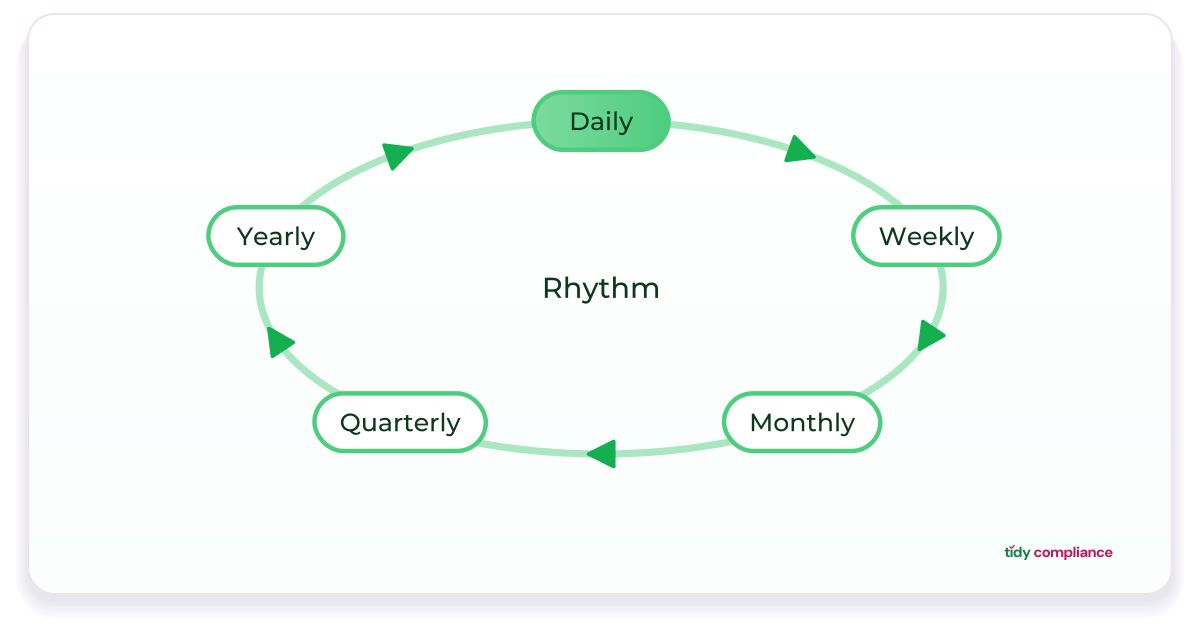
| Check | How often | Proof to keep |
|---|---|---|
| 1. Licenses and permits | Monthly expiry review | Copies and an expiry calendar |
| 2. Controlled substances | Per local rule, plus spot counts | Inventories, logs and discrepancy notes |
| 3. Drug supply chain records | Weekly | Transaction records and partner checks |
| 4. Staff screening | Monthly | Exclusion check results |
| 5. Training | Yearly, plus at hire | Dated sign-offs per person |
| 6. Privacy and security | Yearly risk review | Risk analysis and access logs |
| 7. Billing integrity | Quarterly sample | Sample review notes |
| 8. Storage and safety | Daily and monthly | Temperature and safety logs |
| 9. Inspection readiness | Yearly mock review | Open-items list with owners |
The Checklist, Point by Point
1. Licenses and Permits Are Current
List every license, registration and permit your pharmacy and your pharmacists hold. That usually includes the state pharmacy license, individual pharmacist and technician credentials, the DEA registration if you handle controlled substances, and any permits for compounding or special services. Put each one on a calendar with its expiry date.
- Every license and registration is listed with number, holder and expiry date
- Reminders go out 90, 60 and 30 days before expiry
- Display copies are posted where your state requires them
2. Controlled Substances Are Counted and Explained
Controlled substance records are among the first things an inspector asks to see. Federal rules require inventories at set intervals and records that show receipt and dispensing, and states add their own rules. Check the current requirements with the DEA and your state board, and keep your own spot counts on top.
- Inventories are signed, dated and filed where you can find them
- Receiving records match invoices and order forms
- Every discrepancy has a written explanation and an owner
- Access to the safe or cabinet is limited and logged
3. Drug Supply Chain Records Are Kept and Checked
The Drug Supply Chain Security Act sets rules for tracing prescription drugs, checking trading partners and handling suspect product. Details and timing for dispensers have changed more than once, so read the current FDA guidance for your pharmacy type and do not rely on an old summary. Whatever the timing, the habit is the same: keep transaction records and know who to call about a suspect package.
- You verify that suppliers are authorized trading partners and keep proof
- Transaction records are stored and can be retrieved quickly
- A written procedure explains how to quarantine and report suspect product
4. Staff Are Screened Against Exclusion Lists
If you bill federal health programs, you must not employ or contract with people or entities excluded from them. The HHS Office of Inspector General keeps a public exclusion list, and many pharmacies check it monthly. Check state Medicaid lists as well where your state publishes them.
- Every employee, contractor and owner is checked at hire and then monthly
- Results are saved with the date and the name of the person who checked
- A written step says what happens if someone appears on a list
5. Training Is Current and Documented
Staff should be able to say what to do in the situations they meet. That covers privacy, workplace safety, fraud and abuse awareness, controlled substance handling and your own procedures. A signed attendance sheet is the minimum proof, and a short quiz is better.
- New hires finish required training in their first weeks
- Everyone repeats core topics every year
- Each person has a dated record in one place
6. Patient Information Is Protected
A pharmacy that bills electronically is generally a covered entity under HIPAA, so you need a current security risk analysis, written policies, business associate agreements and a plan for incidents. Pharmacy-specific traps include prescription labels in the trash, voicemail with details and shared logins at the pickup counter.
- A risk analysis was completed in the last year and covers every system that holds patient data
- Business associate agreements are current for software and billing vendors
- Each person has their own login and access is removed when someone leaves
- Paper with patient information is shredded
7. Billing Matches What Was Dispensed
Payers and PBMs audit claims against records. Mismatches usually come from missing signatures, quantity errors, incomplete prescriber information or refills billed too early. A small quarterly sample finds these before an auditor does.
- Pull 20 claims each quarter and match them to prescriptions, signatures and logs
- Write up each error and its fix
- Keep copies of the PBM manual sections you are measured against
8. Storage, Temperature and Safety Routines Are Logged
Refrigerators, expired stock, cleaning routines and workplace safety all need records. Daily temperature checks and monthly expiry sweeps are simple, and missing logs are an easy finding. If you compound, add the routines required by the USP chapters that apply to your services.
- Refrigerator and freezer temperatures are logged daily
- Expired and returned stock are separated and documented
- Safety data sheets and emergency steps are available to staff
9. You Can Show Your Records in an Hour
The ninth check tests the other eight. Ask a colleague to request three records at random, such as last month’s temperature log, a staff training record and a controlled substance inventory, and time how long it takes. If it takes more than an hour, your filing needs work. My pharmacy compliance audit method turns this test into a full review.
- One folder or system holds proof for all eight earlier checks
- An open-items list names an owner and a due date for each gap
- A mock review runs once a year
Turning the List Into a Score You Can Track
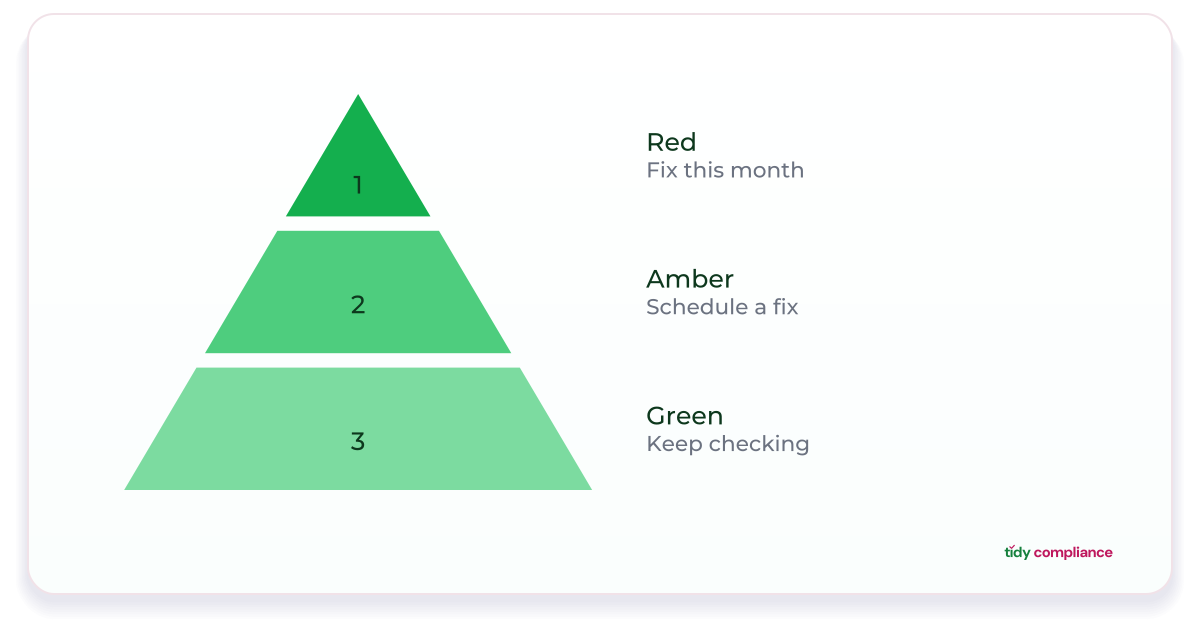
A checklist that lives on paper gets ticked once and forgotten. Give each point a rating of green, amber or red every quarter. Green means the proof exists and is current. Amber means the task is done but the proof is thin. Red means the task is missing or overdue. Write the date and the owner next to every amber and red.
The count of red points is your headline number. Report it to the owner or the board in one line each quarter. When the number falls, you can show progress without a long report. When it rises after a new service or a staff change, you know where to look. The monthly habits that keep it falling are in my guide to pharmacy compliance best practices.
When a Spreadsheet Stops Being Enough
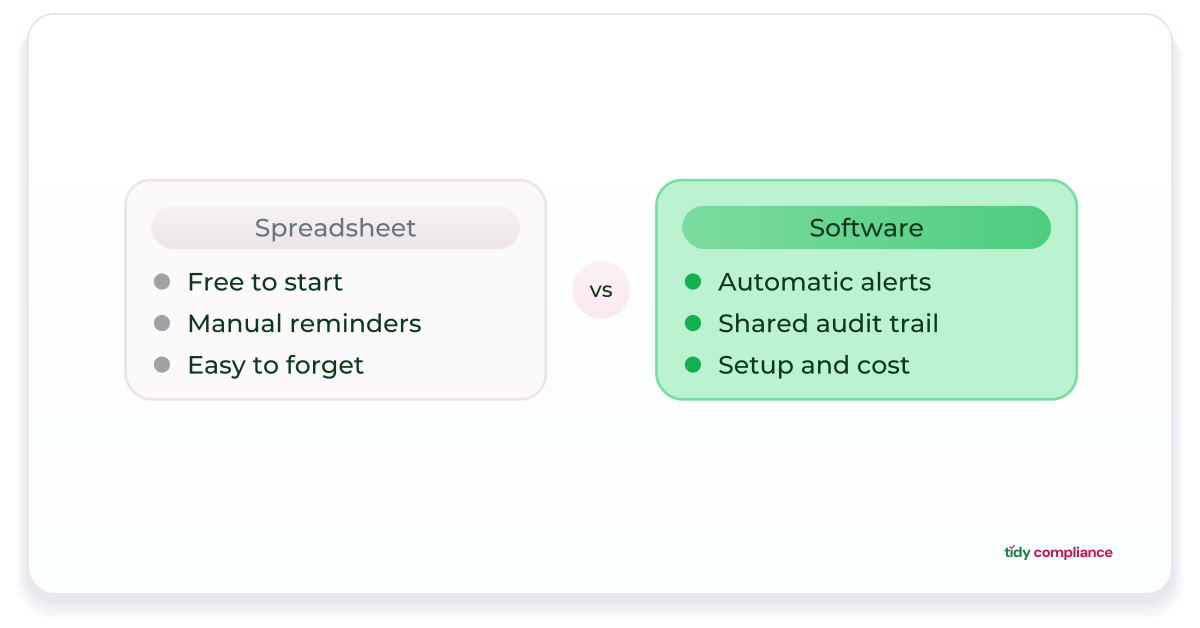
A shared spreadsheet works for one location with a handful of staff. It starts to break when you add a second site, compounding or controlled substance work that needs daily records, or a payer that wants evidence on a deadline. At that point, a system with reminders and an audit trail saves time. I compare the main options in my review of pharmacy compliance software, including what each tool leaves out.
Before you buy anything, finish the checklist once by hand. It shows you which of the nine points are your weak ones, and that tells you which features to pay for.
Where Checklists Go Wrong in Real Pharmacies
The first failure is the one-time tick. Someone fills the list in before a visit, files it and never opens it again. By the next visit half the answers are false. The second failure is the list without proof. A box marked yes means nothing if the log, the certificate or the signed sheet is not in the folder. The third is an owner who is also the busiest person in the building, so the monthly items slide first.
Fix these with small rules. Put the monthly items on the same calendar as payroll and ordering. Require a file name or a location next to every yes. When the owner is overloaded, hand the routine items to a technician or a manager and keep the review for yourself. The list stays short, and it stays true.
How to Decide What to Fix First
Fix in this order: things that can stop you operating, things that can cost you money and things that mostly cost time. An expired license or an uncounted controlled substance sits in the first group. Billing errors and missing exclusion checks sit in the second, because they lead to recoupments and penalties. Missing logs and thin training records sit in the third, but they are the cheapest to fix and give quick wins.
If you find several red points at once, do not try to fix them in one month. Pick the two with the highest risk, assign owners and set dates. Then review again in 30 days. A realistic plan that gets done beats a perfect plan that does not.
Questions About Pharmacy Compliance Checklists
How Often Should I Run Through a Pharmacy Compliance Checklist?
Run the full list once a year and the short monthly items every month. Licenses, controlled substance counts and expiring training need a calendar, because they fail quietly. After a change such as a new service, a new location or a new owner, run the whole list again.
Who Should Own the Checklist in a Small Pharmacy?
One named person, usually the pharmacist in charge or the owner, with a backup. Each of the nine points can have a different task owner, but a single person should decide when a point is done and keep the records.
Does Passing This Checklist Mean I Pass an Inspection?
No. It is a self-check that shows where you are weak. Inspectors and payers apply the rules of your state board and your contracts, and those differ. Use the list to find gaps, then confirm the details with your board, your PBM contracts and your attorney.
What Is the Most Commonly Missed Item?
In my client work, it is paperwork that expires: a license, a staff certification or a vendor agreement that lapsed without anyone noticing. A single expiry calendar with reminders 90, 60 and 30 days ahead fixes most of it.
Do I Need a Written Policy for Every Point?
Not a long one. A one-page procedure that says who does what, how often and where the proof is kept is enough for most points. A short, current procedure is worth more than a thick manual nobody reads.
Can Software Replace the Checklist?
Software can remind, collect records and show status, which helps a lot. It does not decide what applies to your pharmacy. Use the checklist to decide what to track first, and then look at my review of pharmacy compliance software.
What Should I Do When I Find a Gap?
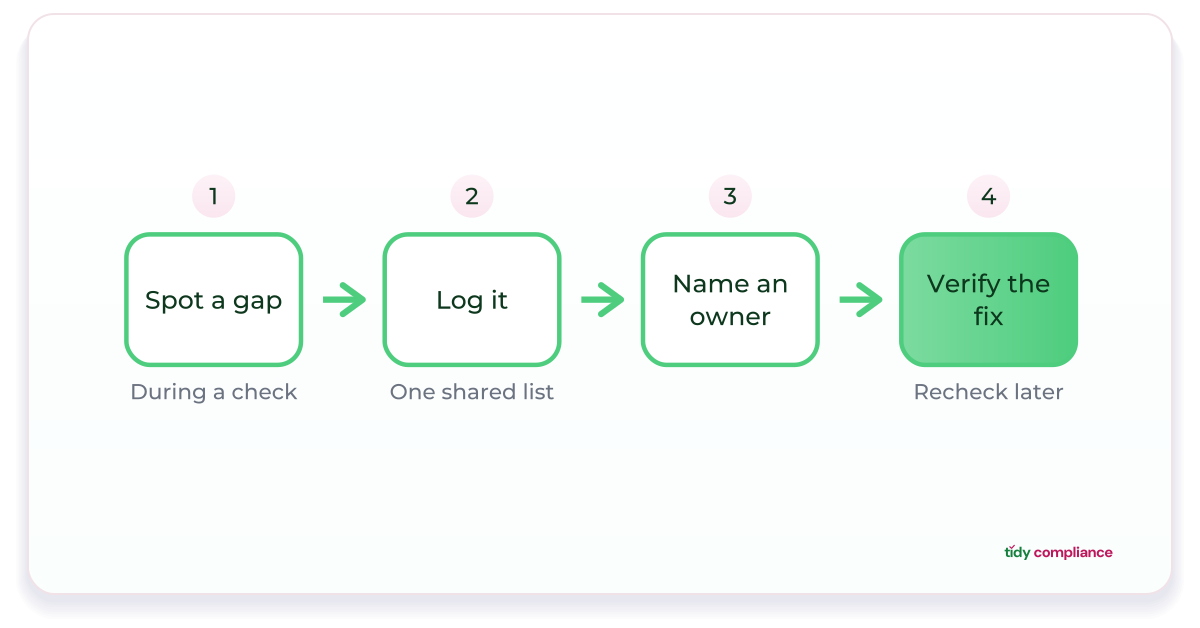
Write it down with a date, name an owner, set a due date and record the fix with proof. A gap that you found, documented and closed is a sign of a working program. A gap nobody wrote down is a finding waiting to happen.
Sources
- U.S. Food and Drug Administration, Drug Supply Chain Security Act
- HHS Office of Inspector General, exclusions program
- DEA Diversion Control Division
- HHS, HIPAA Security Rule guidance
Disclaimer: This article is for general information only and isn’t legal, financial or tax advice. Treat figures as estimates from typical work and confirm details with your providers before you act.
Was this guide helpful?
Thanks for your feedback.
Odessa Whitfield
Odessa leads the Tidy editorial team and works with the compliance consultants to turn real client projects into practical guides on regulations, frameworks, policies and audit preparation. Before joining Tidy, she worked in compliance and risk roles, writing and maintaining policy sets for regulated organizations. Every article goes through a consultant who has done the work in practice, and she updates guides when a rule, framework or tool changes. She works remotely from the United States.