Quick Summary
- The model has six phases: map, rank, assign, write, train and test, then report.
- Each phase ends with something you can show, such as a risk register or a test log.
- Ownership matters most. Every control needs a named person and a date for its next check.
- This model organizes your work and does not replace advice from your securities counsel.
Many firms have a policy manual and still cannot say whether the policies work. That gap comes from missing structure. Nobody mapped the risks, nobody owns the controls and nobody checks. A framework supplies that structure.
The model below is the one I use when I set up a program with private equity compliance consulting clients. It has six phases, and each one has an output you can file. It is a compliance aid, and it does not replace advice from your securities counsel on what the rules require for your firm.
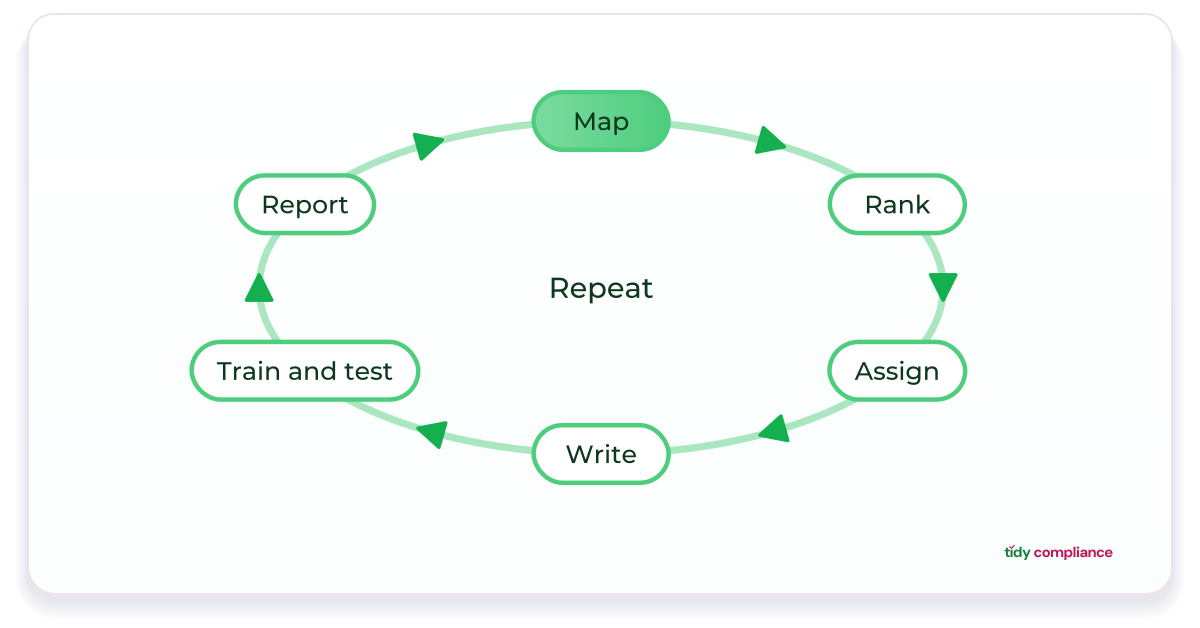
The Six Phases at a Glance
| Phase | Main question | Output | Owner |
|---|---|---|---|
| 1. Map | What does the firm do and promise? | Firm inventory | Compliance officer |
| 2. Rank | Which risks matter most? | Risk register | Compliance officer, partners |
| 3. Assign | Who runs each control? | Control owner list | Managing partner |
| 4. Write | What is the rule in plain language? | Policies and procedures | Control owners |
| 5. Train and test | Do people follow it? | Training log, test results | Compliance officer |
| 6. Report | What do partners need to know? | Quarterly report, annual review | Compliance officer |
Phase 1: Map the Firm
Start with facts about the firm. List the funds and their terms, the people and their roles, the service providers, the systems that hold data and the main promises in fund documents and side letters. Include how deals come in, how they are approved and how money moves.
This phase takes a few days and teaches the most. Firms are often surprised by how many vendors and spreadsheets touch investor data. Keep the output short, ideally a few pages, and update it whenever you launch a fund or change a provider.
Decision gate: Move on when a partner has read the inventory and confirmed that it is accurate.
Phase 2: Rank the Risks
For each activity on the map, ask what could go wrong, how likely it is and how much it would cost in money, trust and time. A simple three-level rating is enough. Typical high-risk areas are fee and expense allocation, valuation, communications, personal trading and cash movement.
The register should name the risk in plain words, the control that addresses it and the person who owns that control. Resist the urge to list every possible risk. Twenty well-described risks are more useful than a hundred vague ones.
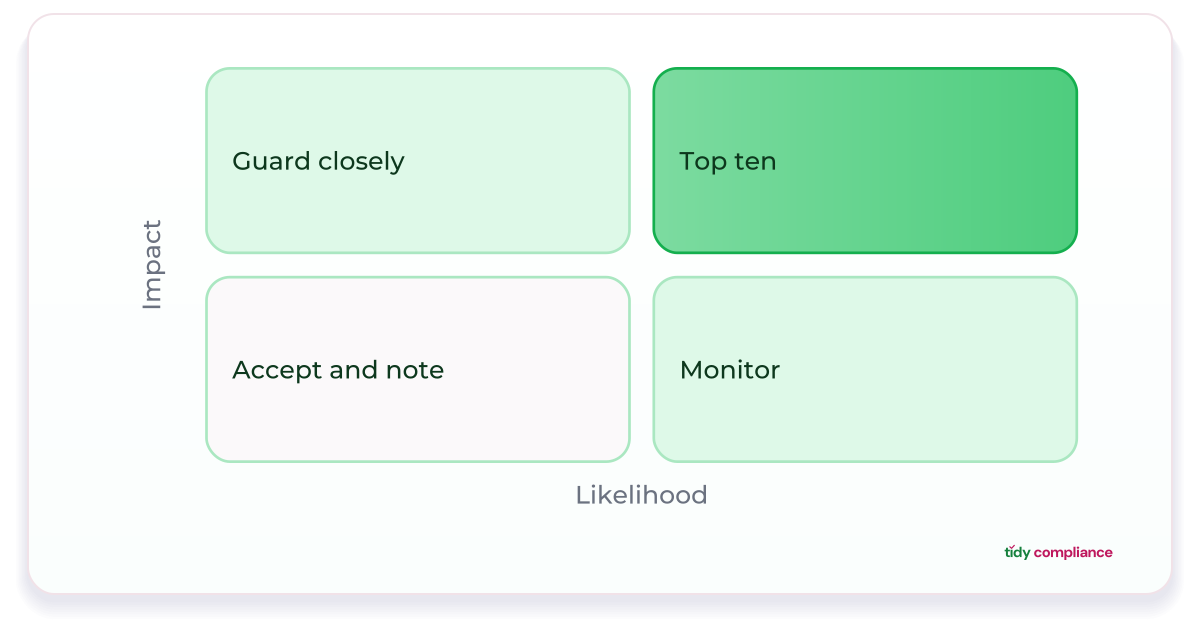
Decision gate: Move on when the top ten risks each have a named control, or a note that a control is missing.
Phase 3: Assign Owners
Every control needs a person, not a department. The CFO may own expense allocation, the head of investor relations marketing approvals and the COO cash controls. The chief compliance officer owns the program and the testing. Partners own the exceptions.
Write down the owner's backup too. Controls fail when someone is on leave and nobody knows who steps in. The owner list also shows overload, such as one person who owns twelve controls and has no time for any of them.
Decision gate: Move on when each control owner has confirmed the assignment in writing.
Phase 4: Write the Rules
Policies should describe what people do, in short sentences, with examples. Each policy needs a purpose, the steps, the person responsible, the records created and a review date. Avoid copying a large firm's manual, because it will describe processes you do not run. For a clear view of the program parts, read my private equity compliance guide.
Write the rules that carry the most risk first: fees and expenses, trading and communications. Put them in front of the owners and let them correct the draft. A policy that the owner would not recognize is not ready.
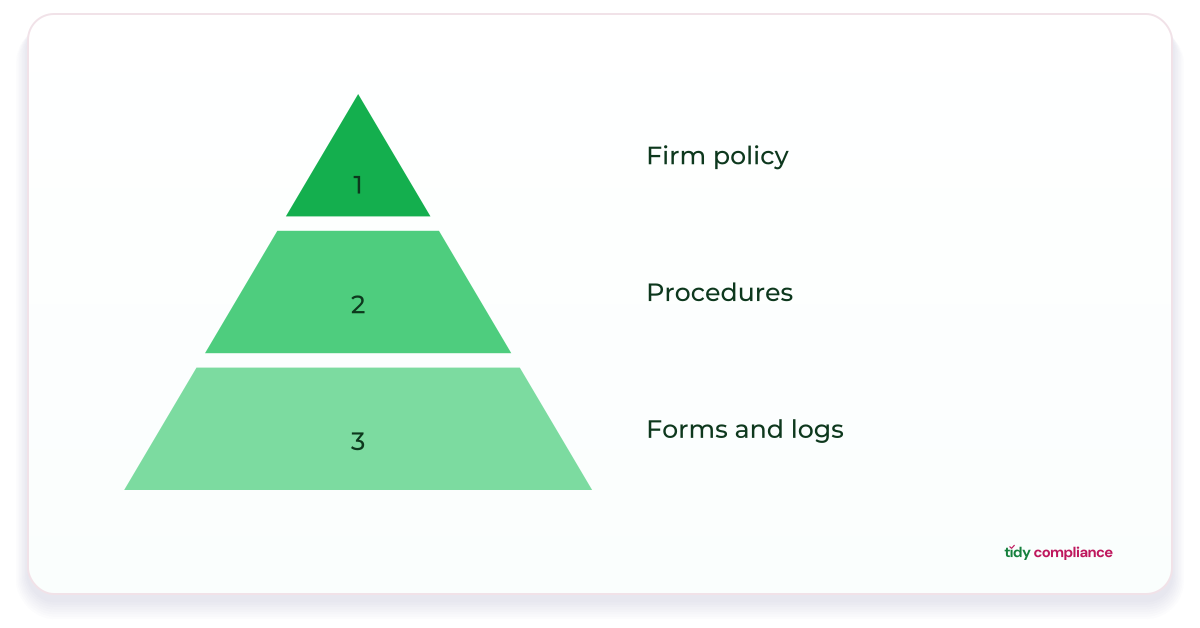
Decision gate: Move on when owners have reviewed their policies and a partner has approved them.
Phase 5: Train and Test
Training should be short and specific to the role. A deal team member needs to know about restricted lists, personal trading and information handling. Finance needs expense rules and wire controls. Use real examples from your own deals, with the names removed.
Testing proves the rules are followed. Each quarter, pick a few controls and check a sample. For expense allocation, take ten recent items and see whether each followed the policy. Record what you checked, what you found and what you changed. The private equity compliance checklist gives you a ready list of points to test.
Decision gate: Move on when you have one full cycle of test results and every issue has an owner and a date.
Phase 6: Report and Improve
Partners need a short quarterly report. It should show the status of the top risks, test results, open issues with dates, regulatory changes you are watching and any exceptions that were approved. One page is enough. The annual review then builds on the four quarterly reports.
Use the review to ask whether the framework still fits. New funds, new strategies and new service providers all change the risk map. If your tools no longer fit your workload, my ranking of private equity compliance software can help you compare options.
Decision gate: The cycle is complete when partners have received the annual review and approved the next year's plan.
Who Does What Across the Phases
The model works when roles are clear. The managing partner sponsors the program, approves the risk register and receives the quarterly report. The chief compliance officer runs the cycle, drafts the policies with the control owners, trains staff and performs the tests. Control owners run the daily work and answer questions from the tests. An outside reviewer, where used, checks the highest-risk areas and the annual review.
Small firms often combine roles. When the chief compliance officer is also the COO, the person tests their own controls, and that is a weakness. The fix is cheap: ask an outside consultant or a partner who does not own the control to review a sample twice a year and sign the result.
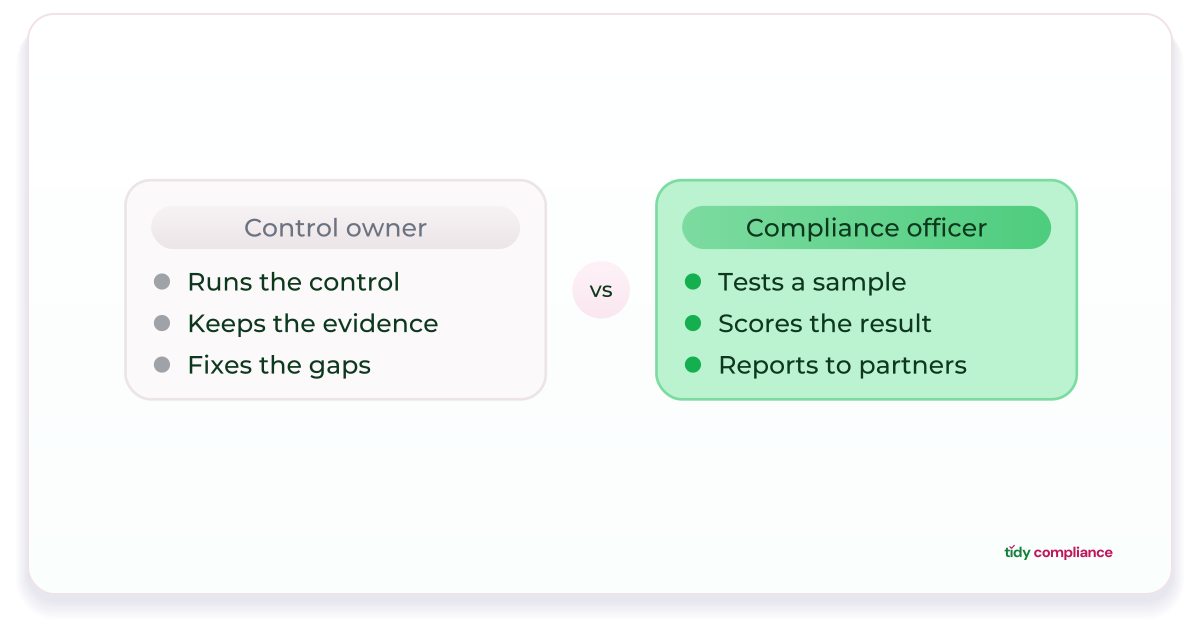
Where the Framework Breaks
I see four failure modes. The first is the risk register written once and never updated, so new strategies and funds are missing from it. The second is policies that nobody owns, which drift away from practice within a year. The third is testing that checks only the easy controls, so the report looks clean while the hard areas are untouched. The fourth is reporting that stops at the compliance officer and never reaches the partners.
Each has a simple guard. Put the register review on the quarterly agenda. Put the owner's name on each policy. Pick at least one hard control to test every quarter. Make the partner meeting the place where the report is presented, with a short discussion and a recorded decision.
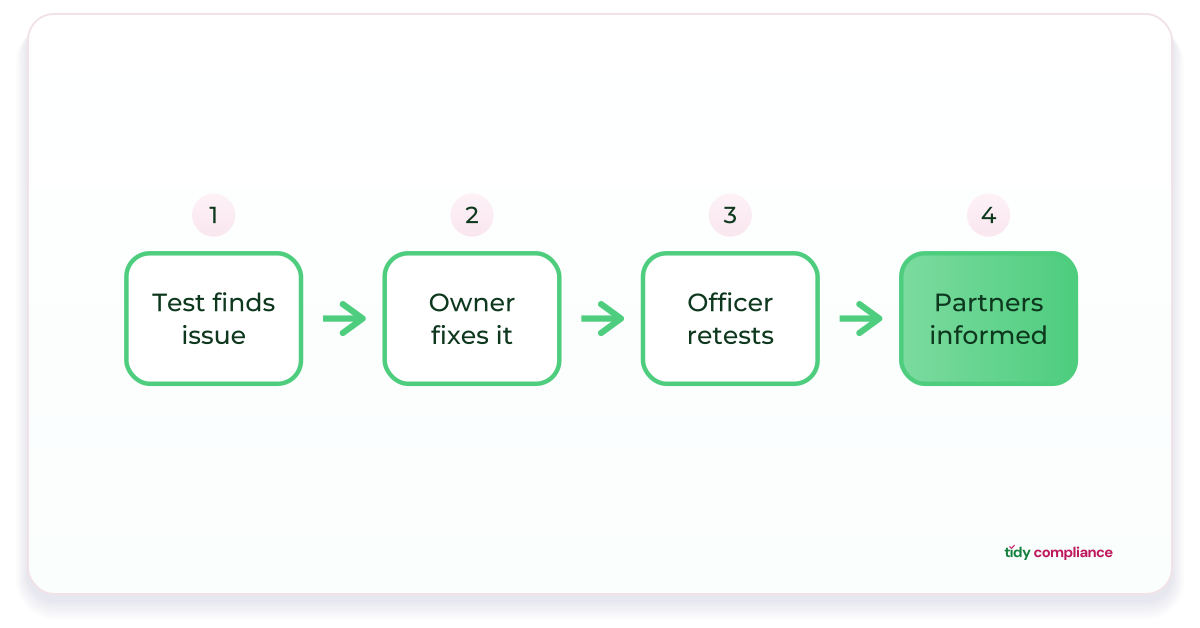
A small example of the cycle in action: a test of ten recent expense allocations finds that three items for a broken deal were charged to the wrong fund. The owner corrects the entries and writes a short memo on the rule, the compliance officer adds a step to the monthly close and the next quarter's test checks the same area with a fresh sample. One finding then moves through the whole cycle, from risk to control to test to fix and back into the report.
A Realistic Timeline
Plan for the first cycle to take two to three quarters. Phases 1 to 3 usually fit into the first month. Writing the policies takes the next one to two months, with the high-risk ones first. Training and the first round of tests follow, and the first quarterly report ends the cycle.
Delays come from the same places each time: partners who are busy with a deal, owners who have not reviewed their drafts and data that lives in someone's personal spreadsheet. Build slack into the plan, and keep the sequence even when a phase slips.
Where Tools Fit
Tools support the framework and do not replace any phase. A simple spreadsheet can hold the risk register and the control list for a small firm. As the number of employees, funds and attestations grows, a platform that tracks approvals, test results and issues pays for itself in saved hours. Choose it after the owners and the rules are clear, because software that mirrors an unclear process only makes the confusion faster.
When you compare vendors, ask each one to walk through your own examples: a personal trade request, an expense allocation review and a quarterly report. If the demo cannot show them in your terms, the fit is weak, whatever the feature list says.
Finally, keep an exit plan. Export your data from the tool at least once a year, so your register, test logs and issue history do not depend on a single vendor's contract.
How to Choose a Starting Point
If you have nothing in place, begin at phase 1. If you have policies and no testing, begin at phase 5 and work backward to fix the parts the tests expose. If an investor review is coming, make a quick risk register and a test log for the top three risks, then build the rest.
- Confirm that a partner sponsors the program and attends the quarterly review.
- Name one owner for every control, plus a backup.
- Pick three controls to test in the next thirty days.
- Put the annual review on the calendar now.
Questions About the Private Equity Compliance Framework
What Is a Private Equity Compliance Framework?
It is a model that shows how your compliance work is organized: which risks you cover, who owns each control, how you test it and how issues reach senior partners. It turns a pile of policies into a system that someone can run and explain.
How Is a Framework Different from a Policy Manual?
A manual holds the rules. A framework holds the structure around them: the risk map, the owners, the testing plan, the reporting lines and the review calendar. You can have a manual without a framework, and then nobody knows if the rules are followed.
Do I Need an Industry Framework or Standard?
Not required for most firms. Some firms borrow structures from risk and control frameworks they already know, such as a three lines model, to organize ownership. Choose what your team will actually use.
How Long Does It Take to Put a Framework in Place?
A basic version for a small manager can take a few weeks if the risk inventory is done. Testing and reporting habits take a few quarters to settle, so plan for a full cycle before you judge the result.
Who Should Own the Framework?
The chief compliance officer designs and runs it, and senior partners approve it and receive its reports. Control owners in finance, operations and investor relations run the daily work.
How Do I Show the Framework Works?
Keep evidence: the risk register, test results, issue logs and the annual review report. When a partner, investor or examiner asks, you can show a cycle of risk, control, test and fix.
Can a Small Firm Use the Same Model?
Yes, at a smaller scale. One person may hold several roles, so add an independent check on the most sensitive controls, such as an outside reviewer who signs off twice a year.
Sources
Disclaimer: This article is for general information only and isn’t legal, financial or tax advice. Treat figures as estimates from typical work and confirm details with your providers before you act.
Was this guide helpful?
Thanks for your feedback.
Odessa Whitfield
Odessa leads the Tidy editorial team and works with the compliance consultants to turn real client projects into practical guides on regulations, frameworks, policies and audit preparation. Before joining Tidy, she worked in compliance and risk roles, writing and maintaining policy sets for regulated organizations. Every article goes through a consultant who has done the work in practice, and she updates guides when a rule, framework or tool changes. She works remotely from the United States.