Quick Summary
- A private equity compliance program has five parts: registration and filings, conflicts and fees, marketing and investor communication, custody and operations, and records and testing.
- Most findings come from the gap between a written policy and daily practice, so build policies from how your team really works.
- Start with a risk inventory of your firm, then write the policies, train people and test them.
- This guide organizes the work and does not replace advice from your securities counsel.
Private equity compliance has a reputation for being opaque. The firm raises a fund, the deal team moves fast and the rules sit in the background until a filing deadline, an investor questionnaire or an examiner's request arrives. Then everyone looks for the policies.
I wrote this guide for people who are building or repairing a program and want to understand the pieces before they hire anyone. If you want help with the build, my private equity compliance consulting page shows how an engagement runs. The guide explains the structure, and it is a compliance aid that does not replace advice from your securities counsel on what the rules require of your firm.
What Private Equity Compliance Covers
A private equity firm is usually an investment adviser to one or more private funds. That role brings duties to the funds and their investors, and in many cases registration and regular filings with a regulator. Compliance is how the firm shows that it follows those duties day after day.
The work splits into two layers. The first layer is law and regulation: the rules that apply because of what you are and what you do. The second layer is your own promises, such as the terms in your fund documents, side letters and investor questionnaires. A good program covers both, and the second layer is the one people forget.
For registered advisers in the United States, the central rule is the requirement to adopt written policies and procedures, review them every year and name a chief compliance officer. The SEC publishes the rule text and related guidance on its website, and I list the sources at the end. Rules for private fund advisers have also been the subject of rulemaking and court challenges in recent years, so check the current status with your counsel before you rely on any specific requirement.
The Five Parts of a Working Program
I describe a program in five parts. They overlap, and it helps to keep them apart when you plan the work and assign owners.
| Part | What is included | Typical records |
|---|---|---|
| Registration and filings | Adviser registration, annual updates and periodic fund reporting | Filed forms, calendar, review notes |
| Conflicts and fees | Allocation of deals, fees and expenses, related-party transactions | Allocation memos, expense reviews, approvals |
| Marketing and investors | Fund presentations, track record statements, due diligence responses | Approval log, source files for numbers |
| Custody and operations | Who holds assets, audits, valuation, cash controls | Audit reports, valuation memos, bank approvals |
| Records and testing | Books and records, code of ethics, annual review | Retention schedule, attestations, test results |
Each part needs an owner. One person can own several, but every part must have a name next to it. When I review a program, a part without an owner is the first thing I flag, because it tells me nobody would notice if it stopped.
Registration and Filings
Whether you register depends on facts such as the amount you manage, the type of funds and any exemption you rely on. Exemptions have conditions, and the conditions have to be monitored. A firm that qualifies for an exemption in one year may lose it the next, so someone must watch the numbers.
Registered advisers file Form ADV, which describes the business, the owners, the funds and the conflicts. It is updated at least annually and when certain information changes. Many private fund advisers also file Form PF, which gives regulators data about their funds. The forms are public documents or regulator-facing records, and the answers must match your fund documents and your marketing.
The practical advice is simple. Keep a filing calendar, assign a preparer and a reviewer, and keep the working papers that show where each number came from. The most common mistakes come from numbers that were right when somebody typed them and wrong by the time of filing.
Conflicts of Interest and Fees
Private equity has more built-in conflicts than most investors realize. The firm earns fees from funds and sometimes from portfolio companies. Several funds may compete for the same deal. Affiliates may provide services. Each of these is manageable when it is identified, disclosed in the right place and handled consistently.
Fees and expenses draw the most attention. Examiners and investors ask how you decide which fund or company pays for an expense, how you treat broken-deal costs and how you calculate management fee offsets. Write the allocation rules down before the situation arises, and apply them the same way each time. A short expense allocation memo for each unusual item is worth the time it takes.
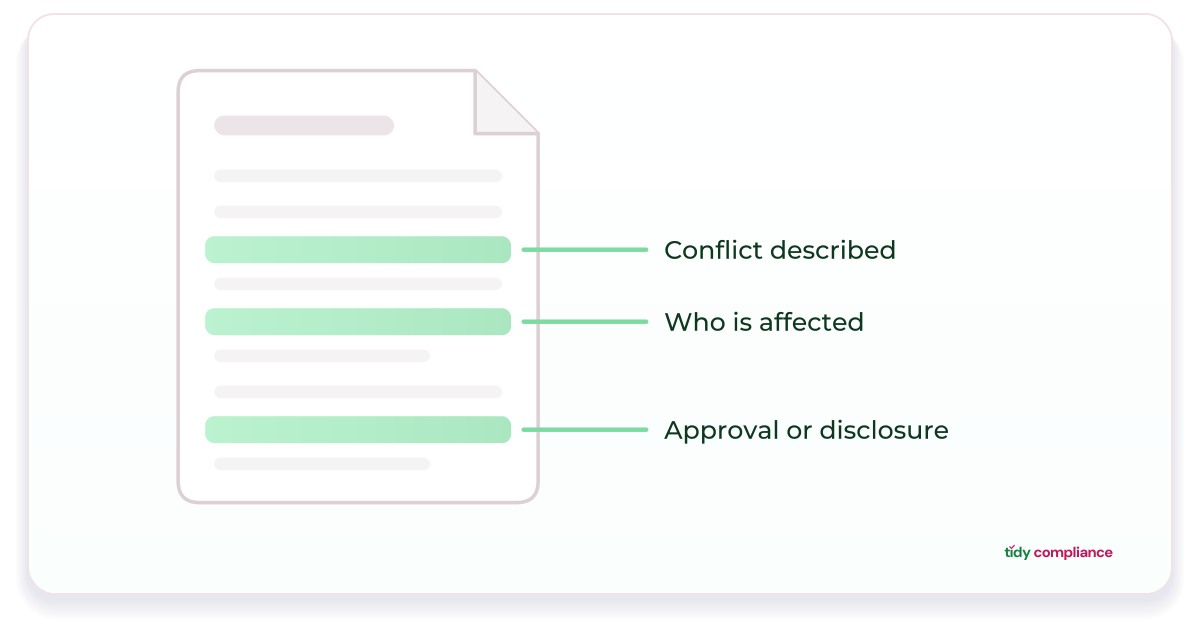
A conflicts register is a good tool for this. It is a simple list of each conflict, where it is disclosed, who approves it and how you monitor it. The register also feeds your annual review, because you can see which conflicts changed.
Marketing and Investor Communication
Anything that describes your firm, your track record or your strategy to a prospective investor is marketing in the broad sense. Presentations, websites, pitch emails, due diligence questionnaires and webinars all count. The rules for advisers include requirements about performance claims, testimonials and how results are presented, and they are detailed. Your counsel should review your approach.
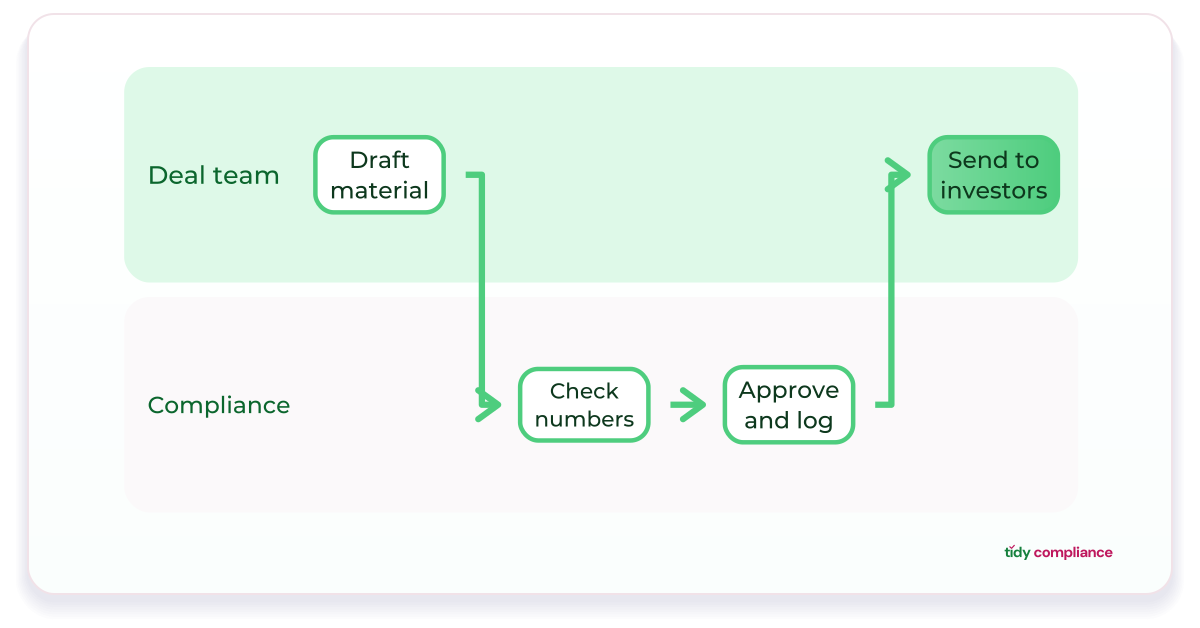
The workflow matters more than any single document. Keep a log that records who drafted each item, who reviewed it, which numbers it contains and where those numbers came from. Store the final version that went out. When an investor asks why last year's deck showed a different return from this year's, you want to answer in minutes.
Due diligence questionnaires deserve attention too. Investors often ask about policies, cybersecurity, business continuity and conflicts. Answers should be consistent with your filings and your real practice. I suggest keeping a library of approved answers with an owner and a review date.
Custody, Valuation and Operations
Custody rules cover how client assets are held and how investors receive audited statements. Private funds often rely on an annual audit by an independent accountant as the path to meeting these duties, and timing matters. Missed audit delivery is a classic avoidable problem, so put the dates on the calendar early.
Valuation is another area where a written method pays off. Describe how you value each type of investment, who approves values, how often and what you do when a valuation changes sharply. Investors and auditors will ask for the method, and the answer should be the same each quarter.
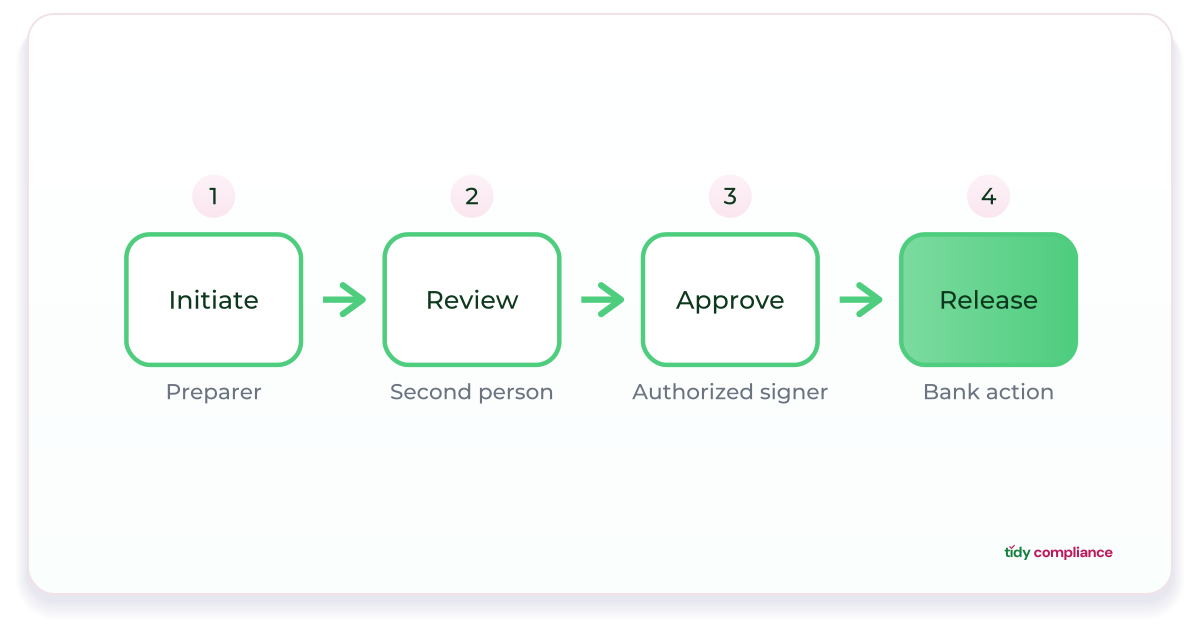
Cash controls complete the picture. Document who can initiate and approve wires, how capital calls and distributions are checked and how bank changes are verified. Fraud attempts that target payment instructions are common, and a call-back rule for any change is cheap protection.
Records, Ethics and Testing
Registered advisers must keep books and records for set periods, and the list of required records is long. A retention schedule that names each record type, the owner and the location gives you something to test. Communications are the hard part. Staff use email, chat and phone messages, and you need a policy about which channels are allowed for business and how they are kept. See my ranking of private equity compliance software for tools that help with archives and attestations.
A code of ethics sets rules for staff, including personal trading, gifts and outside activities. Private equity staff often hold material non-public information about portfolio companies and targets, so the code should say how that information is handled, who may see it and which securities are restricted. Staff acknowledge the code when they join and each year.
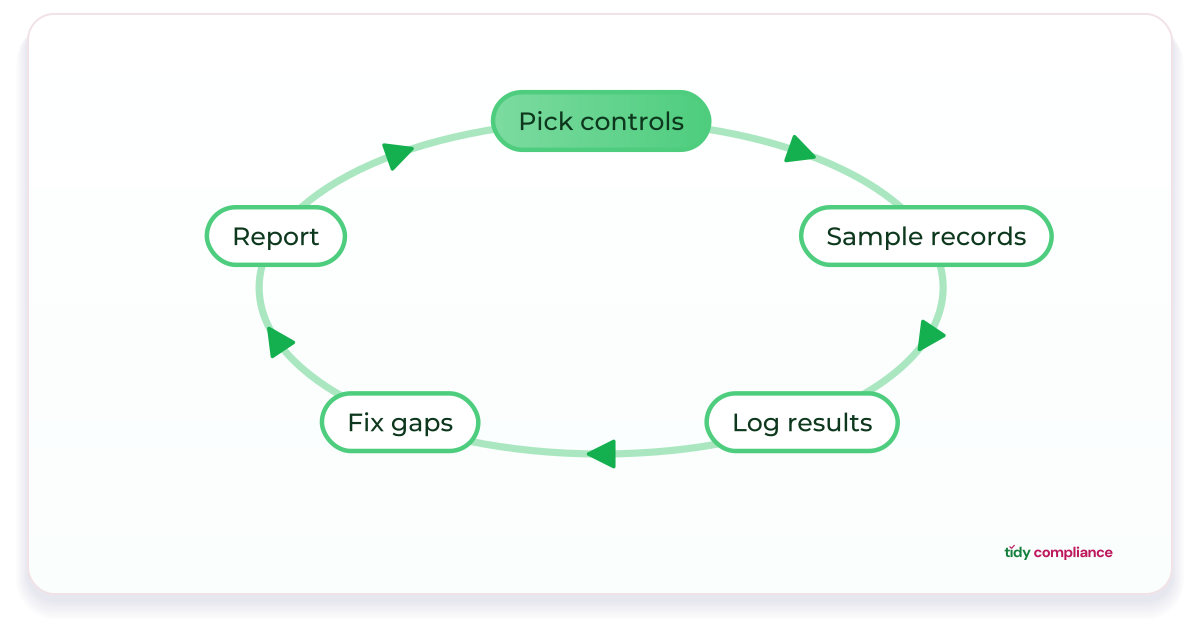
Testing closes the loop. Choose a few controls each quarter, check a sample against the policy and record what you found. The annual review then draws on the year's tests instead of on memory.
The Order I Use to Build a Program
People often start by downloading a policy manual. I recommend a different order, because a manual that does not match your firm is the most common reason programs fail.
- Inventory your firm: funds, people, service providers, systems and the main promises in your fund documents.
- Rank the risks by how likely and how costly each one is.
- Write the policies for the highest risks first, in plain language that matches how people work.
- Train people by role, with real examples from your deals.
- Test a sample of controls and fix what you find.
- Review everything once a year and after any major change.
The first step takes the longest and teaches the most. In my client work, firms are often surprised by how many service providers and data flows they have, and a rough map of them is a good start. The private equity compliance checklist turns this order into eleven concrete checks, and the private equity compliance framework gives you a model for deciding who does what.
Who Owns What
The chief compliance officer coordinates the program, and ownership of the controls sits with the people who run the work. The CFO owns fees, expenses and valuation inputs. The head of investor relations owns marketing approvals. The COO or head of operations owns cash controls and service providers. The managing partners own the tone, and they approve the exceptions.
A chief compliance officer without authority is a risk in itself. The role needs direct access to senior partners and the ability to say no. If the person in the role also has a full-time deal job, write down how they will protect time for compliance, and review that arrangement each year.
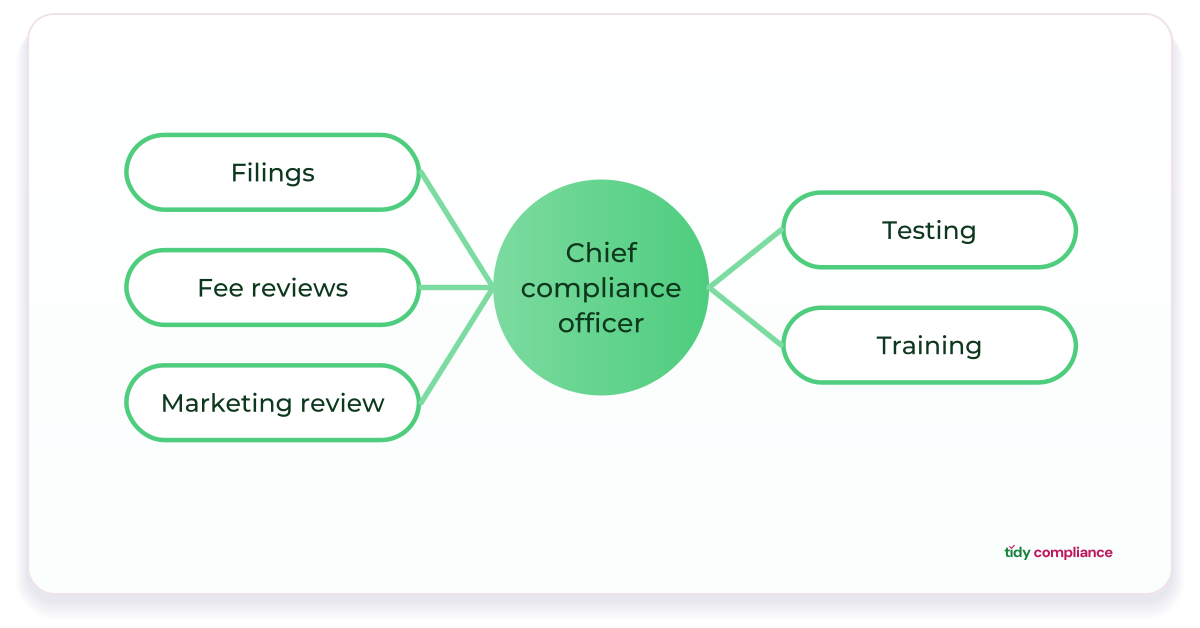
Outsourcing is a legitimate choice for smaller managers. An outside consultant can serve as chief compliance officer or support the person who holds the title. In either case, the firm remains responsible, so define the consultant's scope and keep the records on your side too.
How to Choose Where to Start
If your program is new, start with the risk inventory and the conflicts register. If you have policies, start with a gap review that compares what they say with what happens. If an examination or an investor review is coming, start with records and filings, because those are what people request first.
Whichever path you take, assign owners and dates to every open item, and put the annual review on the calendar now. Small steps on a schedule beat a big push that fades.
Questions About Private Equity Compliance
What Is Private Equity Compliance?
It is the set of policies, controls and records that a private equity firm uses to meet the rules that apply to it as an investment adviser and as a manager of private funds. It covers areas such as registration filings, conflicts of interest, marketing, custody, fees and expenses, trading by staff and recordkeeping.
Do All Private Equity Firms Have to Register with the SEC?
No. Registration depends on factors such as assets under management, the type of funds and available exemptions, and state rules can apply as well. Your counsel should confirm which regime covers your firm, and you can use that answer to scope the compliance program.
Do I Need a Chief Compliance Officer?
Registered advisers must have a written compliance program and a designated chief compliance officer. In smaller firms the role often sits with a partner or the COO, or it is outsourced to a consultant. Whoever holds the title needs the time, the authority and access to senior management.
How Long Does It Take to Build a Program from Scratch?
A first program for a small manager often takes a few months, depending on how many funds, people and service providers are involved. The bulk of the time goes into the risk inventory and the written policies. Training and testing continue after the first version is in place.
What Is the Most Common Weakness You See?
Fees and expenses allocation, and the gap between what the policy says and what staff really do. A policy that describes a process nobody follows is worse than no policy, because it is a written record of a failure.
Do Portfolio Companies Fall Under the Firm's Compliance Program?
The firm's own program covers the firm. Portfolio companies have their own obligations. Many firms still set minimum standards for portfolio companies, such as a security baseline and a reporting routine, because problems there become your problems at exit.
How Often Should the Program Be Reviewed?
Registered advisers have to review their policies and procedures at least annually. I also recommend a review after any major event, such as a new fund, a new service provider or a regulatory change that affects you.
Sources
Disclaimer: This article is for general information only and isn’t legal, financial or tax advice. Treat figures as estimates from typical work and confirm details with your providers before you act.
Was this guide helpful?
Thanks for your feedback.
Odessa Whitfield
Odessa leads the Tidy editorial team and works with the compliance consultants to turn real client projects into practical guides on regulations, frameworks, policies and audit preparation. Before joining Tidy, she worked in compliance and risk roles, writing and maintaining policy sets for regulated organizations. Every article goes through a consultant who has done the work in practice, and she updates guides when a rule, framework or tool changes. She works remotely from the United States.