Quick Summary
- Start with an inventory and your role for each item.
- Every point needs a dated record you can open in minutes.
- Re-screen against the Candidate List after every update and every supplier change.
- Run the full checklist yearly and log open items with dates.
A REACH checklist works when it follows how customers and inspectors really ask: what substances do you handle, what is your role, and where is the paper that proves it. I use the eleven points below at the start of every REACH compliance consulting project. Each point states what to have, what proof to keep and where companies usually slip.
Treat it as a working tool, not a certificate. If you are new to the regulation, read my REACH compliance guide first for the vocabulary, then use the table below to see the whole list.
The 11 Points at a Glance
| Point | What to have | Proof to keep |
|---|---|---|
| 1. Inventory | A list of all substances, mixtures and articles | Inventory with owners and date |
| 2. Roles | Your role for each item | Role notes per product |
| 3. Volumes | Annual quantities per substance | Volume log by calendar year |
| 4. Registration check | Registration status for each substance | Pre-registration or registration number records |
| 5. Safety data sheets | Current sheet for each hazardous item | Dated sheets in a controlled folder |
| 6. Use coverage | Confirmation your use is covered | Supplier statement or own assessment |
| 7. Candidate List screening | Check against the current list | Screening report with date |
| 8. Restrictions | Check against Annex XVII entries | Restriction check per product |
| 9. Authorisation list | Check against Annex XIV | Authorisation check and notes |
| 10. Communication | Replies to customers and consumers | Request log and templates |
| 11. Records and review | Retention rules and a calendar | Review minutes and owner list |
1. Build a Complete Inventory
List every substance, mixture and article you make, import, use or sell, with the supplier, trade name, CAS or EC number where known and the product it ends up in. Start from purchasing data and bills of materials, because memory misses items.
Add items from labs, maintenance and cleaning, which are often outside formal purchasing. The classic gap is a cleaning agent bought locally by a facility manager. Mark each entry with an owner who can answer questions.
- Purchasing and bill of materials data merged
- A named owner per item
- Last review date on the list
2. Record Your Role for Each Item
Write down whether you are a manufacturer, importer, downstream user, distributor or article producer for each item. The role decides every duty that follows. A company that imports a mixture from outside the EU and repacks it can hold two roles for the same product.
Keep a one-line justification. If an inspector or a customer asks why you treat an item as a downstream use, you should have a short answer ready.
3. Track Annual Volumes
Quantity thresholds drive registration and some other duties. Record tonnage per substance per calendar year, summed across your legal entity. For substances in mixtures, calculate the amount of each substance, not the mixture weight.
Where volumes sit close to the one-tonne limit, check the figure quarterly. A good year can push you over a threshold without anyone noticing. Reporting from ERP data is better than estimates.
4. Check the Registration Status of Every Substance
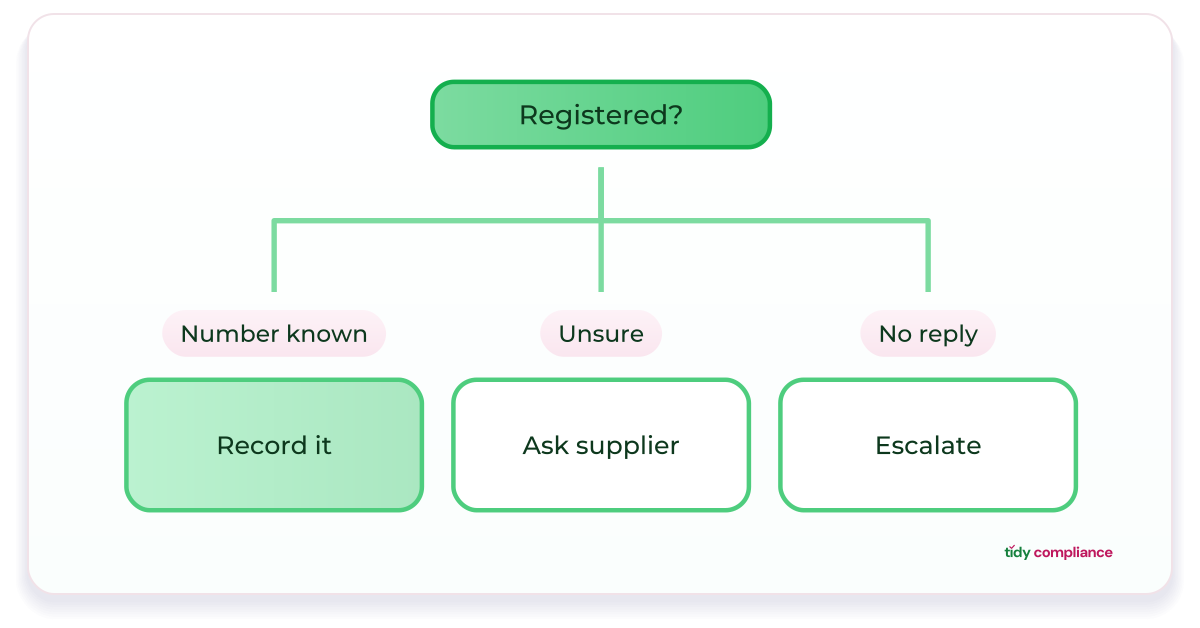
For each substance you make or import, confirm that it is registered, by you or by someone else with a valid route, and that the registration covers your volume and use. ECHA describes the process on its registration page. Keep the registration number on file.
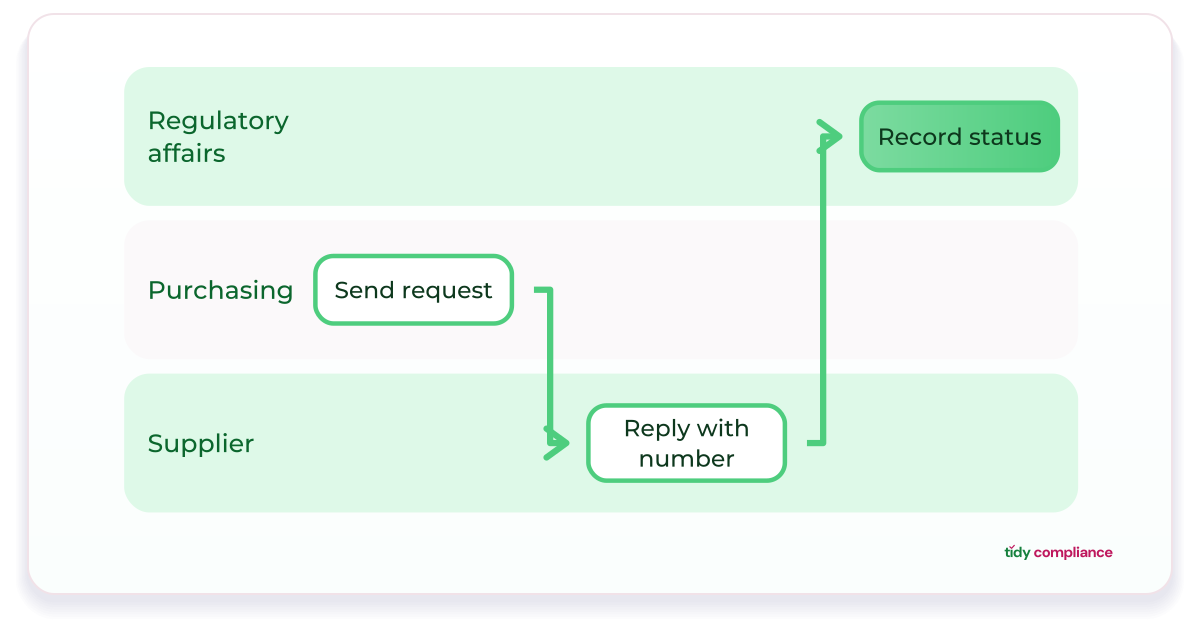
For substances you buy in the EU, ask the supplier for the number and the covered uses. If a supplier cannot confirm registration, treat the supply as a risk and look for an alternative while you ask more questions.
5. Keep Current Safety Data Sheets
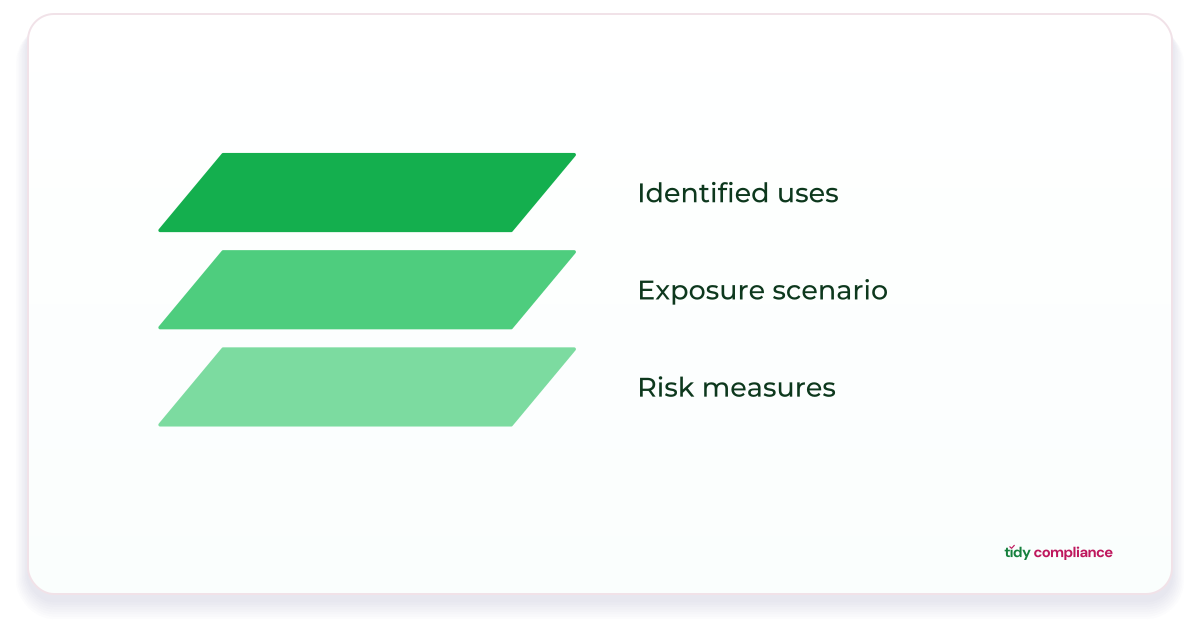
For every hazardous substance and mixture you buy, hold the supplier's current sheet. Check the version date, the sections on hazards, handling and exposure controls, and any attached exposure scenario. Store sheets in one controlled place and replace old versions as they arrive.
If you supply others, create your own sheet for mixtures that need one, and keep the revision history. Sheets with missing sections or outdated references are a classic finding in inspections.
6. Confirm That Your Use Is Covered
Compare your real use with the identified uses and exposure scenarios in the sheet. Check quantity, process, temperature, protective measures and disposal. If your use is not covered, you have three options: adapt your conditions, ask the supplier to add your use or assess the use yourself.
Record the decision. A short note per substance is enough. The note shows that you looked, and in an inspection that matters as much as the outcome.
7. Screen Against the Candidate List
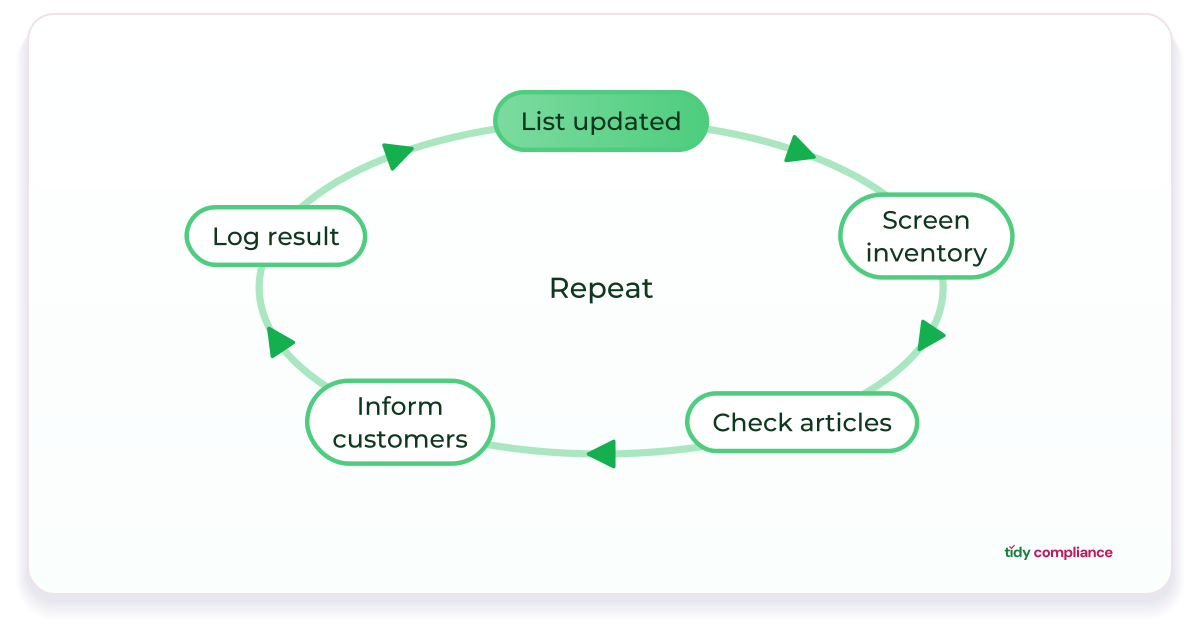
Check every substance and article component against the current Candidate List. Record the date and the result, including a note for items with a match. For articles, check whether any candidate substance exceeds 0.1 percent by weight.
Repeat after each update of the list and whenever you change a supplier or a part. The list changes regularly, so a screening report older than a year is out of date. Consider automating the check with your bill of materials data, an option covered in the REACH compliance software ranking.
8. Check Restrictions (Annex XVII)
Restrictions limit or ban the use of certain substances in certain products or applications. Check your products against the current entries, especially for consumer goods, textiles, toys and electronics. Keep the check as a short note per product family.
Restrictions can change, so tie this review to the same calendar as the Candidate List screening. Where a restriction applies to a supplier's part, ask for a statement of conformity.
9. Check the Authorisation List (Annex XIV)
If you or your suppliers use a substance on the authorisation list, the use needs an authorisation or an exemption. Check whether any of your substances appear and, if they do, who holds the authorisation and whether it covers your use. Plan alternatives early, because the process takes time.
10. Prepare Customer and Consumer Answers
Create standard replies for the questions you receive most: candidate substances above 0.1 percent, registration status, sheet availability and conformity statements. Log each request with date and answer. Consumers who ask about candidate substances in an article are entitled to a reply within 45 days.
Large buyers often send questionnaires with dozens of questions. A response library cuts the time from days to hours, and it keeps answers consistent between departments.
11. Keep Records and Review Yearly
Set retention rules for dossiers, sheets, screening results and correspondence, and keep them as long as the rules for your role require. Ask counsel to confirm the period for your records. Store documents so that more than one person can find them.
Hold a yearly review: inventory, roles, volumes, sheets, screening and open actions. Record minutes. That one meeting makes the rest of the program visible, and it is the first thing an auditor asks to see.
Who Owns Which Point
Checklists fail when everybody is responsible. Assign each point to a role, not just a person, and put a backup name beside it. The split below works for most mid-sized companies.
| Point | Lead role | Needs input from |
|---|---|---|
| Inventory and roles | Regulatory affairs or EHS | Purchasing, product development |
| Volumes | Supply chain or finance | Regulatory affairs |
| Registration and sheets | Regulatory affairs | Suppliers, quality |
| Screening and restrictions | Product compliance | Engineering, purchasing |
| Customer answers | Customer service or sales | Regulatory affairs |
| Records and review | Quality manager | All of the above |
In smaller firms one person holds several roles. That works as long as purchasing is part of the loop, because most REACH surprises arrive through a supplier change that compliance never saw.
What a Good Screening Note Looks Like
Auditors and customers care less about the format than about completeness. A screening note for one product family should fit on a page and answer six questions: which product, which components, which list version, what was found, who checked and when. If a candidate substance was found, add the amount, the supplier statement and what you told customers.
Keep notes short and written in the same words every time. When the next review comes around, you can compare notes and see what changed. A good note also shows what you decided to do about each finding, such as asking the supplier for an alternative or telling customers.
Questions Customers Ask Most Often
Large buyers send similar questionnaires. If you can answer these six from your files in an afternoon, your checklist works.
| Question | Answer comes from | Point |
|---|---|---|
| Does any part contain candidate substances above 0.1 percent? | Screening report and supplier statements | 7 |
| Are all substances registered where required? | Registration list and numbers | 4 |
| Can you provide current safety data sheets? | Sheet folder | 5 |
| Do restrictions apply to your products? | Restriction check notes | 8 |
| Who is your contact for chemical regulation? | Owner list | 11 |
| How do you handle supplier changes? | Supplier approval procedure | 10 |
The last question is where many companies stumble, because the honest answer is that they do not. A one-page procedure that links purchasing to compliance turns a weak answer into a strong one. It also reduces the number of surprises during the year, since every new part or supplier passes a short screening before it enters production.
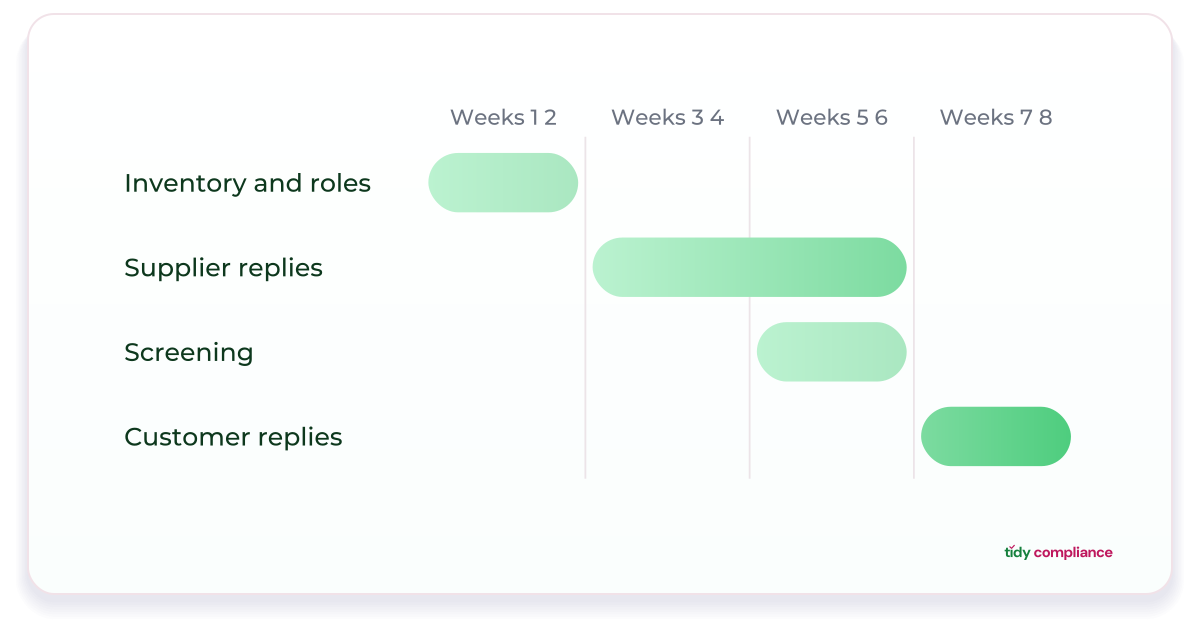
A 60-Day Order of Work
| Weeks | Focus | Result you can show |
|---|---|---|
| 1 to 2 | Inventory, roles and volumes | Inventory with role and tonnage per item |
| 3 to 4 | Sheets and registration status | Sheet folder and registration list |
| 5 to 6 | Candidate List, restrictions and authorisation screening | Dated screening report |
| 7 to 8 | Customer replies, records and review calendar | Reply library and review minutes |
Expect supplier delays in weeks three to six. Send requests early and give someone the job of chasing replies.
Using the Checklist Honestly
A checklist can create false comfort when every box is ticked on paper. Ask for proof next to each point and have someone outside the team spot check three items a year. Where proof is missing, the item counts as open. If you want to know the price of closing the gaps, my guide to REACH compliance cost sets out the main cost drivers.
- Each point has a named owner
- Each point has a dated record you can open in under two minutes
- Open items are in an action list with dates
Sources
ECHA: Understanding REACH, ECHA: Registration, ECHA: Candidate List of substances of very high concern.
Questions About the REACH Compliance Checklist
What Should a REACH Compliance Checklist Include?
An inventory, your role per item, volumes, registration status, safety data sheets, use coverage, Candidate List screening, restriction and authorisation checks, customer answers and a records and review routine.
How Often Should I Run the Checklist?
Review the full list once a year, and repeat the screening steps after each update of the Candidate List, after any supplier change and when you add products.
Who Should Own the Checklist?
One accountable person, often in regulatory affairs, quality or EHS, with a named contact in purchasing and product development. Without purchasing involved, supplier changes slip through.
Do I Need to Check Articles as Well as Chemicals?
Yes. Articles can contain candidate substances or restricted substances. Screen parts and finished goods, and communicate when a candidate substance exceeds 0.1 percent by weight.
What If a Supplier Will Not Answer?
Escalate through purchasing, set a deadline and document the attempts. If the data stays missing, look for an alternative supplier and record your risk decision.
What Proof Will an Inspector or Customer Want?
Usually your inventory, current safety data sheets, registration numbers, screening reports and logs of customer replies. Dated records are far more convincing than statements.
Is the Checklist Enough to Be Compliant?
It is a structured start. Compliance depends on the facts of your products and your role, so ask your counsel to confirm the points that carry legal risk.
Disclaimer: This article is general information about a regulation and is not legal advice. Duties depend on your role, your substances and your volumes, and the rules and fees change, so check current details with ECHA and your counsel before you decide.
Was this guide helpful?
Thanks for your feedback.
Odessa Whitfield
Odessa leads the Tidy editorial team and works with the compliance consultants to turn real client projects into practical guides on regulations, frameworks, policies and audit preparation. Before joining Tidy, she worked in compliance and risk roles, writing and maintaining policy sets for regulated organizations. Every article goes through a consultant who has done the work in practice, and she updates guides when a rule, framework or tool changes. She works remotely from the United States.