Quick Summary
- REACH applies to makers, importers, users and sellers of substances, including some articles.
- Your role and annual volume decide which duties you carry.
- Safety data sheets and Candidate List screening are the most frequent day-to-day duties.
- Put REACH screening into supplier approval to catch problems early.
REACH is the European Union regulation on the Registration, Evaluation, Authorisation and Restriction of Chemicals. It applies to anyone who makes, imports, uses or sells chemical substances in the EU, which is a far larger group than the word "chemical company" suggests. A furniture maker, an electronics importer and a cosmetics brand all have duties. If you want a partner to map yours, REACH compliance consulting starts with exactly that.
This guide explains how REACH works, which role you probably hold, what each duty means in practice and where companies slip. I keep to what the regulation says and point you to the European Chemicals Agency (ECHA) for current details, because lists, fees and guidance change.
What REACH Is and Why It Reaches You
REACH puts the burden of proof on industry. Companies must collect data on the hazards of the substances they handle, assess the risks, and pass safety information along the supply chain. The regulation is administered by ECHA, which describes the basics on its Understanding REACH page. The famous principle is "no data, no market": a substance that needs registration cannot be placed on the EU market without it.
The regulation covers substances on their own, in mixtures and, in some cases, in articles. An article is an object whose shape matters more than its chemistry, such as a chair, a cable or a toy. Articles are not registered in most cases, but they can still trigger duties if they contain certain hazardous substances.
The Four Processes in Plain Language
| Process | What it means | Who feels it |
|---|---|---|
| Registration | Submit a dossier on the substance to ECHA before you make or import it in quantities of one tonne or more per year | Manufacturers and importers |
| Evaluation | ECHA and EU member states check dossiers and may ask for more data | Registrants |
| Authorisation | Substances of very high concern on the authorisation list need approval for each use | Users and suppliers of those substances |
| Restriction | Some uses of some substances are limited or banned (Annex XVII) | Everyone who makes or sells affected products |
Registration gets the headlines, but restrictions and the candidate list catch more companies. A part you buy from a supplier can contain a restricted substance without your knowing, and the duty to comply sits with you as the party that places the product on the market.
Find Your Role First
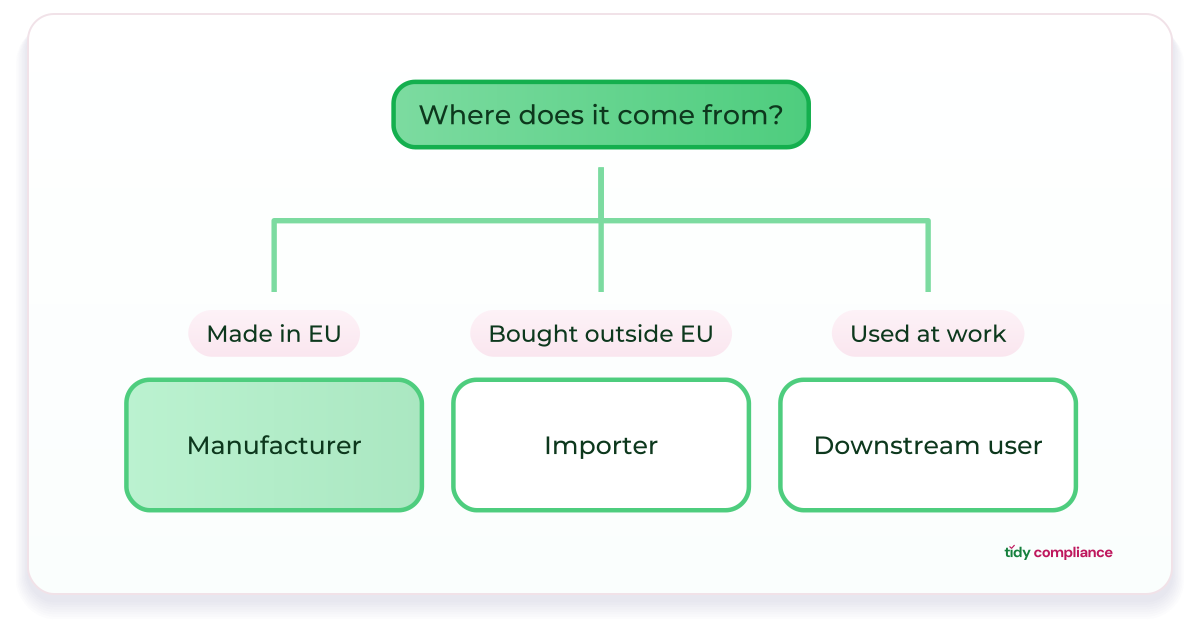
Everything in REACH depends on your role. Roles are tied to what you do with a substance, not to your industry, and one company can hold several roles for different products.
| Role | Short definition | Main duties |
|---|---|---|
| Manufacturer | Makes a substance in the EU | Register, classify and label, supply safety data sheets |
| Importer | Brings a substance, mixture or article from outside the EU | Register substances, check supplier data, notify certain substances in articles |
| Downstream user | Uses a substance in business activity other than making it | Read the sheet, apply risk measures, pass on information, report new uses |
| Distributor | Stores and sells a substance to others | Pass on safety information and keep it with the goods |
| Article producer or importer | Makes or imports objects | Check for candidate list substances, inform recipients and consumers when required |
Companies outside the EU cannot register directly as importers, but a non-EU manufacturer can appoint an only representative in the EU to handle registration duties for the importers it supplies. Whether that route fits you is a business and legal choice.
Registration: Who, When and What It Involves
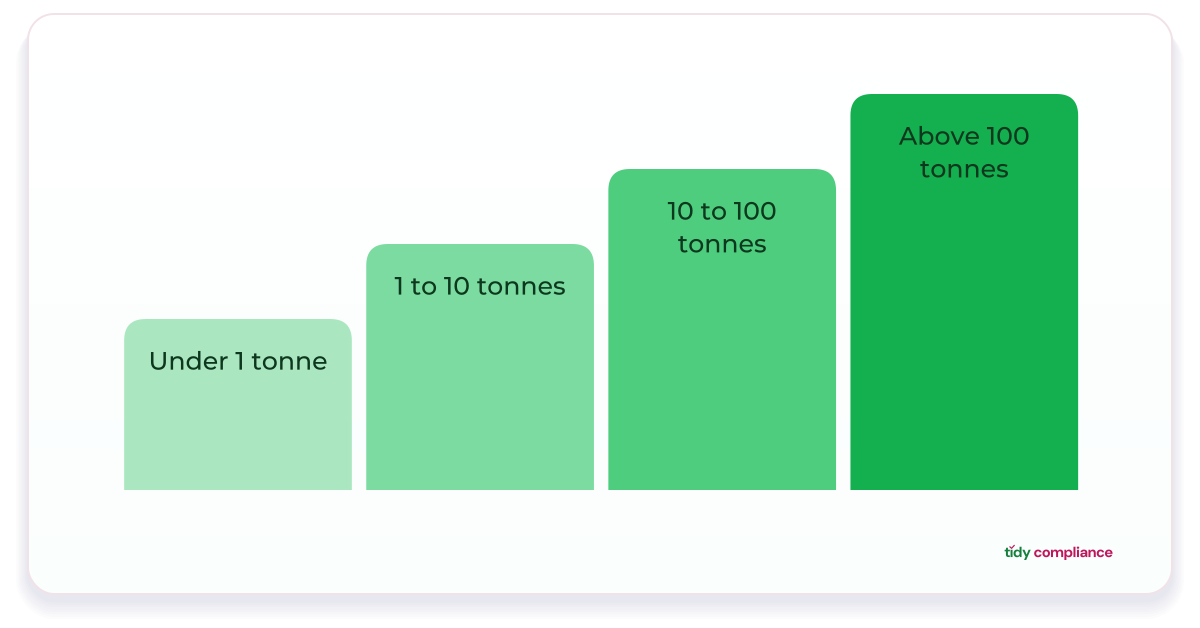
Registration applies per substance and per legal entity once volumes reach one tonne a year. ECHA explains on its registration page that the dossier covers uses, physicochemical, toxicological and ecotoxicological properties and a hazard and risk assessment, submitted in IUCLID format through REACH-IT. If other companies register the same substance, you must register jointly with them.
The data requirements grow with volume. Registration usually carries a fee that depends on your tonnage band and company size, and it needs real data. Where studies are missing, companies share existing studies and cost with other registrants, which is why cost sharing and joint submission matter. My breakdown of REACH compliance cost shows where the money goes.
Safety Data Sheets and Supply Chain Communication
Suppliers must provide a safety data sheet for hazardous substances and mixtures, and for certain other cases. The sheet has a fixed structure of 16 sections, with identification, hazards, handling, exposure controls and disposal. For substances registered at ten tonnes a year or more with certain hazards, the sheet carries exposure scenarios that describe safe conditions of use.
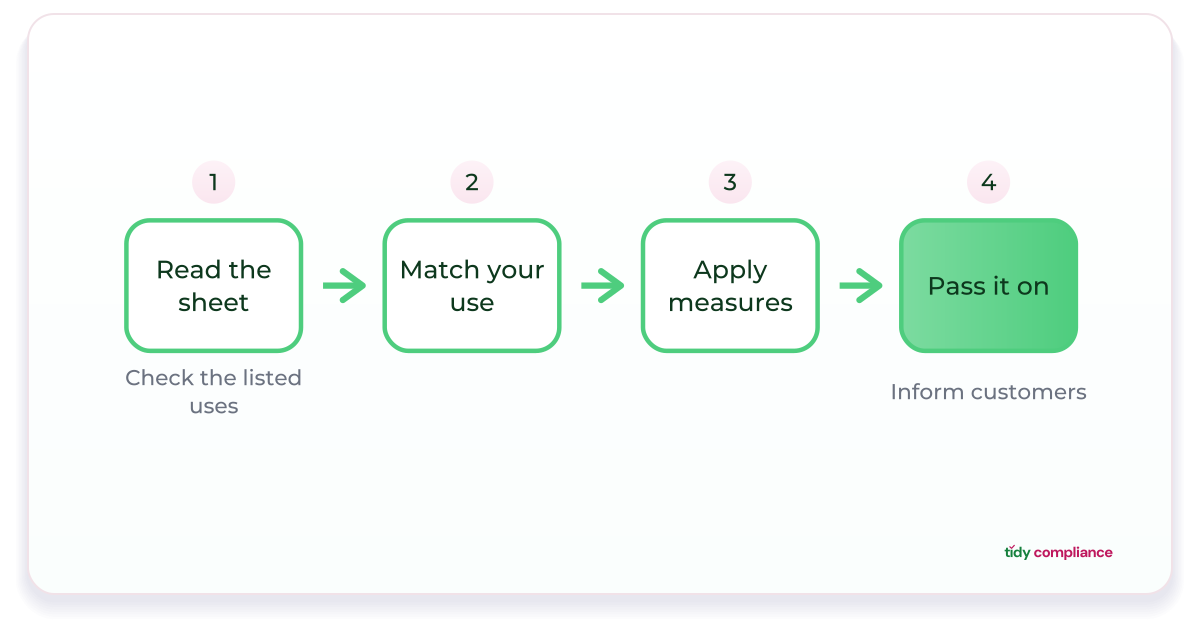
As a downstream user, read the sheet against your real use. If your process, quantity or protective measures are outside the exposure scenario, you have to adapt, ask your supplier to cover the use or carry out your own assessment. Keep each sheet dated, and replace it when the supplier updates it. Good record habits are what the REACH compliance checklist builds.
Substances of Very High Concern and the Candidate List
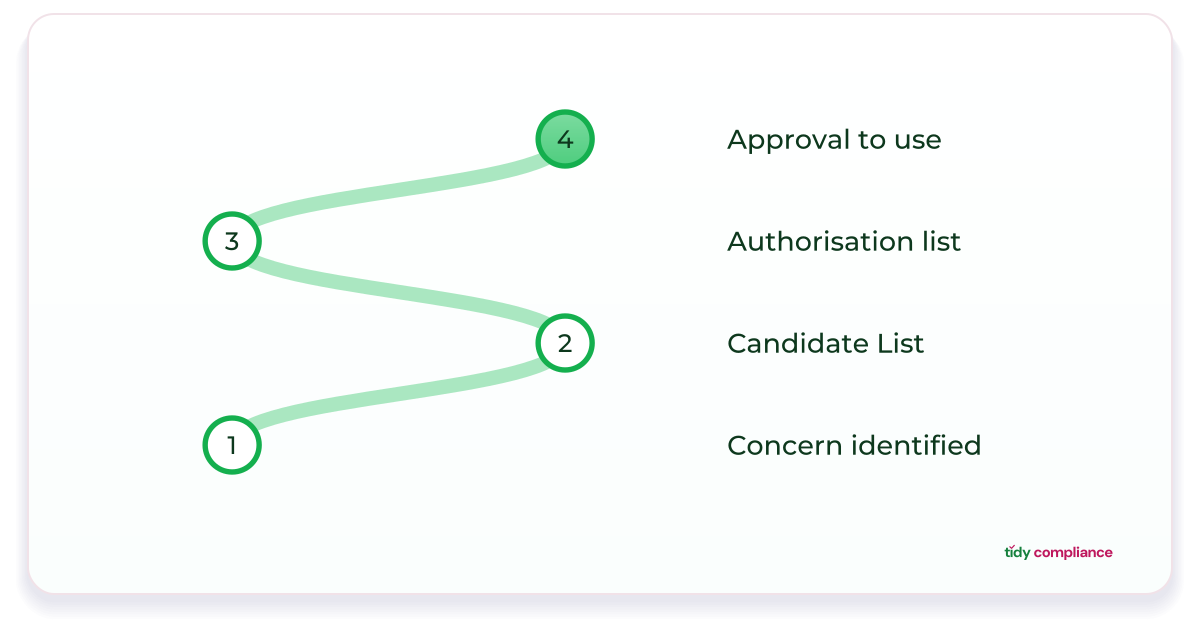
Substances of very high concern, known as SVHCs, are substances with serious hazards, for example those that are carcinogenic, toxic to reproduction or persistent and bioaccumulative. When ECHA identifies one, it enters the Candidate List, which is updated regularly. Entry triggers duties straight away: suppliers must inform customers, and article producers must communicate when a candidate substance exceeds 0.1 percent by weight in an article.
Consumers can also ask for information about candidate substances in a product and must receive an answer within 45 days. Articles containing candidate substances above the threshold also lead to a notification in ECHA's SCIP database under waste rules. Some candidate substances later move to the authorisation list, where use needs approval.
How REACH Fits With Other Chemical Rules
REACH rarely stands alone. The CLP regulation covers classification, labeling and packaging of substances and mixtures, and its hazard classes feed directly into the safety data sheet. Workplace chemical rules cover how your staff handle products day to day. Product rules, such as those for electronics, toys or cosmetics, can add their own substance limits on top of REACH restrictions.
The practical effect is that one inventory should serve several programs. If you record substance identity, supplier, volume, hazard class and use once, you can answer REACH, labeling, workplace and customer questions from the same file. Companies that keep separate lists for each rule end up with conflicting versions and a lot of duplicate work.
If you also operate in Great Britain, remember that it runs its own regime with separate registration and lists. Keep a column in your inventory for the market each product goes to, so you can screen against the right rules.
Enforcement and What Inspectors Look At
REACH is enforced by national authorities in each EU member state, and penalties are set nationally. That means the same gap can lead to different consequences in different countries. ECHA coordinates and publishes guidance, and enforcement projects often focus on a single topic, such as safety data sheet quality, restricted substances in imported goods or registration status.
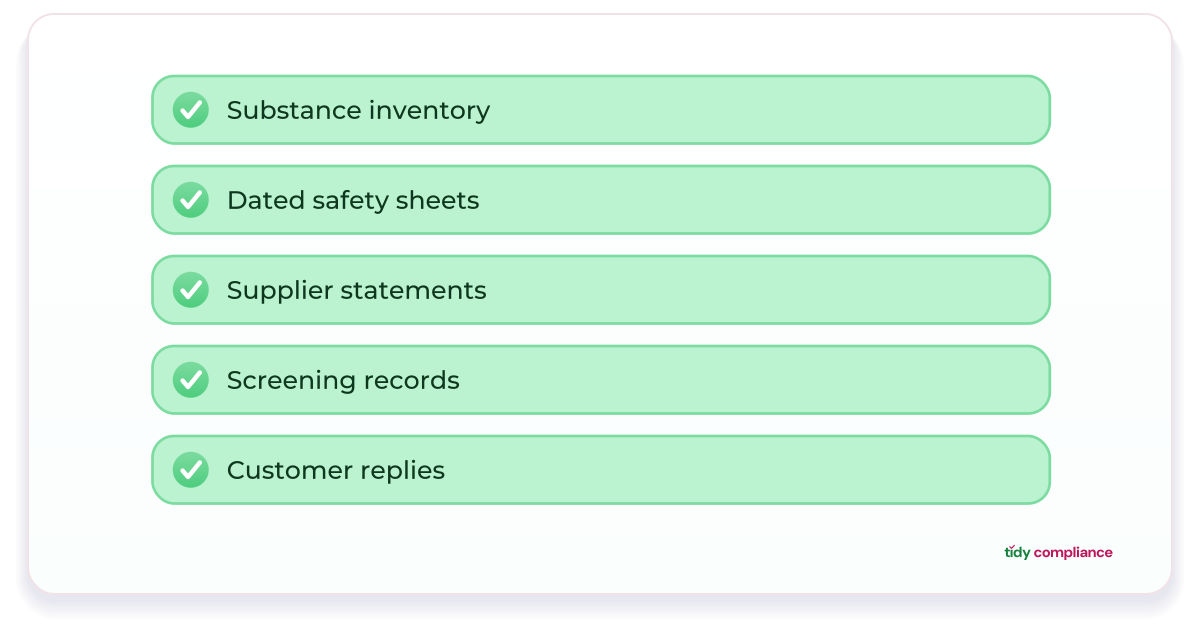
In practice, an inspection or a customer audit starts with documents. Expect to be asked for your inventory, your role per product, registration numbers, current sheets and your screening records. Being able to produce them quickly is half the battle. A missing record is usually treated as a missing process.
Downstream Users: Duties in Detail
If you buy and use chemicals rather than make them, your duties are lighter but real. Read every sheet for your uses, apply the risk management measures it names and pass relevant information to your own customers. If you use a substance in a way your supplier did not foresee, tell the supplier so it can consider covering the use.
Downstream users also carry duties if they hold substances on the authorisation list, or if their uses fall under an exposure scenario with conditions they cannot meet. In those cases, you either change the conditions, find another supplier or prepare your own assessment. Document the decision, even when the answer is that nothing changes.
| Situation | What to do | Record to keep |
|---|---|---|
| Sheet covers your use | Apply the measures named in the sheet | Sheet and use confirmation note |
| Sheet does not cover your use | Ask the supplier, adapt the use or assess it yourself | Request and reply, or own assessment |
| Supplier cannot confirm registration | Escalate, look for alternatives | Correspondence and risk decision |
| New customer asks about SVHCs | Use the screening report and reply template | Request log entry |
A Practical Way to Start
If you are starting from zero, begin with the inventory and build outwards. Five steps cover most of the ground, and each produces a file you can show.
- List every substance, mixture and article you make, import, use or sell
- Record your role and annual volume for each
- Collect current safety data sheets and supplier statements
- Screen against the Candidate List, restrictions and the authorisation list
- Set a review calendar and name an owner
Software helps keep the data current once the process exists, and the best REACH compliance software article compares the main options. A consultant can run the first pass and leave you with files and routines.
Where Companies Slip
| Slip | Why it happens | Fix |
|---|---|---|
| Role never recorded | Nobody asked what the company does with each substance | Add role and volume to the inventory |
| Sheets out of date | Documents were saved once and never refreshed | Date every sheet and review on a schedule |
| Articles ignored | Teams assume REACH is only for chemicals | Screen parts and finished goods for candidate substances |
| Supplier silence | Requests are vague and go unanswered | Use short, specific requests and track replies |
One pattern I see often in client work is the supplier change. A purchasing decision swaps one component for a cheaper one, and the new part contains a candidate substance. Nobody in compliance hears about it until a customer asks. Put REACH screening into the supplier approval step, and the problem mostly disappears.
Sources
ECHA: Understanding REACH, ECHA: Registration, ECHA: Candidate List of substances of very high concern.
Questions About REACH Compliance
What Is REACH Compliance?
REACH compliance means meeting your duties under the EU regulation on chemicals. Depending on your role, that includes registering substances, passing on safety information, screening for substances of very high concern and respecting restrictions.
Does REACH Apply to Companies Outside the EU?
The regulation applies to the EU market. Non-EU companies that export into the EU usually meet their duties through their importers or an only representative. Check the setup with your counsel.
What Is the Difference Between a Substance and an Article Under REACH?
A substance is a chemical element or compound. An article is an object whose shape or design matters more than its chemistry, such as a chair or a cable. The duties differ, and articles mostly raise questions about SVHCs and restrictions.
What Is an SVHC?
A substance of very high concern, for example one that is carcinogenic, toxic to reproduction or persistent and bioaccumulative. SVHCs identified by ECHA go on the Candidate List and trigger communication duties.
When Do I Have to Register a Substance?
When you manufacture or import it in quantities of one tonne or more per year, unless an exemption applies. Check ECHA guidance for your substance and volume.
What Is a Safety Data Sheet and Who Must Provide One?
A 16-section document that describes hazards, safe handling and disposal. Suppliers must provide one for hazardous substances and mixtures and in some other cases. Downstream users must read it against their own use.
Is UK REACH the Same as EU REACH?
No. Great Britain runs its own regime. If you sell in both markets, check each regime separately and ask your counsel which duties apply to you.
Disclaimer: This article is general information about a regulation and is not legal advice. Duties depend on your role, your substances and your volumes, and the rules and fees change, so check current details with ECHA and your counsel before you decide.
Was this guide helpful?
Thanks for your feedback.
Odessa Whitfield
Odessa leads the Tidy editorial team and works with the compliance consultants to turn real client projects into practical guides on regulations, frameworks, policies and audit preparation. Before joining Tidy, she worked in compliance and risk roles, writing and maintaining policy sets for regulated organizations. Every article goes through a consultant who has done the work in practice, and she updates guides when a rule, framework or tool changes. She works remotely from the United States.