Quick Summary
- REACH cost depends on your role, tonnage and data gaps more than on company size.
- Missing data and data sharing often cost more than the registration fee.
- Budget one-off and recurring costs separately.
- An inventory first shows which costs you need at all.
REACH compliance cost depends on what you do with each substance, not on your company size alone. A trading firm that only passes on safety data sheets pays mostly in staff time. A manufacturer that must register a substance pays fees, studies and sometimes consultants. If you are budgeting, REACH compliance consulting can scope your case before you commit.
I do not publish fixed euro figures for registration, because ECHA fees depend on tonnage band and company size and change, and study costs vary widely by substance. Instead I show you the cost model, a worked example with placeholders you replace and the questions to ask for quotes.
What Drives REACH Compliance Cost
| Cost driver | What is included | How it scales |
|---|---|---|
| Registration fees | Paid to ECHA per registration | Depends on tonnage band and company size; ECHA publishes the schedule |
| Data and studies | Test data missing from your dossier | Depends on hazards, volume and what is already available |
| Joint submission and data sharing | Your share of existing studies and the lead registrant work | Depends on the number of registrants and agreements |
| Dossier preparation | Writing and submitting the dossier and assessment | Hours of specialist work, internal or external |
| Safety data sheets and labels | Authoring and updating for your mixtures | Number of products and languages |
| Screening and supplier data | Candidate List checks, supplier requests, customer answers | Number of parts, suppliers and requests |
| Software and staff time | Tools plus the people running the process | Size of range and review frequency |
The first row is the one people ask about, yet in my experience the biggest swing is the data row. A substance with a full set of existing studies costs very little to add to. A substance with gaps can cost many times more, and the cost lands before you sell a single unit.
Registration Fees and How to Find Yours
ECHA states that in most cases you have to pay a registration fee, and the amounts are set in an EU fee regulation. They vary by tonnage band and by whether you are a micro, small, medium or large enterprise, with reductions for smaller companies. Look up the current schedule on the ECHA site before you budget, as amounts and rules are revised from time to time. See ECHA: Registration.
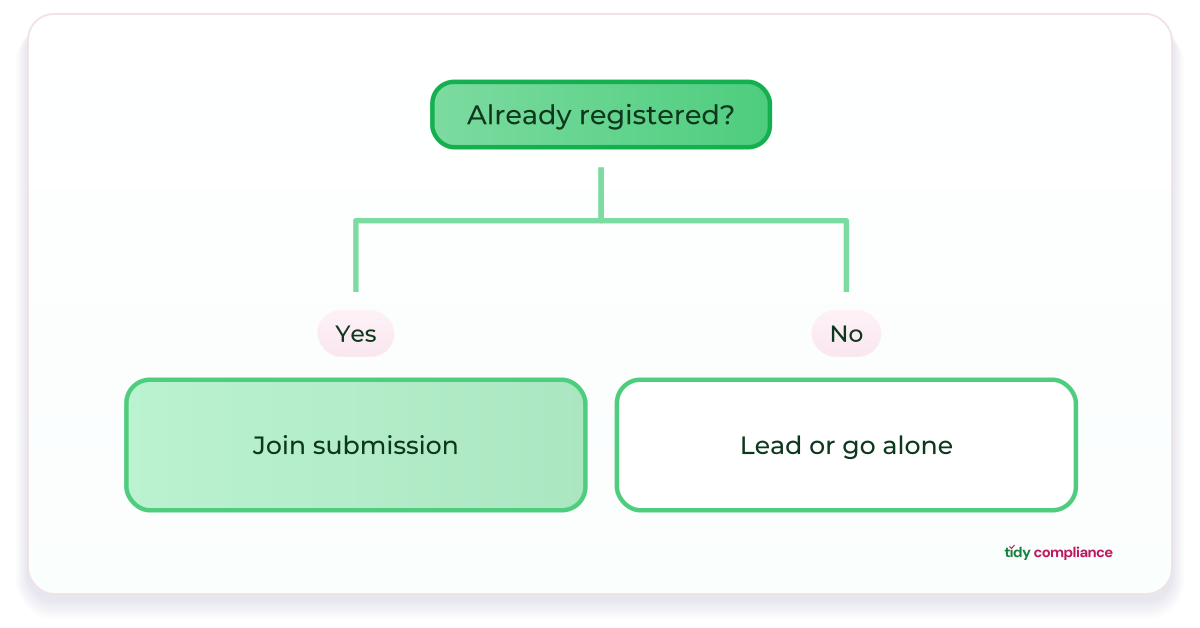
Joint submission matters here. When a substance is already registered by others, you join the existing registration, usually paying a share to the lead registrant for data access plus your own fee. That share is negotiated, so ask for the formula early.
A Simple Formula for Your Budget
Use one line per substance and add the lines. This keeps estimates honest, because you see which substances carry most of the cost.
Cost per substance = registration fee + data access share + new studies + dossier work + yearly upkeep
For items that are not registered by you, replace the first four terms with the cost of sheet handling, supplier requests and screening. Add the software and staff time once at the portfolio level.
- Registration fee from the current ECHA schedule for your band and company size
- Data access share from the lead registrant proposal
- New studies from lab quotes, only if data is missing
- Dossier work in internal hours or a consultant quote
- Yearly upkeep for updates and checks
A Worked Example With Placeholders
Take a mid-sized importer with 40 substances. Twelve are registered by suppliers in the EU, so the importer only needs sheets and checks. Five are imported directly and need registration. The rest are mixtures without separate registration.
| Line | Quantity | Unit cost (replace with your quote) | Subtotal |
|---|---|---|---|
| Registration fees | 5 substances | Fee for your band | 5 x fee |
| Data access shares | 5 substances | Lead registrant quote | 5 x share |
| New studies | 1 substance with gaps | Lab quote | 1 x study cost |
| Dossier work | 5 substances | Hours x internal rate or consultant quote | 5 x hours |
| Sheet and screening upkeep | 40 items | Hours per item per year x rate | 40 x hours |
| Software | 1 portfolio | Annual subscription | 1 x price |
The point of the example is the shape. Five direct imports drive the one-off cost, while 40 items drive the yearly upkeep. If your company has many items and few registrations, your spending is mostly recurring. If it has few items and many registrations, you carry a large one-off cost and a smaller routine.
What Outside Help Costs and When It Pays
Consultants price by scope: a gap assessment, a records build, dossier support or an ongoing retainer. A fixed quote after a short scoping call keeps surprises down. Ask what is included, who does the dossier work and what happens if a study is needed.
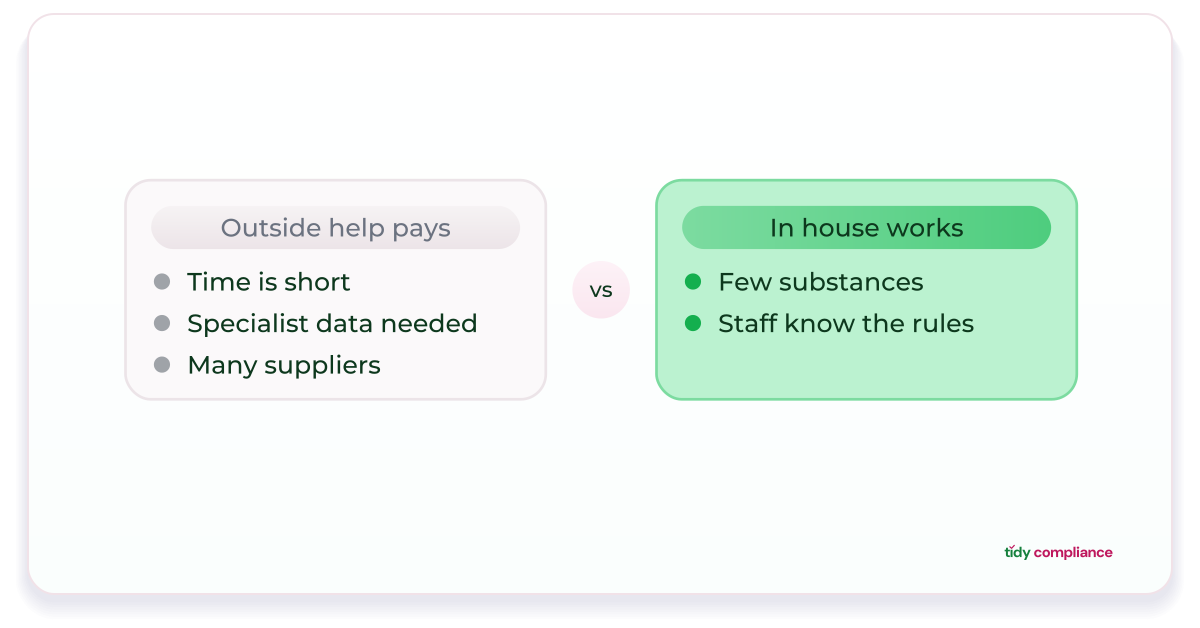
Outside help pays when you lack time or specialist knowledge, when a large customer demands proof by a date or when a restriction or a candidate substance hits a product line. It pays less when you only need a yearly screening, which software or a trained employee can handle. The REACH compliance software article shows which tools fit which budget, and the REACH compliance guide explains the duties behind each line.
How the Bill Looks by Company Type
The same regulation produces very different budgets. These profiles show where the money usually goes. They describe patterns, not prices, so replace the descriptions with your own quotes.
| Company type | Main cost | Secondary cost | Often avoidable |
|---|---|---|---|
| Chemical manufacturer | Registration fees, studies and dossier work | Sheets for many mixtures, evaluation requests | Repeated studies, if data sharing is used early |
| Importer of substances | Fees and data access shares | Only representative contracts, sheets | Late discovery of threshold crossings |
| Formulator or downstream user | Sheet review and supplier requests | Use coverage assessments | Rework when suppliers change without notice |
| Article producer or importer | Screening and supplier statements | Customer questionnaires | Duplicate checks across product lines |
| Distributor | Sheet management and communication | Training for sales staff | Handling the same request many times |
Notice that only the first two rows face registration cost at scale. For article producers and distributors, the work is mostly information management, and that is where software and clear routines save money.
Costs That Surprise People
Before the list, one observation from client work: the companies with the smoothest budgets name one owner for the whole program early. When ownership is split between purchasing, quality and legal, costs get duplicated and nobody sees the total.
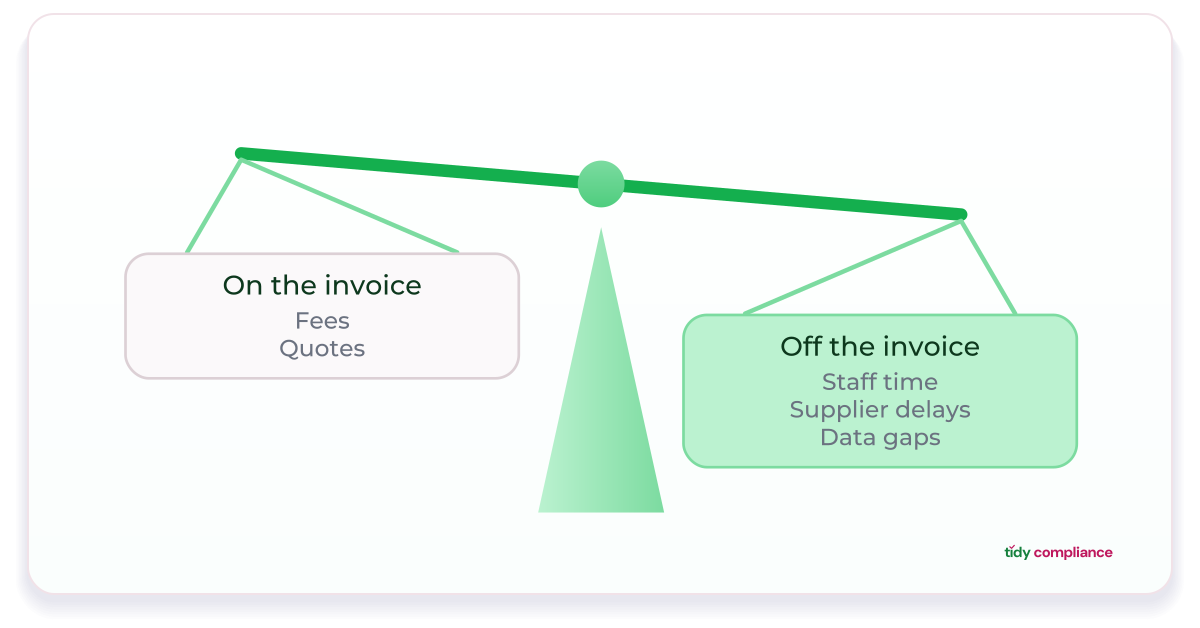
Four items catch companies off guard. First, time: supplier replies take weeks, and staff hours add up even when the euro amounts look small. Second, change: a new classification or a new Candidate List entry means rework on sheets and statements you thought were finished. Third, translation: sheets and labels must be in the languages of the countries you sell in. Fourth, lost sales: when a customer needs a statement by a certain date and you cannot provide it, the cost is the order.
None of these appears on a fee schedule, so add a contingency line. I suggest you add a margin to the upkeep estimate, because the first year of a program is always more work than the second.
How to Ask for Quotes That Compare
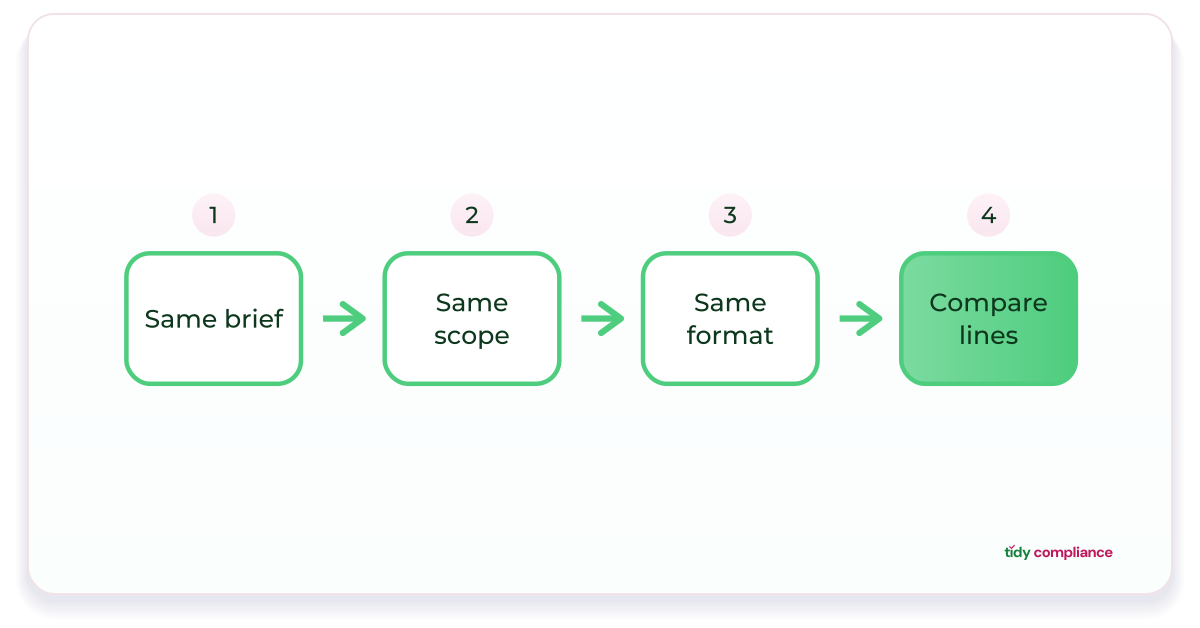
Quotes are easy to compare when the brief is the same, and almost impossible when each provider guesses your scope. Spend an hour on the brief and you save days of back and forth.
Send every provider the same one-page brief: your list of substances with volumes and roles, the markets you sell into and what you already have on file. Ask each for a fixed price, a description of what it includes, how many hours it assumes and what happens if more data is needed. Quotes that differ by a factor of three usually differ in scope.
- Ask which items are registrations and which are checks
- Ask who owns the dossier and the data after the project
- Ask how long the work takes and what you must provide
- Ask what is charged if a new study turns out to be needed
How Spending Spreads Over Three Years
Most programs follow the same curve. Year one carries the set-up: inventory, templates, supplier channels and any registrations. Year two is lighter, because the routines exist and mostly need updating. Year three is a steady state with the yearly review, the Candidate List screenings and customer answers.
| Year | Typical focus | Cost pattern |
|---|---|---|
| 1 | Inventory, registrations, templates, first sheet review | Highest, mostly one-off |
| 2 | Updates, supplier tracking, customer answers | Lower, mostly recurring |
| 3 and after | Yearly review and list screening | Low and steady, unless products or rules change |
When you review your spending, split it into three buckets: money paid to authorities and other registrants, money paid to specialists and the hours of your own staff. Finance teams tend to see only the first two, so the third needs a note in the budget. Staff time is where many programs run over, and it is also the easiest cost to reduce through templates and clear ownership.
New products restart the curve for their own items. That is why growing companies should keep a small standing budget for compliance work on launches, rather than treating each launch as a surprise.
Ways to Keep the Bill Down
| Move | Effect | Trade-off |
|---|---|---|
| Buy from registered EU suppliers | You avoid direct registration | Less control over price and sourcing |
| Use an only representative for non-EU suppliers | Registration handled by the representative | Fees and contract terms need checking |
| Join existing registrations early | Lower data cost through sharing | Negotiation time with lead registrant |
| Standardize supplier requests | Fewer hours per item | Needs an upfront template |
| Review volumes quarterly | No surprise threshold crossings | A recurring task for someone |
Do not cut the checklist itself to save money. The REACH compliance checklist costs little to run and catches the gaps that become expensive later.
Sources
ECHA: Understanding REACH, ECHA: Registration.
Questions About REACH Compliance Costs
How Much Does REACH Registration Cost?
It depends on the tonnage band, your company size and the data you need. ECHA publishes the fee schedule, and data access or new studies often exceed the fee itself. Get the current schedule and a written cost-sharing proposal before you budget.
Do Small Companies Pay Less?
Reduced fees apply to micro, small and medium enterprises under the fee rules. Check the current schedule and the conditions for claiming a reduction.
What Is a Letter of Access?
A permission to refer to studies held by another registrant, usually bought for a share of the original cost. It is one way to avoid repeating animal and lab testing.
Can I Avoid Registration Costs?
Sometimes. If a supplier in the EU registers the substance, or you use an only representative route, the duty sits elsewhere. Whether that works depends on your role, so confirm with your counsel.
Is a Consultant Cheaper than Doing It In-House?
For a first-time project, often yes, because specialists work faster. For yearly upkeep, a trained employee with the right tools can be cheaper. Compare fixed quotes against your internal hours.
What Recurring Costs Should I Plan For?
Updated safety data sheets, Candidate List screening, supplier requests, customer answers, software and staff time. These continue every year even if you never register anything.
What Happens If I Do Not Budget for REACH?
Costs show up later and in a hurry: a customer deadline, a product that cannot be sold or an inspection finding. Rush work costs more than planned work.
Disclaimer: This article is general information about a regulation and is not legal advice. Duties depend on your role, your substances and your volumes, and the rules and fees change, so check current details with ECHA and your counsel before you decide.
Was this guide helpful?
Thanks for your feedback.
Odessa Whitfield
Odessa leads the Tidy editorial team and works with the compliance consultants to turn real client projects into practical guides on regulations, frameworks, policies and audit preparation. Before joining Tidy, she worked in compliance and risk roles, writing and maintaining policy sets for regulated organizations. Every article goes through a consultant who has done the work in practice, and she updates guides when a rule, framework or tool changes. She works remotely from the United States.