Quick Summary
- A good audit follows five phases: scope, document review, site walk, findings and corrective action.
- Records and the site often disagree, and that mismatch is where most findings come from.
- Rank every finding by risk and give each one an owner and a date, or the report becomes shelf material.
- Ask your counsel how to handle findings that might trigger a reporting duty before you write them down.
Most environmental problems I find in audits are ordinary. A permit condition nobody read, a waste label that faded, a monitoring log with a two-month gap. They are cheap to fix when you find them yourself and expensive when an inspector does. Doing that well is a core part of environmental compliance consulting, and the method below is the one I use with clients.
The method works for a single plant or a chain of sites. It is general guidance and not legal advice, so confirm the requirements that apply to your operations with a qualified adviser.
The Five Phases in One Table
Read the table first and then the sections. Each phase produces something you can hand to a colleague, which keeps the audit moving and gives you a record of what was done.
| Phase | Main question | Output | Typical time for one small site |
|---|---|---|---|
| 1. Scope | What is in and out of this audit? | Scope note and requirements list | One to two days |
| 2. Document review | What do permits and records say? | Gap questions for the site walk | Two to three days |
| 3. Site walk | Does the site match the paper? | Observations with photos and notes | Two to four days |
| 4. Findings | What is a gap and how serious is it? | Ranked finding log | Two to three days |
| 5. Correction | Who fixes what and by when? | Action plan and closure evidence | Weeks to months |
Phase 1: Decide What the Audit Covers
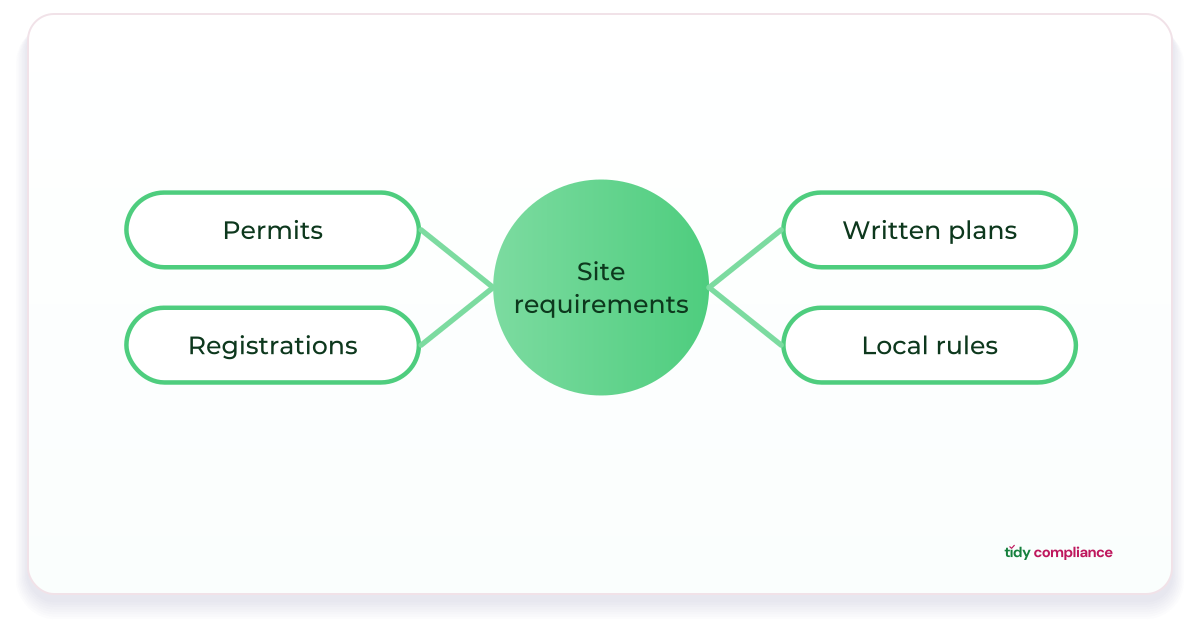
Scope decides everything that follows. Write down which facility, which media and which period the audit covers. Air, water, waste, chemicals, storage tanks, stormwater and reporting are the usual areas. Add state and local requirements, because permits often carry conditions that are stricter than the general rule.
Build a requirements list for the site: every permit, registration and recurring report, with its number, its owner and its due dates. I start from the permit files and the last agency correspondence. If you want a ready set of items to verify while you scope, use my environmental compliance checklist.
Decide the audit's independence at this step. A site manager auditing their own plant finds fewer problems than a colleague from another site, and an outside team finds different ones again. Pick on purpose and note the choice.
Phase 2: Review the Paper Before You Walk the Site
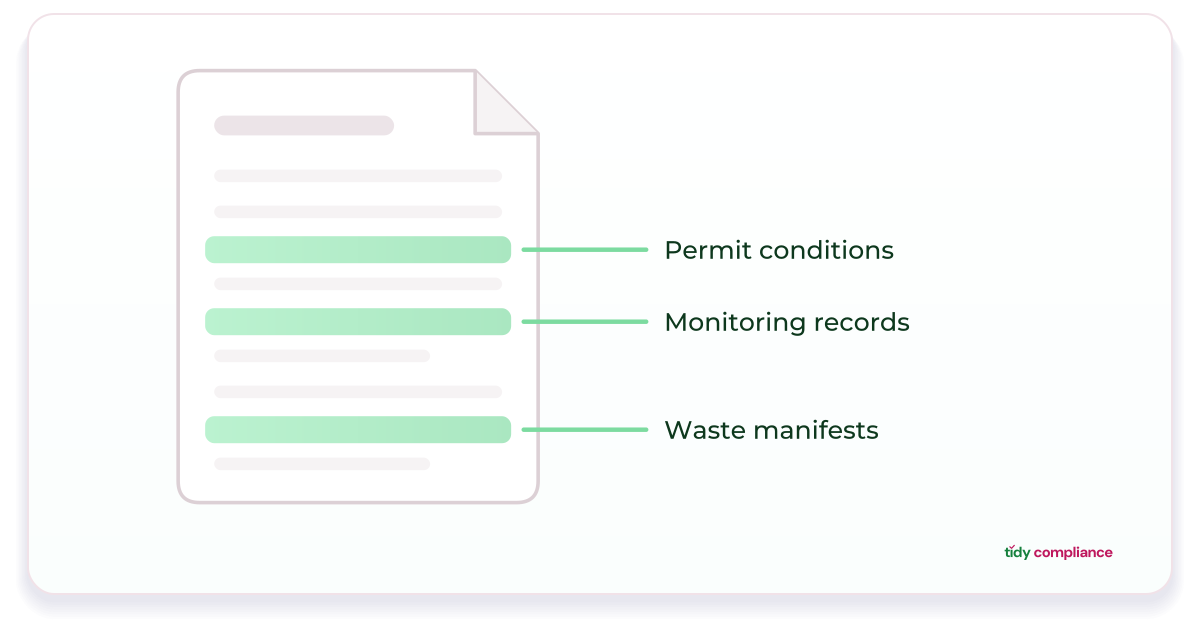
Read permits and records first, so the site walk has a target. For each permit condition, ask what proof exists that the site meets it: a sampling result, a log, a calibration record, a report with a date stamp. Mark conditions where you cannot find proof, and mark conditions where the proof exists but looks wrong.
Typical findings at this stage are quiet. A monitoring frequency in the permit that the log does not match. A hazardous waste generator status that changed after a busy month and nobody noticed. EPA's generator categories depend on how much hazardous waste a site produces in a month, and a site that moves between categories takes on different duties. A quick look at monthly waste volumes against the generator category catches this.
Phase 3: Walk the Site With the Paper in Hand
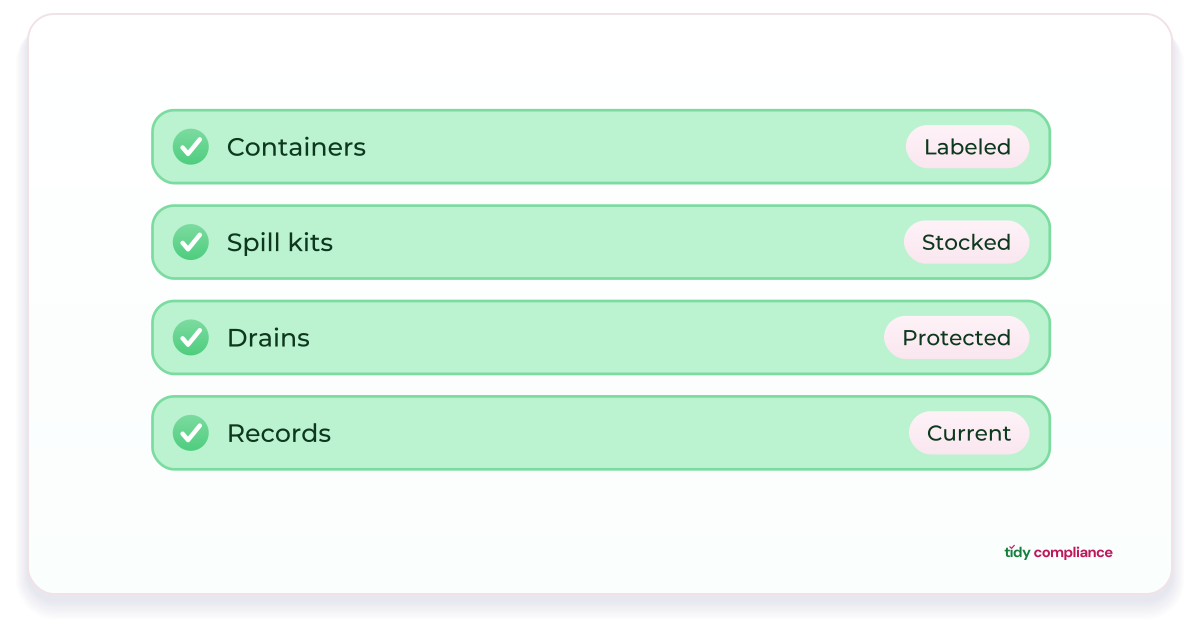
Bring the question list from phase 2 and walk the whole site, including corners nobody visits. Look at storage areas, loading docks, outdoor drains, containment, labels, spill kits and waste accumulation points. Talk to the operators and ask them to show you what they do, rather than describe it.
Take photos and notes with a place and a time. Check three things at every waste or chemical area: is the container labeled and closed, is secondary containment in place and does the date on the label match your accumulation rules. Operators often know about a problem before the paper does, so ask what workarounds exist and what they would change.
Interviews matter as much as inspection. Ask two people the same question separately, such as what they do after a small spill. Matching answers show a working procedure. Different answers show that the written procedure exists but has not reached the floor.
Phase 4: Write Findings That Someone Can Act On
A finding needs four parts: what you saw, which requirement it relates to, how serious it is and what a fix looks like. Keep each finding to a few sentences. Rank findings by risk: potential harm to people or the environment, likelihood of a regulator noticing and how long the gap has existed.
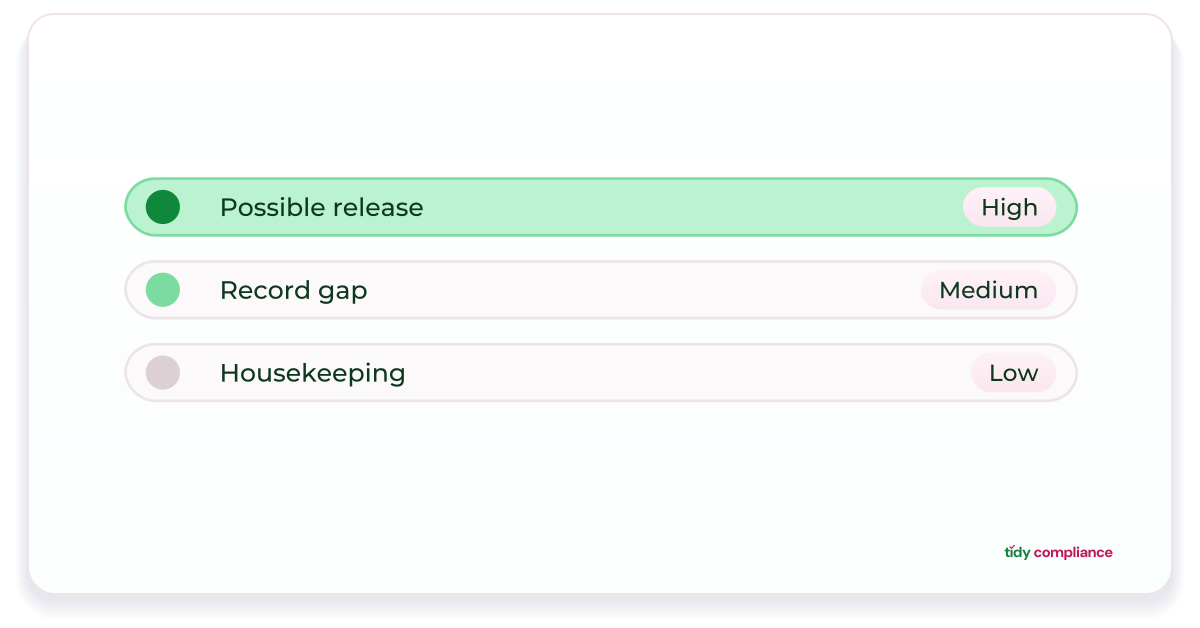
Group findings into three levels. High means a possible release, a missing permit or a repeated violation. Medium means a gap in records or a procedure that does not match practice. Low covers housekeeping. A report with fifty findings of equal weight tells the reader nothing, so push for a short high list that gets attention first.
| Sample finding | Level | Typical fix | Owner |
|---|---|---|---|
| Waste containers without accumulation dates | Medium | Label, retrain and add a weekly walk | EHS lead |
| Sampling log has a two-month gap | High | Explain, resume sampling, check reporting duty with counsel | Plant manager |
| Spill kit missing at loading dock | Low | Restock and add to inspection list | Warehouse supervisor |
| Permit condition not in any procedure | Medium | Write the procedure and assign an owner | EHS lead |
Before you circulate the report, ask your counsel how to handle any finding that might trigger a reporting duty. The audit policy EPA publishes describes conditions under which a company that finds, discloses and corrects a violation can get penalty relief, and one condition is prompt written disclosure. Whether it applies to you is a legal question.
Phase 5: Fix, Track and Prove It
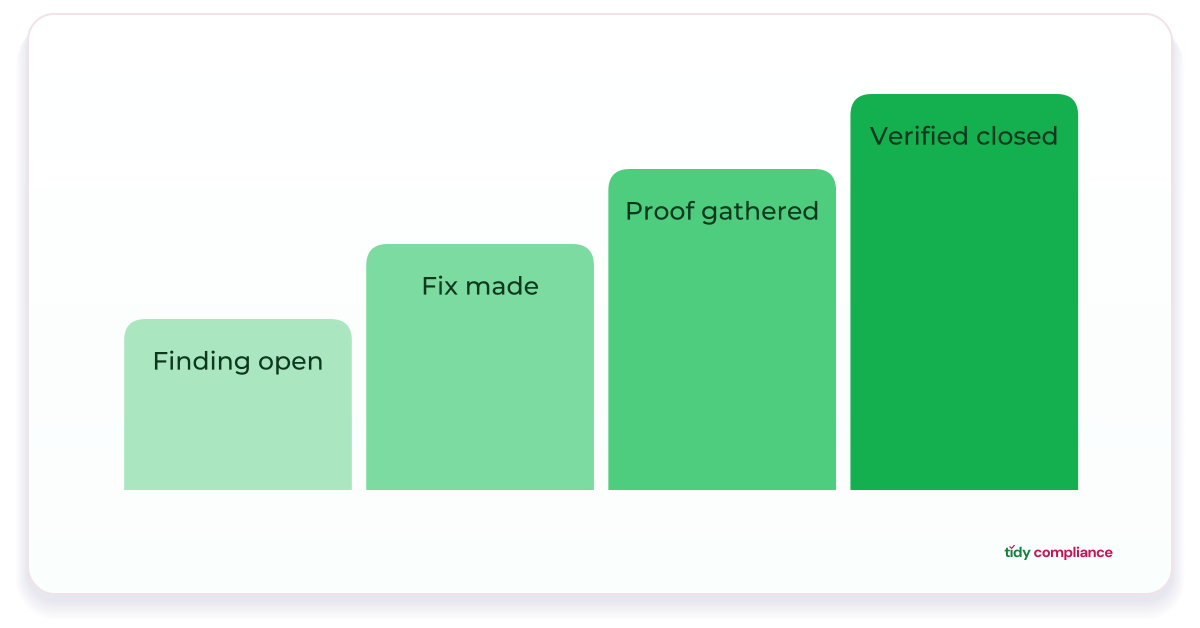
The audit has no value until the fixes are done and shown. Put every finding into one tracker with an owner, a due date and a field for closure evidence. Review the tracker monthly, and send the high-level items to leadership.
Closure evidence is a photo, a record, a signed procedure or a sample result. A finding closed with the words "done" and no proof reopens itself at the next audit. For the day-to-day routine that keeps the tracker alive, see my guide to environmental compliance management.
Tracking software can take over the reminders once you have many sites. Compare the options in my review of environmental compliance software before you buy. If you are weighing outside help against internal time, my breakdown of environmental compliance cost shows where audit budgets usually land.
What to Prepare Before the First Audit Day
Good preparation saves a day on site. Send the site contact a document request two weeks ahead: permits and their conditions, the last two years of monitoring and sampling records, waste manifests, training sheets, inspection logs, spill and incident files, agency correspondence and the last audit report. Ask for a site map that marks drains, storage areas, outfalls and emission points.
Book interviews with the people who do the work, not only the managers who sign the reports. Operators, maintenance staff and the person who receives deliveries know where the paper and the floor part ways. Tell everyone that the aim is to find gaps while they are cheap to fix, so people answer openly. If staff fear blame, they hide problems, and the audit measures their caution instead of your site.
Plan the day around risk. Start where the highest-risk activity sits, such as hazardous waste or a process with an air permit, so that a delay never cuts the most important areas short. Keep a running list of open questions and ask them at a fixed time each day, so nobody gets interrupted all afternoon.
Where Audits Go Wrong
I see the same failures often. The audit scope is too wide and the team runs out of time, so the second half of the site gets a quick look. The auditor reviews the permit but not the correspondence with the agency, and misses a commitment made last year. Findings are written in technical language that the site manager cannot act on. Or the report arrives and nobody owns the tracker.
A fix for each: cut scope to what you can inspect properly, read agency letters, write findings in plain steps and name an owner for the tracker before the audit starts. Delays are normal, especially when a sampling result is outstanding, so plan the report date a week after the lab results are due.
Deciding Between an Internal Audit and Outside Support
Use an outside team if you meet two or more of these conditions:
- Nobody on staff has run a full multi-media audit before.
- You have an acquisition, a new process or a permit change coming.
- An agency inspection or customer audit is scheduled.
- The last audit is more than two years old.
- Past findings stayed open because nobody had time to follow up.
Questions About Environmental Compliance Audits
What Is an Environmental Compliance Audit?
It is a structured review of a facility or company against the environmental requirements that apply to it, such as air permits, wastewater discharge, hazardous waste handling, storage tank rules and reporting duties. The auditor compares what the rules and permits require with what the site does and what records show, and writes up the gaps with a ranked action list.
How Often Should I Run an Environmental Compliance Audit?
Most organizations audit each facility once a year, and high-risk sites more often. Run an extra review after a permit change, a new process, an acquisition or a notice from a regulator. Small monthly self-checks between audits keep findings small.
Should an Internal Person or an Outside Consultant Run the Audit?
Both work. An internal auditor knows the site and costs less per round. An outside auditor brings a fresh view, knows what regulators ask about and is not tied to the people being reviewed. Many companies alternate: internal audits most years and an outside audit every second or third year.
What Happens If the Audit Finds a Violation?
You document it, correct it and ask your counsel whether a disclosure duty applies. Some rules require prompt reporting. EPA also has an audit policy that can reduce penalties for violations that a company finds, discloses and corrects within set conditions. Check the current policy text with your attorney before you decide.
Does a Self-Audit Create Legal Risk?
Findings can create obligations, which is why many companies run audits through counsel and keep a clear process for corrections. That is a legal question, and the answer depends on your facts, so ask a licensed attorney how to structure your program.
What Documents Should I Gather Before an Audit?
Gather permits and their conditions, monitoring and sampling records, waste manifests, training records, inspection logs, spill and incident files, reports sent to agencies and your written procedures. Missing documents are findings of their own, so note what you cannot find.
How Long Does an Environmental Compliance Audit Take?
A single small facility often takes two to four days on site plus report writing. A multi-site company runs audits in a schedule across the year. The time depends on how many permits, processes and waste streams the site has and how well the records are organized.
Sources
Disclaimer: This article is for general information only and isn’t legal, financial or tax advice. Treat figures as estimates from typical work and confirm details with your providers before you act.
Was this guide helpful?
Thanks for your feedback.
Odessa Whitfield
Odessa leads the Tidy editorial team and works with the compliance consultants to turn real client projects into practical guides on regulations, frameworks, policies and audit preparation. Before joining Tidy, she worked in compliance and risk roles, writing and maintaining policy sets for regulated organizations. Every article goes through a consultant who has done the work in practice, and she updates guides when a rule, framework or tool changes. She works remotely from the United States.