Quick Summary
- Recurring costs, mostly staff time and monitoring, usually exceed one-off projects over a few years.
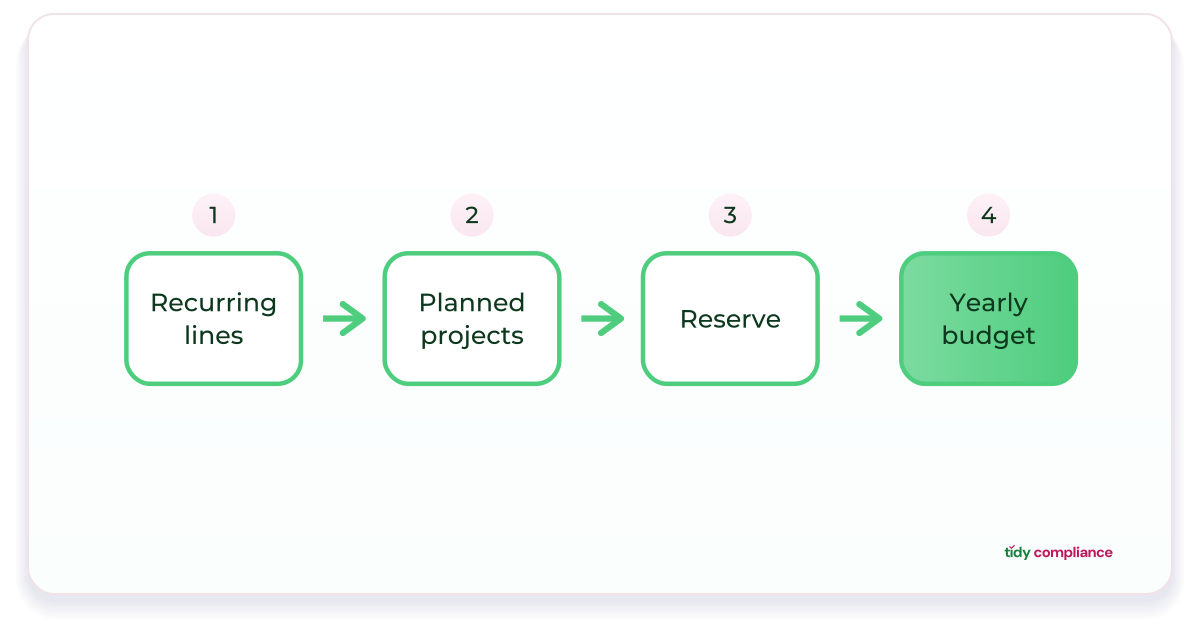
- Use a simple formula: recurring duties plus planned projects plus a reserve for findings.
- The ranges in this article are planning figures from my project experience, not quotes.
- A fixed scope and a written quote keep outside help predictable.
"What will this cost?" is the first question I hear from owners and plant managers, and it is a fair one. The honest answer starts with the permits and processes you have. Two plants of the same size can differ by a factor of five, because one has an air permit and wastewater discharge and the other has a small waste stream. As part of environmental compliance consulting, I build budgets bottom-up, and this article shows how.
All figures here are planning ranges from my client work, not quotes and not legal advice. Your sector, state, site size and starting point move them a lot.
The Budget Formula
I use three buckets. Recurring costs are what you pay every year to keep running: staff time, sampling and lab fees, permit and agency fees, training and tools. Planned projects are the one-off items you can see coming, such as a permit application, a spill plan, a new containment area or a first audit. The reserve covers what audits and inspections turn up.
The reserve percentage is my rule of thumb for sites with a mature program. A site that has never audited itself should plan higher, since the first audit usually finds more than the tenth.
Typical Cost Lines and Planning Ranges
The table lists the lines I include and the ranges I see for a small to mid-sized single site. Larger or multi-site operations scale up. Treat each range as a starting point for conversation with your own vendors.
| Cost line | Type | Planning range per year or project | What moves the price |
|---|---|---|---|
| EHS or compliance staff time | Recurring | A fraction of one salary up to a full role | Number of permits and sites |
| Sampling and lab analysis | Recurring | A few thousand to tens of thousands of dollars | Parameters, frequency, permit type |
| Permit and agency fees | Recurring | Hundreds to several thousand dollars per permit | State, permit class, size |
| Training | Recurring | Hundreds to a few thousand dollars | Headcount, roles, content source |
| Compliance tools | Recurring | From free to five or six figures | Sites, users, modules |
| Outside compliance audit | Project | Low four figures to five figures | Scope, site complexity, travel |
| Permit application or renewal | Project | Several thousand to tens of thousands of dollars | Technical studies, review time |
| Spill and prevention plans | Project | Low to mid four figures | Site layout, storage volumes |
| Controls or equipment | Project | Wide range, from small fixes to major capital | Process, limits, existing equipment |
The figures are wide on purpose. A site with one hazardous waste stream and a stormwater permit sits near the bottom of each range. A plant with an air permit, process wastewater and several waste streams lives near the top.
A Worked Example: A Small Metal-Finishing Shop
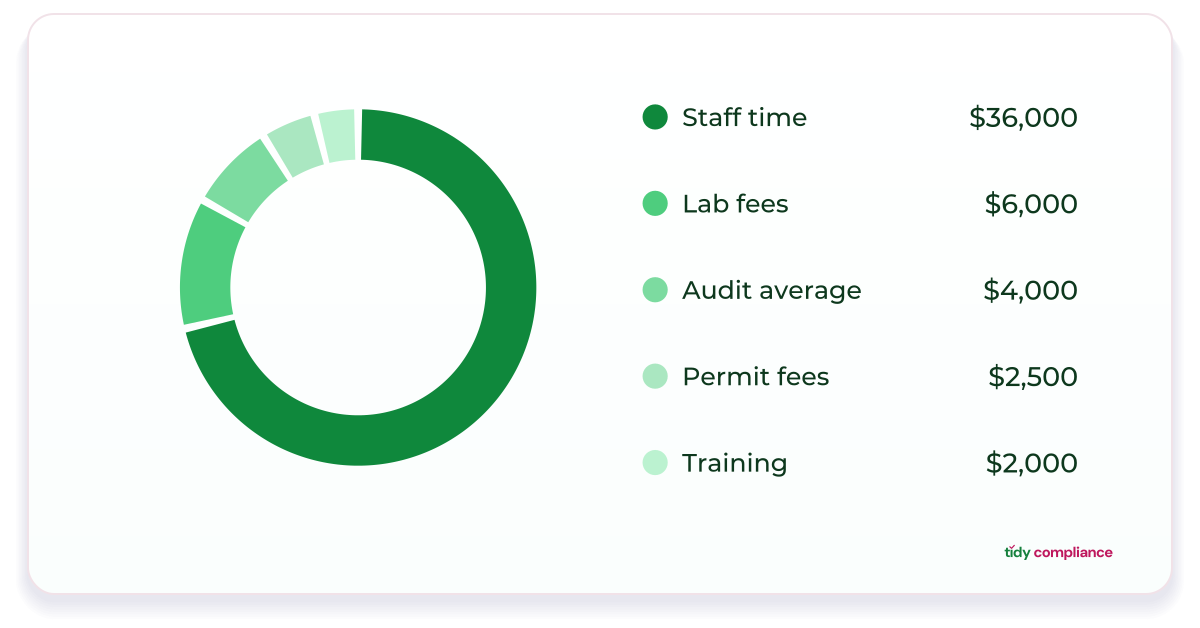
Take a 40-person shop with one hazardous waste stream, a stormwater permit and a small air registration. I am using round numbers to show the method, so replace them with your own quotes.
| Item | Assumption | Annual cost |
|---|---|---|
| Staff time | One part-time EHS lead, about 0.4 of a role at $90,000 loaded | $36,000 |
| Sampling and lab fees | Quarterly stormwater and periodic waste profiles | $6,000 |
| Permit and agency fees | Three registrations and permits | $2,500 |
| Training | Annual refresh plus new hires | $2,000 |
| Tools | Shared calendar, spreadsheet register | $0 |
| Planned projects | Outside audit of $8,000 every second year, averaged | $4,000 |
| Subtotal | $50,500 | |
| Reserve | 15 percent for findings | $7,575 |
| Total | about $58,000 |
Nearly two-thirds of the total is staff time. That surprises owners who expect the bill to be mostly testing or equipment. When I help clients cut cost, the first lever is rarely a cheaper lab. It is a clearer register and routine, which lowers the hours spent on firefighting.
What Outside Help Costs and Buys
Consultants price in three ways. Fixed-fee projects suit a first audit or a register build. Time and materials suits uncertain work such as a regulator response. Retainers suit ongoing support. Ask for a written scope, a deliverables list and a fixed quote where the work is clear.
Compare the price with your own hours. If a project would take your lead six weeks and distract them from daily duties, a four-week outside project may cost less overall. The method I use for audits is laid out in my guide to the environmental compliance audit, so you can see what the deliverables should look like.
What Non-Compliance Costs
Civil penalties are set by statute and adjusted for inflation, and the amounts differ by law and by violation. The EPA publishes the current figures in its annual inflation adjustment rule, so look up the numbers for the statutes that apply to you instead of relying on a blog. The penalty is rarely the largest cost. Correction work, legal fees, production downtime and customer audits tend to add more.
EPA's audit policy describes conditions under which a company that finds, discloses and corrects a violation can receive reduced gravity-based penalties. That is a reason to audit yourself, and a question for your attorney about how to use it.
How Cost Changes With Size and Sector
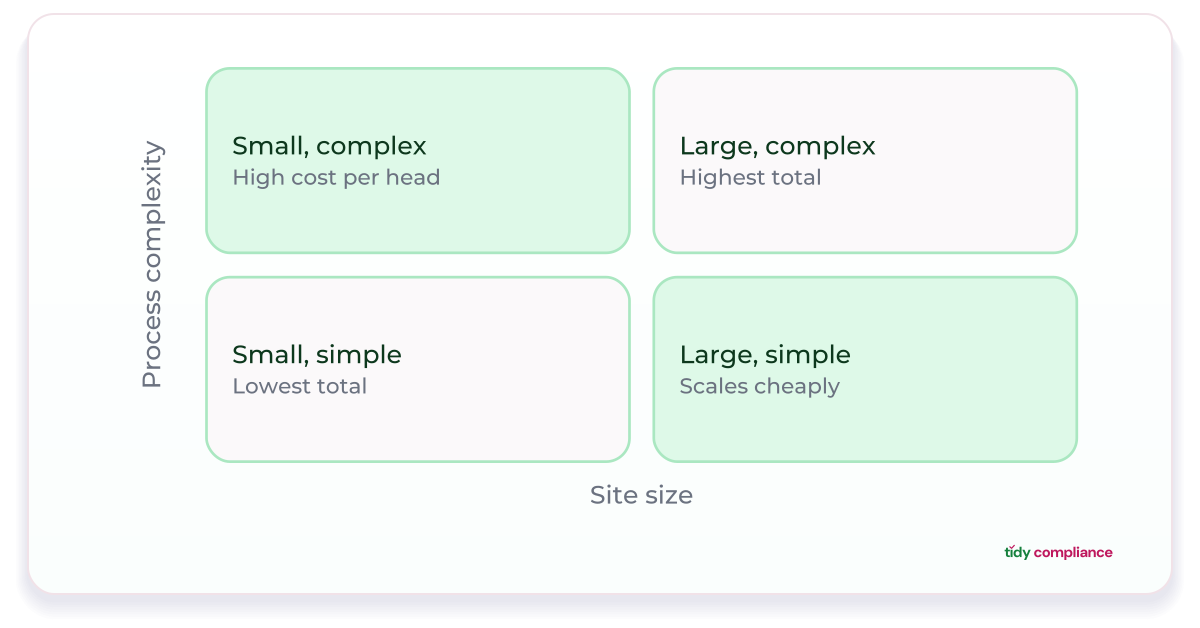
Size matters less than complexity. A large warehouse with only a stormwater permit and routine waste can cost less to keep compliant than a small plating shop. Sector sets the baseline: manufacturing, chemicals, energy and food processing carry more permits and more monitoring than offices and light assembly. Multi-site companies add coordination cost, but they also gain from shared procedures, one register and bulk pricing for labs and training.
Cost per site tends to fall as you add sites to a mature program, because the register, procedures and training content are written once. I see the opposite when each site builds its own system, which duplicates work and produces different standards. If you run several sites, the program view in my guide to environmental compliance management is a better starting point than a per-site price list.
Costs People Forget to Budget
The first budget usually misses the same items. Staff time for records is the largest, since every inspection, log and report takes minutes that add up across a year. Waste disposal fees rise with volume and with hazard class, and they change when a vendor reprices. Maintenance of controls, such as calibrating monitors or servicing containment, is easy to leave out. Training time costs wages as well as content fees, and consultants' travel often sits outside the quoted fee.
Insurance and customer requirements also matter. Some customers ask for audit results or certifications as a condition of supply, and the price of meeting those requests belongs in the budget. A lender or insurer may ask for an environmental review before a deal, which is a project cost you can foresee.
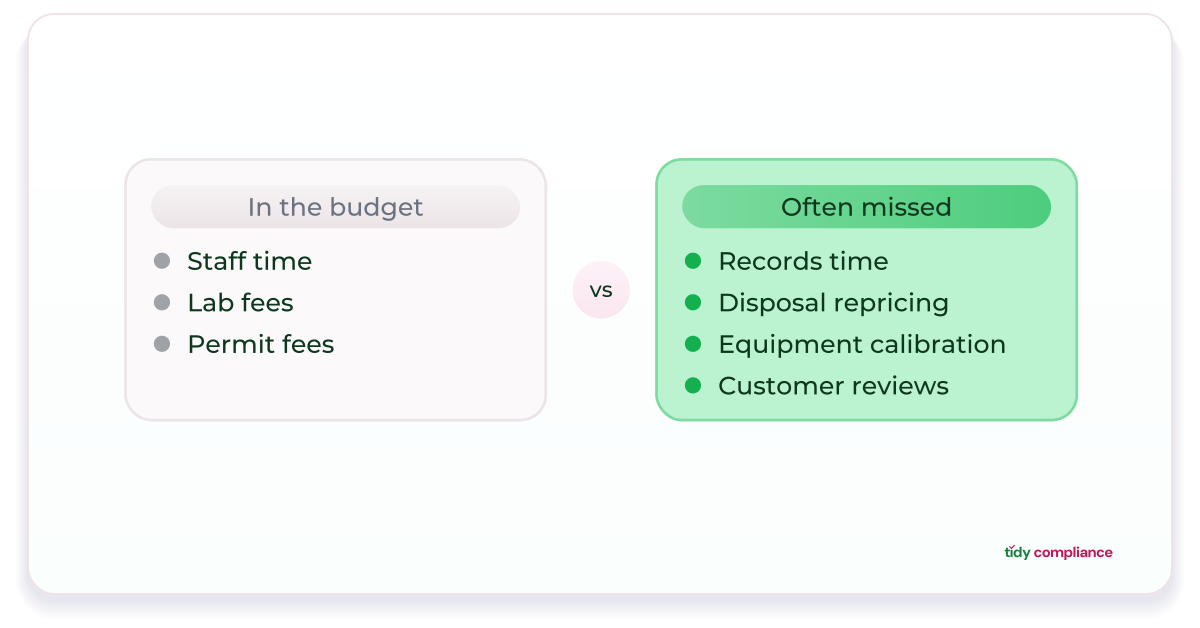
| Often forgotten | Why it surprises people | How to plan for it |
|---|---|---|
| Records and reporting time | Spread across many people in small slices | Estimate hours per duty in the register |
| Waste disposal price changes | Vendors reprice by hazard class and volume | Review the contract yearly and track volumes |
| Equipment calibration and service | Small items outside the main budget line | Add each device to the calendar with a cost |
| Customer and lender reviews | Arrive with short notice | Keep an audit report and records ready |
Where You Can Safely Save
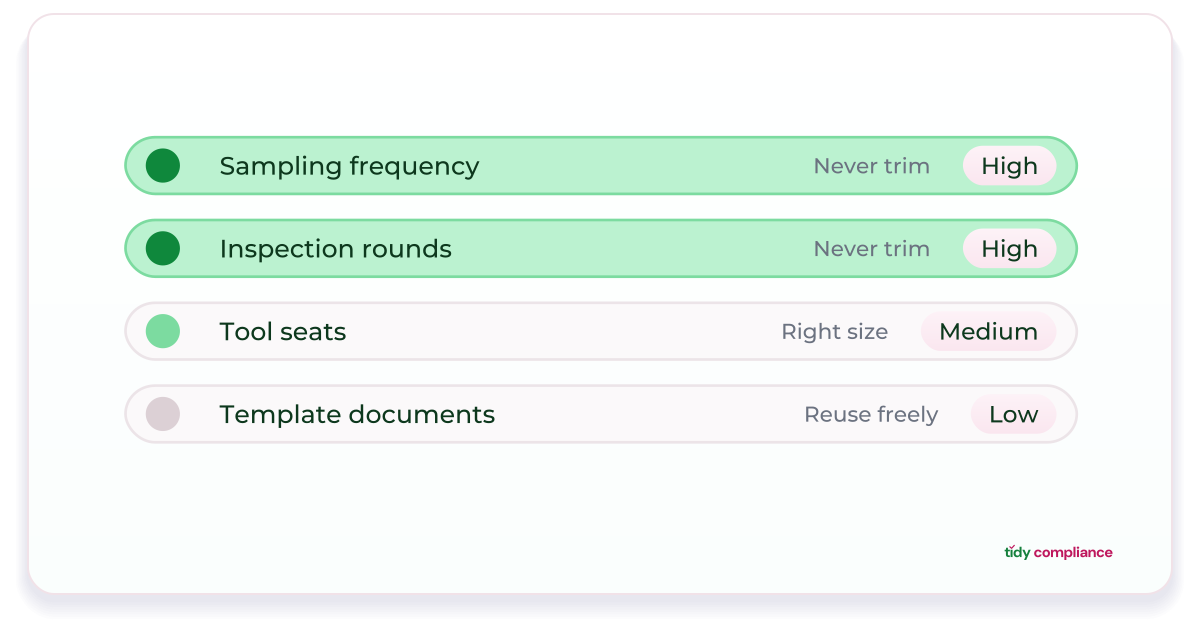
- Combine sampling events and lab jobs, and ask for quotes from two labs.
- Reduce hazardous waste at the source, since lower volumes can change your generator status and your duties.
- Use a spreadsheet register until you outgrow it, then compare tools. My overview of environmental compliance software lists prices where vendors publish them.
- Train supervisors to run routine checks, which lowers the cost of findings.
- Bundle permit renewals into one planning calendar so studies are done once.
Avoid saving on the wrong thing. Skipping sampling, stretching an inspection interval or delaying a permit renewal looks cheap in a quarter and expensive after a visit.
How to Compare Quotes Fairly
Ask every vendor to price the same written scope. For an audit, the scope names the sites, the media covered, the number of days on site, the interviews and the deliverables. Ask whether the price includes travel, lab fees and a follow-up call after the report. A cheap quote that leaves out the report or the action plan is a partial quote.
Check references from sites like yours. A consultant who knows food plants may not know metal finishing, and the difference shows in the findings. Ask for a sample report with names removed so you can judge whether findings come with ranked actions or only a list of observations.
Build Your Own Budget in Five Steps
- Fill an obligations register with every permit and report. The environmental compliance checklist helps you find items you forgot.
- Estimate hours per duty and multiply by a loaded hourly rate.
- Add vendor quotes for sampling, fees, training and tools.
- List projects you can see in the next three years and spread each over its life.
- Add a reserve, review it after each audit and keep the budget with the permit calendar, as described in my guide to environmental compliance management.
Questions About Environmental Compliance Costs
How Much Does Environmental Compliance Cost a Small Business?
A small site with a few permits and one waste stream often spends a low five-figure amount per year when you add staff time, testing, fees, training and some outside help. A site with air permits, wastewater discharge or several waste streams spends more. These are planning ranges from my project experience, so build your own estimate from your permits.
What Is the Biggest Cost Driver?
Staff time and monitoring. Sampling, lab analysis, inspections and reporting repeat every year, and they add up faster than one-off projects. Capital equipment is the largest single item when a site needs new controls, but it happens less often.
Is It Cheaper to Hire a Consultant or Do It in House?
It depends on your starting point. If you have a capable internal lead, outside help for the first audit and register setup can be enough. If nobody owns compliance, a retainer for ongoing support often costs less than the rework caused by missed duties. Compare real quotes against your internal hours.
How Much Does an Environmental Compliance Audit Cost?
A single-site audit by an outside team commonly runs from a few thousand dollars for a small, simple facility to well above that for a complex plant with several permits. Scope, travel and report depth change the price. Ask for a fixed quote tied to a written scope.
What Do Penalties Cost Compared with Compliance?
Civil penalties are set by statute and adjusted for inflation, and amounts differ by law and by violation. EPA publishes the current inflation-adjusted figures, so check them for the laws that apply to you. The penalty is only part of the cost, since correction, legal fees and lost production time often exceed it.
Can Software Reduce Compliance Costs?
It can reduce admin time when you have many permits, sites or records, because it handles reminders, logs and reports. It does not remove testing or capital costs. A small site with a handful of duties often runs well on a shared calendar and a folder.
How Do I Budget for Environmental Compliance?
List the lines once: staff time, testing and lab fees, permit and agency fees, training, tools, outside advice and the capital items you can foresee. Add a reserve for corrective work after audits. Review the budget each year when permits and processes change.
Sources
Disclaimer: This article is for general information only and isn’t legal, financial or tax advice. Treat figures as estimates from typical work and confirm details with your providers before you act.
Was this guide helpful?
Thanks for your feedback.
Odessa Whitfield
Odessa leads the Tidy editorial team and works with the compliance consultants to turn real client projects into practical guides on regulations, frameworks, policies and audit preparation. Before joining Tidy, she worked in compliance and risk roles, writing and maintaining policy sets for regulated organizations. Every article goes through a consultant who has done the work in practice, and she updates guides when a rule, framework or tool changes. She works remotely from the United States.