Quick Summary
- Twelve points cover most of what an inspector or auditor looks at on an ordinary site.
- For each point, keep proof: a record, a photo or a signed log.
- Add a section from your own permits, since permit conditions differ from site to site.
- Score each point as verified, partial or open, and give every open point an owner and a date.
A checklist cannot make a site compliant, and it is still the quickest way to find where you stand. I use the list below at the start of every environmental compliance consulting project, and clients use it afterward for their own yearly check.
Each point tells you what to verify and what proof to keep. The list is general and is not legal advice, so add the conditions from your own permits and confirm requirements with a qualified adviser.
How to Score the List
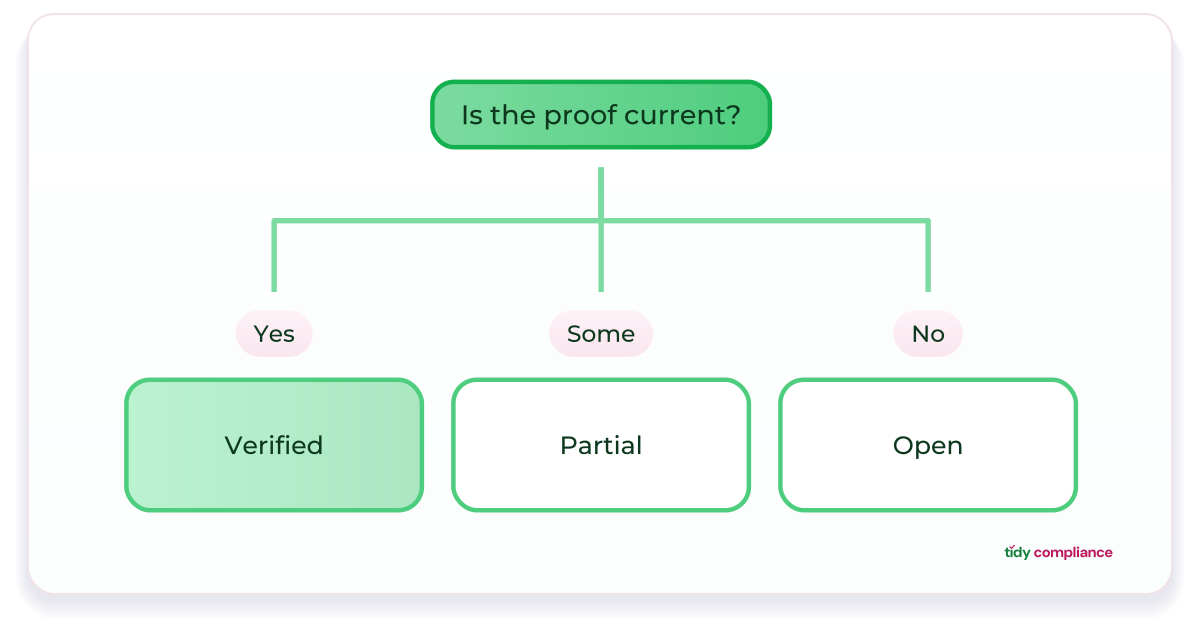
Give each point one of three marks: verified (you saw proof today), partial (some proof is missing) or open (no proof, or the practice does not exist). Do not mark a point as verified because you believe the work happens. If you cannot show a record, it is partial at best.
| Mark | Meaning | What happens next |
|---|---|---|
| Verified | Proof seen and current | File the proof, set the next check date |
| Partial | Practice exists, proof incomplete | Fix the records within a set time |
| Open | No proof or no practice | Assign an owner, a date and a fix |
1. Permits and Registrations Are Current
List every permit and registration for the site: air, wastewater, stormwater, waste generator status, storage tanks and local approvals. Check the number, the expiry date, the renewal deadline and the named responsible person.
Proof to keep: the permit copies, a register with dates and the submission receipts for the last renewal.
2. Permit Conditions Are Turned Into Tasks
Read each permit condition and find the procedure, log or person that meets it. Conditions that sit only in the permit file are the ones that get missed.
Proof to keep: a table that links each condition to a task and an owner. The ongoing routine around this table is covered in my guide to environmental compliance management.
3. Air Emissions Are Monitored and Reported
Check the emission sources on site, the monitoring or recordkeeping each one needs, equipment maintenance logs and any reports sent to agencies. Small sources such as boilers, generators and paint booths are easy to forget.
Proof to keep: logs, calibration records and the last submitted report.
4. Wastewater and Stormwater Controls Work
Walk the drains and find where water leaves the site. Check discharge limits, sampling results, pretreatment equipment and stormwater controls such as covers, sweeping and sediment barriers. Look for stains and sheen near loading areas.
Proof to keep: sampling results, inspection logs and photos of controls.
5. Hazardous Waste Is Identified and Managed
Confirm that each waste stream has a documented determination, a labeled container and an accumulation date. Compare monthly waste volumes with your generator category, since the category sets your duties, and EPA's categories depend on how much hazardous waste you generate in a month.
Proof to keep: waste profiles, manifests, weekly container inspection logs and training records for handlers.
6. Other Waste and Recycling Are Documented
Non-hazardous, universal and special wastes carry their own rules, including used oil, batteries, lamps and electronics. Check that each one has a container, a vendor and a record of pickups.
Proof to keep: vendor agreements, pickup receipts and a short list of waste streams with owners.
7. Chemicals and Fuel Storage Are Controlled
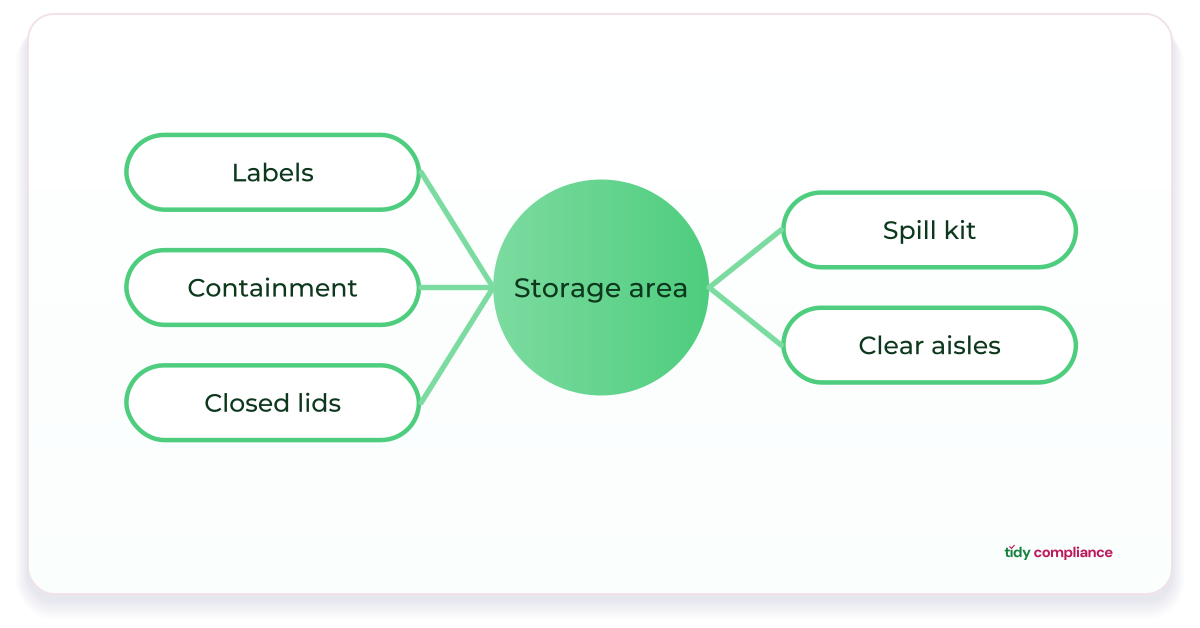
Check the inventory against any reporting thresholds, the safety data sheets, secondary containment and compatible storage. Look at tanks, drums, totes and outdoor storage. A forgotten drum behind the building is a typical finding.
Proof to keep: the chemical inventory, safety data sheet index and containment inspection logs.
8. Spill Prevention and Response Are Ready
Check that the spill plan matches the site as it is today, spill kits are stocked and in the right places, and people know the first steps and who to call. Ask two operators separately what they would do after a small spill and compare answers.
Proof to keep: the current plan, kit inspection logs and drill or training records.
9. Reporting and Recordkeeping Are on Schedule
List every recurring report and its due date, then check proof of submission for the last cycle. Confirm that records are stored where a reviewer can find them and that your retention schedule is written down. Retention periods vary by rule and state, so have counsel confirm them.
Proof to keep: submission confirmations and the retention schedule.
10. People Are Trained for Their Tasks
Match training to roles: waste handlers, tank operators, spill responders and supervisors. Check that new hires get training before they start the task and that refreshers follow your schedule.
Proof to keep: attendance sheets with names, dates and topics, and short quizzes where you use them.
11. Inspections and Audits Happen and Get Used
Check that routine inspections run on schedule and that a full internal or outside audit happened in the last year. Read the last report and see whether its findings were closed. My article on the environmental compliance audit shows how to run that review step by step.
Proof to keep: inspection logs, the last audit report and its action tracker.
12. Findings Are Fixed and the Fix Is Proven
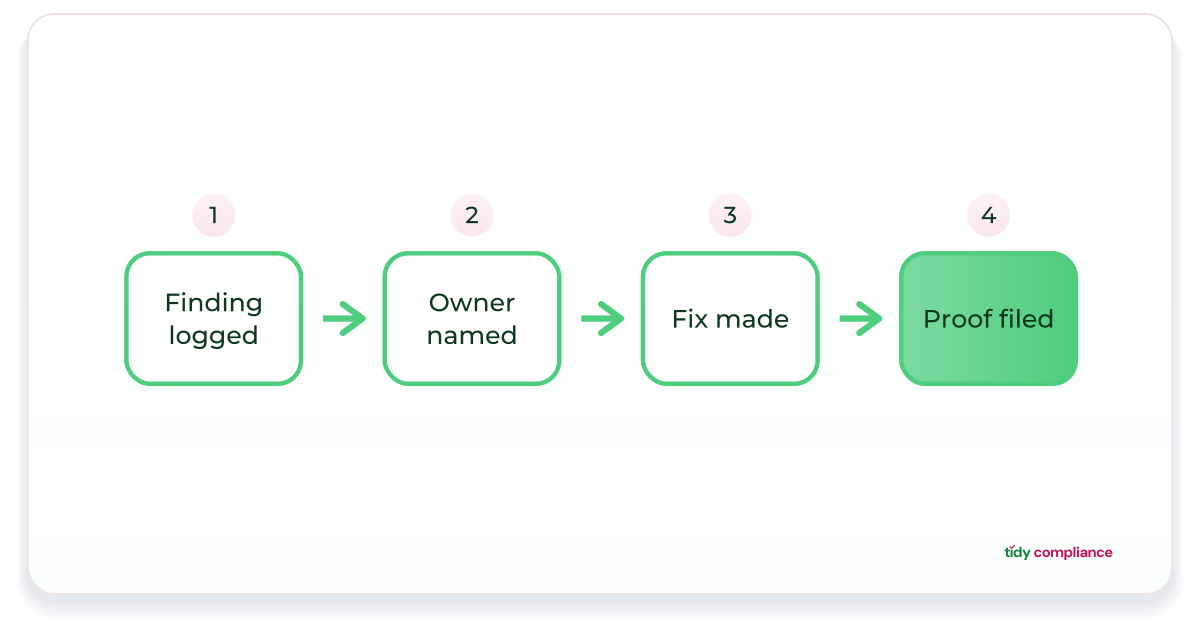
Open the corrective action list. Check owners, dates and evidence of closure. Look for items older than ninety days and ask why they are open. This point shows whether the other eleven are part of a living program.
Proof to keep: the tracker with closure evidence. If the list grows beyond a spreadsheet, see my comparison of environmental compliance software.
The Whole List in One Table
Copy the table into a spreadsheet and add columns for the mark, the owner and the date. Review it quarterly. When you plan your yearly spend on checks, the lines in environmental compliance cost show typical ranges.
| Point | Verify | Proof |
|---|---|---|
| 1. Permits | Current, renewals tracked | Permit copies and register |
| 2. Conditions | Each one has a task and owner | Condition table |
| 3. Air | Sources, logs, reports | Logs and last report |
| 4. Water | Discharges, samples, controls | Results and photos |
| 5. Hazardous waste | Determinations, labels, status | Manifests and inspection logs |
| 6. Other waste | Containers, vendors, pickups | Receipts |
| 7. Chemicals | Inventory, containment, SDS | Inventory and logs |
| 8. Spills | Plan, kits, response steps | Plan and drill records |
| 9. Reporting | Due dates met, records stored | Submission confirmations |
| 10. Training | By role, before the task | Attendance records |
| 11. Inspections | Routine checks and yearly audit | Logs and audit report |
| 12. Corrections | Owners, dates, closure | Action tracker |
Using the Results
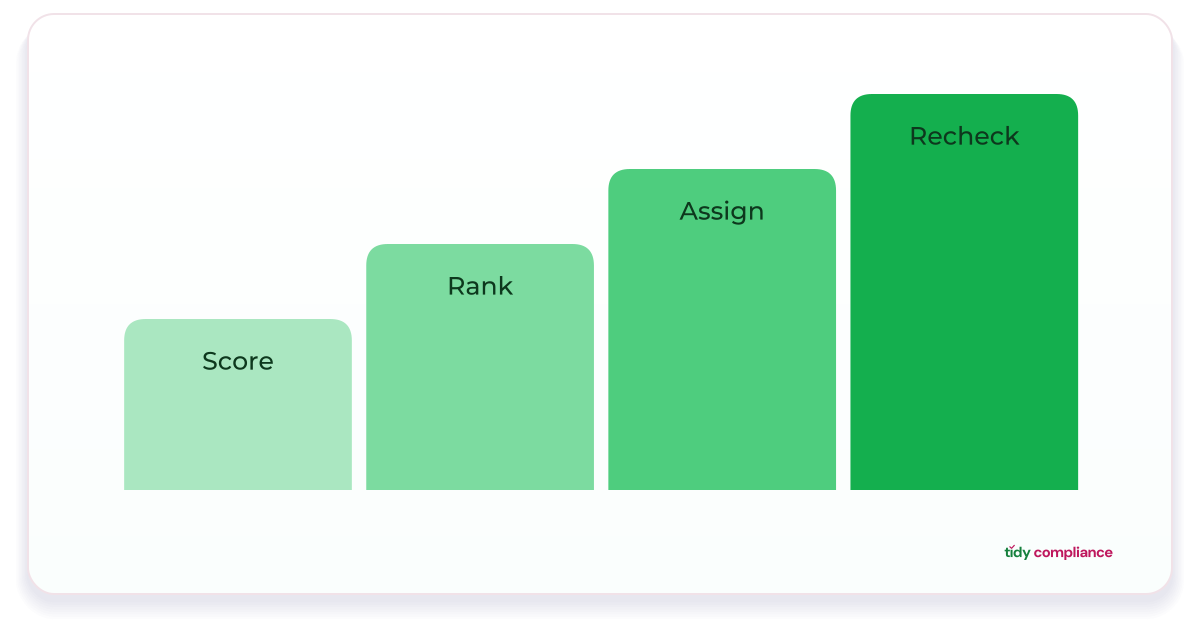
Once every point has a mark, sort the open and partial items by risk. A missing permit renewal, a sampling gap or an unlabeled hazardous waste container comes before a missing training signature. Give each item one owner and a date, and write the first action as a verb: find, label, sample, file, train.
Hold a short review a month later. Items that moved from open to verified show the program works. Items that did not move show a resource or ownership problem, and that is a conversation for the person who controls the budget. In my client work, the first run of this list usually returns four to six open points on a small site, and the second run, a quarter later, returns one or two.
Do not hide the first result. A list that shows many open points in year one is honest and gives you a starting line. A list with every point marked verified on the first try deserves a second look, since people tend to mark what they believe instead of what they have seen.
Adapting the List to Your Site
The twelve points are a base. Add lines that come from your own situation. A food plant adds grease and wastewater pretreatment, a machine shop adds coolant and metal wastes, a laboratory adds small-quantity chemicals and a warehouse adds forklift battery handling and stormwater. Each permit also carries conditions that exist only for that site, and those belong on the list as their own rows.
Include state and local requirements. A federal baseline rarely tells the whole story, because many states run their own programs with stricter conditions or extra reports. Ask your agency contact or your adviser which state and local items apply, and add them with the same proof column as the rest.
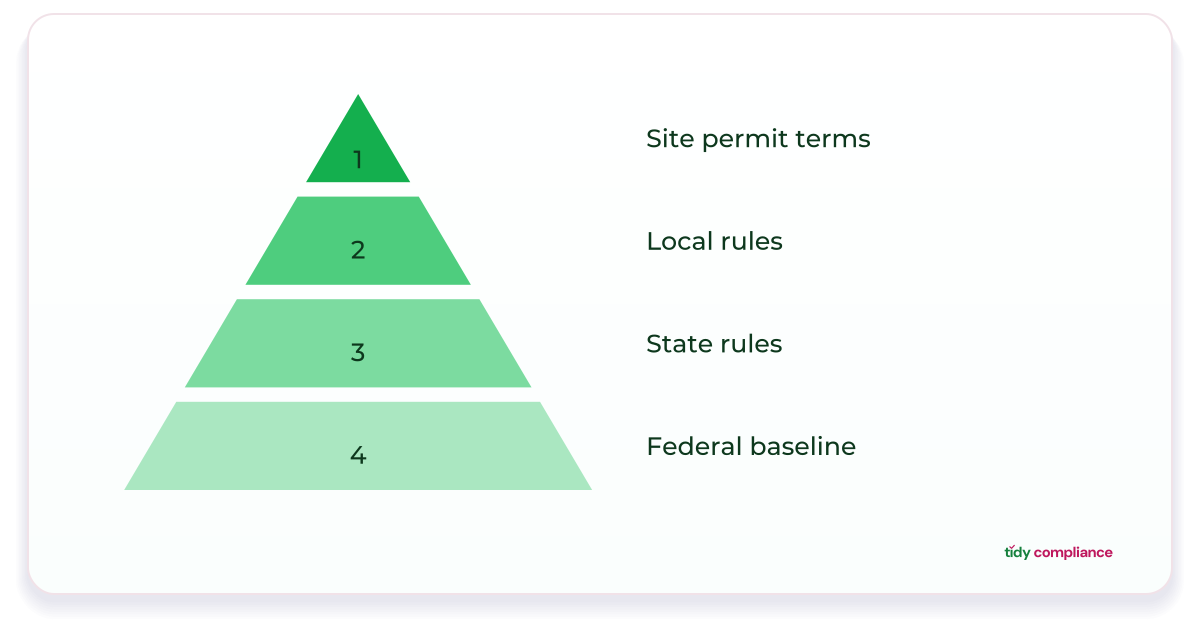
- Add one row for every condition in every permit you hold.
- Add rows for state and local programs that apply to your site.
- Add rows for customer or corporate requirements that go beyond the law.
- Remove rows only after you confirm in writing that they do not apply.
How Often to Run Which Part
Not every point needs the same rhythm. Points 5, 7 and 8 involve physical conditions that change daily, so a short weekly walk with a few tick boxes keeps them honest. Points 1, 2 and 9 follow permit and reporting calendars, so check them monthly against the register. Points 10, 11 and 12 suit a quarterly review. Run all twelve together once a year, preferably with someone from outside the site, and keep each completed list with its action tracker so the trend is visible.
When the list is done, file it before you do anything else. A completed checklist that sits on a clipboard proves nothing, and one that sits in the records folder next to closed actions is evidence of a working program.
When a Checklist Is Not Enough
Consider outside help when several points come back open, when a regulator visit is scheduled or when nobody on site has time to follow up. The checklist shows you the gaps, and a structured project closes them.
- Three or more points are open and no owner exists for them.
- You cannot find the proof for permit renewals within an hour.
- The site changed processes or chemicals since the last review.
Questions About the Environmental Compliance Checklist
What Should an Environmental Compliance Checklist Include?
It should cover permits and registrations, air, water and stormwater duties, hazardous and other waste, chemical storage and spill prevention, monitoring and reporting, training, inspections, records, contractors and corrective actions. Add items that come from your own permits, because those conditions are specific to your site.
How Often Should I Use the Checklist?
Use the full checklist at least once a year for each site, and use the short routine items weekly or monthly. Run it again after a permit change, a new process or an acquisition.
Is a Generic Checklist Enough?
It is a good start and a poor finish. Generic lists miss permit conditions, state rules and local requirements. Add a section built from your own permits and agency letters before you rely on the list.
Who Should Complete the Checklist?
The site owner completes it with the people who do the work, and a second person reviews the answers. A review by someone from outside the site, such as a colleague from another plant or a consultant, finds more.
What Do I Do with Items I Cannot Verify?
Mark them as open, assign an owner and a date, and treat them as gaps until you have proof. If a missing item might involve a reporting duty, ask your counsel before you write conclusions.
Does This Checklist Replace an Audit?
No. A checklist is a quick self-check. An audit adds interviews, sampling checks, a site walk by a trained person and a ranked report. Use the checklist to prepare for an audit and to keep a site on track between audits.
Where Should I Store Completed Checklists?
Keep them in your records folder, filed by site and date, with the corrective action list beside them. A reviewer who sees a year of completed checklists with closed actions sees a working program.
Sources
Disclaimer: This article is for general information only and isn’t legal, financial or tax advice. Treat figures as estimates from typical work and confirm details with your providers before you act.
Was this guide helpful?
Thanks for your feedback.
Odessa Whitfield
Odessa leads the Tidy editorial team and works with the compliance consultants to turn real client projects into practical guides on regulations, frameworks, policies and audit preparation. Before joining Tidy, she worked in compliance and risk roles, writing and maintaining policy sets for regulated organizations. Every article goes through a consultant who has done the work in practice, and she updates guides when a rule, framework or tool changes. She works remotely from the United States.