Quick Summary
- Start with one register of every permit, report and duty, each with an owner and a due date.
- Site routines (daily, weekly, monthly) catch problems while they are small and cheap.
- Records are part of the work. If you cannot show it, a reviewer treats it as not done.
- A short management review each quarter keeps the program funded and moving.
Environmental compliance fails slowly. A permit condition gets missed during a staff change, a new chemical arrives without a review, a quarterly report goes out a week late. No single event looks dramatic, and then an inspection puts them in one list. Companies I help through environmental compliance consulting usually need a routine more than a new rulebook.
Here is the routine I set up for them. It is general guidance and not legal advice, so check the requirements that apply to your operations with a qualified adviser.
Begin With a Register of Everything You Owe
The register is the most useful document in the program. It lists every permit, registration, plan, report and recurring duty, with the requirement source, the owner, the due date and the place where proof is stored. For most sites it starts as a spreadsheet and fills over a few weeks as you read permit files and agency letters.
Do not copy the regulation text into it. Write each duty in one plain sentence that an operator understands, such as "Inspect secondary containment weekly and log it." Then link it to the permit condition or rule behind it, so a reviewer can trace it.
| Register field | Example entry | Why it matters |
|---|---|---|
| Duty | Submit the annual discharge report | Plain wording that operators follow |
| Source | Permit condition number | Lets you trace the duty to its origin |
| Owner | Site EHS lead, backup shift supervisor | One name prevents shared blame |
| Due date or rhythm | Every January, reminder in November | Turns a duty into a calendar entry |
| Proof location | Folder path and file name | Fast retrieval when a reviewer asks |
Give Every Duty a Name, Not a Department
"Operations" does not file a report. A person does. Assign each register line to one named person and one backup. At company level, name a lead who sets standards, reviews all sites and reports upward. At site level, name an owner who answers for the permits that site holds.
The lead needs real authority: the ability to stop a process that is out of compliance, or at least to escalate to someone who can. In my client work, programs where the lead reports to a plant manager only tend to slide, because the pressure to keep production moving wins every argument. A reporting line to a senior executive changes that.
Run the Site on a Daily, Weekly and Monthly Rhythm
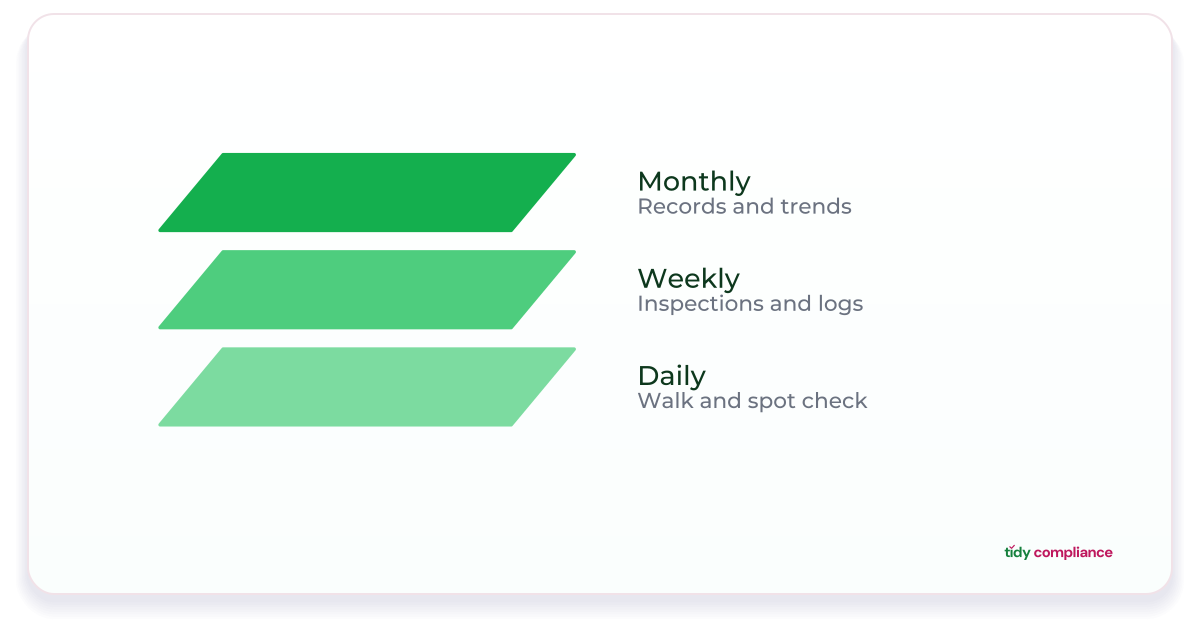
Small routine checks keep a site in shape. Operators do the daily ones as part of their job, supervisors do the weekly ones and the EHS lead does the monthly ones. Every check writes a line in a log: who, when, what was found, what was done.
- Daily: containers closed and labeled, no leaks or stains, drains clear, spill kits in place.
- Weekly: secondary containment, waste accumulation dates, storage areas, stormwater controls.
- Monthly: monitoring data against limits, waste volumes against generator status, open corrective actions.
- Quarterly and yearly: permit calendar review, training refresh, internal audit and management review.
Keep the logs simple. A one-page form with tick boxes gets filled out. A five-page form gets pre-filled on Friday afternoon for the whole week, which is worse than nothing because it creates false records.
Control Change Before It Reaches the Floor
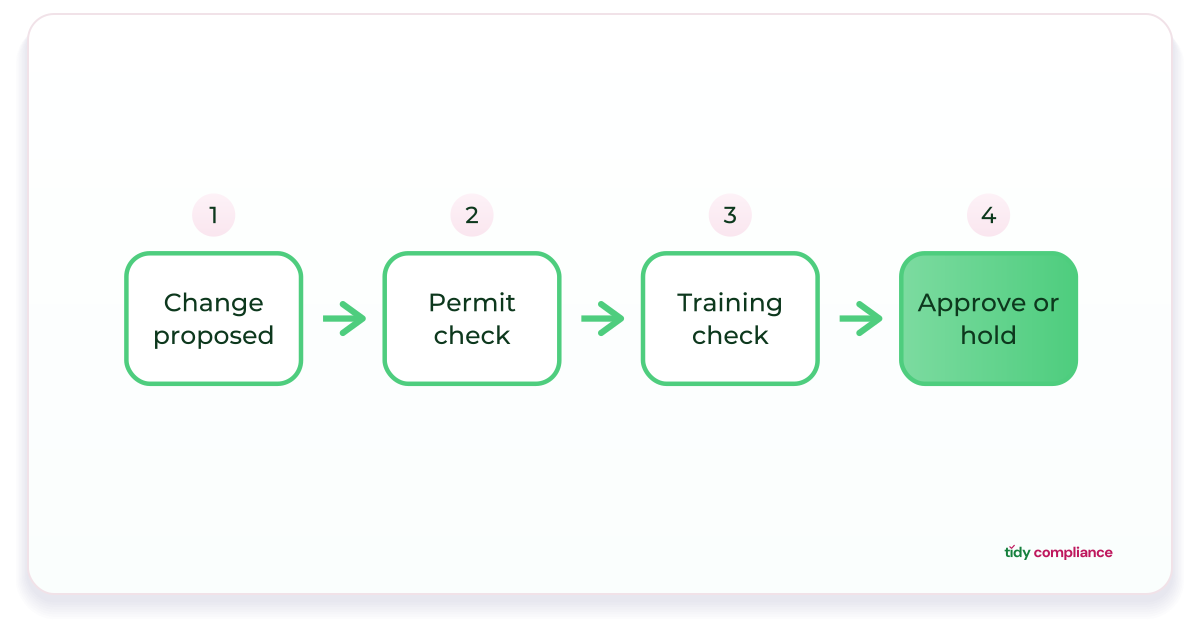
Most new violations begin with a change: a new chemical, a new production line, a new tenant, a different waste vendor. Add a short review step to your change process so someone with environmental knowledge asks four questions before the change goes live. Does it alter emissions, discharges or waste? Does it need a new permit or an amendment? Does it change a storage quantity or a reporting threshold? Does it need new training?
This step takes ten minutes and saves weeks. I have seen a plant add a solvent line in two days and spend four months correcting the permit position afterward. The review would have cost one phone call.
Train the People Who Do the Work
Training works when it matches the task. Operators need to know what goes into which waste container and what to do after a spill. Supervisors need to know how to read their permit conditions. Managers need to know what to report and to whom. Keep sessions short, close to the work and recorded with names and dates.
After a real incident, add a five-minute briefing to the next team meeting. People remember a story from their own site more than a slide from a corporate deck.
Records Are Half the Job
A compliant site that cannot prove it looks the same as a non-compliant site to a reviewer. Keep permits, monitoring data, manifests, inspection logs, training sheets, incident files, audit reports and agency submissions in a structure that matches your register. Name files with the date and the duty, so a search takes seconds.
Set a retention schedule once and apply it. Retention periods vary by rule and state, so have counsel confirm them. When the volume of records grows across several sites, software can help, and my comparison of environmental compliance software shows the common options and what they cost.
Check Yourself Before Someone Else Does
Routine checks tell you about today. A periodic audit tells you whether the whole system works. Plan one full review per site per year, and use a lighter self-assessment between them. My method for planning the full review is in the guide to an environmental compliance audit, and the inventory of items to verify is in the environmental compliance checklist.
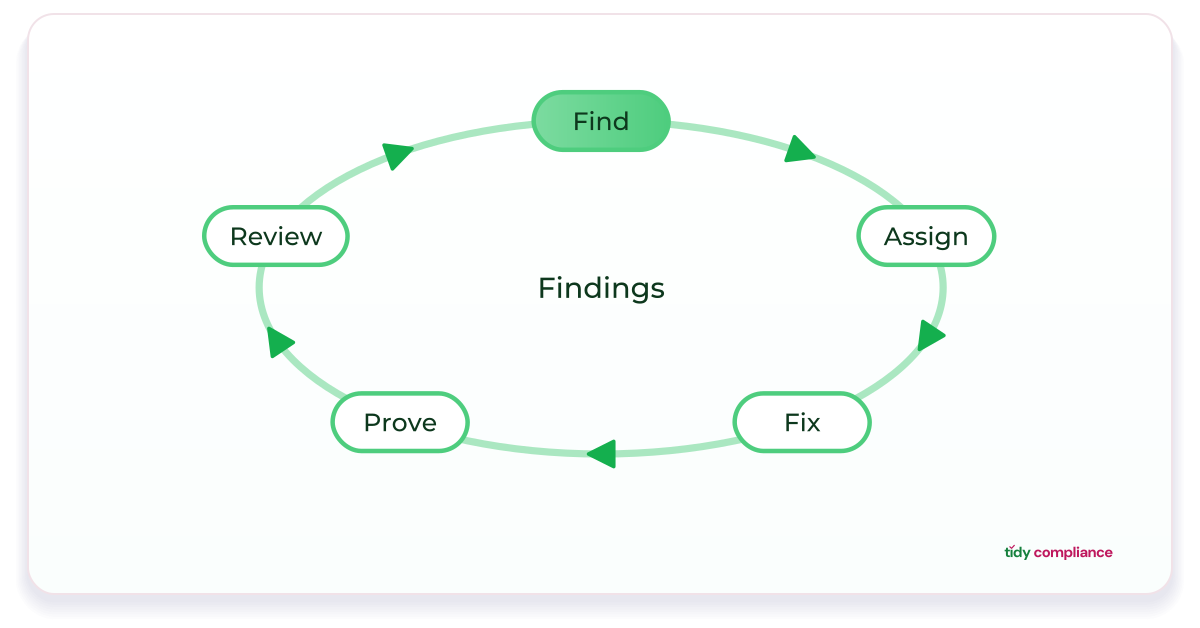
Track every finding in one place until closed, with evidence. Quarterly, show leadership the open items by risk level, the oldest open item and the next three deadlines. If a finding stays open for two quarters, escalate it.
Hold a Short Management Review Each Quarter
Put the lead, site owners and one senior sponsor in a room for 45 minutes. Agenda: new or changed requirements, status of the register, audit and inspection results, open actions, incidents and resource needs. Record decisions and owners. This meeting is where budget gets approved and where a stuck action gets unstuck.
Cost visibility helps here. If leaders see the yearly spend on the program next to the cost of a missed deadline or a corrective project, the conversation changes. My overview of environmental compliance cost gives typical lines to use.
Bring Contractors and Vendors Into the Program
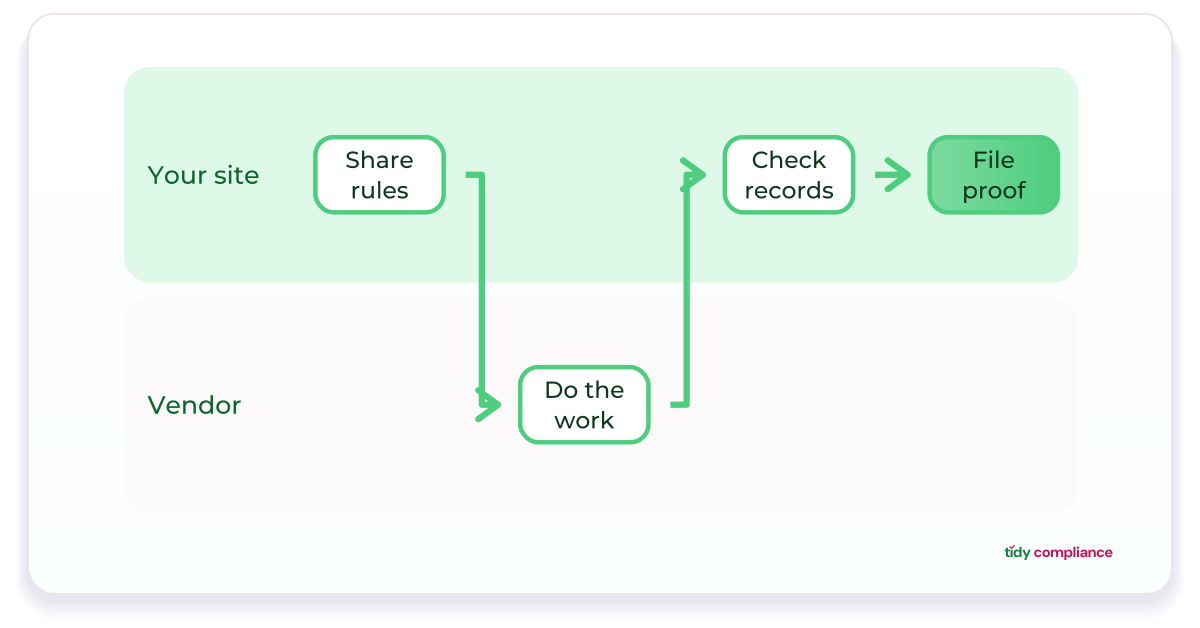
Waste haulers, maintenance contractors, lab services and construction crews work on your site and handle your materials. Their mistakes land on your record. Keep a short list of every vendor that touches waste, chemicals or equipment, with the service, the contract date and the last review.
Check the waste vendors in particular. Know where your hazardous waste goes, keep the manifest copies and read the vendor's records now and then. A waste hauler's problem can become your problem, and it is easier to find it through a yearly review than through a letter. Give contractors a short site briefing that covers spill response, storage rules and who to call, and keep the sign-in sheet.
Measure the Program With Five Numbers
You cannot manage what you never count. Five simple measures tell leadership how the program is doing without a long report. Track them monthly and show the trend, not only the current value.
| Measure | What it shows | Warning sign |
|---|---|---|
| Duties completed on time | Whether the calendar works | Falling below 95 percent for two months |
| Open corrective actions by age | Whether findings get fixed | Items open for more than ninety days |
| Routine checks completed | Whether sites run their rhythm | Logs filled in batches or with gaps |
| Training completion | Whether people are ready for their tasks | New staff working before training |
| Incidents and near misses reported | Whether people speak up | Zero reports for a long period |
The target of 95 percent is my working figure for mature sites, not a legal standard. Pick a threshold that fits your sites and apply it consistently. A sudden zero in incident reports is a warning sign too, since it often means that people stopped reporting, not that problems stopped.
Your First Ninety Days
If you are starting from a loose setup, do not try to fix everything at once. In the first thirty days, build the register from permits and agency letters, name an owner for each line and set the permit calendar. In the next thirty, start the weekly and monthly checks at each site and open one corrective action tracker. In the last thirty, run a light self-audit, hold the first management review and write down what you learned.
Expect delays. Permit files are rarely complete, owners are busy and the first logs come back messy. That is normal, and the second month looks much better than the first. What matters is that after ninety days each duty has a name, a date and a place for proof.
When Outside Support Pays Off
You can run most of this yourself. Outside help is useful at specific points: setting up the register, running the first full audit, preparing for an agency visit or training a new lead. Look for support that leaves your team with working documents and habits, and not a dependency.
- Nobody owns compliance across sites today.
- Permit deadlines are tracked in several personal calendars.
- You added sites, processes or chemicals since the last review.
- Findings from the last audit are still open.
Questions About Environmental Compliance Management
What Is Environmental Compliance Management?
It is the ongoing system a company uses to know which environmental requirements apply, assign duties, track permits and deadlines, keep records, train staff, check performance and fix problems. It runs all year and does not stop when a permit is issued or an audit is finished.
Who Should Be Responsible for Environmental Compliance?
Name one accountable lead for the company and one owner for each site. The site owner knows the daily operations, and the company lead sets the standard and watches the whole picture. Operators carry the daily tasks, and managers own the permits that cover their processes.
What Is an Environmental Management System?
It is a structured set of policies, objectives, procedures and reviews that a company uses to manage environmental performance. ISO 14001 is a well-known standard for such systems. A system helps, but certification is a business choice and not a replacement for meeting your permits and rules.
How Do I Keep Track of Permit Deadlines?
Put every permit, report and renewal into one register with the due date, the owner and the proof of submission. Set reminders sixty and thirty days ahead. A shared calendar works for a small company, and software helps when you have many sites.
How Often Should I Train Employees?
Train people when they start, when their duties change and on a regular refresh cycle that you set in your procedures. Some rules prescribe training for specific roles, so confirm the requirements for your operations with a qualified adviser.
What Records Should I Keep?
Keep permits, applications, monitoring and sampling data, waste manifests, inspection logs, training records, incident reports, audit reports and submissions to agencies. Retention periods vary by rule and by state, so write one retention schedule and have your counsel confirm it.
When Do I Need Outside Help?
Consider it when nobody owns compliance, when you add sites or processes, when an agency inspection or customer audit is coming or when findings stay open from one audit to the next. Outside support gives you method and speed. Legal interpretation remains a job for a licensed attorney.
Sources
Disclaimer: This article is for general information only and isn’t legal, financial or tax advice. Treat figures as estimates from typical work and confirm details with your providers before you act.
Was this guide helpful?
Thanks for your feedback.
Odessa Whitfield
Odessa leads the Tidy editorial team and works with the compliance consultants to turn real client projects into practical guides on regulations, frameworks, policies and audit preparation. Before joining Tidy, she worked in compliance and risk roles, writing and maintaining policy sets for regulated organizations. Every article goes through a consultant who has done the work in practice, and she updates guides when a rule, framework or tool changes. She works remotely from the United States.