Quick Summary
- The audit has five phases: scope, evidence, testing, scoring and a gap plan. Most of the work happens before anyone tests a control.
- Revision 2 has 110 requirements in 14 families, and your contract decides which revision applies to you.
- A policy alone rarely satisfies a requirement, because you also need a setting, a record or a person who can show it works.
- Scoring rules and program details change, so check the current methodology and your contract before you plan.
A NIST 800-171 audit tells you how well your systems protect the Controlled Unclassified Information you handle for government customers. If you work with NIST 800-171 compliance consulting, the audit is the step that turns a vague feeling about security into a score and a list. Most teams I meet are surprised by how much of it comes down to scope and paperwork that matches reality.
This framework covers the five phases I use to find gaps quickly. It is a planning aid and not legal advice, and it does not replace the rules in your contract. Confirm anything that affects a submission or a bid with your counsel and your contracting officer.
Five Phases in Brief
Each phase produces one output that the next phase depends on. If one output is weak, the audit shows it quickly.
| Phase | Main question | Output you need |
|---|---|---|
| 1. Scope | Which systems, people and places touch CUI? | Scope statement, network diagram and data flow |
| 2. Evidence | Can you prove each requirement is met? | System Security Plan and an evidence set per requirement |
| 3. Testing | Does the control work when someone tests it? | Test notes, interview notes and screenshots |
| 4. Scoring | Which requirements are met, and how much does each gap cost? | Score and a ranked gap list |
| 5. Gap plan | What gets fixed, by whom and by when? | Plan of action with owners and dates |
Phase 1: Set the Scope Before Anything Else
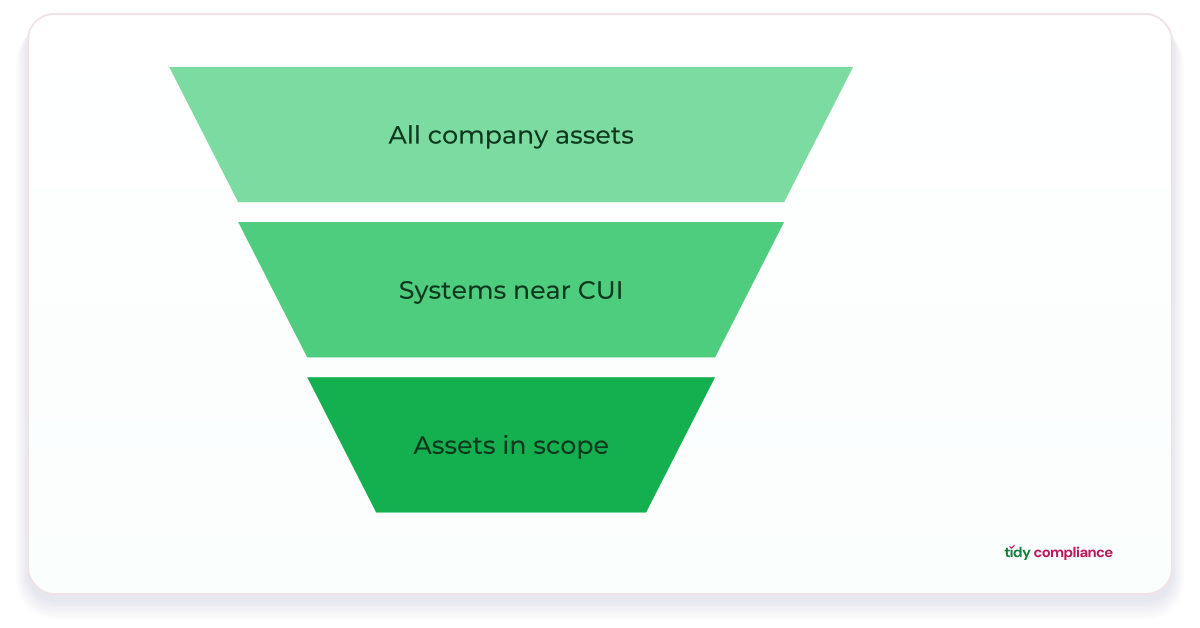
Scope is the decision that changes the size of the audit most. Everything that stores, processes or transmits Controlled Unclassified Information is in scope, along with the systems that protect it and the people who use it. Anything you can keep out of scope is a requirement you never have to prove.
I start every engagement by walking the data flow with the contracts team, because they know where the information really goes. IT teams often describe a cleaner picture than the one that exists, and the shared drive someone used in 2022 still turns up in the audit even if nobody lists it. Your scoping output is a short statement, a network diagram and a data flow diagram that agree with each other.
Scope Choices That Pay Back
A few choices shrink scope without weakening security. You can move CUI into its own enclave, limit who can reach it and use cloud services that are built for this kind of data. Each choice has a documentation duty, so you trade audit effort for design effort. For companies with a few dozen users who need CUI, the trade is usually worth it. Smaller boundaries also make the next point easier, which is the cost, covered in my NIST 800-171 compliance cost breakdown.
Phase 2: Build the Evidence Set
The audit measures your controls against the 110 requirements in NIST SP 800-171 Revision 2, which are grouped into 14 families such as access control, audit and accountability and incident response. Your evidence set holds a System Security Plan plus the documents, settings and records that show each requirement is met.
The System Security Plan sits at the center. It has to match your real environment. When the plan says multi-factor authentication covers every user and a tester finds three service accounts without it, the plan and the test disagree, and the test wins. Evidence that holds up is current, approved and specific. Drafts and unsigned policies do not count.
| Evidence type | Examples | Common weakness |
|---|---|---|
| Documents | Policies, procedures, System Security Plan, diagrams | Unsigned or outdated versions |
| Settings | Configuration exports, screenshots, logs | Screenshots that do not show which system they come from |
| People | Interview answers from administrators and users | Staff describe a process that differs from the document |
| Demonstrations | Live tests of access, logging and alerts | A control that exists on paper but is switched off |
I ask clients to date and sign every policy, keep screenshots with the system name visible and store everything in one folder structure organized by requirement. If you want a ready list to organize against, the NIST 800-171 compliance guide explains the 14 families in plain language.
Phase 3: Test the Way an Assessor Would
NIST SP 800-171A, the assessment guide that goes with the requirements, describes three methods: examine, interview and test. Each requirement is broken into assessment objectives, and Revision 2 has 320 of them in total. A requirement is only met when its objectives are satisfied.
Interviews catch more problems than most teams expect. Ask the administrator how new accounts are created, then ask a regular user how they got access. If the two answers describe different processes, you have your finding. In my client work the first round of mock interviews almost always turns up a surprise, such as a manager who approves access by chat message instead of through the ticket system.
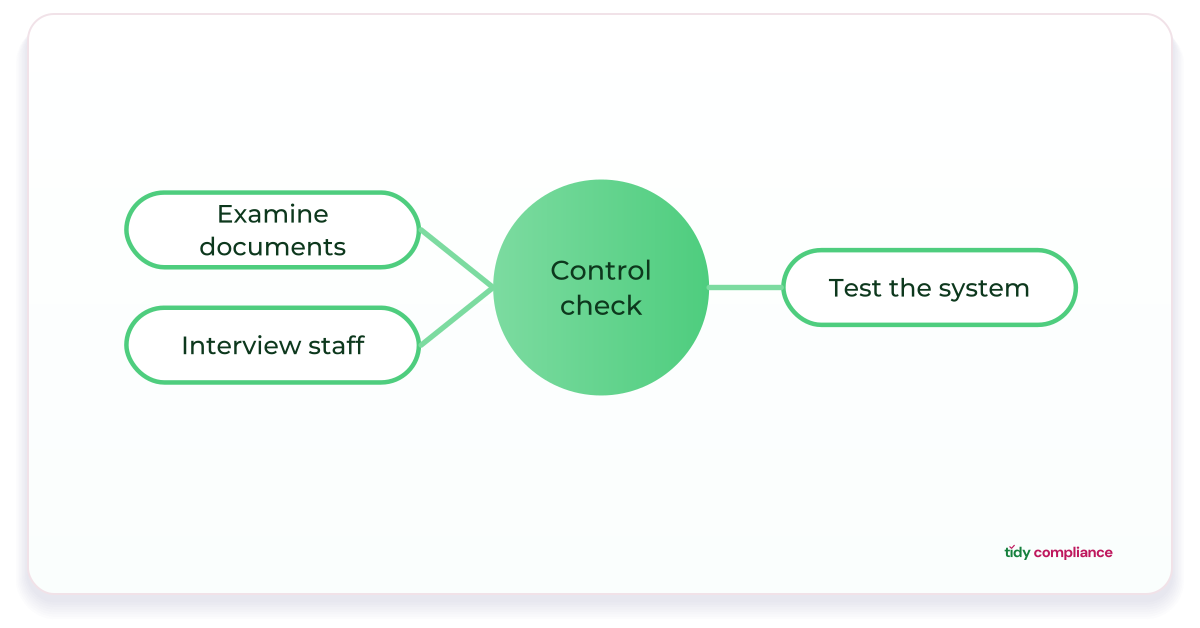
Testing is the third lever. Show that a locked account stays locked, that logs capture a login and that removable media is blocked. These checks reward teams that use tools their staff already know.
Phase 4: Score the Result and Rank the Gaps
The DoD assessment methodology gives a simple scoring model. The score starts at 110, and every requirement that is not met subtracts a weighted value of 5, 3 or 1 points, so a poor environment can end up with a negative number. The score is useful because it makes progress visible: a first score of 40 and a second of 85 tell a better story than a list of tasks.
Treat a self-scored result as a preliminary estimate until your authorized official reviews it, and check the current methodology document before you submit anything. A high score still hides risk when a single high-value gap sits in your most sensitive system, so rank gaps by risk and effort, not by points alone.
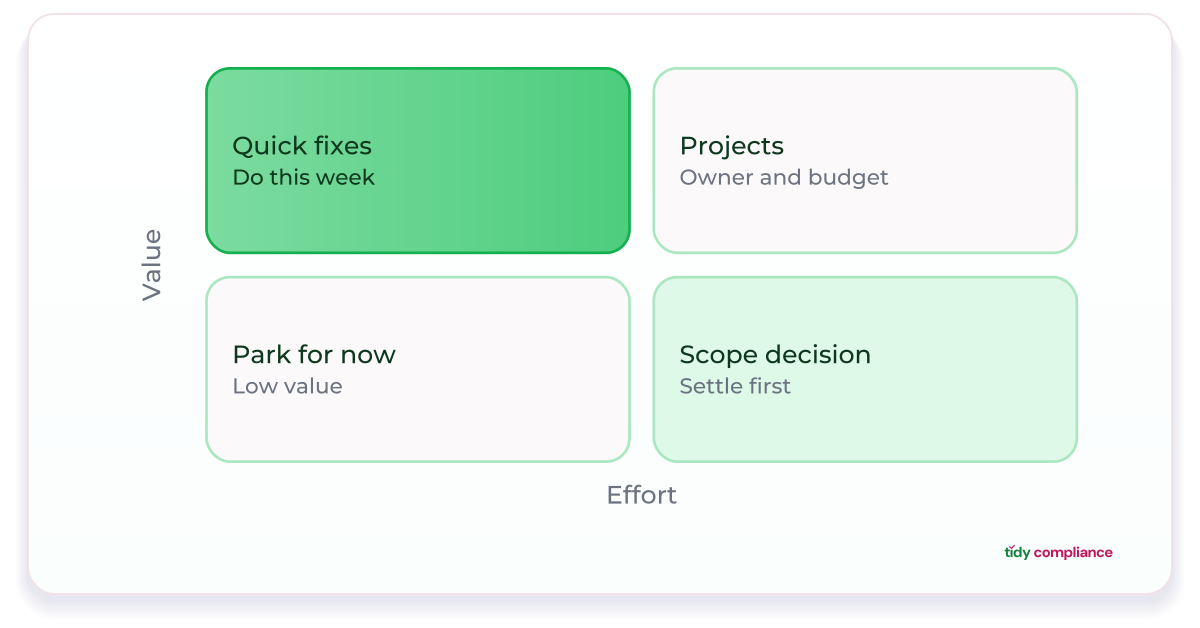
| Gap type | Typical example | How I rank it |
|---|---|---|
| Quick fix | Missing screen lock timeout, unsigned policy | Fix this week, small effort and clear points |
| Project | Multi-factor authentication for all users, log monitoring | Plan with an owner and budget, high value |
| Structural | Flat network with CUI on shared drives | Decide on an enclave first, because it changes everything else |
Phase 5: Turn Gaps Into a Plan of Action
A plan of action and milestones lists every open item with an owner, a date and the evidence that will close it. Write it before the audit ends, so nobody invents it in a hurry. Programs differ on what may go on a plan and how long it may stay open, so check the rules that apply to your contract.
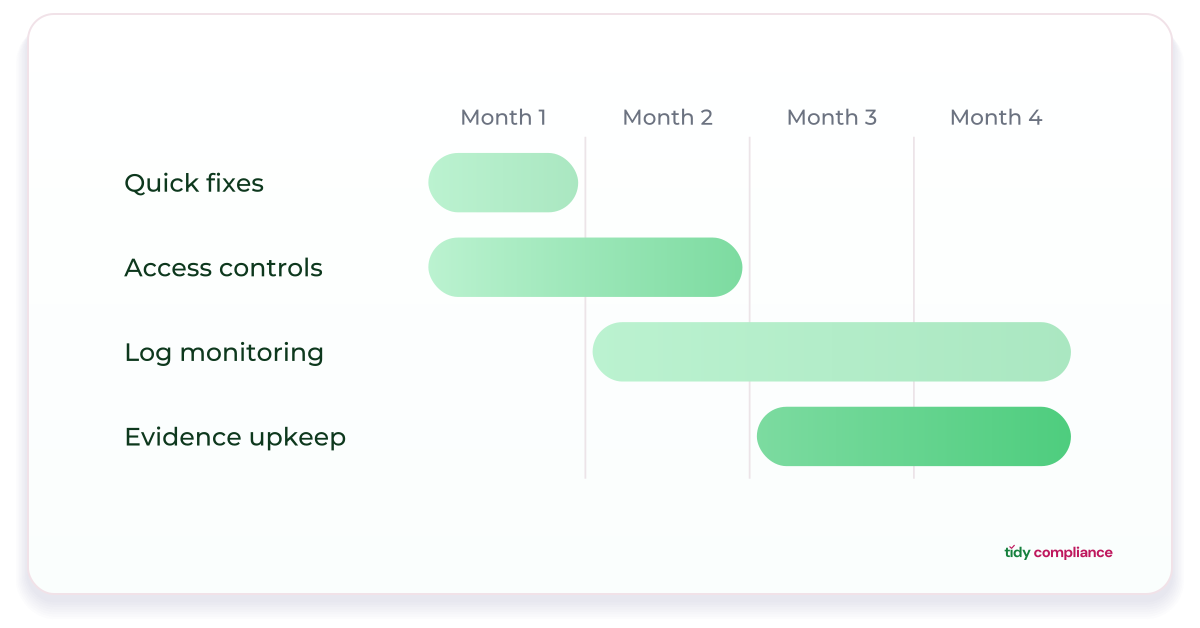
Budget and sequence come next. Start with items that touch the most systems, then the high-value gaps, then the quick fixes you can do in parallel. In a typical project I see, one or two items slip by a month because a tool needs to be bought or an IT change window is full. If your gaps lead toward a formal assessment, my NIST 800-171 compliance for small business article shows how smaller teams sequence the work with limited staff.
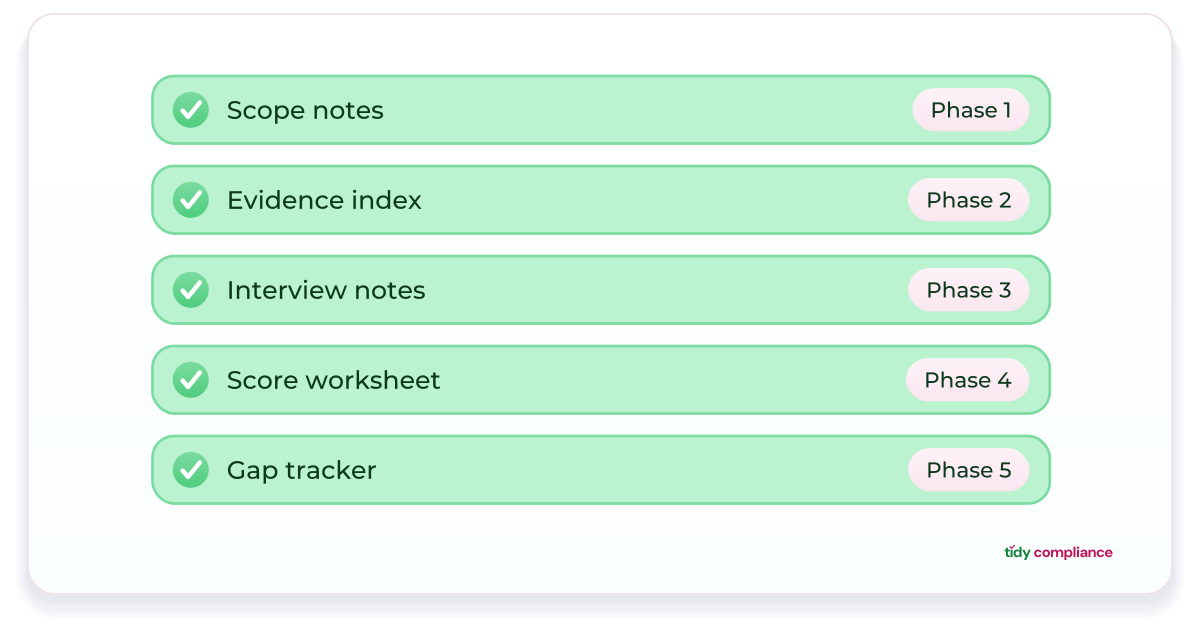
Keep the working papers for every phase. A score without notes is hard to defend a year later, when nobody remembers why a requirement was marked as met. A short log with the date, the person who checked and the evidence reference is enough, and it makes the next audit much faster.
Where Tools Help and Where They Do Not
Tools help with evidence collection, plan tracking and reminders. They do not decide your scope, and they do not make a requirement true. Use one when you have more requirements to track than a spreadsheet can handle. My ranking of NIST 800-171 compliance tools compares the main options and what each one covers.
How to Prepare Your Own Audit
You can run a lean audit with a small group. Before you start scoring, check this list:
- The scope statement, network diagram and data flow diagram agree with each other.
- The System Security Plan is signed, dated and matches how your systems run today.
- Every requirement has an evidence folder with current, approved material.
- Administrators and users have done a mock interview and gave matching answers.
- Every provider that touches CUI has documented its responsibilities.
- Your scoring rules follow the current assessment methodology.
If the list shows more gaps than you can close alone, you do not have to carry it by yourself. An outside review of scope and evidence costs little compared with fixing the wrong systems.
Questions About the NIST 800-171 Compliance Audit
What Is a NIST 800-171 Compliance Audit?
It is a structured check of your systems and practices against the security requirements in NIST SP 800-171. It can be a self-assessment, a review by a consultant or an assessment by a third party or the government. The goal is the same in each case: find out which requirements are met, which are not and what evidence proves it.
Who Performs the Audit?
It depends on your contract. Many contractors start with a self-assessment under the Department of Defense assessment method, and some contracts bring in government assessors or, under the CMMC program, authorized third-party assessors. Your solicitation names which applies, so read that language first and ask your contracting officer or prime if it is unclear.
How Is the Score Calculated?
Under the DoD assessment method the score starts at 110 and each requirement that is not met subtracts a weighted value of 5, 3 or 1 points. The lowest possible score is negative. Check the current methodology document, because values and rules can change.
Can I Put Open Items on a Plan of Action?
A plan of action and milestones lists gaps you intend to fix and by when. Whether it is accepted, and which items it may contain, depends on the program and contract that apply to you. Check the current rule text and ask your assessor or consultant, because some requirements cannot be deferred.
How Long Does a Gap Audit Take?
A questionnaire-style review can take days. An evidence-based review of a small environment often takes a few weeks, and a multi-site or hybrid environment takes longer. Preparation before the review takes more calendar time than the review itself, mostly for scope and evidence.
Do I Need to Audit Against Revision 2 or Revision 3?
Audit against the revision your contract names. Revision 2 has 110 requirements and is the version many current contract clauses and assessment programs still use. Revision 3 was published in May 2024, and adoption follows each program's own schedule, so confirm which one your customer expects.
How Often Should I Repeat the Audit?
At least once a year, and again after major changes such as a new cloud service, a new office or an acquisition. Your System Security Plan should be updated each time. Some programs set their own intervals, so check your contract.
Sources
- NIST SP 800-171 Revision 2, Protecting CUI in Nonfederal Systems
- NIST SP 800-171 Revision 3, Protecting CUI in Nonfederal Systems and Organizations
- NIST SP 800-171 DoD Assessment Methodology, Version 1.2.1
- The Defense Compliance Report, NIST 800-171 gap analysis
Disclaimer: This article is for general information only and isn’t legal, financial or tax advice. Treat figures as estimates from typical work and confirm details with your providers before you act.
Was this guide helpful?
Thanks for your feedback.
Odessa Whitfield
Odessa leads the Tidy editorial team and works with the compliance consultants to turn real client projects into practical guides on regulations, frameworks, policies and audit preparation. Before joining Tidy, she worked in compliance and risk roles, writing and maintaining policy sets for regulated organizations. Every article goes through a consultant who has done the work in practice, and she updates guides when a rule, framework or tool changes. She works remotely from the United States.