Quick Summary
- NIST 800-171 lists the security requirements for protecting Controlled Unclassified Information in your own systems.
- Revision 2 has 110 requirements in 14 families, and your contract decides which revision applies.
- Your first step is a map of where CUI lives, because scope drives effort, cost and score.
- The score, the System Security Plan and a plan of action are the three documents that tell your status.
If a contract clause or a prime contractor has just told you to "comply with NIST 800-171," you are probably holding more questions than answers. I have walked many small and mid-sized contractors through this first conversation, and the confusion is almost always the same: the document is long, the acronyms pile up and nobody says where to begin. A good NIST 800-171 compliance consulting engagement starts by removing that fog, and this guide does the same in writing.
It covers what the standard is, who it applies to, how it is organized, how scoring works and what to do in your first weeks. It is general information and not legal advice, and your contract is the final word on what applies to you.
What NIST 800-171 Actually Is
NIST Special Publication 800-171 is a list of security requirements for protecting Controlled Unclassified Information in nonfederal systems, meaning systems run by companies and universities instead of the government. NIST publishes it, and agencies put it into contracts. The requirements cover access, logging, encryption, training, incident response, physical security and more.
Controlled Unclassified Information, or CUI, is government information that needs protection but is not classified. Technical drawings, certain export-controlled data and some procurement documents are common examples. If you handle it, your contract usually says so, and it may come with a clause that points to NIST 800-171.
Who Needs to Comply
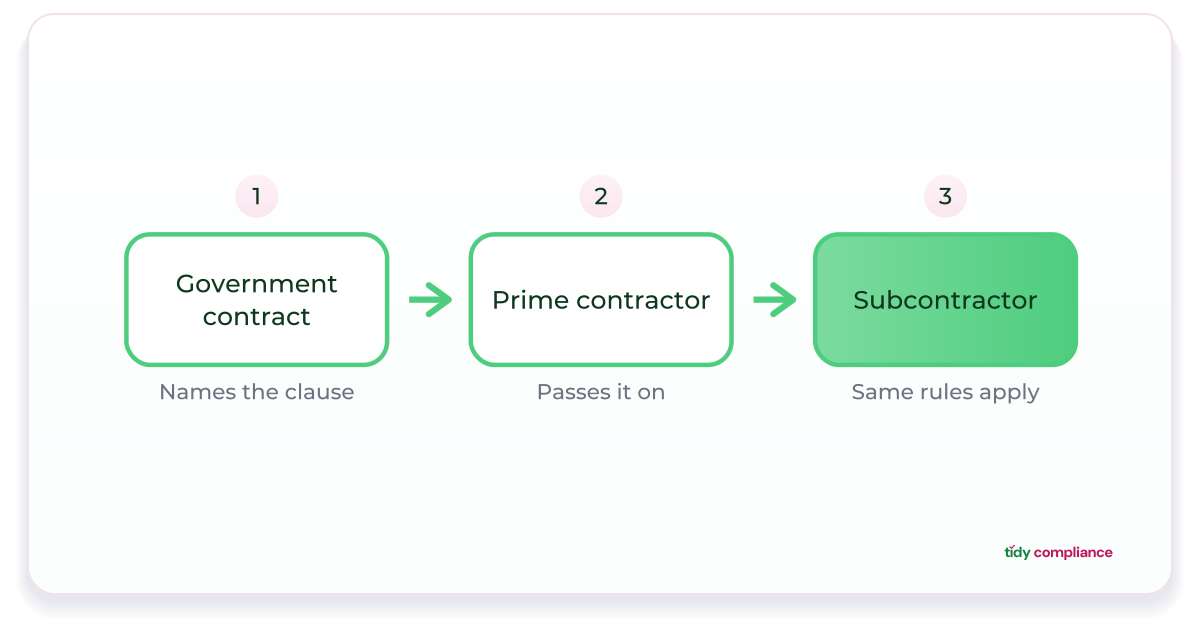
Anyone whose contract requires it. In the defense supply chain the clause that carries the requirement is DFARS 252.204-7012, and primes pass it down to subcontractors. Other agencies use similar clauses for their own CUI. Size does not matter. A five-person machine shop and a large integrator both have to protect CUI they handle, but the effort looks very different, as my article on NIST 800-171 compliance for small business explains.
The relationship with CMMC causes the most confusion, so here is the short version. NIST 800-171 is the content, and CMMC is a program that verifies it for defense contractors. The Level 2 practices follow NIST 800-171, so work you do now carries forward. Program rules and rollout are set by the Department of Defense, so check the current status in your contract.
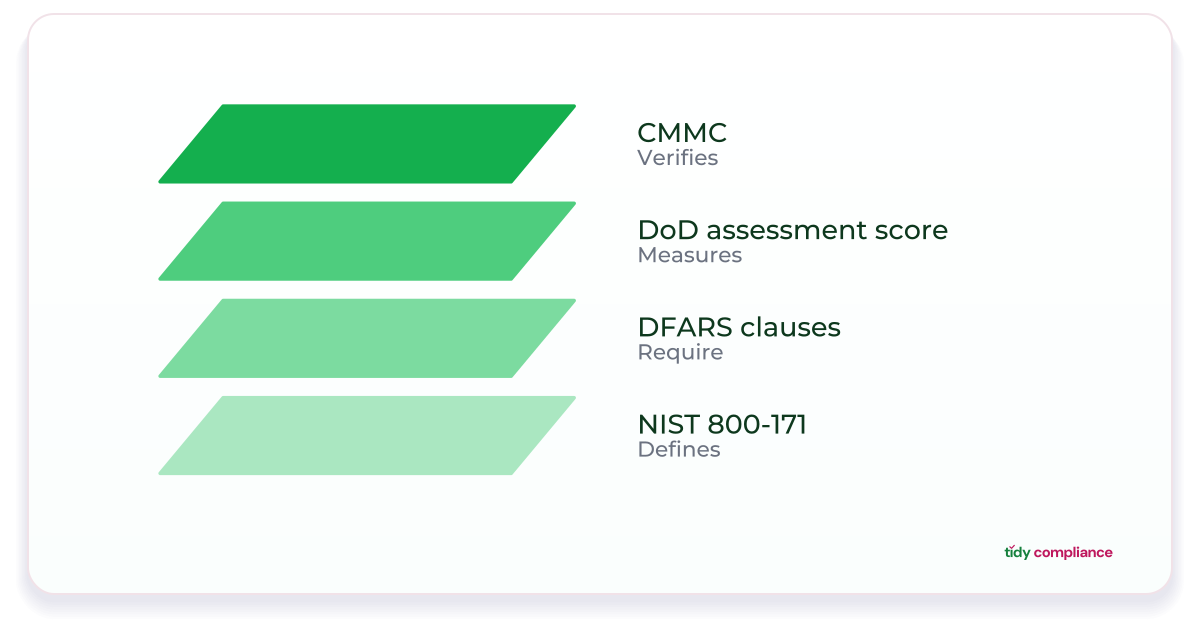
| Item | What it is | Who sets it |
|---|---|---|
| NIST SP 800-171 | The security requirements for CUI in nonfederal systems | NIST |
| DFARS clauses | Contract language that requires the requirements and reporting | Department of Defense |
| DoD assessment methodology | The scoring method for a self-assessment | Department of Defense |
| CMMC | A program that verifies contractors meet the requirements | Department of Defense |
The 14 Families in Revision 2
Revision 2 groups its 110 requirements into 14 families. You do not need to memorize them, but knowing the groups helps you assign owners. Access control and system and communications protection hold more than a third of the requirements between them.
| Family | Requirements | What it asks of you |
|---|---|---|
| Access Control | 22 | Who can reach CUI and what they can do |
| Awareness and Training | 3 | Staff know the rules and the threats |
| Audit and Accountability | 9 | Logs show who did what and when |
| Configuration Management | 9 | Systems are set up and changed in a controlled way |
| Identification and Authentication | 11 | Users and devices prove who they are |
| Incident Response | 3 | You can detect, report and handle incidents |
| Maintenance | 6 | Repairs and updates do not open a door |
| Media Protection | 9 | Drives, paper and backups are protected |
| Personnel Security | 2 | People are screened and access ends when they leave |
| Physical Protection | 6 | Buildings and devices are protected |
| Risk Assessment | 3 | You find and rank risks and vulnerabilities |
| Security Assessment | 4 | You test controls and keep a plan |
| System and Communications Protection | 16 | Data is protected in transit and at rest, and networks are separated |
| System and Information Integrity | 7 | You fix flaws and watch for malware and attacks |
Revision 3 was published in May 2024 and reorganizes the content into 17 families, adding areas such as planning, system and services acquisition and supply chain risk management. Programs adopt revisions on their own schedule, so confirm which one your contract expects before you build a plan.
Two terms come up in every conversation and are worth knowing. A "requirement" is one of the numbered statements, such as limiting system access to authorized users. An "assessment objective" is a smaller test inside a requirement, described in the companion publication NIST SP 800-171A. A reviewer works through objectives, so a requirement is only met when all of its objectives are.
The Three Documents That Tell Your Story
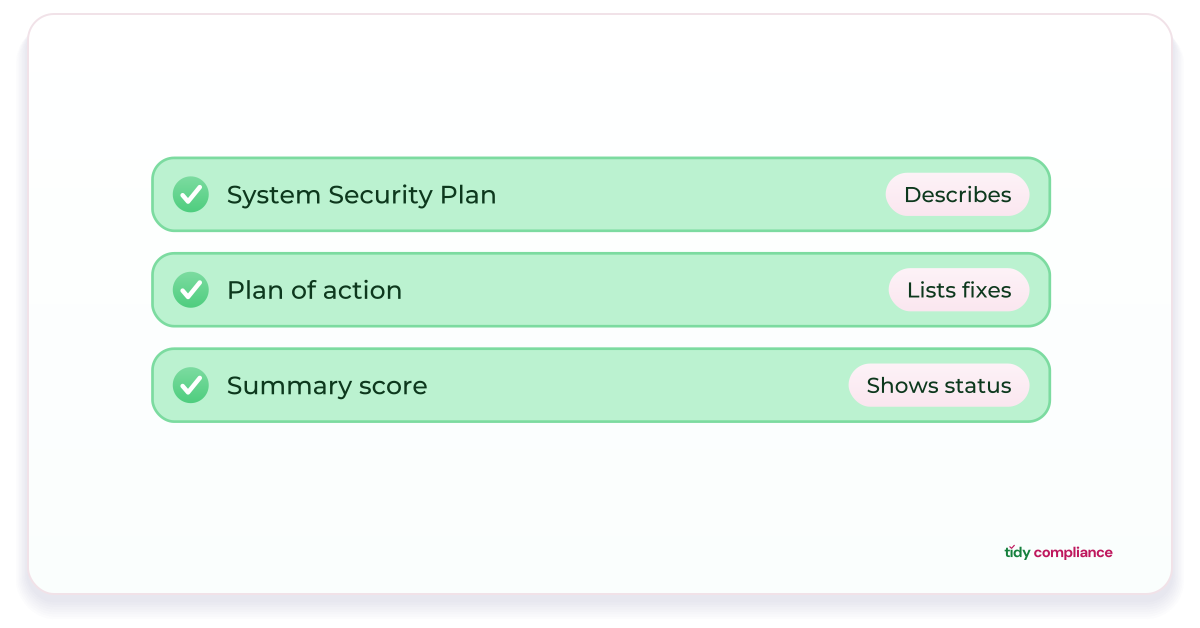
Three documents sit at the center of the work. The System Security Plan describes your system boundary and how you meet each requirement. The plan of action and milestones lists the gaps you have and when you will close them. The score summarizes your status in one number under the DoD assessment method.
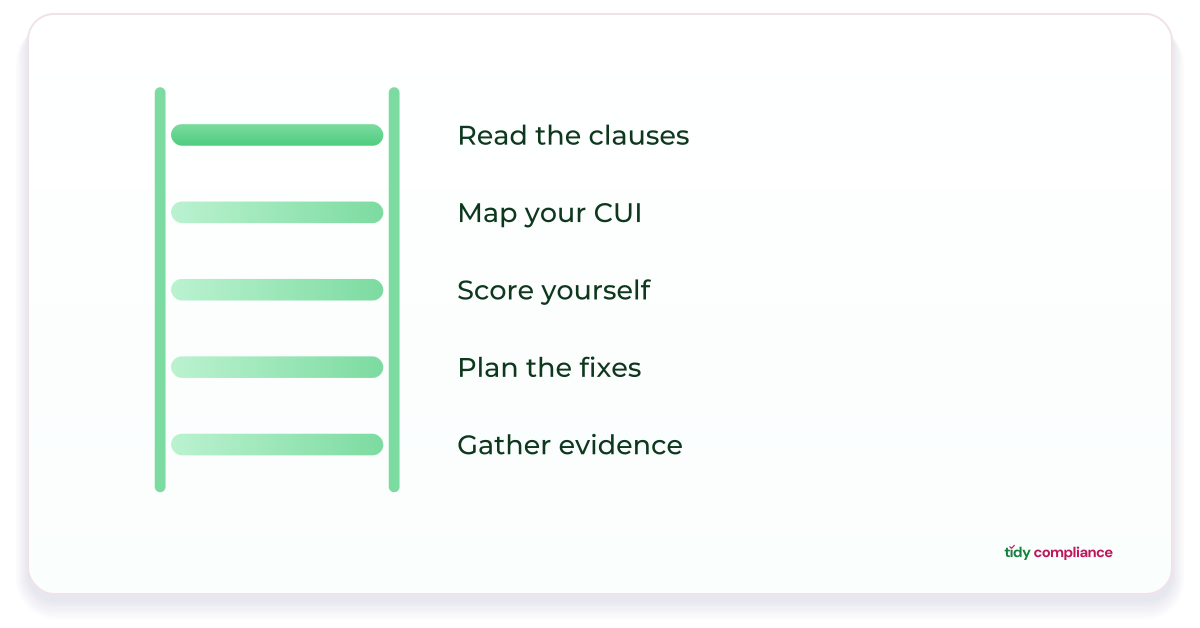
The score starts at 110 and goes down by 5, 3 or 1 points for each requirement that is not met, so the number can end up negative for an environment with many gaps. It is easy to compare over time, which is why customers like it. It is also easy to overstate, and a score you cannot back with evidence creates more problems than a low one. The NIST 800-171 compliance audit framework shows how to score honestly in five phases.
How to Get Started
Start with four moves, in this order. First, read the clauses in your contract and note the revision, the information type and any reporting duty. Second, find where CUI lives, including email, shared drives, laptops and vendor portals. Third, name an owner. Fourth, draft a short System Security Plan and score yourself against the requirements.
Most new teams want to buy something at this point. I suggest waiting. You will know much better what you need after the first scored pass, and some tools solve a narrow problem that shrinks your scope more than a broad platform could. You can see how the main options compare in my NIST 800-171 compliance tools ranking.
A good first week looks modest. You read the clauses, interview the person who handles contracts, list the places CUI could be stored and ask your IT provider what it already documents. None of that needs a tool or a budget. It does need a few honest answers, and the one I hear least often is "we do not know yet," which is a perfectly good place to begin.
What It Costs and How Long It Takes
Cost and time follow scope and your starting point. A company with CUI on a few devices and basic controls in place can get to a first score and a plan in weeks. A company with CUI spread across a flat network needs months of remediation. Published provider estimates put a first-year program for a company of up to 50 people in the tens of thousands of dollars. I break the pieces down in the NIST 800-171 compliance cost article.
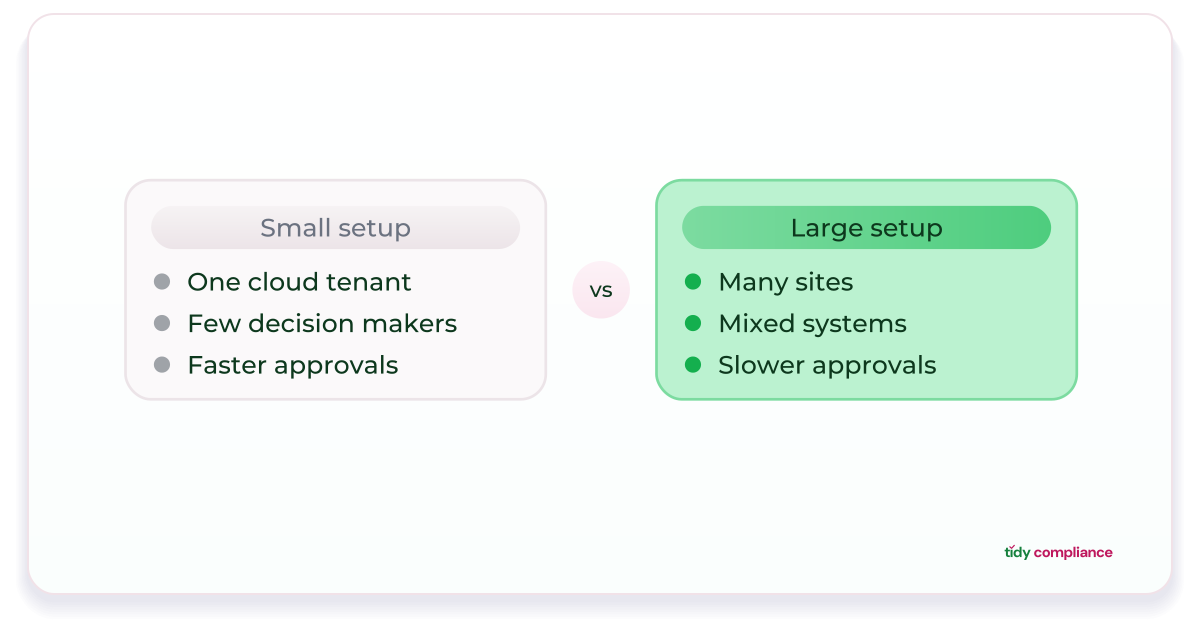
Time depends on how fast your team can make decisions. Projects slow down when nobody can approve a change to the network, buy a license or sign a policy. A named owner with authority removes most of that delay, which is why I put ownership on the starter checklist below.
Cost has a second layer that is easy to miss, which is upkeep. Once the gaps are closed, you still run access reviews, update the System Security Plan when systems change, train new hires and renew tools. Plan for that from the start, so the program does not decay the month after the first review.
A Starter Checklist
Use this list for your first month. If you can tick every line, you have the foundation that the rest of the project builds on.
- You know which contract clauses require NIST 800-171 and which revision they name.
- You have a one-page map of where CUI lives and who touches it.
- One person owns the project and has time set aside for it.
- A draft System Security Plan exists, even with open gaps.
- You scored yourself using the DoD assessment method and saved the working papers.
- Your IT provider has told you in writing which requirements it covers.
- A plan of action lists each gap with an owner and a date.
How to Decide on Next Steps
Think of the standard as a long checklist with a short list of decisions behind it: what is in scope, who owns each family and how you will show evidence. Teams that settle those three early move steadily, and teams that skip them keep rewriting documents. Leave legal questions about clause wording to your counsel, and keep the technical work with people who run the systems.
If your contract names a deadline or a customer asks for a score, begin with scope and the first scored review. If you have time, do the review yourself and bring in an outside reviewer for scope and the System Security Plan, where errors cost the most. If your IT provider cannot show you how it handles CUI, consider an independent review before you commit to remediation.
Questions About NIST 800-171 Compliance
What Is NIST 800-171?
It is a publication from the National Institute of Standards and Technology that lists security requirements for protecting Controlled Unclassified Information when it sits in systems that are not run by the government. Contractors meet it because their contracts require it. NIST publishes the requirements, and the contracting agency decides who has to follow them.
What Is Controlled Unclassified Information?
It is information that the government creates or holds and that needs protection, but that is not classified. Examples include certain technical drawings, export-controlled data and some procurement details. Your contract or your customer should tell you what is marked as CUI, and your counsel can help if the marking is unclear.
How Many Requirements Are There?
Revision 2 lists 110 requirements in 14 families. Revision 3, published in May 2024, restructures them into 17 families. Which revision you follow depends on your contract and on the program that assesses you.
Is NIST 800-171 the Same as CMMC?
No. NIST 800-171 is the set of requirements. CMMC is the Department of Defense program that checks whether contractors meet them, and its Level 2 follows the same requirements. Preparing for one prepares you for much of the other.
Do I Have to Be Certified?
NIST 800-171 itself is not a certification. Depending on your contract, you may submit a self-assessment score, undergo a government review or, under CMMC, a third-party assessment. Check the clauses in your contract and the current program rules.
How Long Does It Take to Become Compliant?
It depends on your scope and your starting point. A small company with a tight scope can reach a scored review and a plan within weeks and close the main gaps in a few months. Larger or multi-site environments take longer.
What Should I Do First?
Read your contract clauses, find where CUI lives and write that down on one page. Everything else, from the score to the budget, depends on that map.
Sources
- NIST SP 800-171 Revision 2, Protecting CUI in Nonfederal Systems
- NIST SP 800-171 Revision 3
- NIST SP 800-171 DoD Assessment Methodology, Version 1.2.1
Disclaimer: This article is for general information only and isn’t legal, financial or tax advice. Treat figures as estimates from typical work and confirm details with your providers before you act.
Was this guide helpful?
Thanks for your feedback.
Odessa Whitfield
Odessa leads the Tidy editorial team and works with the compliance consultants to turn real client projects into practical guides on regulations, frameworks, policies and audit preparation. Before joining Tidy, she worked in compliance and risk roles, writing and maintaining policy sets for regulated organizations. Every article goes through a consultant who has done the work in practice, and she updates guides when a rule, framework or tool changes. She works remotely from the United States.