Quick Summary
- The requirements are the same for a five-person shop and a large contractor, but a small company can meet them in much lighter ways.
- Scope is your biggest lever, so decide where CUI lives before you spend on tools.
- Name one owner, write a short System Security Plan and fix gaps in order of risk.
- Your IT provider shares the work, so get their responsibilities in writing.
Small contractors tell me the same thing: the 110 requirements in NIST SP 800-171 look written for someone with a security team. They are not wrong that the language is heavy. But what a small company has to prove is smaller too, because fewer people, devices and places touch the information. The work I do through NIST 800-171 compliance consulting with small firms starts with that point, and it changes the budget conversation.
This article shows how I would approach NIST 800-171 if I ran a company of ten or fifty people. It is general guidance and not legal advice. Your contracts decide what applies, so confirm clauses with your counsel and your customer.
What Really Changes When You Are Small
The requirements do not shrink with your headcount. A requirement such as multi-factor authentication or audit logging applies in full. What shrinks is the number of systems you have to apply it to and the effort of keeping evidence current. A company with eight laptops can often show a control with one settings export, where a larger company needs a monitored process across hundreds of devices.
The tradeoff is capacity. A small company has no spare person to read a 100-page framework, so the plan has to fit in the gaps between customer work. I think of it as three constraints: limited hours, limited budget and limited tolerance for tools nobody has time to learn. The sections below follow those constraints.
| Topic | What a small company can do | What it usually avoids |
|---|---|---|
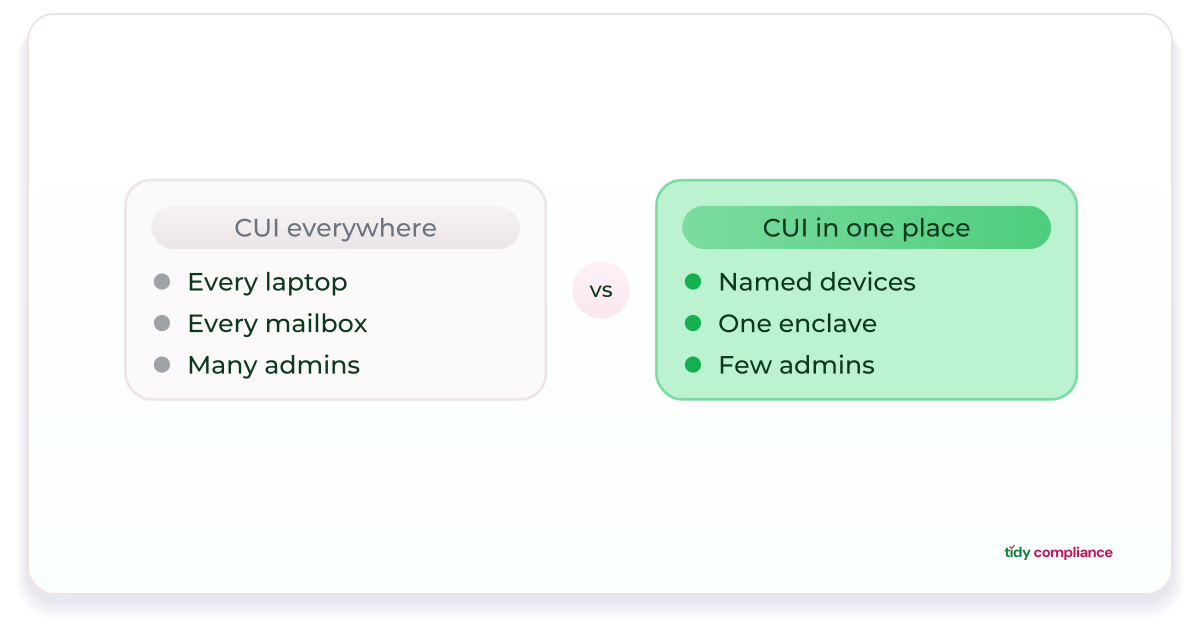
| Scope | Keep CUI on a few named devices or in one enclave | CUI spread across every laptop and mailbox |
| Ownership | One named owner and a short responsibility table | A committee with no time |
| Documents | A System Security Plan and short procedures | Long policy sets copied from templates |
| Tools | Built-in settings and one or two focused tools | A full platform before the process works |
| Evidence | A dated folder per requirement family | Screenshots collected at the last minute |
Shrink the Scope First
The cheapest requirement is the one you never have to meet. Start by finding every place CUI lives: email, shared drives, laptops, phones, a design tool, a vendor portal. Then decide where it should live. Many small contractors pick one secured cloud environment or one set of managed devices, and block CUI from everywhere else.
This choice has costs. People work a little differently, and you need a rule for how files get in and out. I have seen it go wrong when the new enclave was too awkward, and staff quietly started emailing files around it. A few hours of training and a clear rule fixed that. If you want to see how scope affects the budget, the NIST 800-171 compliance cost article puts figures on the difference.
Before the plan, a word on expectations. Your first score will probably be lower than you hoped, and that is normal. Most small contractors I meet start with a mix of strong basics, such as antivirus and backups, and a few large gaps, such as logging and formal procedures. A low first score is normal, and it is useful because it gives you a baseline, and every point you gain after that is visible progress that you can show to a customer.
Your First 90 Days
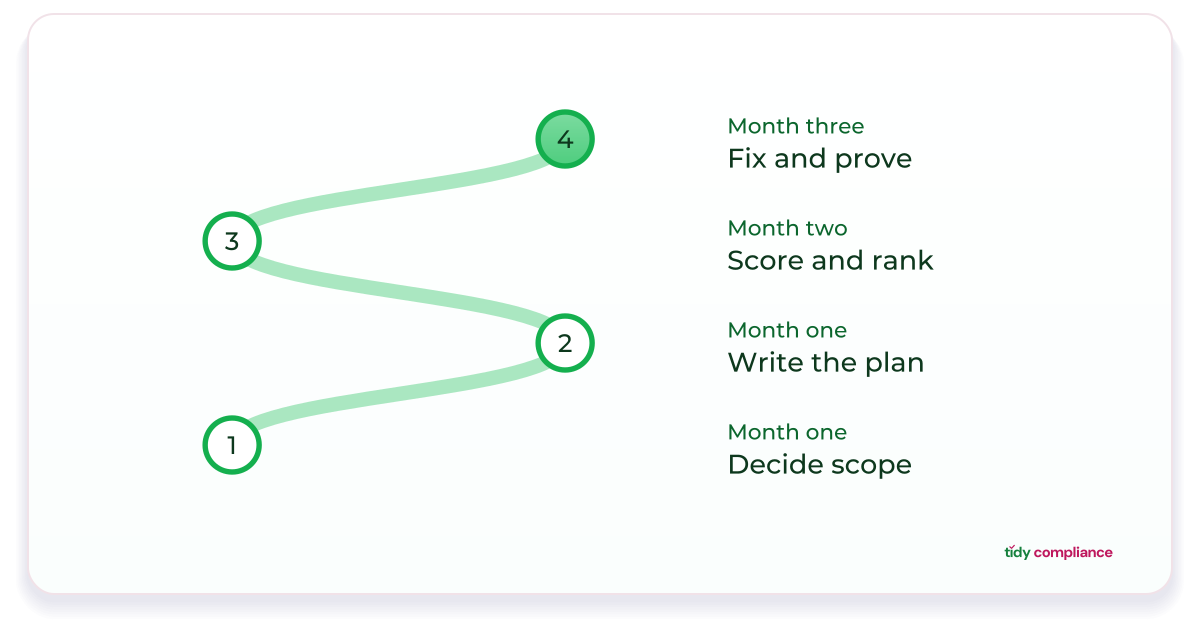
You do not need a perfect program in a quarter. You need a scope, a score and a plan. Here is the sequence I suggest to small teams who start from zero.
Month One: Decide and Document
Confirm the clauses in your contracts, map where CUI lives and choose your scope. Name an owner and block out a few hours a week for that person. Write a first draft of the System Security Plan, even if half the requirements say "not yet met." A draft that is honest beats a polished one that is not.
Month Two: Score and Rank
Score yourself against the 110 requirements using the DoD assessment method and rank the gaps by risk and effort. Quick wins, such as screen locks and signed policies, go first. Bigger items, such as multi-factor authentication and logging, get an owner and a budget. My piece on the NIST 800-171 compliance audit explains how to run this review in five phases.
Month Three: Fix and Evidence
Close the quick wins, start the projects and begin saving evidence in a dated folder. By the end of the quarter you should have a score that is higher than your first one and a plan of action with dates. That alone answers most customer questions.
Working With Your IT Provider
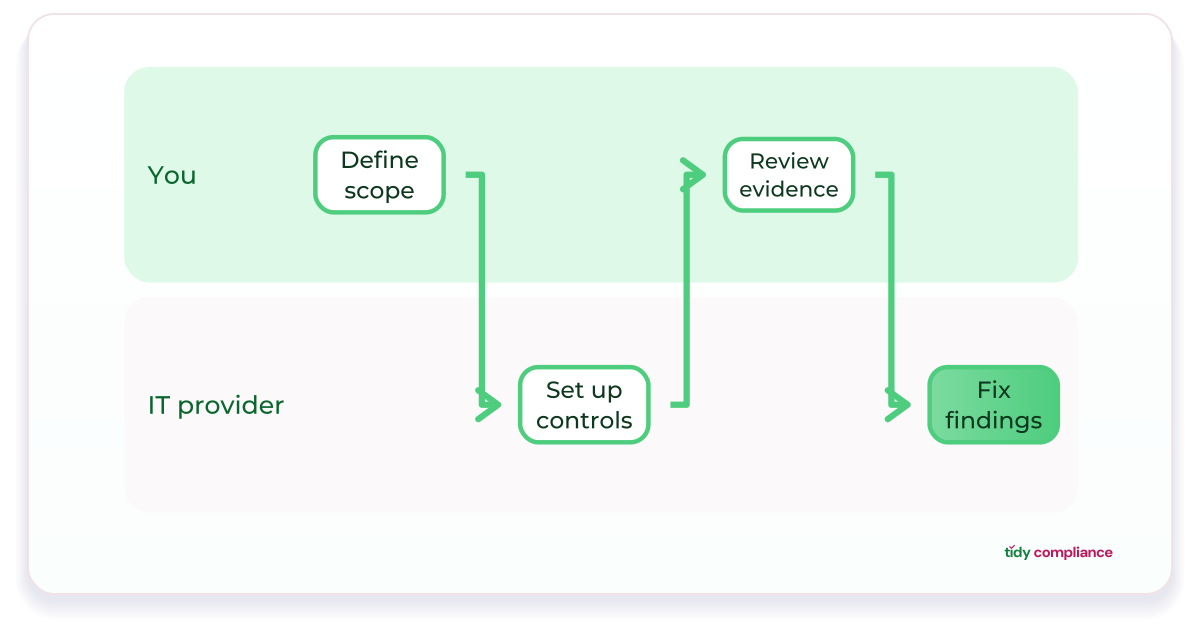
Most small contractors rely on an outside IT provider for email, backups and devices. That makes the provider part of your compliance story. Ask for a short written statement of which requirements they meet on your behalf, which stay with you and how they handle CUI if it passes through their systems.
Providers differ a lot here. Some know the requirements well and can show evidence on request. Others have never been asked. If yours falls in the second group, you can still work with them, but expect to take on more of the documentation yourself, and consider a short review by someone who knows the framework. Questions about contract liability and flow-down terms belong with your counsel.
Spend on Tools Last, Not First
It is tempting to buy a platform in week one. I suggest waiting until your first scored pass is done. At that point you know which requirements have real volume, such as access reviews or log checks, and which are one-time settings. Some tools solve a narrow problem, such as encrypted email and files for CUI, and can shrink scope more than a broad platform. My comparison of NIST 800-171 compliance tools shows which kind fits which problem.
| Spending order | Item | Why it comes here |
|---|---|---|
| 1 | Scoped review and System Security Plan | Everything else depends on it |
| 2 | Access control and multi-factor authentication | High-value requirements with broad effect |
| 3 | A secure place for CUI | Shrinks scope and the work that follows |
| 4 | Logging and monitoring | Needs a defined scope to be useful |
| 5 | Evidence and tracking tool | Pays off once the process runs |
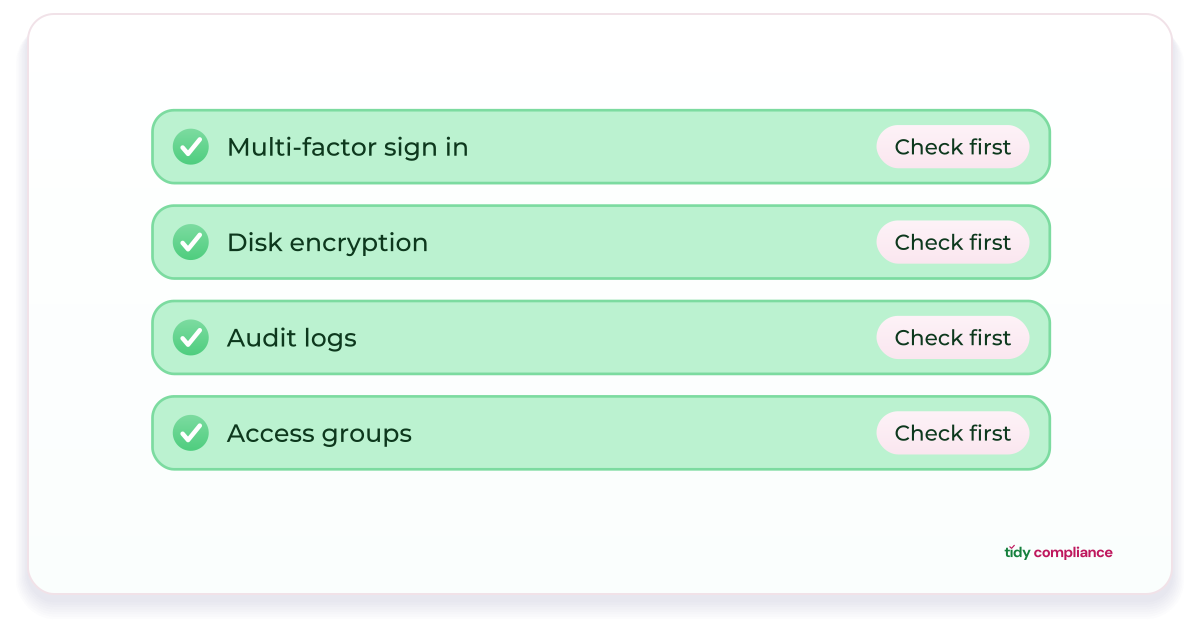
One more point on tools: check what you already own. Many small companies pay for email, identity and device management products that include settings for multi-factor authentication, encryption and logging. Switching those on can close several requirements at no new cost, and it keeps your environment simpler than adding another product. The limit is licensing, since some features sit in higher plans, so check your current tier before you assume.
Keep one rule for every purchase: it must close a named gap from your plan. A product that is not tied to a gap on the list usually becomes shelfware, and shelfware is the most expensive kind of compliance spending because it also adds a system to maintain.
Mistakes I See Small Companies Make
The most common mistake is writing a long policy set from a template and never matching it to real practice. The second is putting the whole company in scope because nobody drew a boundary. The third is waiting for a contract deadline, which squeezes the one phase that cannot be rushed: gathering evidence over time, for example showing that an access review happened every quarter.
A quieter mistake is treating the project as an IT task. The people who handle contracts, HR and facilities own requirements as well, such as personnel screening and physical access. Pull them in early. For a view of the basics before you start, the NIST 800-171 compliance guide walks through the 14 requirement families.
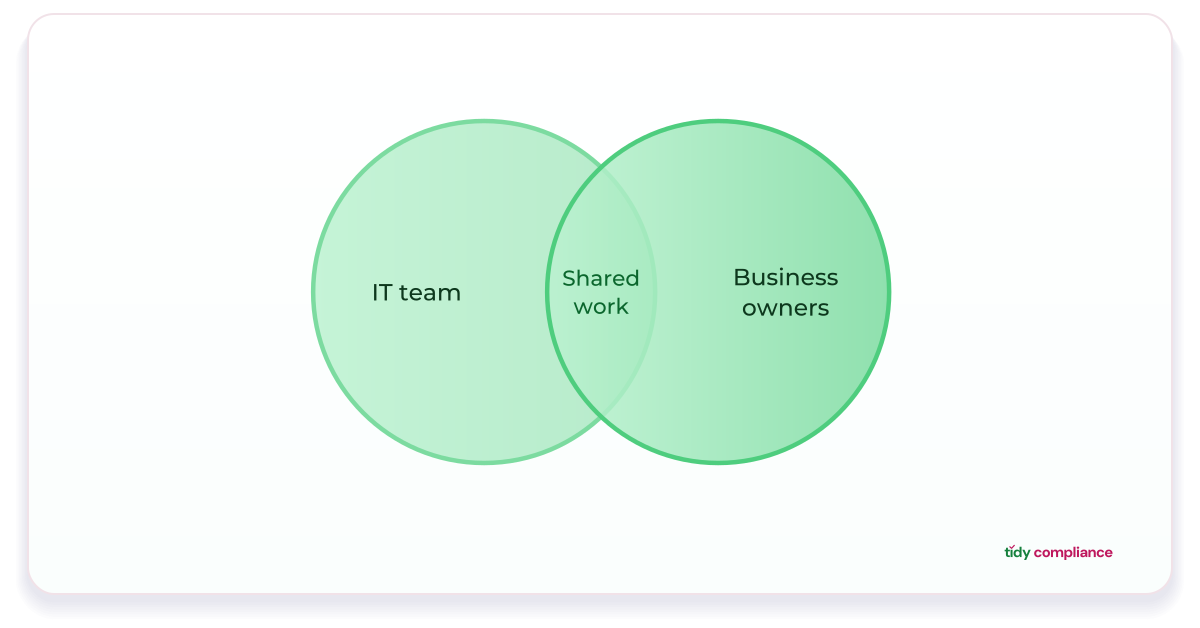
Time is the last constraint. A realistic plan for a company of fifteen people asks the owner for three to five hours a week, the IT provider for a few hours a month and every staff member for one short training session. Putting those hours in a calendar in advance is what keeps the project moving, because customer work will always win a fight with compliance work that has no date.
How to Decide Whether You Need Outside Help
Work through the first month yourself, since you know your contracts and data best. Bring in help when one of these is true:
- You cannot say where CUI lives or which systems touch it.
- A customer or prime has asked for a score or a plan with a date.
- Your IT provider cannot show which requirements it meets for you.
- You have gaps but no owner, no budget or no time.
A short outside review of scope and the System Security Plan usually saves the most rework. It also gives you a neutral view to share with your customer.
Questions Small Contractors Ask About NIST 800-171
Does NIST 800-171 Apply to a Company with Five Employees?
Size does not decide it. Your contracts do. If a contract or a subcontract flows down a clause that requires you to protect Controlled Unclassified Information, the requirements apply to you whether you have five employees or 500. Read the clauses, ask your prime contractor what they expect and ask your counsel if the wording is unclear.
Can a Small Business Skip Some Requirements?
No requirement disappears because you are small. What changes is how you meet it. A five-person company can meet a requirement with a simple setting or a one-page procedure, where a larger one needs a tool and a team. The goal is to make each requirement as light as it can be while still being true.
What Is the Cheapest Way to Start?
Define your scope. If CUI lives on two laptops and one cloud folder, your project is much smaller than if it lives across every device in the office. After that, a scored self-review costs mostly your own time, and you can decide where to spend money on the biggest gaps.
Should I Buy a Compliance Platform First?
I would not. A platform tracks work, and you cannot track work until you know your scope and your gaps. Run a first pass in a spreadsheet, then decide whether the number of requirements and the evidence volume justify a tool.
Do I Need a Dedicated Security Person?
Not at the start. You need one named owner with real time, which is often the owner or an operations lead, plus an IT provider who understands the requirements. A fractional specialist for the plan and the gap list is a common middle path.
How Does My Managed IT Provider Fit In?
Your provider runs many of the systems in scope, so they own many of the settings. Ask for a written statement of which requirements they meet for you and which stay with your company. Providers that handle CUI for you may need to meet requirements of their own.
How Long Will This Take?
A small company with a tight scope can often reach a first scored review and a plan in weeks, and fix the most important gaps over a few months. Procurement of a tool or a provider change is usually what slows things down, so plan for it early.
Sources
- NIST SP 800-171 Revision 2, Protecting CUI in Nonfederal Systems
- NIST SP 800-171 DoD Assessment Methodology, Version 1.2.1
Disclaimer: This article is for general information only and isn’t legal, financial or tax advice. Treat figures as estimates from typical work and confirm details with your providers before you act.
Was this guide helpful?
Thanks for your feedback.
Odessa Whitfield
Odessa leads the Tidy editorial team and works with the compliance consultants to turn real client projects into practical guides on regulations, frameworks, policies and audit preparation. Before joining Tidy, she worked in compliance and risk roles, writing and maintaining policy sets for regulated organizations. Every article goes through a consultant who has done the work in practice, and she updates guides when a rule, framework or tool changes. She works remotely from the United States.