Quick Summary
- An assessment compares what you must do with what you really do and ranks the gaps.
- Sample real records, since policies on paper often differ from daily practice.
- Score with a short scale and a ranked list, not decimal percentages.
- The value comes from the action plan, so name an owner before you start.
A risk and compliance assessment answers one question: if a regulator, auditor or large customer asked about your program tomorrow, how ready are you? It does that by comparing what you must do with what you really do, then ranking the differences by how much damage each could cause. In my risk and compliance consulting work, the assessment is always the first deliverable, because every later decision about budget and order of work comes from it.
Below I explain what an assessment covers, how the steps run, how to score readiness and what to do with the results. Use it to plan your own or to judge the proposal of an outside provider. This is compliance consulting, not legal advice, so your counsel decides what a specific rule requires.
What a Risk and Compliance Assessment Includes
Two reviews are often mixed up. A risk assessment looks at events that could harm you and rates likelihood and impact. A compliance assessment checks your practices against specific obligations. Combining them avoids duplicate interviews and shows which gaps are also high risks.
| Part | Key question | Typical evidence |
|---|---|---|
| Obligation review | Which rules, standards and contract terms apply to us? | Obligations register, contracts, regulator letters |
| Gap review | Where do our practices fall short of those obligations? | Policies, procedures, sampled records |
| Risk rating | Which gaps and events could hurt us most? | Workshop notes, incident history, loss data |
| Control review | Do our checks exist and do they run? | Control lists, test logs, approvals |
| Readiness view | How would a reviewer see us today? | Scored summary and ranked action plan |
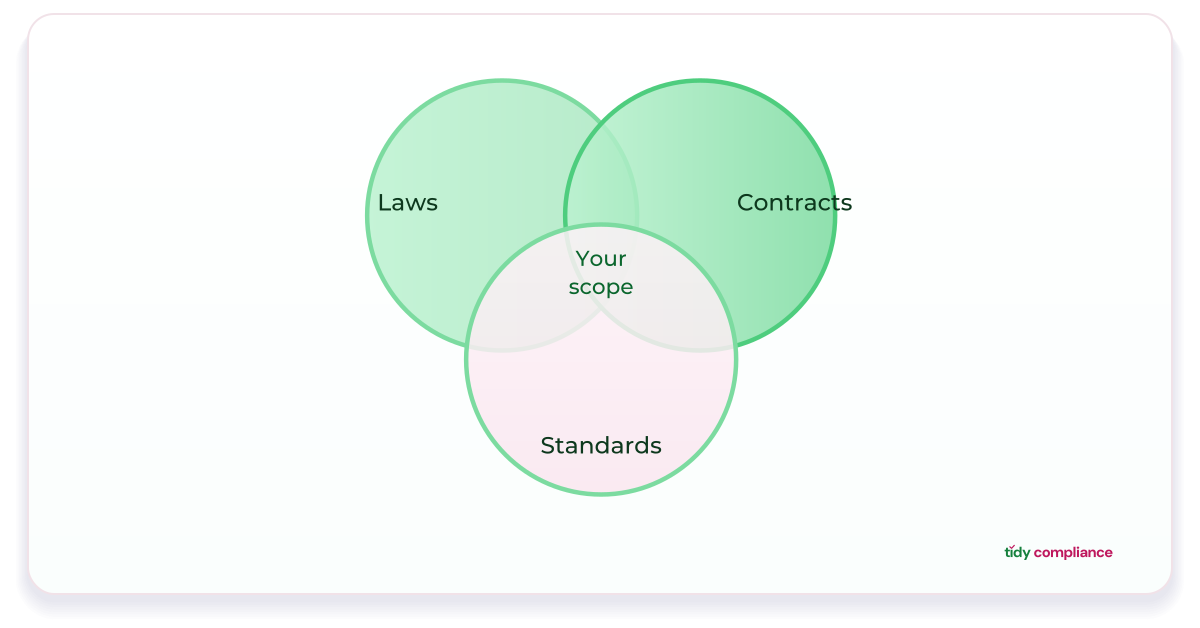
The scope depends on your sector. A hospital group usually reviews privacy, billing and security rules. A bank looks at lending, consumer protection and financial crime duties. Software companies often cover security frameworks and customer contract promises. Pick the scope with a short list of obligations, then widen it later.
The Steps of an Assessment, From Scope to Report
A good assessment follows a fixed order. Standards such as NIST SP 800-30, the Guide for Conducting Risk Assessments, describe risk assessment as part of a larger risk management cycle that begins with preparation and ends with communicating and maintaining results. The practical version for most organizations has six steps.
- Set scope and sponsor. Agree which business areas, sites and obligations are in, who sponsors the work and who gets the report.
- Collect documents. Gather policies, procedures, contracts, previous audit reports, incident logs and the org chart.
- Interview owners. Talk to the people who run each process. Ask how work really happens and where it goes around the rules.
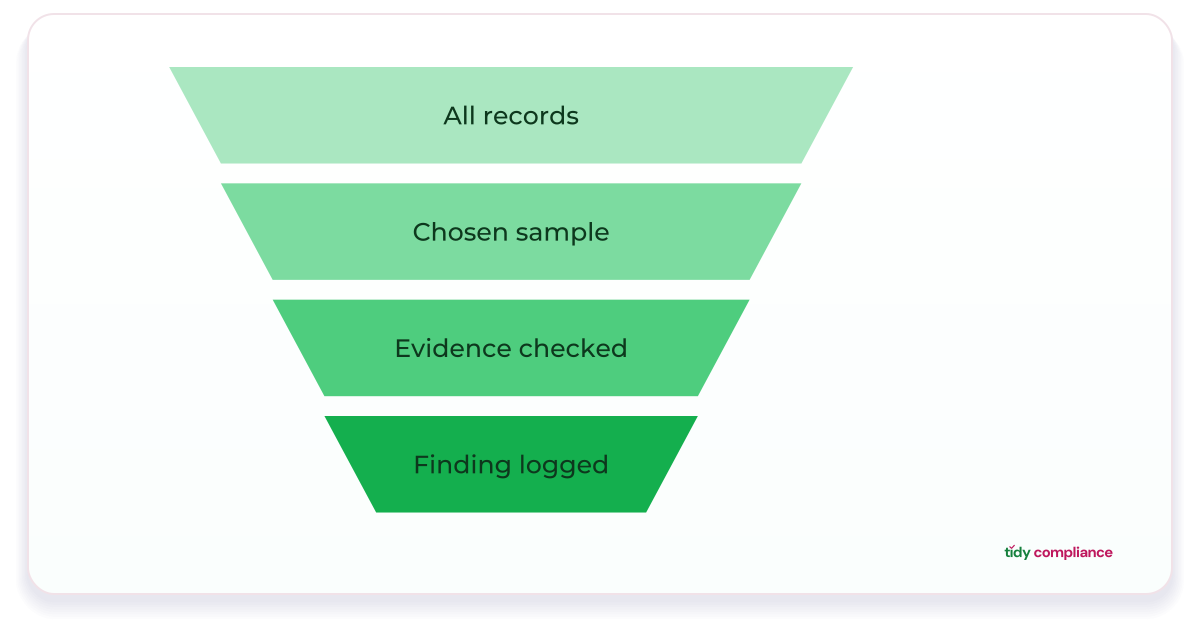
- Sample the evidence. Pull a set of records, such as vendor files or access reviews, and check them against the written procedure.
- Rate gaps and risks. Score each finding for likelihood and impact on a short scale, and note existing controls.
- Report and plan. Present a ranked list with owners, effort and target dates.
Sampling matters more than most teams expect. A policy can look fine and the records can show it is ignored. Ten sampled files tell you more than an hour of discussion about how the process should work.
How to Score Readiness
Scoring turns findings into a decision tool. Use a scale you can explain in one minute. I prefer two simple dimensions: how likely the failure is, and how bad the result would be. Multiply the two to get a rating, then sort.
| Rating | What it means | Usual response |
|---|---|---|
| Critical | Likely to fail and severe in effect, or an obligation with no control at all | Fix first, with an owner and a date within weeks |
| High | A control exists but is weak, or the impact would be serious | Fix in the current planning period |
| Medium | Gaps in documentation or inconsistent practice | Schedule within the year |
| Low | Minor wording or format issues | Handle during routine reviews |
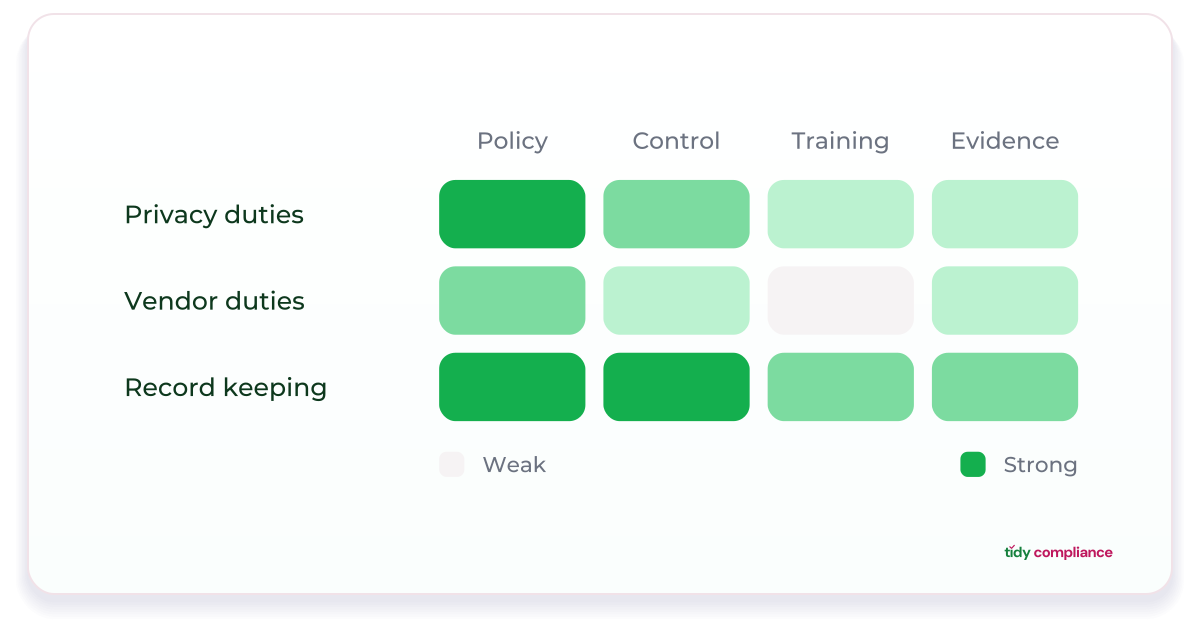
Add a second view for readiness: for each obligation, mark whether policy, control, training and evidence are present. An obligation with all four is ready. One with a policy and nothing else is documented only. This simple grid helps leaders see that a thick binder is not the same as a working program.
Avoid decimal scores. A readiness of 73.4 percent sounds precise and hides the fact that one missing control may matter more than ten formatting problems. Present counts and a ranked list instead.
Who Should Run It: Internal Team or Outside Consultant
Both can work. An internal team knows the business and costs little in cash. An outside reviewer brings a fresh view, a method and independence, which matters when leadership must trust the result. Many organizations use a mix: internal staff gather documents and schedule interviews, and the consultant interviews, rates and writes.
| Option | Strengths | Watch for |
|---|---|---|
| Internal team | Knows the business, no external fee, builds skills | Blind spots, conflicts of interest, competing daily work |
| Outside consultant | Independent view, tested method, speed | Needs onboarding, quality varies, ask for sample reports |
| Hybrid | Internal context with external rigor | Needs clear roles so nothing falls between the two |
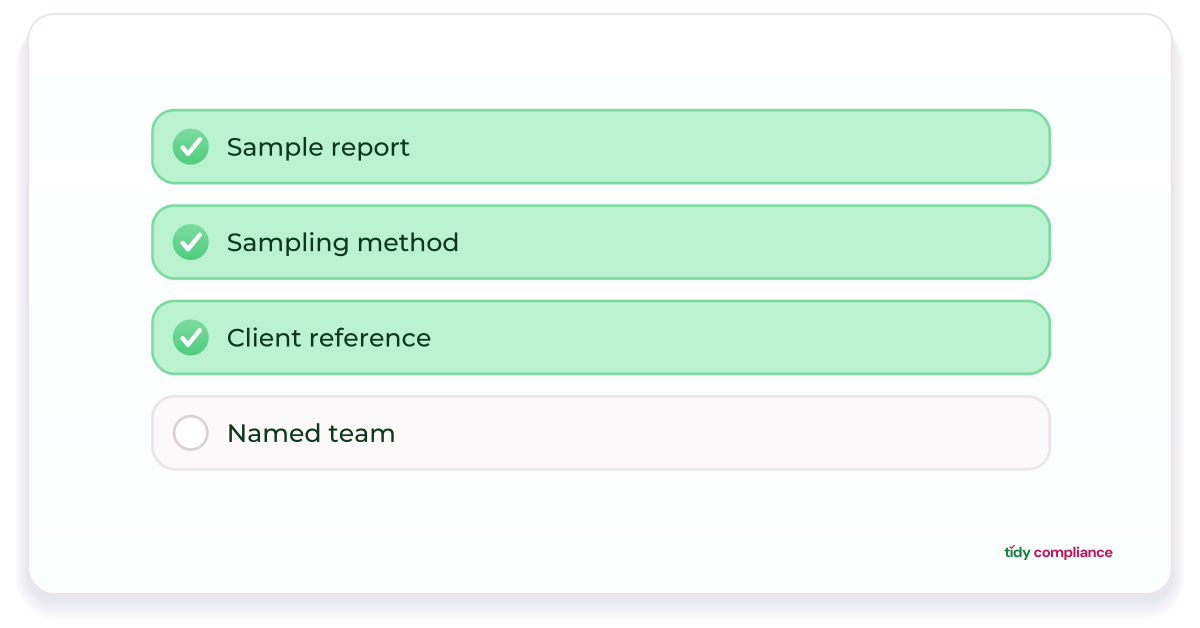
Ask any provider for a sample report, the method for sampling and a clear line between compliance consulting and legal advice. If the provider cannot show a ranked findings format, expect a long document with no priorities.
Supporting Tools Without Taking Over
A spreadsheet handles a first assessment. Once you run it every year across many sites, a platform that stores the obligations register, risk ratings and evidence saves effort. My comparison of GRC software covers options and published prices. Pick the tool after you have run one assessment by hand, so you know what you need it to do.
The same applies to frameworks. ISO 37301 gives a structure for a compliance management system, and its page at the International Organization for Standardization describes it as guidance for establishing, developing, implementing, evaluating, maintaining and improving such a system. Using a recognized structure makes your assessment easier to explain to reviewers. I explain how the parts fit in my guide to the risk and compliance framework.
The Findings I See Most Often
After many assessments, the same short list of findings returns, whatever the sector. Knowing it helps you check your own house before anyone arrives.
The first is an obligations list that is out of date. A rule changed, a contract was signed or a product launched, and nobody updated the register. The second is policy drift: the written process says two approvals, the real process has one because the second approver is on leave half the time. The third is evidence that exists in someone’s inbox and nowhere else, so when that person leaves, proof of the control leaves too.
Vendor files are the fourth. Contracts lack the clauses you need, reviews were never done or the vendor changed ownership without anyone noticing. The fifth is training that was assigned and never tracked to completion. None of these needs a large investment to fix. They need an owner and a date, which is why the ranked plan matters more than the length of the report.
A short illustration shows the pattern. Picture a clinic group with 41 vendors on its list where nine have no current agreement on file. Eight of the nine are low risk. The ninth is a billing processor with access to patient accounts. A ranked report puts that single vendor at the top of the action list, so it is fixed in the first two weeks, while the other eight can take a quarter. Without the ranking, the team would have started at the top of the spreadsheet.
Using the Results
The report is only the start. Turn the top findings into a plan with owners, effort estimates and dates. Fix the ones that are cheap and high impact right away: an unsigned vendor contract, an access list nobody reviews, a policy missing an approver. Larger projects, such as a new monitoring process, need budget and a timeline.
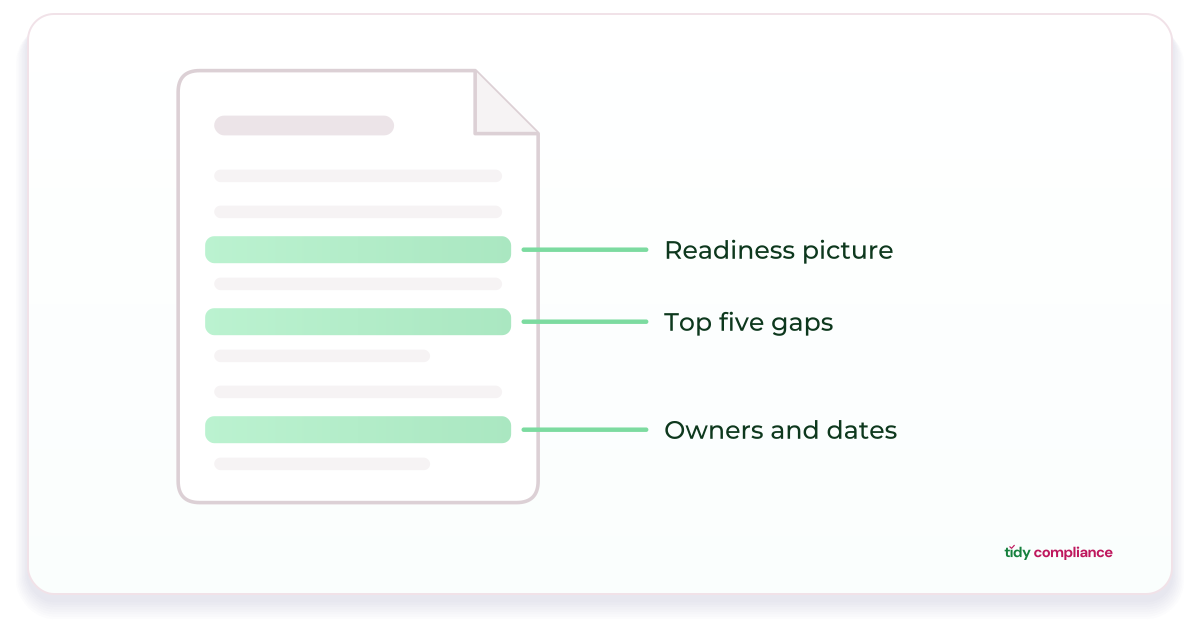
Brief leadership in a single page: the readiness picture, the top five risks, what you will do in the next 90 days and what you need from them. Then schedule a follow-up check, usually after three months, to confirm that fixes landed and that evidence exists. For the habits that keep results from fading, see my list of risk and compliance best practices.
How Long It Takes and What Affects Cost
A focused assessment for one business unit often takes a few weeks of elapsed time. A whole organization with several sites, many vendors and multiple regimes can take a few months. Time depends on the number of obligations, the number of interviews, document quality and how quickly people respond to requests. Cost follows effort, so a clean scope saves money.
You can keep effort down by preparing documents in advance, naming a coordinator and scheduling interviews in blocks. The checklist in my risk and compliance checklist doubles as a preparation list, because it names the records a reviewer asks for first.
How to Judge Whether You Are Ready for an Assessment
You can start with very little, but a few things make it faster and more useful. Check this short list before you begin:
- A sponsor who will read the report and act on it
- A list of the main obligations, even if rough
- Access to policies, contracts and the last audit results
- A coordinator who can book interviews and chase documents
- Agreement on how you will rate risks
If most of these are missing, begin with the obligations list and sponsor. The assessment will be sharper afterwards. If you want help with the first round, a consultant can run the assessment and hand over the method so your team can repeat it.
Sources
NIST SP 800-30 Rev. 1: Guide for Conducting Risk Assessments, ISO 37301: Compliance management systems, U.S. Department of Justice: Evaluation of Corporate Compliance Programs.
Questions About Risk and Compliance Assessments
What Is a Risk and Compliance Assessment?
It is a structured review that compares your practices with your legal, regulatory and contractual obligations and rates the gaps by likelihood and impact. The result is a ranked list of what to fix and a view of how ready you are for a review.
How Is a Compliance Assessment Different from an Audit?
An assessment looks for gaps and ranks them so you can plan improvements. An audit tests whether controls operate as claimed and reports findings against a defined standard. Many organizations run an assessment first and an audit afterwards.
How Often Should We Run an Assessment?
Run a full assessment at least every year, and again after a merger, a new product, a new market or a major rule change. Focused reviews of high-risk areas can run more often.
How Long Is the Assessment?
A focused review of one business unit usually takes a few weeks. A multi-site organization with several regimes can take a few months. Document quality and speed of replies affect the timeline most.
What Does an Assessment Cost?
Cost depends on scope, the number of sites, vendors and obligations and who performs the work. Ask providers for a fixed quote after a scoping call, and compare what the report will contain, not only the price.
Can We Do the Assessment Ourselves?
Yes, many organizations do. Use a written method, sample real records and keep the reviewer independent from the process under review. An outside reviewer is worth considering when leadership or a customer needs an independent view.
Is the Assessment Report Legal Advice?
No. It is compliance consulting. It shows gaps and risks. Your attorney interprets what a specific law requires and advises on reporting or disputes.
Disclaimer: This article is for general information only and isn’t legal, financial or tax advice. Treat figures as estimates from typical work and confirm details with your providers before you act.
Was this guide helpful?
Thanks for your feedback.
Odessa Whitfield
Odessa leads the Tidy editorial team and works with the compliance consultants to turn real client projects into practical guides on regulations, frameworks, policies and audit preparation. Before joining Tidy, she worked in compliance and risk roles, writing and maintaining policy sets for regulated organizations. Every article goes through a consultant who has done the work in practice, and she updates guides when a rule, framework or tool changes. She works remotely from the United States.