Quick Summary
- Scope the audit by risk and current exam priorities.
- Test samples against policy, then widen the sample when you find exceptions.
- Rank findings with Impact x Likelihood x Detectability.
- Close findings with evidence and track them to the next audit.
An SEC compliance audit tests whether your policies are followed and whether your records prove it. It is different from writing a manual, and it is different from waiting for an exam. A good audit finds gaps while you can still fix them quietly, which is why it is part of every SEC compliance consulting program I run.
This article gives you a repeatable method: the phases, a scoring formula for ranking findings, sample sizes and a report outline. It is written for registered investment advisers, and the logic works for other registrants with adjustments.
The Audit in Seven Phases
| Phase | What you do | Output |
|---|---|---|
| 1. Scope | Pick areas by risk and set the review period | Scope note |
| 2. Request list | List the documents and data you need | Request list with owners |
| 3. Map policy to practice | Read each policy and note how work is really done | Policy-practice map |
| 4. Test samples | Pull samples and check them against the policy | Test sheets with exceptions |
| 5. Interview | Ask the people doing the work | Interview notes |
| 6. Rate findings | Score each exception for risk | Ranked findings |
| 7. Report and track | Write the report and follow fixes to closure | Report and action log |
Choose the Scope by Risk, Not by Habit
Start with the areas examiners care about and where your firm is exposed. The Division of Examinations publishes its priorities, and you can read the current set on its exam page. Combine that with your own history: recent complaints, staff changes, new products and any items left open from the last review.
A typical audit year covers marketing, personal trading, books and records, custody, trade allocation and data protection, with a rotating extra area. The rule behind the compliance program, Rule 206(4)-7, asks for an annual review, so make sure your scope covers the annual cycle across the years.
Build a Request List That Stands Up
List what you need before you start and send it to owners with dates. Typical items are the compliance manual and version history, the last annual review, the code of ethics and attestations, trading and holdings reports, a list of advertisements, custody documents, filings and training logs.
Track which items came in on time. Late or missing items are themselves a signal. When a record takes two weeks to find, an examiner's first request will take as long.
How Big Should the Sample Be?
There is no single legal sample size. Choose based on population and risk, and write down the reason. The table below is a starting point I use for firms with a few dozen clients and staff.
| Population | Suggested sample | Notes |
|---|---|---|
| Under 20 items | All items | Full review is cheap |
| 20 to 100 items | 10 to 15 items | Add items from high-risk periods |
| Over 100 items | 25 to 40 items | Include a spread across months and people |
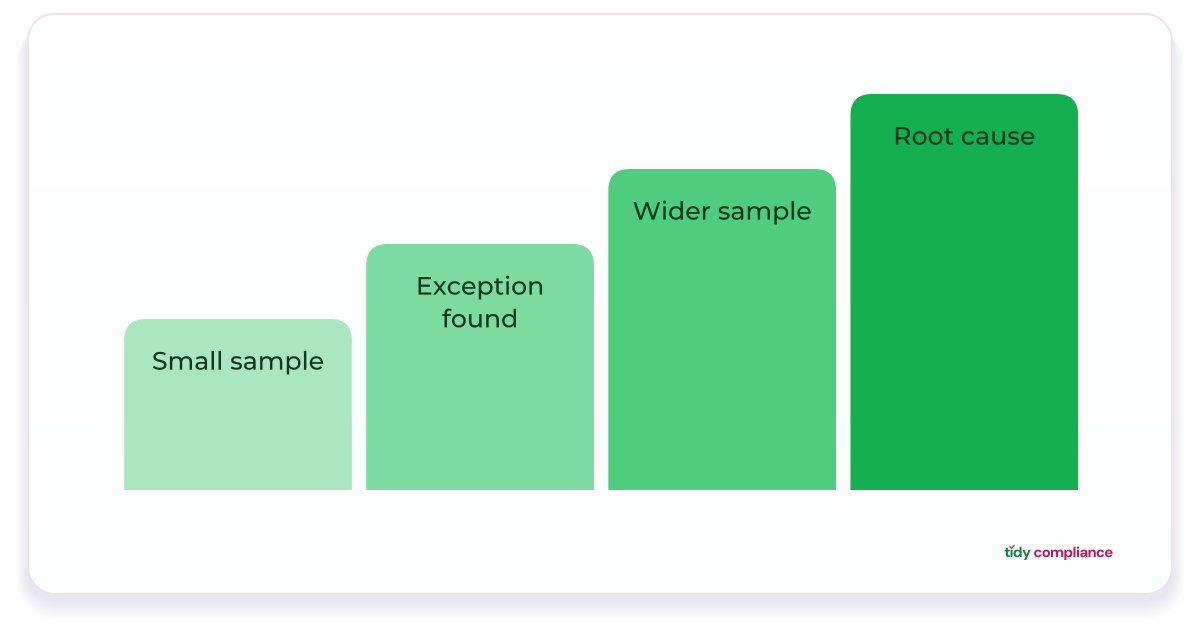
If you find exceptions, widen the sample in that area. A single exception in a sample of fifteen means you should test more before you decide whether it is isolated or systemic.
The Scoring Formula for Ranking Findings
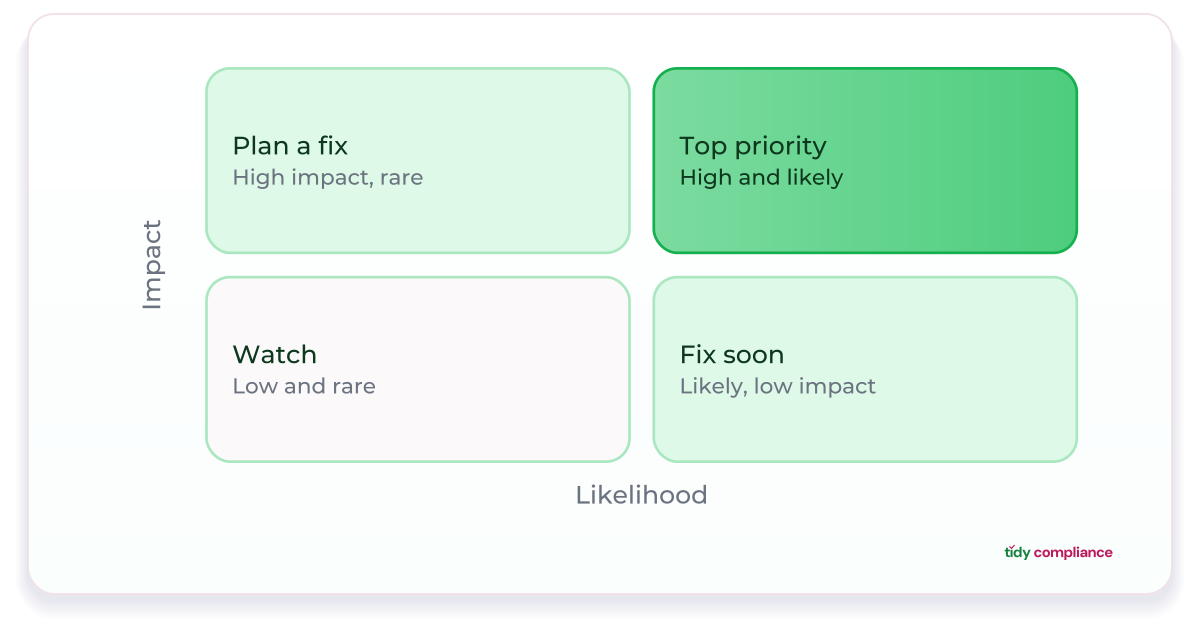
Rank findings with a simple formula so you can explain your priorities. Score each from 1 to 5 on three factors, then multiply.
Priority = Impact x Likelihood x Detectability
- Impact: how serious is it if this happens (client harm, a rule breach, reputational damage)?
- Likelihood: how often does the exception occur in the sample?
- Detectability: if it happens, how easily would you notice without the audit? A low-visibility gap scores higher.
| Finding | Impact | Likelihood | Detectability | Score | Action |
|---|---|---|---|---|---|
| Website claim without support file | 4 | 3 | 4 | 48 | Fix this month |
| Personal trades reported late by two staff | 3 | 3 | 2 | 18 | Retrain and monitor |
| Record index missing for old client files | 3 | 2 | 3 | 18 | Schedule a clean-up |
| Policy refers to a retired system | 2 | 5 | 1 | 10 | Update at next revision |
The scoring does not need to be perfect. Its job is to show reviewers that you applied a method and that your fix order follows it.
What to Test in Each Core Area
| Area | What to test | Evidence |
|---|---|---|
| Marketing | Ads against approval records and support files | Approval log, copies of published ads |
| Personal trading | Holdings and transaction reports against firm trades | Reports, exception log |
| Books and records | Retrieval of samples across several years | Records map, retrieval times |
| Custody | Where client assets sit and who can access them | Custody analysis, statements |
| Trade allocation | Fairness of allocation across clients | Blotters, allocation records |
| Data protection | Access reviews and incident readiness | Access lists, tabletop notes |
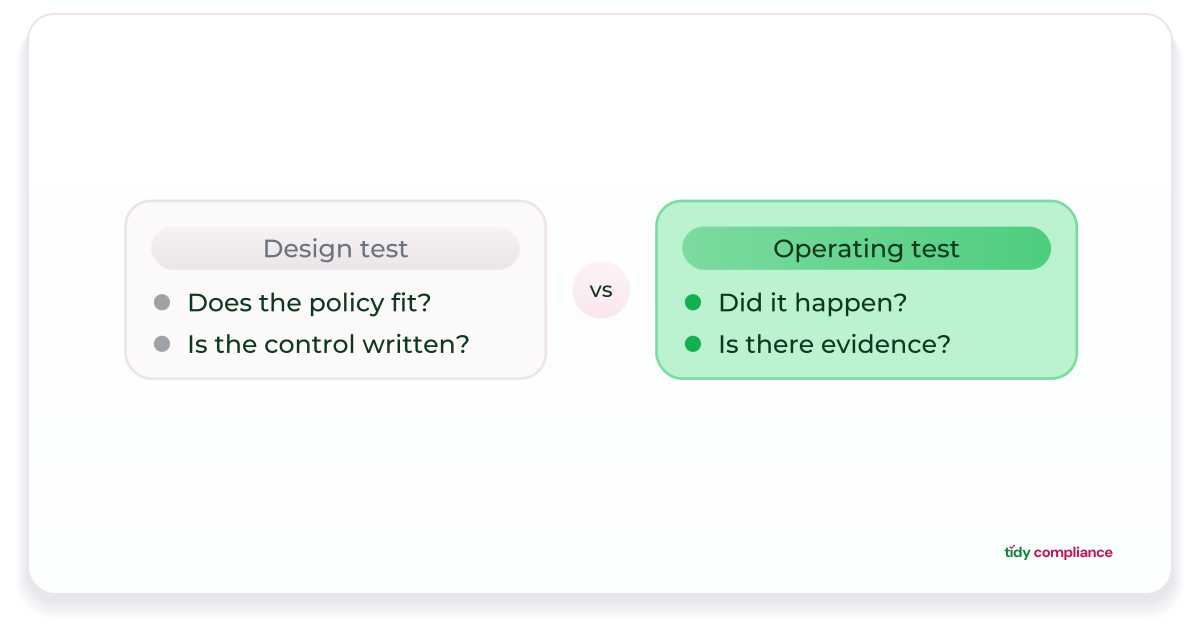
For each area, do two kinds of tests. A design test asks whether the policy covers the risk. An operating test asks whether the policy was followed in the sample. A policy that looks fine but fails in operation is a gap, and so is the reverse, where people do the right thing but the manual says otherwise.
Interviews Reveal What Documents Hide
Documents show what should happen. People show what does. Interview three kinds of staff: those who approve, those who execute and those who supervise. Ask open questions such as how do you handle a client request that arrives by text, or what do you do when a trade needs pre-clearance late in the day.
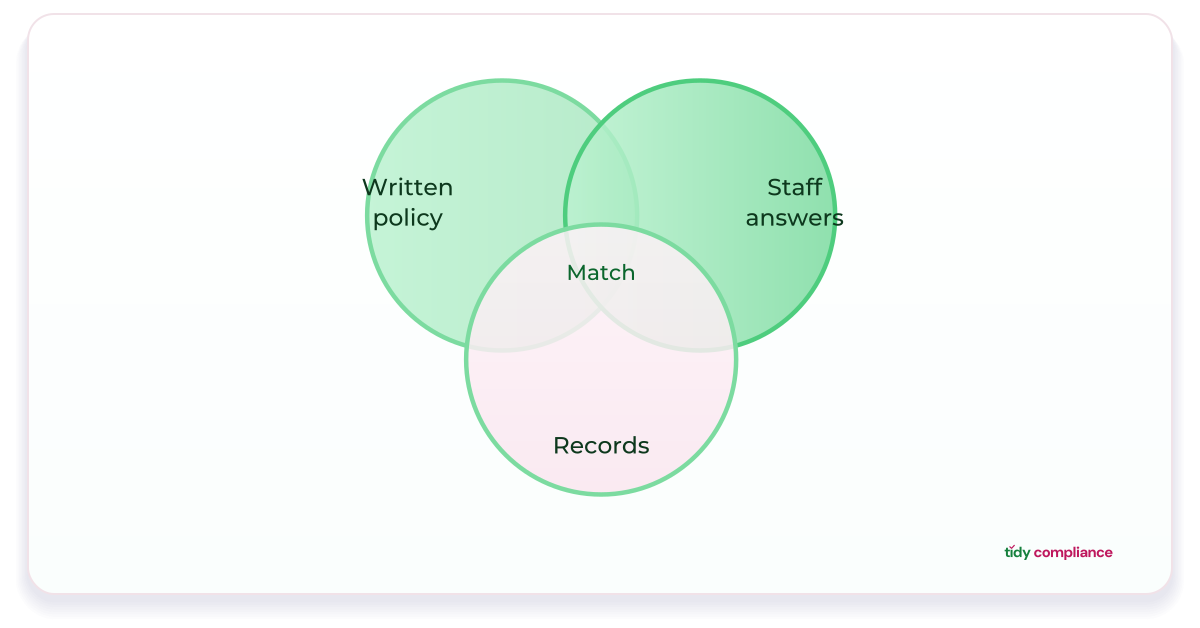
Compare answers with the written policy and the samples. Differences go into the findings. Keep a neutral tone, because staff who feel they are being investigated will tell you less.
Fieldwork rarely runs smoothly. Records arrive late, staff are away and samples turn up odd cases that need a second look. Build a buffer into the schedule, keep a running list of open questions and clear them before you write. An audit that is rushed into a report tends to produce findings that fall apart when the owner of the area reads them, which wastes everyone's time.
Write a Report People Will Read
Keep it to a few pages: scope, method, a short summary, ranked findings with owners and dates, and an appendix with the evidence index. Lead with the three findings that matter most. Describe what you tested and what you saw, then the action. Avoid blame.
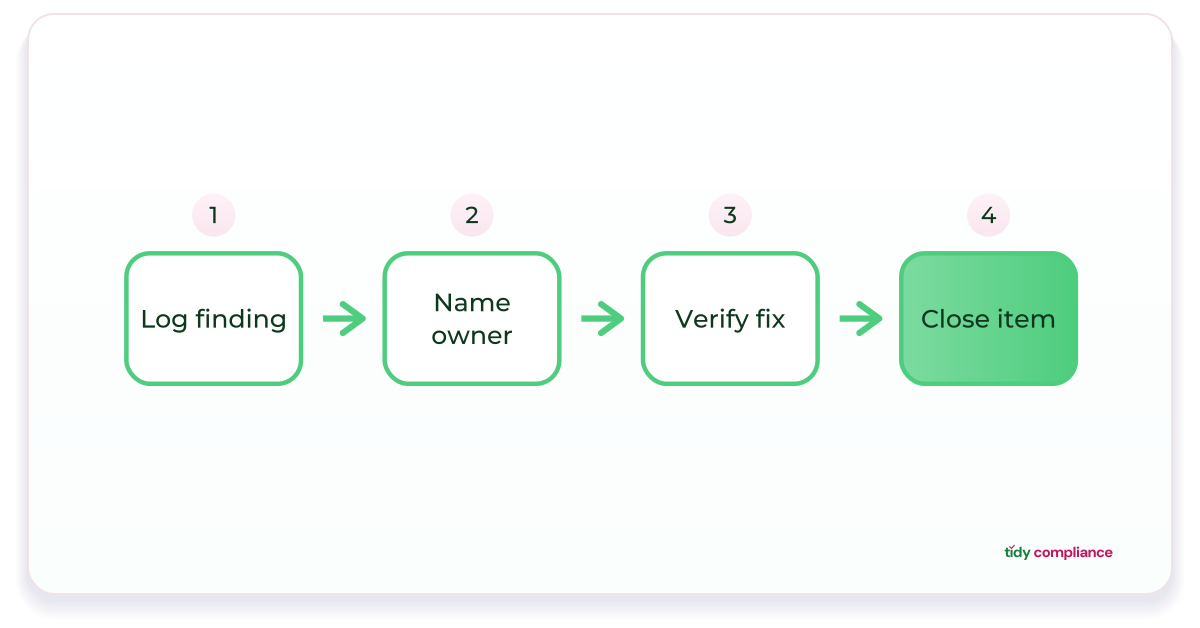
Agree the first progress check before you finish the report, so the actions have a home. Record closure with evidence: an updated policy, a new log, a training record. Unclosed findings from last year's audit are the first thing an examiner will ask about, so track them in the same place you hold the current ones.
A Worked Example From a Small Adviser
A small adviser with eight staff and a few hundred client accounts asked me for an audit ahead of a client due diligence request. We scoped three areas: marketing, personal trading and records. The request list went out on day one, and by day ten two items were still missing: a list of published advertisements and the staff attestation file.
Marketing testing found that the website carried a performance chart with no support file and a client quote that predated the current approval process. Personal trading testing showed two late holdings reports and no record of who reviewed them. The records test showed that email from one partner lived in a personal account, which meant retrieval took days.
The scored list put the website claim first and the personal email second. The firm fixed the chart and removed the quote within a week, moved the partner's mailbox into the archive within a month and added a reviewer sign-off to the trading reports. The whole audit took three weeks, mostly waiting for records, and the next quarter's test showed all three areas clean.
Common Findings and Their Usual Fixes
| Finding | Usual cause | Fix |
|---|---|---|
| Advertisement with no support file | Content published by staff without approval | Single approval step with a checklist |
| Late personal trading reports | No reminder or reviewer | Calendar reminders and a reviewer sign-off |
| Records in personal accounts | Staff convenience | Approved channels and an archive |
| Policy cites a retired process | Manual not updated | Version review tied to system changes |
| Annual review without follow-up | No owner for findings | Action log with owners and dates |
Who Should Run the Audit
The best auditor is someone who knows the rules and does not run the area under test. In small firms that is hard, because the CCO often runs both. Options are an outside reviewer, a peer from another firm or a staff member from a different area under the CCO's guidance. Document who did the work and why you consider the reviewer suitable.
Outside reviewers bring benchmarks and a fresh view, and they cost more. A hybrid works well: run routine tests in-house through the year and bring in an outside firm for a deeper annual review or before a planned event, such as a merger or a fundraising round.
Tell staff how long audit files are kept and where. A consistent retention period and a single storage place make later requests easy to answer, and they reduce the risk that a stray copy ends up somewhere uncontrolled.
What to Do After the Audit
Review the results with leadership, set the next quarter's testing plan and update the manual where policy and practice differ. If you found issues that may require disclosure or correction, talk to counsel before you act. Then re-test fixed areas in six months to see whether the change held.
If you want to build a strong baseline before the audit, the SEC compliance checklist gives you ten points to prepare, and the best practices show habits that keep results stable. Tools that store the evidence are compared in the SEC compliance software ranking, and the SEC compliance guide explains the regulatory background.
Sources
SEC: Marketing Rule small entity compliance guide, SEC Division of Examinations, eCFR: Rule 206(4)-7, compliance programs of investment advisers.
Questions About SEC Compliance Audits
What Is an SEC Compliance Audit?
A structured test of whether your policies are followed and whether your records prove it. It covers areas such as marketing, trading, records, custody and data protection, and ends with ranked findings and a fix plan.
How Is an Audit Different from an SEC Exam?
An exam is performed by the SEC's examination staff. An audit is your own or an outside reviewer's test, ideally done before an exam so you can fix gaps early.
How Often Should I Run an Audit?
Test high-risk areas through the year and complete a full review at least annually. Add targeted audits after rule changes, new services or findings.
Can I Audit Myself?
Yes, with discipline. Use a documented method and ask an independent person to check a sample. Bring in an outside reviewer when conflicts exist or before a major event.
How Long Does an Audit Take?
A focused audit for a small adviser often takes two to four weeks of elapsed time, mostly waiting for records. Larger firms need longer.
What Happens If the Audit Finds Serious Problems?
Rank them, fix them and record the fix. Ask counsel whether any issue needs special handling or disclosure, since that is a legal decision.
What Should I Keep from the Audit?
The scope, request list, test sheets, interview notes, findings, report and evidence of closure, stored in one controlled folder.
Disclaimer: This article is general information about SEC compliance and is not legal advice. Which rules apply depends on your firm type, size and services, and rules and exam priorities change, so confirm current requirements with your securities counsel.
Was this guide helpful?
Thanks for your feedback.
Odessa Whitfield
Odessa leads the Tidy editorial team and works with the compliance consultants to turn real client projects into practical guides on regulations, frameworks, policies and audit preparation. Before joining Tidy, she worked in compliance and risk roles, writing and maintaining policy sets for regulated organizations. Every article goes through a consultant who has done the work in practice, and she updates guides when a rule, framework or tool changes. She works remotely from the United States.