Quick Summary
- Tailor the manual to the real business, because the gap between paper and practice is the finding.
- Test what you write and keep a dated log.
- Approve marketing before it goes out and keep the support file.
- Build an exam-ready evidence folder before you need it.
Good SEC compliance looks plain from the outside: policies that match the work, records that can be found and people who know what to ask before they act. The eight practices below come from the programs I see work, mostly at registered advisers. If you want a partner to build them with you, SEC compliance consulting covers the full path.
Each practice has a short do and avoid list, so you can check your own firm against it. The order matters. The first three create the base, and the rest rely on it.
The 8 Practices at a Glance
| Practice | Why it matters | First step |
|---|---|---|
| 1. Tailor the manual | Examiners compare what you wrote with what you do | Mark every policy that does not match practice |
| 2. Empower the CCO | A CCO with access and authority catches problems early | Give the CCO a seat in leadership meetings |
| 3. Test what you write | Testing is the proof that policies work | Pick five policies to test this quarter |
| 4. Approve marketing first | Advertising is a frequent finding | One approval inbox for all content |
| 5. Capture all business communications | Off-channel messaging is an enforcement theme | Define approved channels and block the rest |
| 6. Oversee your vendors | Your vendors hold your data and records | Rank vendors by access and review the top five |
| 7. Train with proof | Training logs show you did it | Add a short quiz to every session |
| 8. Keep an exam folder | You answer faster and look organized | Build one index of your top 30 records |
The Eight Practices in Detail
1. Tailor the Manual to the Work You Actually Do
The most common weakness I see is a manual that describes a firm slightly different from the one that uses it. A policy says trades are pre-cleared by email while the firm uses a trading system, and the gap between paper and practice becomes the finding. The rule behind the compliance program, Rule 206(4)-7, asks for policies reasonably designed for your business, so tailoring is the requirement itself.
Walk each policy with the person who does the work and mark every line that does not match. Fix the policy or fix the practice, and record which you chose.
Do This
- Write each policy from your real process, with names and systems
- Remove sections for services you do not offer
- Date every version and keep old ones
Avoid This
- Pasting a vendor template with the firm name swapped in
- Writing policies nobody can follow with current staff
- Letting the manual age while the business grows
2. Give the Chief Compliance Officer Real Authority
The CCO is the person examiners talk to first, so the role needs weight. In small firms the CCO often wears several hats, which is acceptable as long as conflicts are managed. If the same person approves and executes trades, an independent check should exist.
Ask the CCO to report to leadership every quarter with open items, test results and rule changes. Short written reports are enough, and they build a record of oversight.
Do This
- Place the CCO in the leadership meeting and the budget discussion
- Document the CCO designation and a named backup
- Let the CCO stop a publication or a trade that breaks a policy
Avoid This
- Giving the CCO title to the person with the most free time
- Overloading the CCO with operational tasks that conflict with oversight
- Treating compliance as an annual event
3. Test What You Write
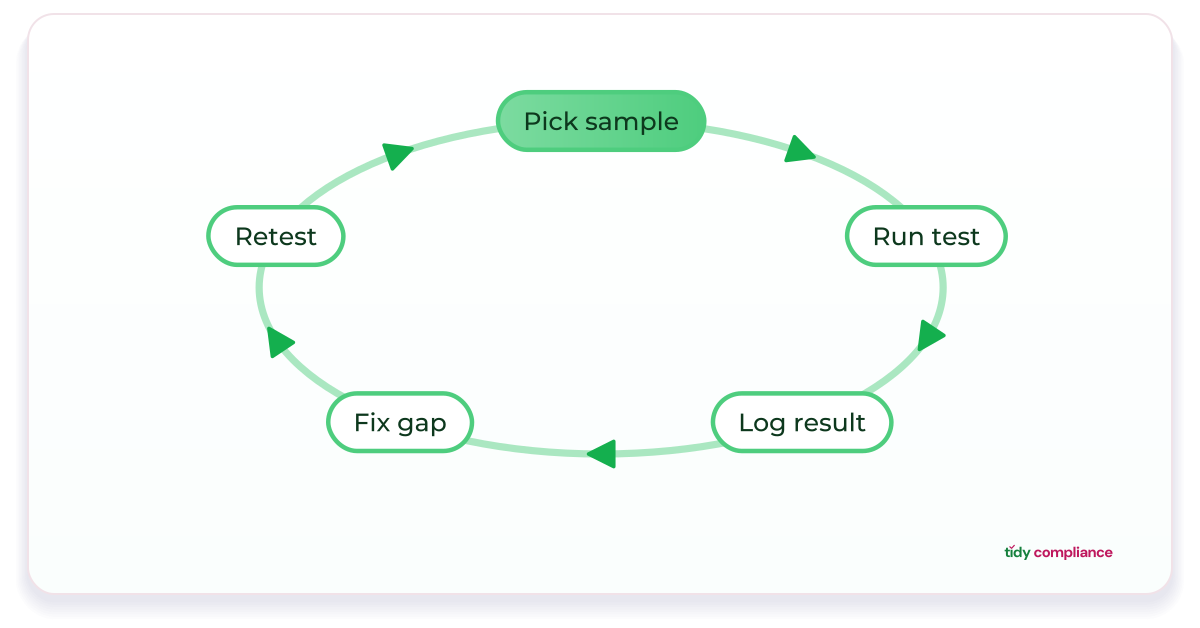
A policy proves intent, a test proves operation. Choose areas with the most risk first: trade allocations, personal trading, advertising, custody and valuation where relevant. Pull a sample, compare it with the policy and note exceptions.
Examiners ask to see testing, and a testing log with dated entries is the evidence. Keep it simple: area, date, sample size, result, action. Over a year, the log becomes the backbone of your annual review. See my SEC compliance audit guide for a deeper method.
Do This
- Pick a sample each quarter and test it against the policy
- Record scope, method, result and follow-up in one log
- Close findings with dates and evidence
Avoid This
- Describing controls without ever testing them
- Testing only easy areas
- Leaving old findings open across years
4. Approve Marketing Before It Goes Out
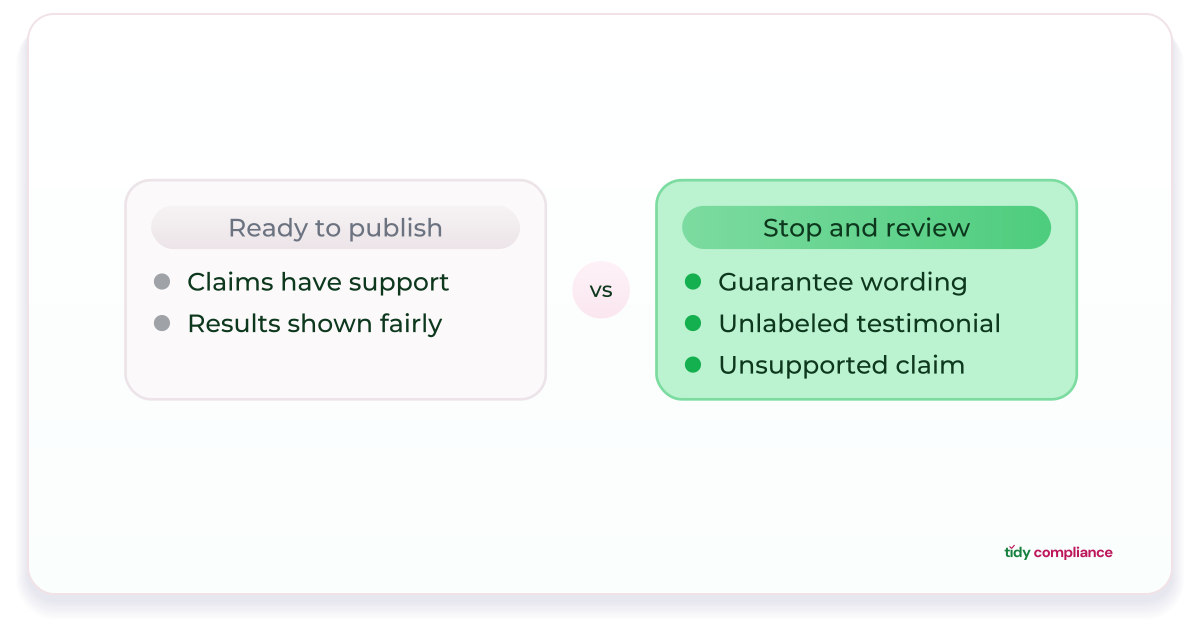
The Marketing Rule defines advertisements broadly, and the SEC lists the main requirements in its small entity compliance guide: no misleading statements, support for material claims, fair treatment of risk and fair performance presentation. Records of published ads must be kept.
The SEC has also brought cases over misleading claims about artificial intelligence capabilities. If your marketing mentions AI, treat the claim like a performance number and keep the evidence. Firms that use AI tools in their work may find my overview of AI compliance consulting useful.
Do This
- Route every ad, post, deck and website change through one approval step
- Keep the support file for every claim next to the approval
- Review the website quarterly
Avoid This
- Letting staff post performance or client claims on their own
- Using testimonials without checking the conditions
- Forgetting to keep copies of what was published
5. Capture Business Communications on Approved Channels
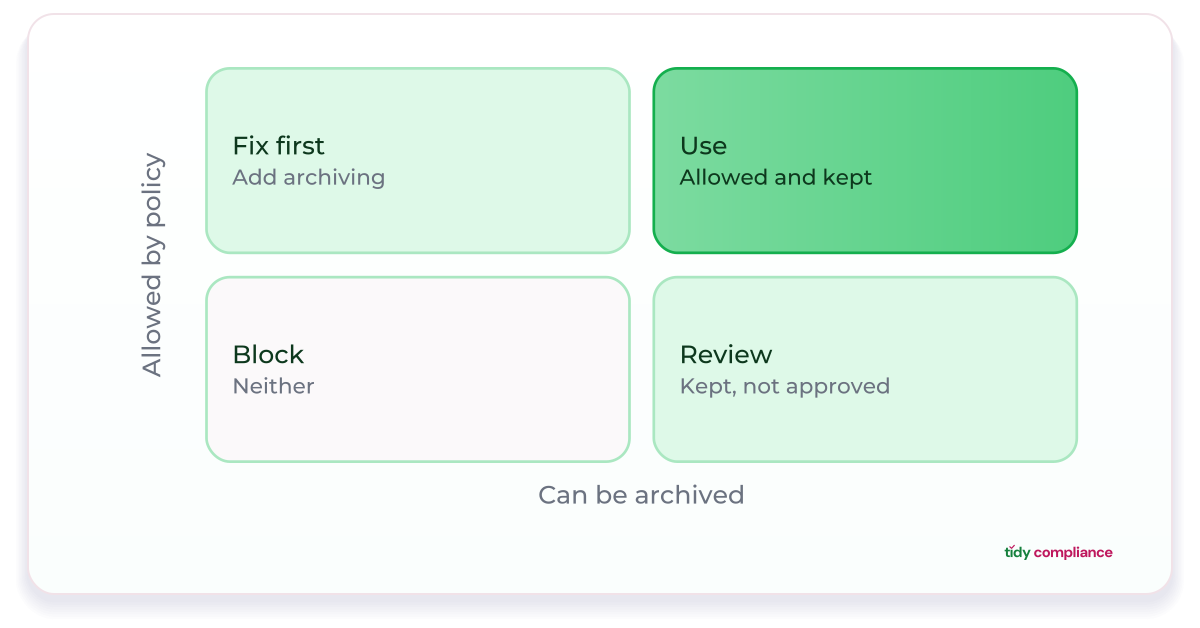
The SEC has brought a series of enforcement actions against firms whose staff used unapproved messaging apps for business. The lesson is practical: if a message about client business is sent, you must be able to keep and find it.
Choose channels you can archive, tell staff what is allowed, attest yearly and test with a sample. Where staff already use a channel you do not support, solve it with a supported alternative rather than a ban that people ignore. A good archive is described in my ranking of SEC compliance software.
Do This
- Define approved channels in writing and train staff on them
- Archive email and approved messaging with search
- Review a sample each quarter
Avoid This
- Letting advisers use personal text apps for client talk
- Relying on a policy with no technical control
- Ignoring ephemeral messaging settings
6. Oversee the Vendors That Hold Your Data
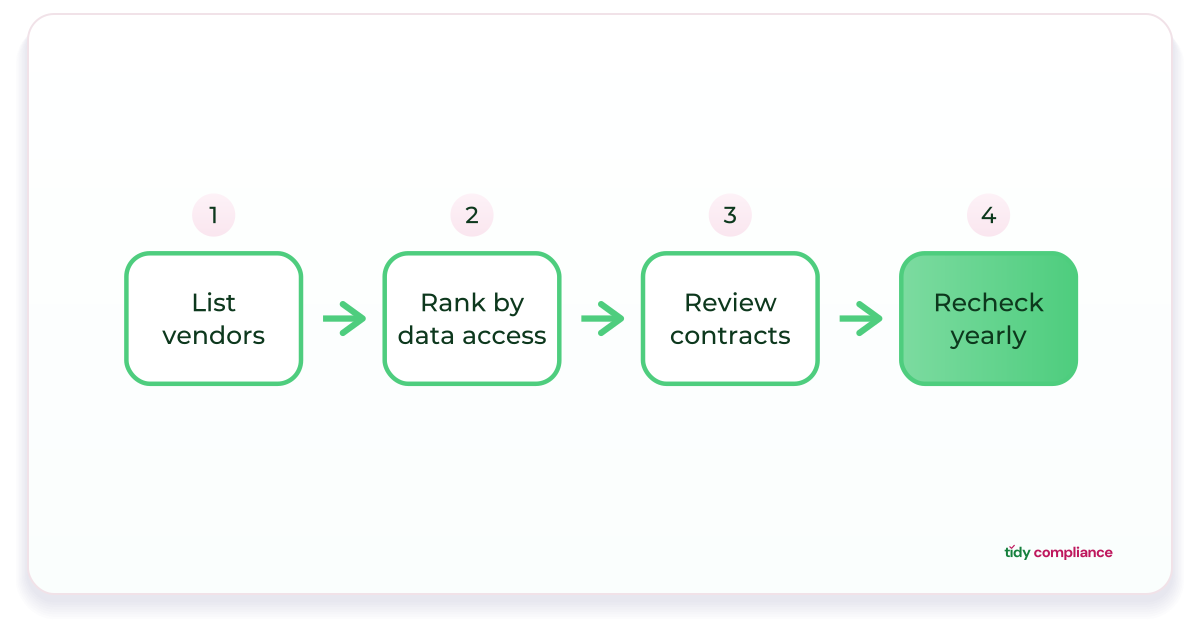
Your custodian, portfolio system, archive and cloud storage all hold sensitive data. Rank them by how much damage a failure would cause. For the top group, collect security reports, check incident notification terms and note the review date.
When amendments to privacy and safeguards rules put new demands on incident response, vendor terms are the first place to check. Ask your counsel which compliance dates apply to your firm size.
Do This
- List vendors by access to client data and importance
- Ask for security reports and incident terms
- Review the top vendors every year
Avoid This
- Signing contracts with no incident notification terms
- Assuming a large vendor needs no oversight
- Keeping no record of vendor reviews
7. Train With Proof
Training matters because many violations come from people who did not know the rule. Keep sessions short and specific: advertising, personal trading and communications are the usual topics. A quiz shows who understood and who needs a follow-up.
Keep attendance, content and results in one folder. If an examiner asks, you can show who was trained on what and when.
Do This
- Train at hire and at least yearly
- Use short quizzes and keep results
- Add targeted sessions after rule changes or findings
Avoid This
- Counting a slide deck sent by email as training
- Training everyone on everything
- Skipping senior staff
8. Keep an Exam-Ready Evidence Folder
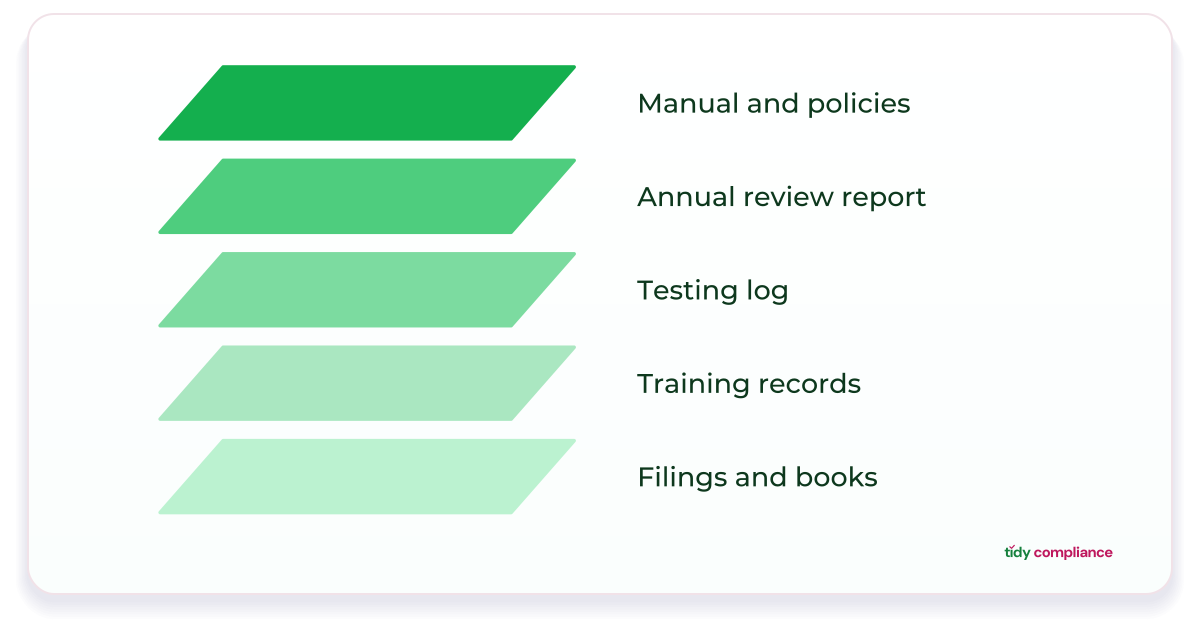
When an exam starts you usually have a short window to send documents. A folder with the program, annual review, testing log, ads, codes, filings and training logs answers most first requests. Name files by topic and date and keep an index.
A short mock request each year shows how long retrieval takes and what is missing. If it takes more than a day, fix the storage. Many firms combine this folder with a records map from the SEC compliance checklist.
Do This
- Index your top 30 records with owner and location
- Run a mock request each year and time it
- Update the folder after every review
Avoid This
- Collecting documents only after an exam letter arrives
- Storing records in personal drives
- Letting the index go stale
How These Practices Fail in Real Firms
The habits above are simple, and firms still lose them in predictable ways. Staff turnover removes the one person who understood the testing log. A busy quarter pushes testing to the next one and then the one after. A new service launches without a policy update. The fix is the same each time: attach each practice to a calendar entry and to a named person, and review the calendar in the leadership meeting.
| Failure | Early sign | Safeguard |
|---|---|---|
| Testing lapses | No log entry for two quarters | Calendar reminder reviewed by leadership |
| Manual drifts from practice | New tools or services with no policy change | Policy review step in every launch checklist |
| Approval gets bypassed | Ads appear with no sign-off record | Publishing access limited to the approval step |
| Training fades | Attendance drops after the first year | Short refreshers and tracked completion |
Small firms feel these failures most, because one person holds several jobs. If that is you, write down the one task you would drop last, and protect it on the calendar. Review the table once a quarter and ask whether any early sign appears in your firm. The cost of catching it early is a short conversation, and the cost of missing it is usually an exam finding.
Where to Start If You Can Only Do Three
If you have to choose, begin with practices 1, 3 and 8. A tailored manual, regular testing and an evidence folder cost the least and cover the most. Add marketing approval next, because it is an area where small mistakes appear in public. After that, communications and vendors follow naturally, and training is the thread that holds them together. For the full background on the rules, my SEC compliance guide explains who is regulated and how the pieces fit.
Sources
SEC: Marketing Rule small entity compliance guide, SEC Division of Examinations, eCFR: Rule 206(4)-7, compliance programs of investment advisers.
Questions About SEC Compliance Best Practices
What Are the Most Important SEC Compliance Best Practices?
A tailored manual, an empowered CCO, regular testing, marketing approval, communications capture, vendor oversight, training with proof and an exam-ready evidence folder.
How Often Should I Test My Compliance Controls?
Test the highest-risk areas at least quarterly and the rest at least once a year, in line with your annual review. Record scope, method and results.
Is a Template Manual Acceptable?
A template can be a starting point, but the rule asks for policies reasonably designed for your business. Edit every section to match your real processes and keep revision history.
What Should My Approved Channels Policy Say?
Which channels are approved, what may not be used for client business, how messages are retained and how staff attest. Test it with sampling.
Do Small Firms Need All Eight Practices?
Yes, scaled to size. A small firm can run testing and the evidence folder with a spreadsheet and a shared drive.
How Can I Show Examiners That My CCO Has Authority?
Keep records of reporting to leadership, budget decisions and cases where the CCO stopped or changed an action.
Do These Practices Apply to Broker-Dealers and Public Companies?
The principles carry over. The specific rules differ, so ask counsel which requirements apply to your firm type.
Disclaimer: This article is general information about SEC compliance and is not legal advice. Which rules apply depends on your firm type, size and services, and rules and exam priorities change, so confirm current requirements with your securities counsel.
Was this guide helpful?
Thanks for your feedback.
Odessa Whitfield
Odessa leads the Tidy editorial team and works with the compliance consultants to turn real client projects into practical guides on regulations, frameworks, policies and audit preparation. Before joining Tidy, she worked in compliance and risk roles, writing and maintaining policy sets for regulated organizations. Every article goes through a consultant who has done the work in practice, and she updates guides when a rule, framework or tool changes. She works remotely from the United States.