Quick Summary
- Scope the audit by AI system and by requirement, so findings point to something specific.
- Review six areas: inventory, risk, policy, data, vendors and oversight, then check the evidence behind each.
- Score each area on a simple 0 to 3 scale so you can compare quarters.
- The most common finding is a gap between a written policy and what teams actually do.
An AI audit sounds like a technical exercise, and most of it is document and process work. You compare what you say you do with what the evidence shows, and you write down the gaps. In AI compliance consulting projects, I use one formula for this, and it works for internal reviews and for preparing an outside assessment.
Below you get the scoring formula, what to review and why, the evidence that reviewers expect, the findings I see most and a layout for the report. This is compliance guidance, not legal advice.
The Formula I Use
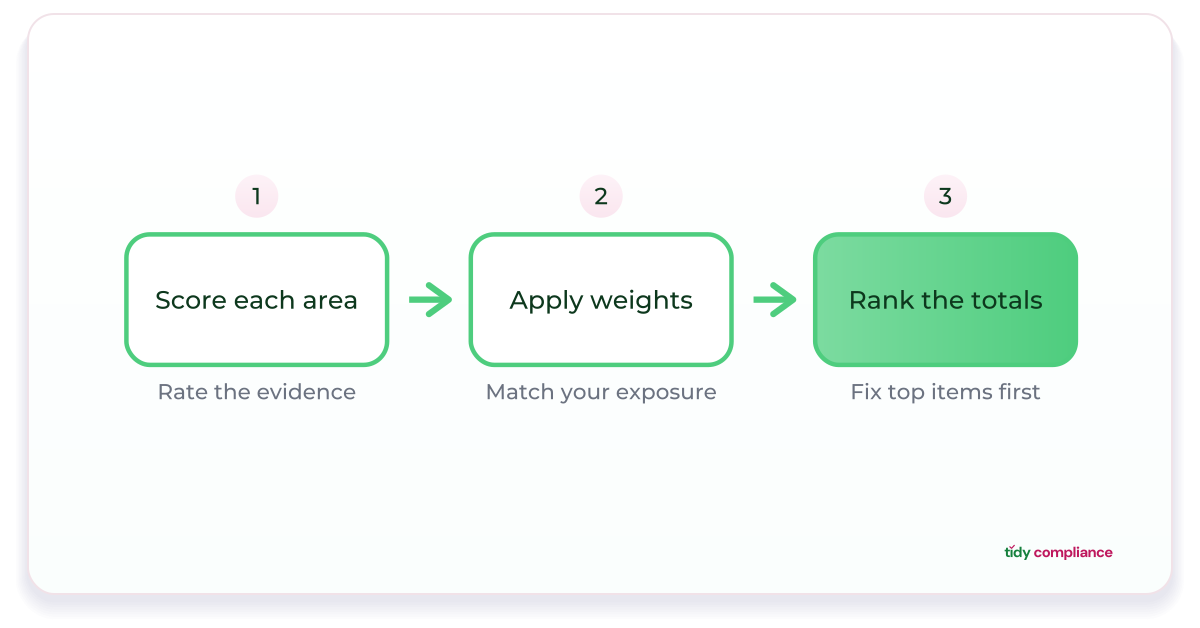
Score each of six areas from 0 to 3, weight the areas by the risk of your systems, and sum them. A 0 means no process exists. A 1 means a process exists on paper. A 2 means it is followed but the evidence is thin. A 3 means it is followed and documented with dated records.
Audit score = sum of (area score x weight) divided by the maximum possible, shown as a percentage by area and overall.
Weights should reflect your exposure. A company that screens job candidates with AI weights oversight and bias testing heavily. A company that mostly uses chat tools for drafting weights data controls and vendors heavily. The percentage is a trend tool, not a certificate, so compare it quarter to quarter.
Set the Scope Before You Look at Anything
A vague scope produces vague findings. List the systems in scope, the requirements you test against and the period you review. For a first audit, choose the five to ten systems with the highest risk or the most users, and a framework such as the NIST AI Risk Management Framework or ISO/IEC 42001 as a reference. Add legal requirements your counsel confirms for your regions.
If you do not yet have an inventory, stop and build one. The AI compliance checklist shows how, and an AI compliance assessment gives you a readiness picture before a formal audit.
What to Review and Why
These are the six areas, what the reviewer asks and why it matters.
| Area | What you review | Why it matters |
|---|---|---|
| Inventory | Completeness, owners, purpose, data | Everything else depends on it |
| Risk | Classification method and ratings | Controls should match risk |
| Policy and governance | Policy, roles, approvals, training | Shows intent and accountability |
| Data | Inputs, retention, privacy, vendor use of data | Most incidents involve data |
| Vendors | Reviews, contracts, AI features added | Bought AI carries your risk |
| Oversight and monitoring | Human review, tests, incident log | Proves controls work over time |
Inventory: Is the List Complete?
Test completeness by sampling from outside the list. Check expense reports, single sign-on logs and vendor invoices for AI tools, and compare them with the inventory. Every tool you find that is not listed is a finding, and a pattern of them says the intake process is not working.
Then check each entry for an owner, a purpose, the data used and a risk rating. Missing owners are the most common gap, since a system without an owner has no one who answers for it.
Risk and Governance: Do Decisions Leave a Record?
Ask how a new AI use case gets approved, then ask for the last three approvals. A good process leaves a form, a rating, a named approver and a date. Check that high-risk systems received the extra steps your policy promises, such as impact assessments, testing and human review.
Review training too. Ask for completion records by role and check that they cover the newest tools. Training that predates your current tools does not support your policy.
Data and Vendors: Where Do Inputs Go?
For each system, confirm what data goes in, where it is stored, whether the vendor uses it to train models and how long it is kept. Compare the answers with your policy and contracts. Look for personal, confidential and regulated data in places where it is not allowed.
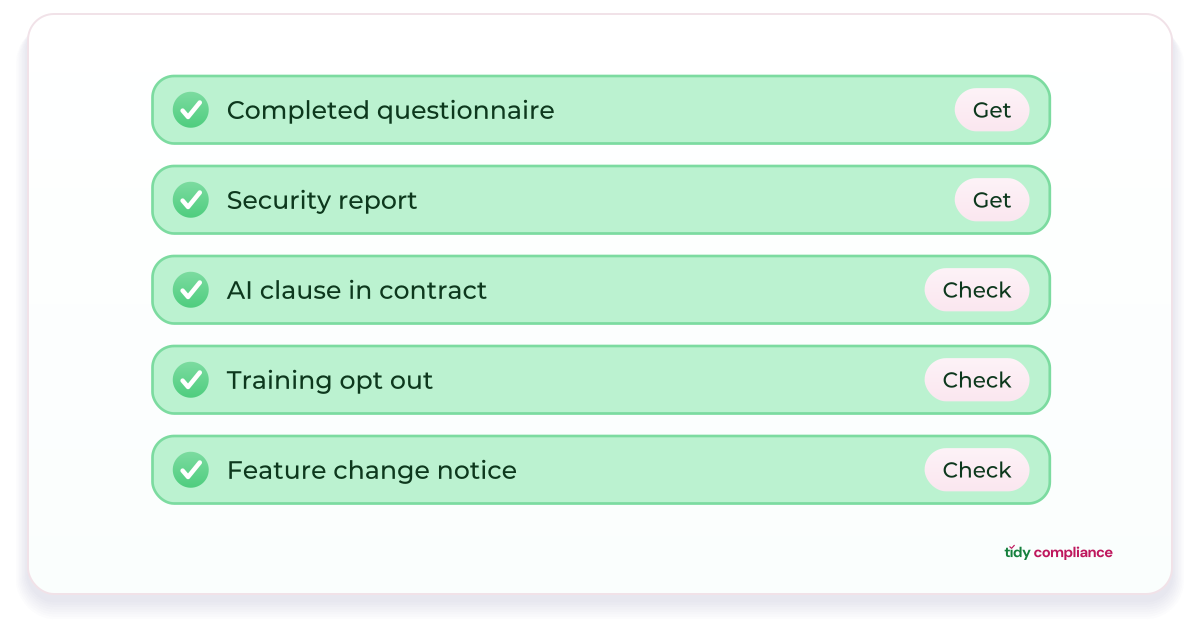
Vendor review is next. Ask for the questionnaire, the security report and the contract terms for AI, and check dates. Vendors that added AI features after you signed are a frequent gap, so look at release notes and settings for tools you have used for years.
Oversight and Monitoring: Does It Work in Practice?
For higher-risk systems, ask who reviews outputs, how often and what happens when they disagree. Sample logs of overrides and complaints. If reviewers never override anything, ask whether they have the time and information to do the job.
Check testing and monitoring: accuracy, drift, bias and misuse checks, with dates and results. Then review the incident log, including near misses. An empty log in a large program is usually a sign that nobody reports, not that nothing happens.
The Evidence Reviewers Expect
Collect evidence before the interviews, so the sessions can focus on questions instead of requests for documents.
- Inventory export with owners, dates and risk ratings
- Approved policy with version history and approver
- Approval records for the last several new AI uses
- Vendor questionnaires, reports and contract clauses
- Training completion by role
- Test, monitoring and oversight logs
- Incident log and the last review minutes
Findings I See Most Often, and How to Fix Them
| Finding | Typical cause | Fix |
|---|---|---|
| Unlisted AI tools | No intake step, easy self-signup | Intake form, spend and login checks |
| No owner for a system | Tool adopted by one team | Assign an owner at approval |
| Policy not followed | Policy too long or unknown | Short policy, training, approval gate |
| Vendor terms unclear | Reviews done once at purchase | Renewal review and AI clause |
| No monitoring records | Tests at launch only | Test calendar and logged results |
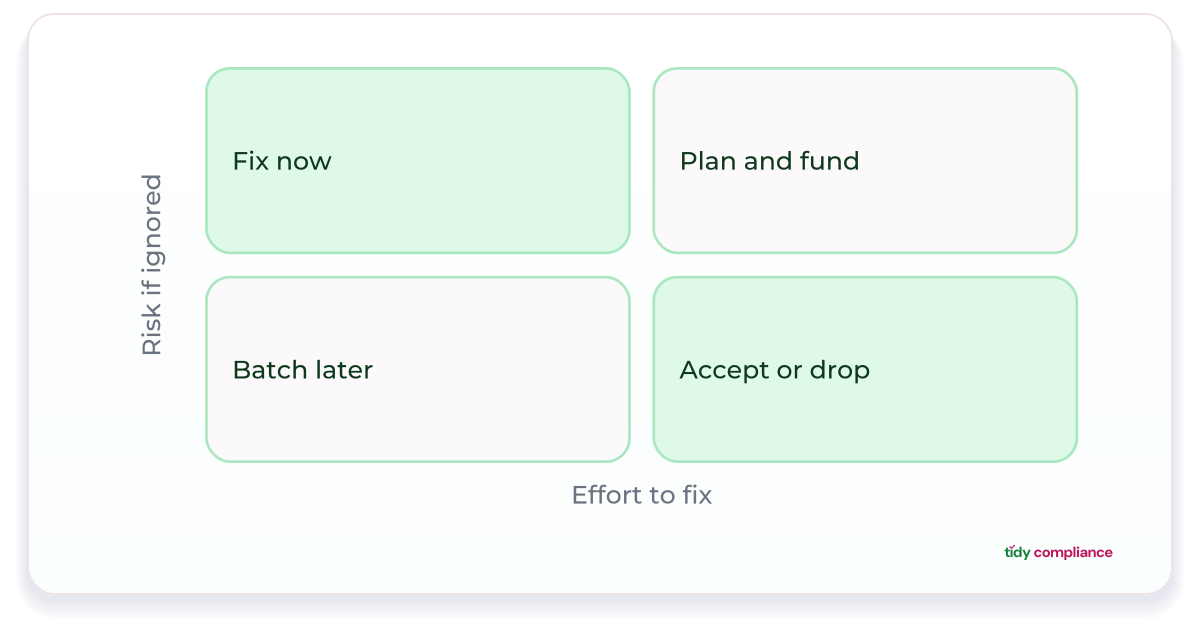
Rate each finding by risk and effort, assign an owner and a date, and recheck after the fix. Findings without owners return in the next audit unchanged.
How to Structure the Report
Keep it short enough to read. Start with a one-page summary showing the score by area, the top five findings and the decisions you need from leadership. Then list findings with the evidence reviewed, the requirement tested, the risk rating, the recommended fix, the owner and the due date.
Close with a plan for the recheck. A report that ends with dates and owners gets acted on, and one that ends with a general recommendation gets filed. The habits in AI compliance best practices help you stay audit ready between reviews.
Run Interviews That Produce Evidence
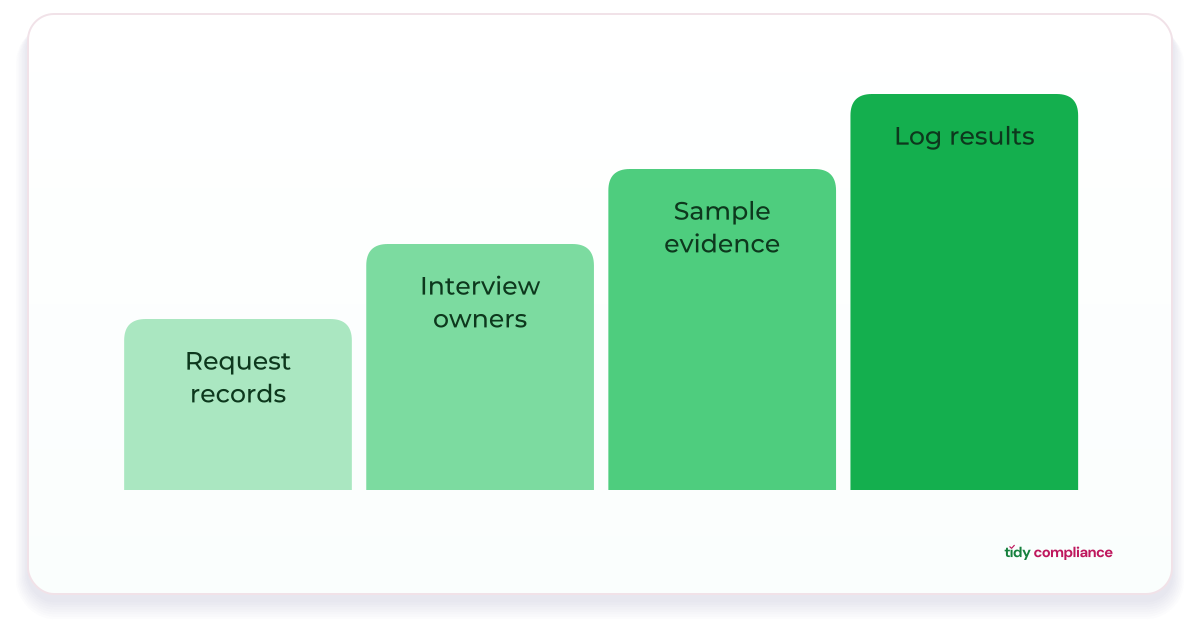
Documents show what is written down, and interviews show what people do. Talk to a system owner, a user and a reviewer for each high-risk system. Ask open questions: walk me through the last time someone asked to add a new AI tool, show me where you saved the result and tell me what happened when the output looked wrong.
Take notes against the requirement you are testing, and ask for the matching record before the meeting ends. If a person describes a step that is not in the policy, record it as an observation. Sometimes the practice is better than the policy and the policy needs to change. Sometimes the practice is a workaround that creates risk. Either way, the finding is that the two do not match.
Keep a short sampling log: which records you chose, why and what you found. Sampling at random from each area, at least three records per area for a first audit, gives your conclusions weight without turning the audit into a full census. Larger programs sample more, and high-risk systems deserve a deeper look than the rest.
Closing Findings So They Stay Closed
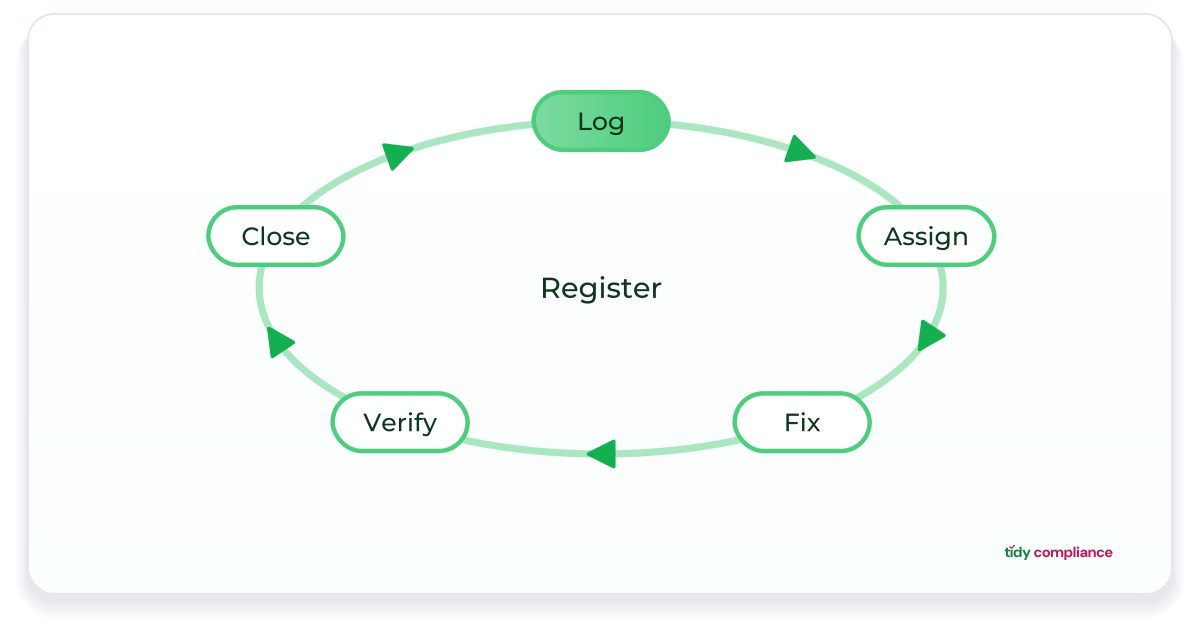
A finding is closed when someone has checked the fix, not when the owner says it is done. Set a recheck date at the time you log the finding, and ask for new evidence: a dated document, a log entry or a screenshot. For policy fixes, check that staff were told and trained.
Track findings in one register with an owner, a risk rating, a due date and a status. Review the register monthly in the first quarter after the audit and then each quarter. Repeat findings across two audits are a sign that the root cause is in the process, such as a missing intake step, and not in the individual fix.
One practical note on timing: schedule the audit for a quiet period, not the week of a product launch or a budget close. Owners who are rushed give short answers and skip evidence, and your findings will reflect their calendar more than your program. Tell the teams what you will ask, send the evidence list two weeks ahead and agree on a single place to upload records. A calm, well-prepared audit produces better findings and leaves teams more willing to take part in the next one.
Tools That Support the Audit
Governance platforms keep inventories, assessments and evidence in one place, which makes sampling and reporting faster. They do not decide what is a finding. Compare options in my ranking of AI compliance tools, and note that most vendors do not publish prices.
Internal Review or Outside Auditor?
Do the first pass internally if you have reviewers who are independent of the teams they check. It teaches you where the evidence is thin. Bring in an outside consultant when you need an independent view for a customer, an investor or a formal standard, and when your team lacks time. Certification bodies handle formal assessments for standards such as ISO/IEC 42001. Ask each provider for sample deliverables, a fixed price and a recheck.
For the wider background on frameworks, my AI compliance guide explains what each one asks of you.
Sources
NIST: AI Risk Management Framework, ISO: ISO/IEC 42001 AI management systems, European Commission: AI Act regulatory framework.
Questions About AI Compliance Audits
What Is an AI Compliance Audit?
It is a structured review of how your organization finds, classifies, controls and documents its AI systems, tested against a standard or set of requirements. The result is a report with findings, evidence references and a remediation plan.
Is an AI Compliance Audit Required?
Requirements depend on your sector, your regions and your contracts. Some rules and customer contracts call for assessments or audits, and others do not. Ask your counsel which apply to you, and consider an internal audit anyway to find gaps early.
How Long Does an AI Compliance Audit Take?
A focused internal audit of a few systems can take two to four weeks. Larger scopes with many systems and vendors take longer, mostly because evidence collection and interviews depend on busy people.
Who Should Perform the Audit?
An internal audit works well for a first pass, if the reviewers are independent of the teams they check. Outside consultants add experience and a fresh view, and certification bodies perform formal assessments for standards such as ISO/IEC 42001.
What Evidence Do Auditors Ask For?
Expect an inventory, risk assessments, policies, approval records, vendor reviews, training logs, test and monitoring results and an incident log. Dated records matter more than polished documents.
How Often Should I Audit?
Many organizations audit yearly and run lighter checks each quarter. Audit again after a major change, such as a new high-risk use case, a vendor switch or a change in rules.
What Happens After the Audit?
Findings go into a remediation plan with owners and dates, and you recheck the fixes. Keep the report, the plan and the recheck results together as evidence of steady improvement.
Disclaimer: This article is for general information only and isn’t legal, financial or tax advice. Treat figures as estimates from typical work and confirm details with your providers before you act.
Was this guide helpful?
Thanks for your feedback.
Odessa Whitfield
Odessa leads the Tidy editorial team and works with the compliance consultants to turn real client projects into practical guides on regulations, frameworks, policies and audit preparation. Before joining Tidy, she worked in compliance and risk roles, writing and maintaining policy sets for regulated organizations. Every article goes through a consultant who has done the work in practice, and she updates guides when a rule, framework or tool changes. She works remotely from the United States.