Quick Summary
- A CMMC assessment checks your documents, your technical settings and your people against the practices for your level.
- Your contract decides whether a self-assessment or a third-party assessment applies, so confirm it before planning.
- A readiness check uses the same method as the real one and shows you the gaps in time to fix them.
- Scope, the System Security Plan and staff interviews cause most surprises.
An assessment is the moment all the preparation gets tested. The rules for who performs it, which score counts and what happens with open items are set by the Department of Defense, and they are phased in over time. What stays stable is the method: an assessor reads, looks and asks. That is why I treat CMMC compliance consulting as preparation for three kinds of questions, not as a document project.
This guide explains how an assessment works and gives you a four-part method for evaluating your own readiness. It is general information, not legal advice. Confirm the requirements for your contract in the official documents.
What an Assessment Looks At
CMMC Level 2 is built on the 110 practices of NIST SP 800-171, grouped into 14 families such as access control, audit and accountability, incident response and system protection. For each practice, an assessor works through assessment objectives and decides whether each one is met.
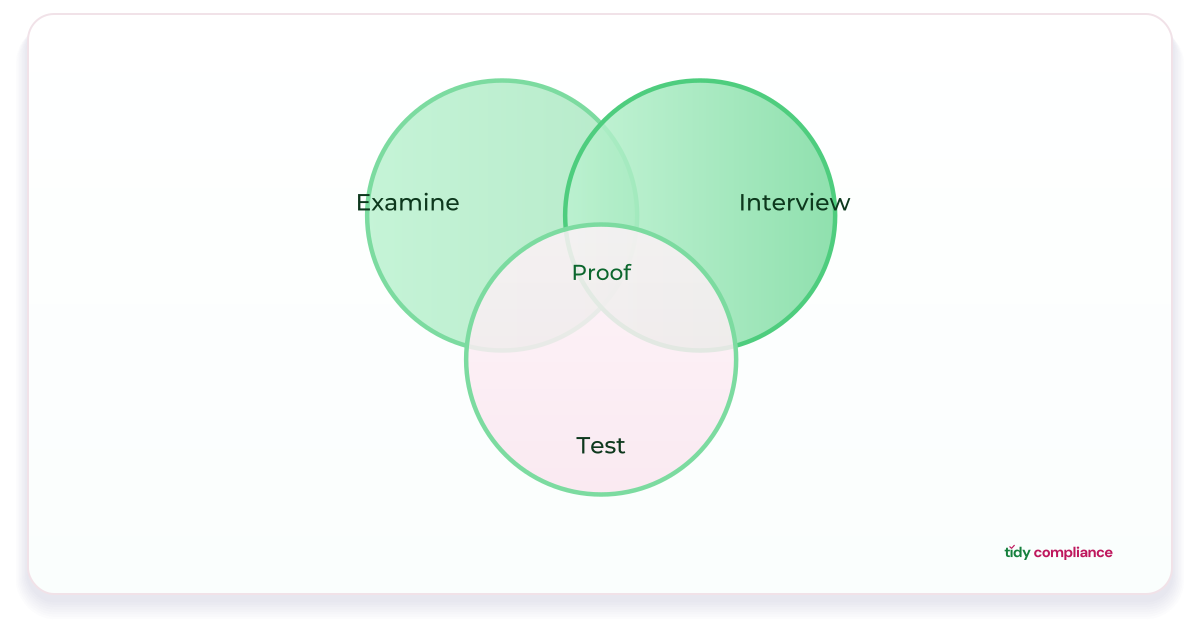
The assessor uses three methods. Examine means reading documents and looking at settings: policies, the System Security Plan, configurations and logs. Interview means asking the people who run the controls to explain what they do. Test means observing a control at work, such as checking that a locked account cannot sign in. A practice is met when the three methods tell the same story.
Self-Assessment or Third-Party Assessment
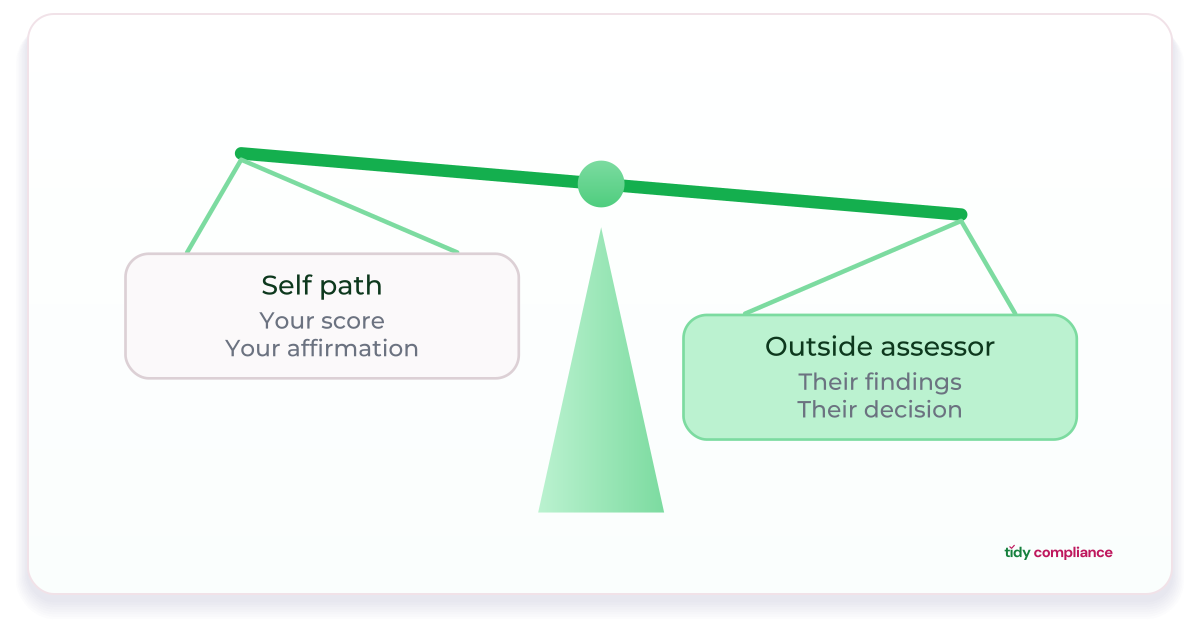
The path depends on your contract and the type of information involved. Some contracts allow a self-assessment, where you evaluate yourself and submit results. Others require an assessment by an authorized third-party assessor organization, known as a C3PAO. A few higher-level programs involve the government directly. The table summarizes the differences in how you prepare.
| Point | Self-assessment | Third-party assessment |
|---|---|---|
| Who performs it | You, or a consultant on your behalf | An authorized assessor organization |
| Result | A score and an affirmation you submit | A certification decision on the assessor's findings |
| Risk of weak evidence | Your leadership signs an affirmation that others can later test | Findings can delay your status |
| How to prepare | Score yourself with the official method and keep the evidence | Run a mock assessment and brief your team on interviews |
Confirm which path applies to you in the current rules and in your solicitation, since the rollout is phased and details are updated. A readiness check works for both paths.
A Four-Part Method for Evaluating Your Own Readiness
I use four parts, one after the other. Each part ends with a number or a list you can show to leadership.
Part 1: Test the Scope
Start by asking whether your boundary is right. Check that every system that stores, processes or transmits CUI is inside it, and that systems outside are really separated. A common error is a laptop or a shared mailbox that sits outside the boundary on paper and carries CUI in practice. Trace three real files from arrival to storage to sending, and see which systems they touch.
Part 2: Read Your Documents Like an Assessor
Open the System Security Plan and pick ten practices at random. For each, follow the reference to the policy, the setting or the record. Count how many references lead to a real, current item. If fewer than eight of ten do, the plan is not ready. Check dates and owners on the policies at the same time.
Part 3: Test the Technical Settings
For a sample of practices, check the setting itself, not the description. Try an account without multifactor authentication, check a laptop's patch status, read a log for last week and look for a former employee's account. Record what you find with the date. These simple tests reveal the gaps that interviews would expose later.
Part 4: Interview Your Own People
Ask the people who run controls to explain what they do and show it. An administrator should be able to describe how accounts are created, reviewed and removed without reading a manual. If three people give three different answers, you have a training gap and not a document gap.
Scoring and Rating the Gaps
Score your practices with the official method published by the Department of Defense, and keep a record of how you reached each result. For your own prioritization, add a second rating. I give each gap two marks from 1 to 3: how much effort the fix needs and how much risk it carries. Fix high-risk, low-effort gaps first, then high-risk, high-effort ones, and leave low-risk items for the action plan.
| Risk | Effort | What to do |
|---|---|---|
| High | Low | Fix this week, record the evidence |
| High | High | Plan with an owner, a date and a budget |
| Low | Low | Batch into routine work |
| Low | High | Record in the plan of action and review later |
For the longer-form version of this method, with scoping rules and a findings format, read my CMMC compliance audit guide. It treats the same ground at a deeper level.
What Good Evidence Looks Like
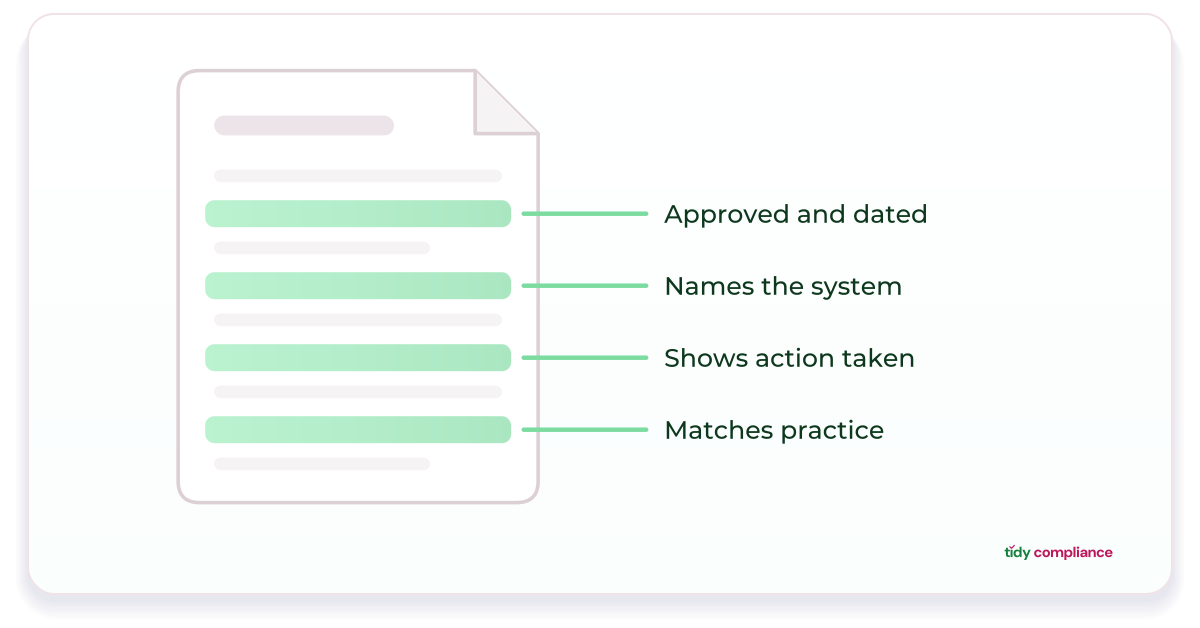
Evidence is anything that shows a practice is met: a policy, a screenshot of a setting, an exported report, a log extract or a signed training record. Good evidence has three traits. It is dated, so the assessor can see when it was true. It is specific, so it names the system and the setting. And it is findable, so your team can produce it within minutes.
I suggest one folder per practice family and a short index that lists each item, its date and its owner. Replace screenshots on a schedule, because a setting captured two years ago proves little. Where a practice depends on a person's habit, such as reviewing accounts every quarter, keep the record of each review.
A frequent trap is evidence that describes intent and not action. A policy that says access is reviewed quarterly is a statement. The dated review records are the proof. If the records do not exist, the assessor will treat the practice as not met, however good the policy reads.
Preparing Your People for Interviews
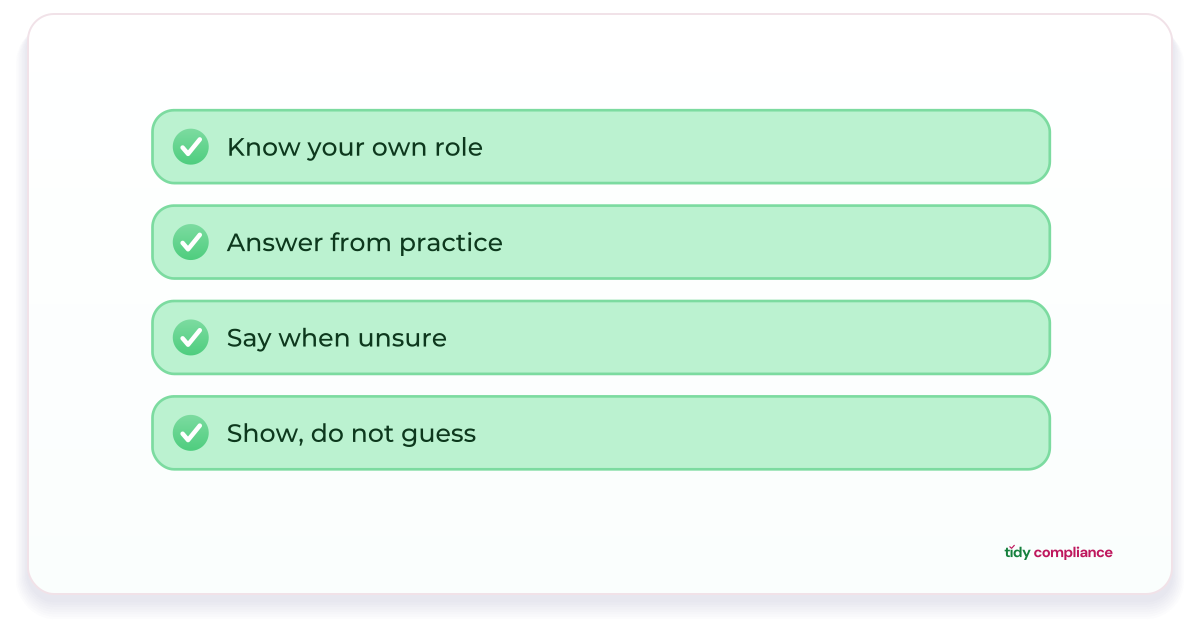
Interviews catch teams that rely on documents alone. Pick the people who run the controls and sit with each for 30 minutes. Ask them to walk through three real cases, such as onboarding a new user, handling a lost laptop and reviewing a log alert. Let them show the system while they talk.
Tell people they may say "I would check the procedure" when they are unsure, and then show where it is. Guessing creates findings. Prepare leaders as well: an assessor may ask who approves the System Security Plan and how risks are reported upward.
Signs You Are Ready, and Signs You Are Not
You are close when your scope has been challenged by someone outside your IT team, the System Security Plan matches the systems, evidence is stored by practice with dates and your control owners can explain their work. You are not ready when the plan was written once and never compared with reality, when evidence lives in people's inboxes or when only one person understands the environment.
A mock assessment is the best test. Use the 12 points in my CMMC compliance checklist as the agenda, and bring someone who has not worked on your environment. Their questions will be close to the assessor's.
Tools and Support for Your Assessment
Platforms can track practices, evidence and the plan of action, and some work with assessors and readiness providers. They do not perform or replace the assessment. I compare the main options in my ranking of CMMC compliance tools. Whatever you use, make sure the output is a report your assessor can read.
Budget for the assessment itself, remediation and staff time. The CMMC compliance cost article breaks down what drives each part. New to the program? The CMMC compliance guide explains the levels, the terms and the timeline in plain language.
A Realistic Timeline for a Readiness Check
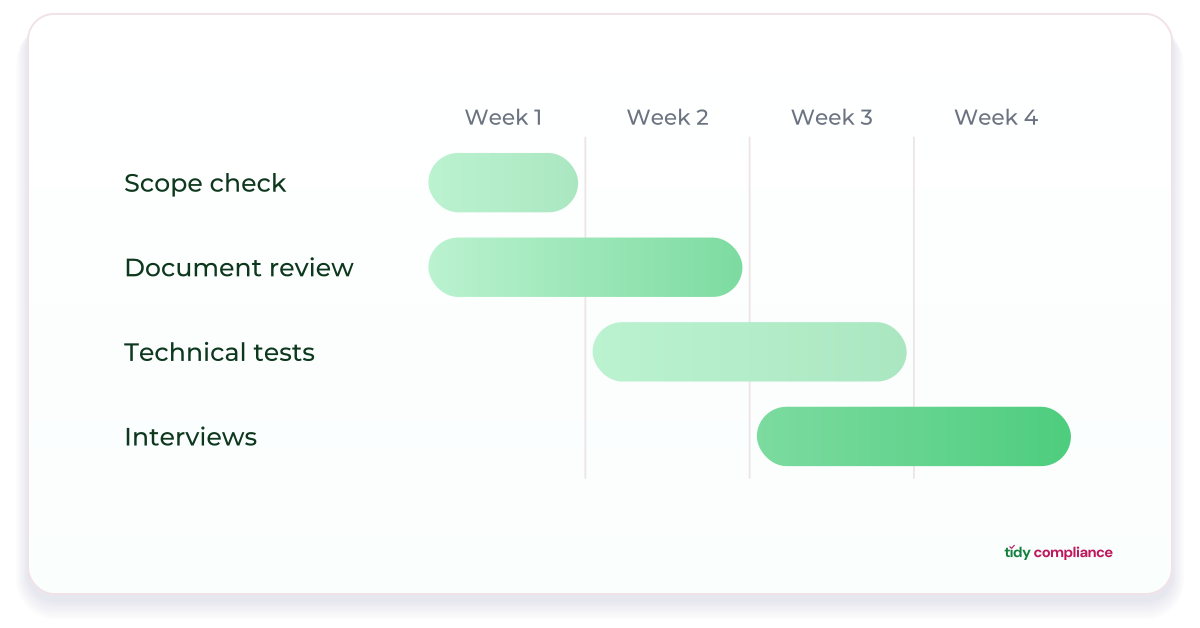
For a small, well-scoped environment, I plan about four weeks. The first week covers scope and document collection. Weeks two and three cover the document read, the technical tests and the interviews. The last week is for scoring, ranking the gaps and presenting the results to leadership with owners and dates attached.
Delays usually come from two places: waiting for evidence from IT or an outside provider, and scheduling people who are busy. Book interviews on the first day, and ask for exports early. If you plan a third-party assessment, leave time between the readiness check and the real one to fix the high-risk gaps and capture fresh evidence.
How to Choose Who Runs Your Readiness Check
Pick someone who is independent of the people who built the controls and who knows the assessment method. That can be a consultant, a trusted peer from another company or a security lead from a different team. Ask them to follow the examine, interview and test method, to report findings in neutral words and to give you a ranked list with owners and dates.
Questions About the CMMC Compliance Assessment
What Is a CMMC Assessment?
It is the evaluation that checks whether your environment meets the practices required for your level. Depending on your contract, it is a self-assessment you submit yourself or an assessment carried out by an authorized third-party assessor organization. Your contract and the current Department of Defense rules decide which one applies.
Is a Readiness Assessment the Same as the Official Assessment?
No. A readiness assessment is a practice run that you or a consultant carry out to find gaps before the official one. It has no official standing, but it uses the same method, so it shows you what the official assessor is likely to find.
What Score Do I Need?
Scoring uses the method published by the Department of Defense, where each unmet practice reduces a maximum score of 110. Rules on minimum scores and limited open items exist, and they are updated by the Department, so read the current text or ask your consultant. I would not plan a budget around the minimum.
How Long Does a Readiness Assessment Take?
A focused readiness assessment of a small environment can fit into a few weeks. Larger scopes take longer, mainly because of interviews and evidence requests. Preparation, especially a clear scope and a System Security Plan, saves the most time.
Who Interviews Staff During an Assessment?
Assessors speak with the people who run the controls, such as system administrators, HR and the person who manages access. They ask people to explain what they do and to show it. Practice with your team before the real assessment.
What Happens If the Assessment Finds Gaps?
It depends on your level, your path and the current rules. Some gaps can be recorded in a plan of action under defined conditions, and others must be fixed before you can claim a status. Ask your consultant or assessor how the rules treat each gap on your list.
How Often Do I Need to Repeat It?
Assessment results have a defined validity period, and annual affirmations are part of the program. Plan to keep evidence current throughout, so each renewal is a refresh and not a new project. Confirm the current periods in the official documents.
Sources
- U.S. Department of Defense CIO, Cybersecurity Maturity Model Certification
- NIST SP 800-171 Revision 2, Protecting Controlled Unclassified Information
Disclaimer: This article is for general information only and isn’t legal, financial or tax advice. Treat figures as estimates from typical work and confirm details with your providers before you act.
Was this guide helpful?
Thanks for your feedback.
Odessa Whitfield
Odessa leads the Tidy editorial team and works with the compliance consultants to turn real client projects into practical guides on regulations, frameworks, policies and audit preparation. Before joining Tidy, she worked in compliance and risk roles, writing and maintaining policy sets for regulated organizations. Every article goes through a consultant who has done the work in practice, and she updates guides when a rule, framework or tool changes. She works remotely from the United States.