Quick Summary
- The audit has five phases: scope, evidence, assessment, scoring and closeout. Most of your work happens before the assessor starts.
- Assessors rate every requirement through documents, interviews and tests, so a policy without a working control does not pass.
- Some requirements can never be deferred to a plan of action, so close those first.
- Program rules and dates are still evolving, so check the current rule and your contract before you set a schedule.
A CMMC audit is the formal check that your systems protect the sensitive government information you handle. If you work with CMMC compliance consulting, the audit is the part that decides whether the preparation worked. I have watched capable teams lose weeks because they treated it as a document drop, when the assessor was really testing how the company behaves day to day.
This framework walks through the five phases I use with clients. It does not replace the program rules or your contract, and it is not legal advice. Treat it as a way to organize your preparation, then confirm the details against the current rule text.
The Five Phases of a CMMC Audit at a Glance
Each phase has one output that the next phase depends on. If one is weak, the audit shows it quickly, so use the table as a map before you read the detail.
| Phase | Main question | Output you need |
|---|---|---|
| 1. Scope | Which systems, people and facilities touch controlled information? | Scope statement and network diagrams |
| 2. Evidence | Can you prove each requirement is met? | System security plan and an evidence set per requirement |
| 3. Assessment | Does the control work when the assessor tests it? | Prepared staff, working controls and access for the assessor |
| 4. Scoring | How many requirements are met, and which ones are not? | Score and findings report |
| 5. Closeout | Can open items be closed in time? | Plan of action with owners and dates |
Phase 1: Set the Scope Before Anything Else
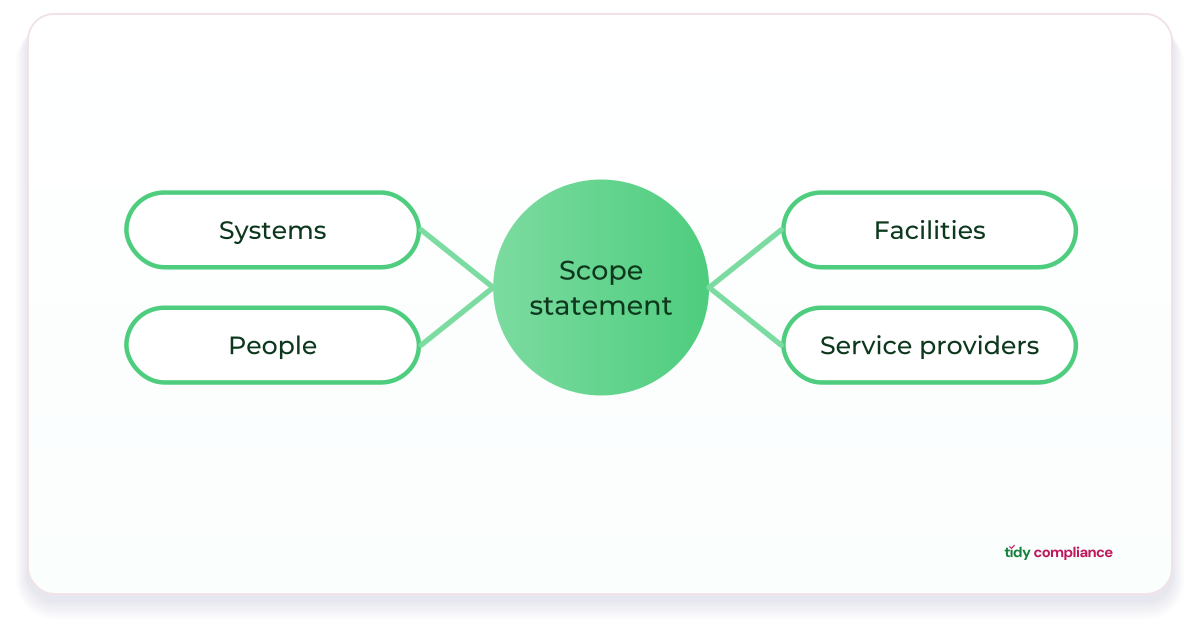
Scope is the single decision that changes the size of the audit most. Everything that stores, processes or transmits controlled unclassified information is in scope, along with the systems and people that protect it. Anything you can keep out of scope is a requirement you never have to prove.
The program groups assets into categories, such as the assets that handle the information itself, the assets that provide security protection and assets that support the people who work with it. I start every engagement by walking the data flow with the contracts team, because they know where the information really goes. IT teams often describe a cleaner picture than the one that exists, and the shared drive someone used in 2022 shows up in the audit even if nobody lists it.
Your scoping output is a short statement, a network diagram and a data flow diagram that all agree with each other. If you are still deciding between a self-assessment and a third-party assessment, my CMMC compliance assessment guide covers how to evaluate readiness first.
Scope Decisions That Pay Back
A few choices shrink scope without weakening security. You can separate the systems that handle controlled information into their own environment, limit which staff can access it and use a managed service that already meets the requirements. Each choice carries its own documentation duty, so shrinking scope trades audit effort for design effort. In my experience the trade is worth it for companies with fewer than a few dozen users who need the information.
Phase 2: Build the Evidence Set
The audit measures your controls against the 110 security requirements in NIST SP 800-171 Revision 2, which the program uses for Level 2. Your evidence set holds a system security plan plus the documents, configurations and records that prove each requirement is met.
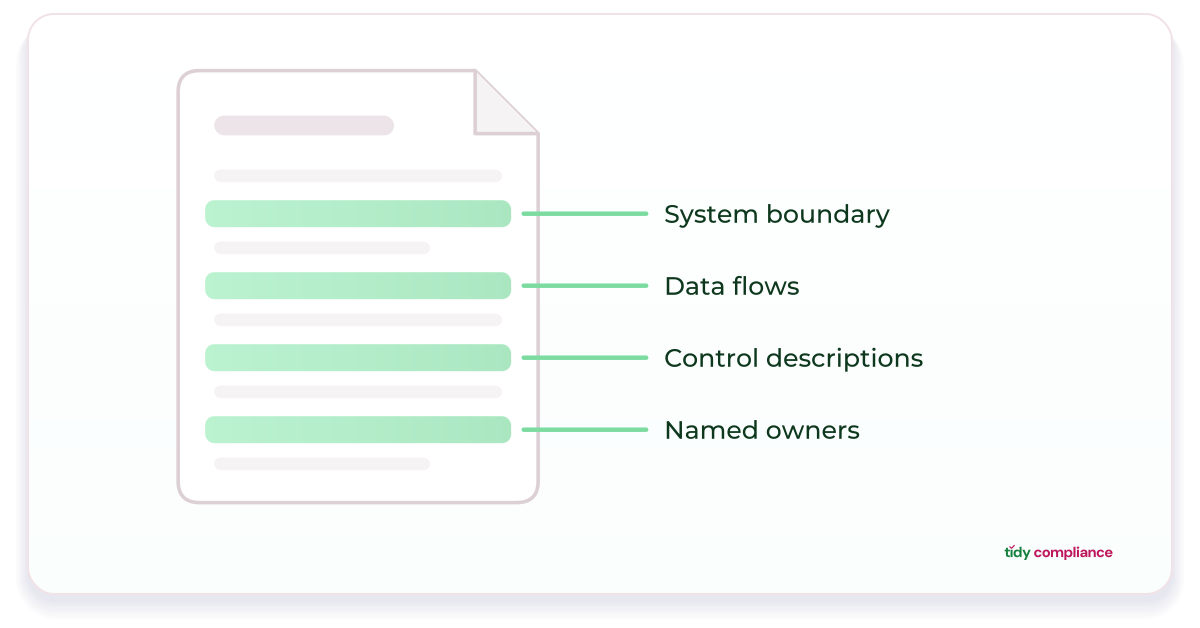
The system security plan is the center of the set, and it is one of the requirements that cannot be placed on a plan of action. It needs to match your real environment. When a plan says multi-factor authentication covers every user and the assessor finds three service accounts without it, the plan and the test disagree, and the test wins.
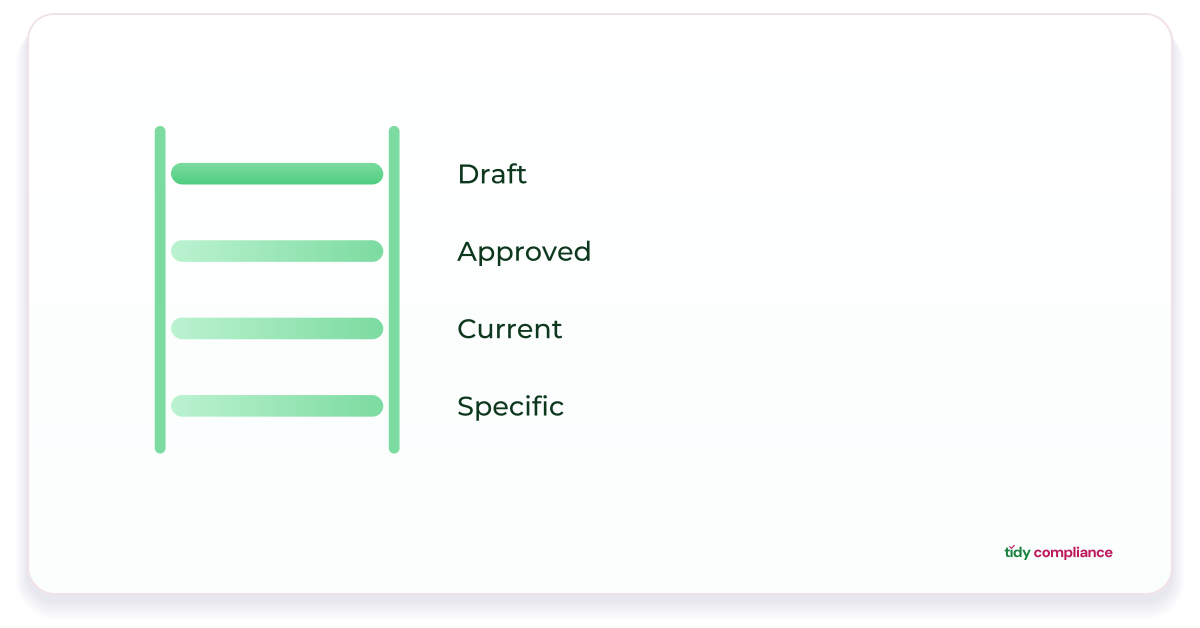
Evidence the assessor accepts is current, approved and specific. Drafts, working papers and unapproved policies do not count. I ask clients to date and sign each policy, keep screenshots of settings with the system name visible and store everything in one folder structure organized by requirement number. You can find a requirement-by-requirement list in my CMMC compliance checklist.
What Counts as Evidence
| Evidence type | Examples | Common weakness |
|---|---|---|
| Documents | Policies, procedures, system security plan, diagrams | Unsigned or outdated versions |
| Configurations | Settings exports, screenshots, logs | Screenshots that do not show which system they come from |
| People | Interview answers from administrators and users | Staff describe a process that differs from the document |
| Demonstrations | Live tests of access, logging and alerts | A control that exists on paper but is not turned on |
Phase 3: Know How the Assessor Tests
NIST SP 800-171A, the assessment guide the program relies on, defines three methods: examine, interview and test. Each requirement has one or more objectives, and the assessor picks the methods that fit. An objective is only met when its evidence is satisfied.
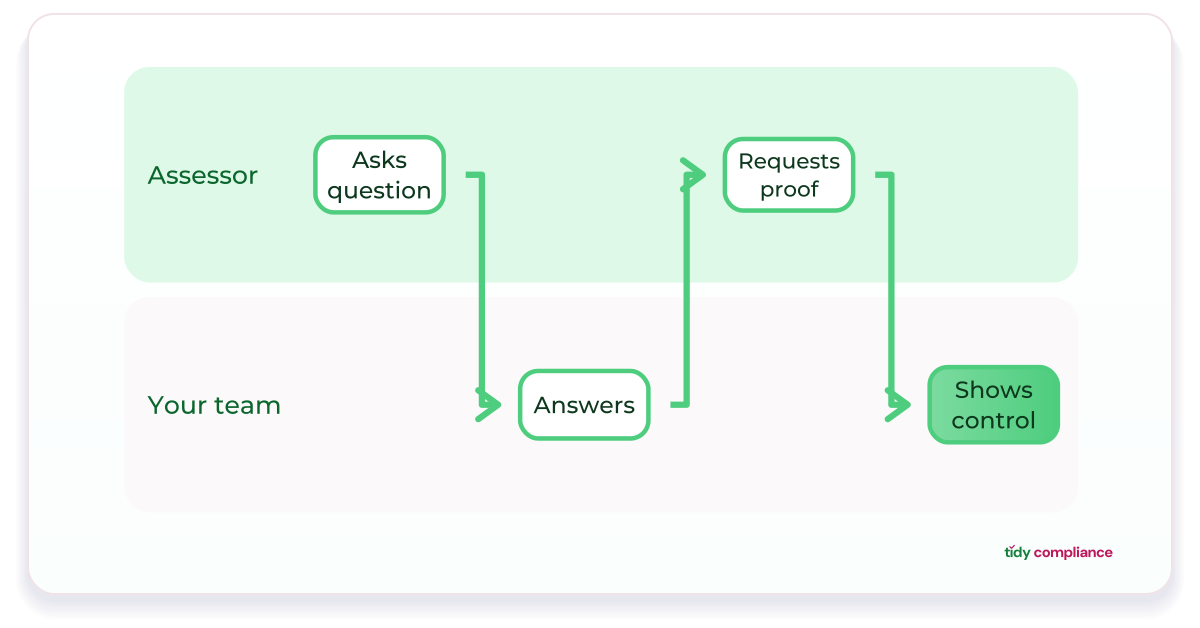
Interviews catch more problems than people expect. The assessor asks the administrator how new accounts are created, then asks a regular user how they got access. If the two answers describe different processes, the finding writes itself. I run mock interviews with clients two weeks before the assessment, and the first round almost always turns up a surprise, such as a manager who approves access by chat message instead of through the ticket system.
Testing is the third lever. The assessor may ask you to show that a locked account stays locked, that logs capture a login or that removable media is blocked. These tests reward companies that use tools their staff already know. For a view of platforms that help with evidence collection, see my review of CMMC compliance tools.
Phase 4: Understand How Findings Are Scored
Under the Level 2 scoring model, each requirement is rated met, not met or not applicable. Requirements carry different point values, and each not-met requirement subtracts its value from a maximum of 110. A conditional result needs a minimum score of 88, which is 80 percent of the maximum, and the open items must qualify for a plan of action.
Qualifying is not automatic. A single open item can be worth only limited points on a plan of action, and a short list of requirements cannot be deferred at all, including the system security plan and several physical access controls. You can read the scoring rules in the program's final rule, which is linked in the sources below, and the details can change, so check the current text.
| Result | What it means | Your next step |
|---|---|---|
| All requirements met | Final status can be recorded | Plan the annual affirmation and the next assessment cycle |
| Conditional | Minimum score reached and open items qualify | Close the plan of action within the allowed window |
| Not passed | Score too low or a non-deferrable item is open | Fix the gaps, then schedule a new assessment |
Phase 5: Close Out and Keep the Result
A conditional result starts a clock. The plan of action must be finished within the window the rule sets, and a closeout assessment confirms it. Every item needs an owner, a date and the evidence that will prove it, written before the audit so you are not inventing it in a hurry.
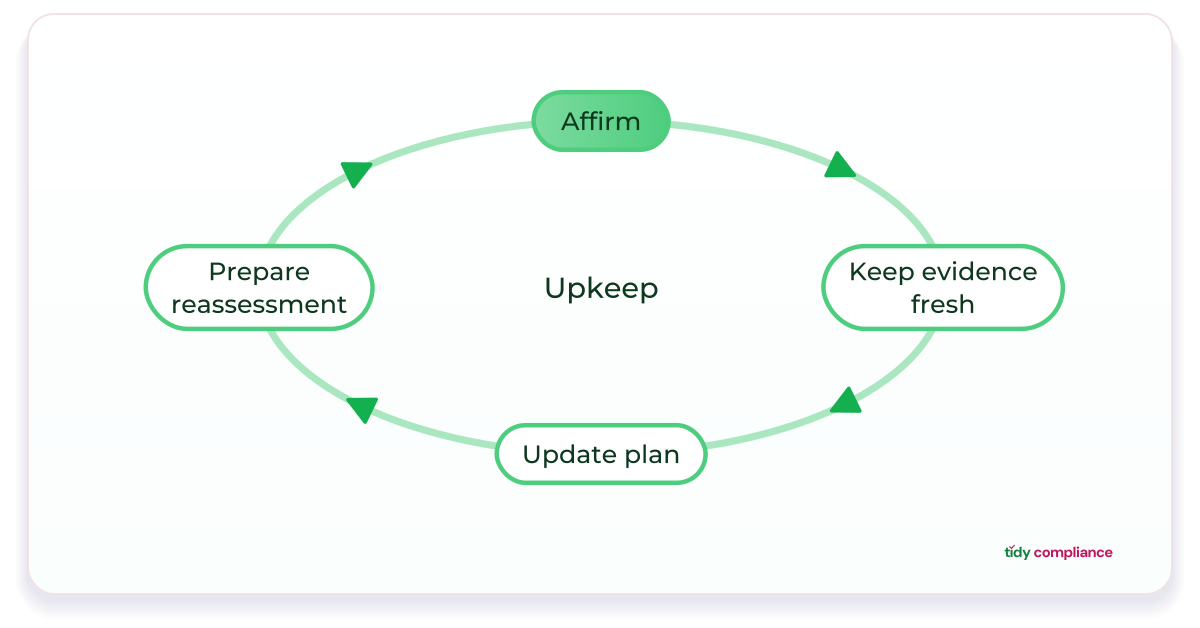
After a passing result the work continues. An authorized official affirms continued compliance, changes to your environment need to be reflected in the system security plan and certification has an end date. Teams that go quiet after the audit usually find that the plan no longer matches the systems by the next review.
Budget for this phase as well. My breakdown of CMMC compliance cost shows which costs repeat each year and which are one-time. If you are new to the program as a whole, start with the CMMC compliance guide.
The Findings I See Most Often
Patterns repeat across companies. The most common finding is a system security plan that no longer matches the environment, followed by policies that exist but are not approved. The next group is controls that staff describe correctly but cannot demonstrate, such as logging that was configured and later turned off after a software update.
A smaller group is more expensive. Cloud services and managed providers that handle controlled information need their own documented responsibilities, and a missing shared responsibility matrix delays many audits. I recommend you ask every provider for that document before the assessment is booked, not during it.
How to Prepare Your Own CMMC Audit
You can run a lean preparation with a small group. Before you book an assessor, check this list:
- The scope statement, network diagram and data flow diagram agree with each other.
- The system security plan is signed, dated and matches how your systems run today.
- Every requirement has an evidence folder with current, approved material.
- Administrators and users have done a mock interview and gave matching answers.
- Every provider that touches controlled information has documented its responsibilities.
- The non-deferrable requirements are closed, not planned.
If this list shows more gaps than you can close in time, you do not have to carry it alone. The team behind CMMC consulting can run a readiness review with you.
Questions About the CMMC Compliance Audit
Who Performs a CMMC Level 2 Audit?
It depends on the contract. Some Level 2 programs allow a self-assessment, and others require a certification assessment by a C3PAO, which is a third-party assessment organization authorized to do this work. The solicitation or contract tells you which one applies, so read that language first and ask your contracting officer or prime if it is unclear.
What Does a C3PAO Assessor Look At?
The assessor checks every requirement in scope through three kinds of evidence: documents and settings they examine, people they interview and controls they test. A policy alone rarely satisfies a requirement. The assessor wants to see the control working and hear your staff describe it the same way your documents do.
What Score Do I Need to Pass?
A full pass means every applicable requirement is met. A conditional result is possible when you reach at least 88 of 110 points and the open items qualify for a plan of action and milestones, which has to be closed within 180 days. Check the current rule text, because the details are set by the program and can change.
Can Any Requirement Go on a Plan of Action?
No. Some requirements cannot be deferred, including the system security plan, and individual open items are limited in how many points they may be worth. This is why I tell clients to close the non-deferrable items before they book an assessor.
How Long Does the Assessment Itself Take?
The on-site or remote assessment window is usually measured in days, and the preparation before it takes far longer. In my client work the preparation, meaning scope, evidence and the system security plan, takes most of the calendar time. The assessor then needs time to write the findings report.
What Happens If I Fail an Objective?
That requirement is marked not met and its point value comes off your score. Depending on the score and the requirement, you may qualify for conditional status and a closeout window, or you may need to fix the item and be reassessed. A short window for new evidence exists in some cases, so ask your assessor how it works before the findings report is final.
How Often Do I Need to Repeat the Audit?
Certification is time-limited, and an authorized official affirms continued compliance each year. Confirm the exact interval and affirmation steps in the current program rules and in your contract, then calendar them.
Sources
- Cybersecurity Maturity Model Certification (CMMC) Program, final rule, Federal Register
- NIST SP 800-171 Revision 2, Protecting CUI in Nonfederal Systems
- S90, CMMC assessment process: inside a Level 2 C3PAO review
Disclaimer: This article is for general information only and isn’t legal, financial or tax advice. Treat figures as estimates from typical work and confirm details with your providers before you act.
Was this guide helpful?
Thanks for your feedback.
Odessa Whitfield
Odessa leads the Tidy editorial team and works with the compliance consultants to turn real client projects into practical guides on regulations, frameworks, policies and audit preparation. Before joining Tidy, she worked in compliance and risk roles, writing and maintaining policy sets for regulated organizations. Every article goes through a consultant who has done the work in practice, and she updates guides when a rule, framework or tool changes. She works remotely from the United States.