Quick Summary
- DoD estimates for small entities range from about $5,977 for Level 1 to about $104,670 over three years for a Level 2 C3PAO assessment.
- Those figures cover the assessment only. Fixing gaps, tools and staff time come on top.
- Your total is assessment cost plus remediation, tooling, consulting and yearly upkeep.
- Reducing scope is the cheapest way to lower every one of those lines.
CMMC cost questions usually start with a single number, and that number is almost always the assessment fee. The fee matters, but in the projects I see it is often the smaller share of the budget. If you are weighing CMMC compliance consulting, you need the full picture before you ask anyone for a quote.
This guide uses the Department of Defense cost estimates as a baseline, then shows you the formula I use for the rest. All prices change, so treat every figure as a planning range and confirm it against current quotes. None of this is legal or financial advice.
What the DoD Estimated for Each Level
The program's final rule includes a regulatory cost analysis with figures for small entities. As reported in published summaries of that analysis, they look like this, in base-year 2023 dollars.
| Level and assessment type | Per assessment | Three-year total with affirmations |
|---|---|---|
| Level 1, self-assessment | About $5,977, repeated yearly | Not stated |
| Level 2, self-assessment | About $34,277 | About $37,196 |
| Level 2, C3PAO assessment | About $101,752 | About $104,670 |
| Level 3, government assessment | About $9,050 (assessment support only) | About $12,802 |
The DoD treats these as planning estimates, not market prices. They also exclude the cost of putting the security requirements in place, because the program considers those requirements as already required by existing contract clauses. That gap is exactly where budgets go wrong.
The Formula for Your Own CMMC Budget
I use a five-line formula with clients. Every line can be estimated on its own, and most can be reduced by scope decisions made early.
The assessment line comes from the table above or from an assessor quote. Remediation is the cost of closing the gaps your assessment finds, and it is the line you cannot know until you have a gap list, which is why the CMMC compliance assessment comes first. Tools and services include identity management, endpoint protection, logging, encryption and a managed provider if you use one.
A Worked Example With Stated Assumptions
The numbers below are illustrative, not a quote and not a benchmark from my projects. They exist so you can see how the formula works and swap in your own figures.
Assume a 40-person manufacturer with one office, 12 people who handle controlled information and a Level 2 certification assessment required by contract. A gap assessment finds 28 open requirements.
| Cost line | Assumption | Illustrative amount |
|---|---|---|
| Assessment | DoD estimate for a small entity | $101,752 |
| Remediation | 28 gaps, split between policy work and technical changes | $60,000 |
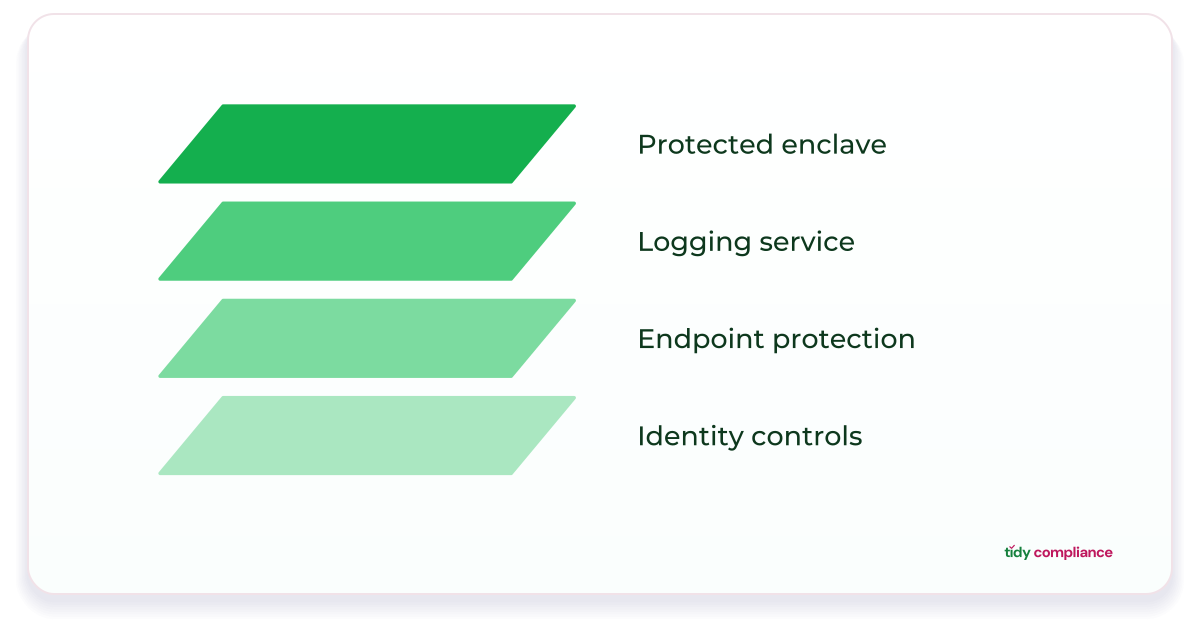
| Tools and services | Identity, endpoint, logging and a protected enclave | $45,000 per year |
| Consulting | Gap assessment, system security plan, mock assessment | $35,000 |
| Internal staff time | 400 hours at a loaded rate of $60 per hour | $24,000 |
| First-year total | $265,752 |
In this example the assessment is about 38 percent of the first year. Change the assumptions and the shares move, which is the point. A company that reduces scope to five users with controlled information may cut the tools, remediation and staff lines by half. If you want to run your own version, the CMMC compliance checklist gives you the requirement list to count gaps against.
Seven Factors That Move the Total
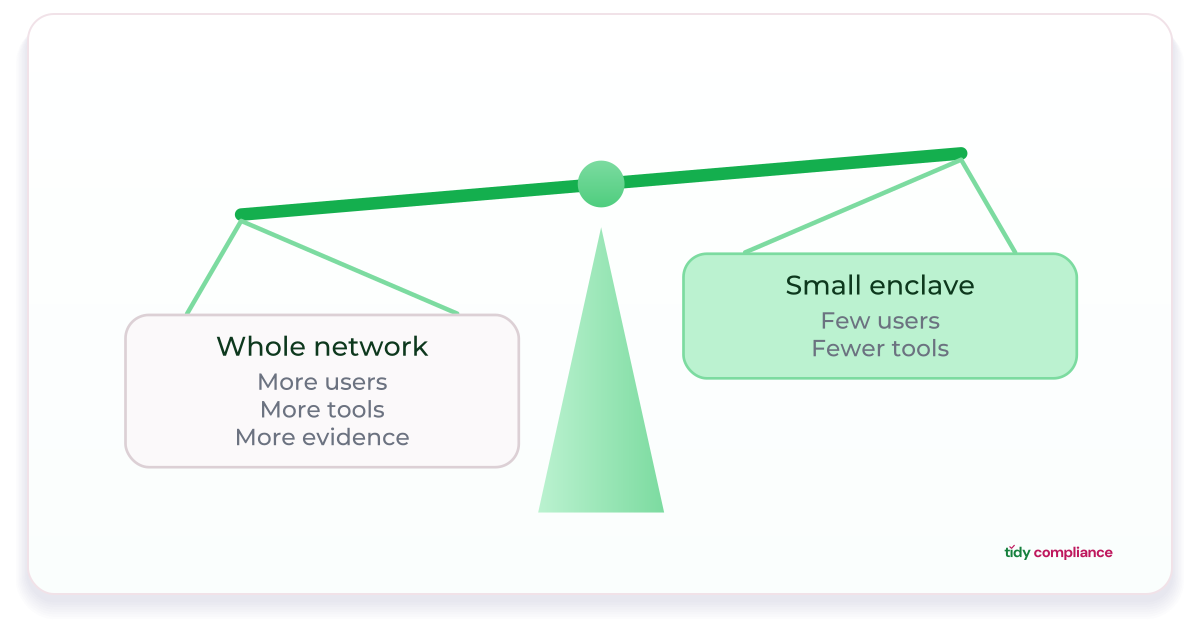
- Scope. Every user, system and location in scope adds work. A separate enclave for controlled information often costs less than bringing the whole company up to standard.
- Starting point. A company with an identity system, logging and written policies has fewer gaps than one with none of them.
- Level and assessment type. Self-assessment and C3PAO assessment differ by a factor of three in the DoD estimate.
- Provider model. Managed security services and compliant cloud environments turn some capital cost into monthly fees.
- Documentation quality. A rushed system security plan generates rework during the assessment.
- Your team. If nobody on staff can run the controls day to day, you pay for it externally for years.
- Timeline. Compressed schedules cost more, because you pay for parallel work and rush fees.
Where Tool Spend Goes
Platforms for evidence collection and control monitoring are one of the choices you can compare before committing. I would not buy one before the gap assessment, because it tells you whether you need a platform or a few targeted tools. My review of CMMC compliance tools compares the main options side by side.
Most budgets also include items that vendors do not advertise as CMMC products: multi-factor authentication licenses, security log storage, encryption of laptops, a secure place for backups and training content. Add them to your list early, because they are small individually and large together.
What You Pay a Consultant For
Consulting fees buy you three things: a faster gap assessment, a system security plan that matches your systems and a mock assessment run by someone who has seen real ones. They do not buy you a pass. I advise you to ask for a fixed price and a deliverable list, and to be wary of anyone who promises a certificate. For the wider process view, the CMMC compliance audit framework shows what each deliverable feeds into.
If you are still learning the basics of the program, my CMMC compliance guide is a better first read than a price list. The structure of the levels decides which cost lines apply to you.
The Costs That Come Back Every Year
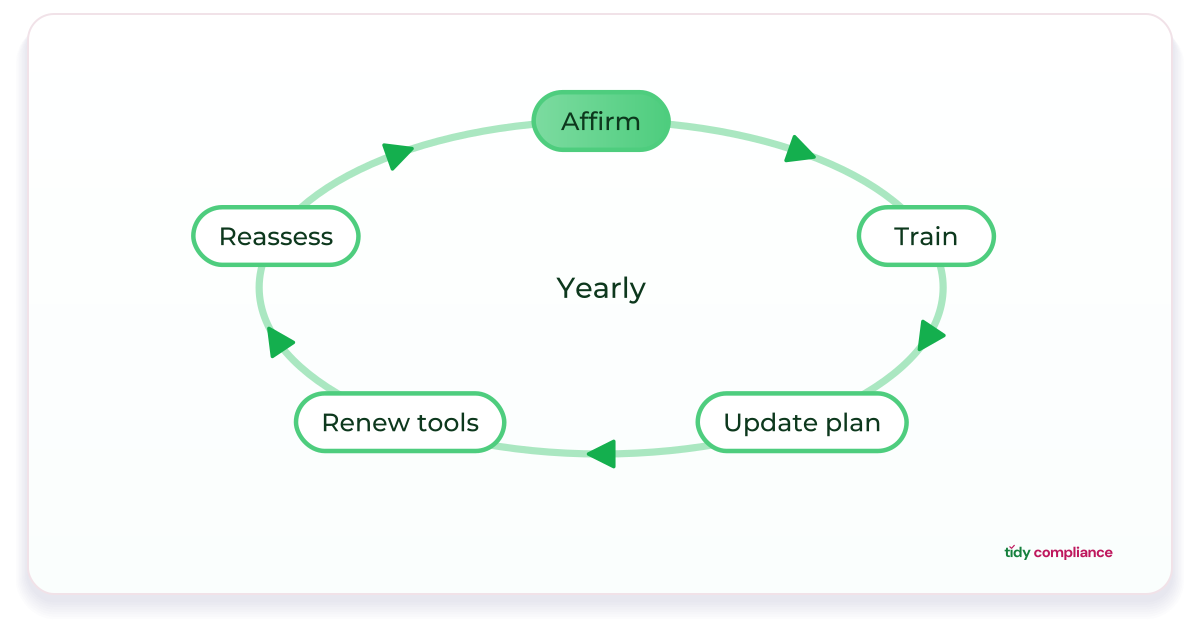
A first-year budget is easy to approve and easy to misread. Certification is time-limited and the controls have to keep running, so a share of the spend repeats. When I build a multi-year view with clients, the recurring lines are the ones leadership forgets, and they are the ones that cause a surprise in year two.
| Recurring line | What drives it | How to keep it down |
|---|---|---|
| Affirmations | Staff time to review controls and sign off each year | Keep evidence current all year instead of rebuilding it before the sign-off |
| Tool and service fees | Seat counts, log volume and managed service tiers | Count only the users who handle controlled information |
| Training | Annual awareness content and role-based refreshers | Use short modules with tracked completion |
| Plan upkeep | New systems, vendors and staff that change the environment | Name one owner and review the plan every quarter |
| Reassessment | The next assessment cycle at the interval the rules set | Treat every year as a rehearsal, not a restart |
The interval for reassessment and the affirmation steps come from the program rules and your contract. Confirm both and put the dates in your finance calendar, so the cost never appears as a surprise.
Self-Assessment or Third-Party Assessment: What It Does to Your Budget
The gap between the two Level 2 paths in the DoD estimate is about $67,000 per assessment for a small entity. That gap is real, but it is not a choice you make for savings. Your contract sets the path, and trying to skip a required third-party assessment costs you the contract.
Where the contract allows a self-assessment, the saving comes with a duty: you carry the scoring risk yourself. I advise clients to run the same mock assessment they would run before a certification, with an outside reviewer if possible. An honest low score is cheap to fix. A weak self-assessment that fails a later government review is not.
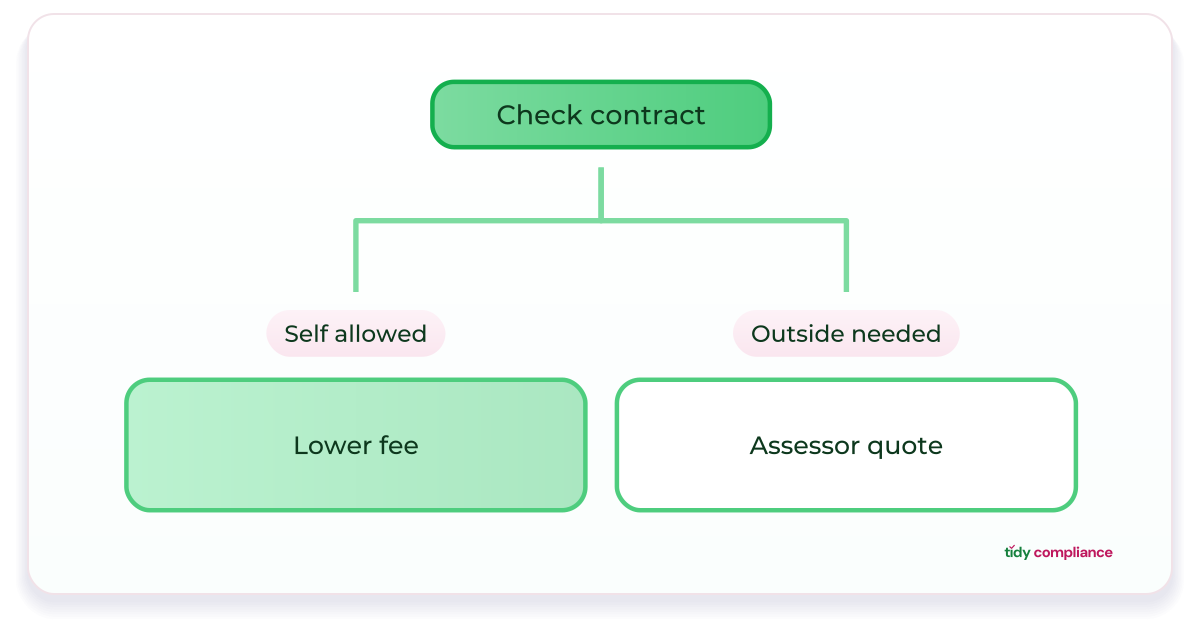
If you are choosing between the two, ask your contracting officer or prime in writing which one applies. Keep the answer with your evidence, because assessors and auditors may ask where the decision came from.
Seven Questions to Ask Before You Accept a Quote
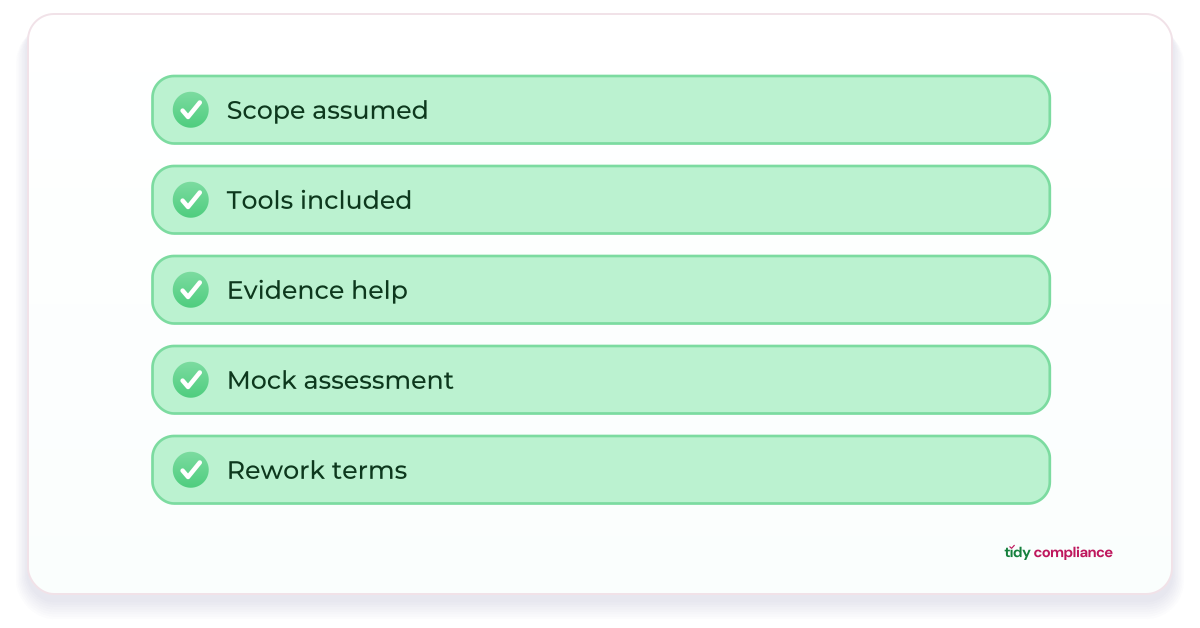
Quotes for CMMC work are hard to compare because providers draw the boundary in different places. One price includes retesting and another does not, and one counts only the policy work while the next also covers technical changes. I use the questions below when I review a quote with a client, and a provider who cannot answer them clearly has told you something already.
- Which scope does this price assume, and what happens to the price if the scope grows?
- Which deliverables do I receive, and in which format?
- Is remediation included, or only the assessment of gaps?
- What do I have to do myself, and how many hours does that take?
- Is a mock assessment included, and who runs it?
- What recurring fees start after the first year?
- What happens if the assessment finds something unexpected?
Write the answers next to each quote in a simple sheet. After three quotes the differences stand out, and the cheapest one is rarely the one with the most included.
How to Keep Your CMMC Budget Under Control
Before you approve any spend, check these points:
- You know which level and assessment type your contract requires.
- You have a scope statement and a gap list, not only a quote.
- Every provider quote states what is excluded.
- You have costed the annual lines, not only the first year.
- You compared at least two options for each larger tool or service.
Questions About CMMC Compliance Costs
How Much Does CMMC Level 2 Certification Cost?
The Department of Defense estimated about $101,752 per C3PAO assessment for a small entity, or about $104,670 over three years once annual affirmations are included. Those figures cover the assessment only. The work of fixing gaps comes on top, and it depends on your starting point.
Does the DoD Estimate Include Fixing My Security Gaps?
No. The program treats the underlying security requirements as already required by existing contract clauses, so the assessment estimates leave out implementation. In my client work, remediation is the largest and least predictable line in the budget, which is why I price the gap assessment first.
Is a Level 2 Self-Assessment Cheaper than a C3PAO Assessment?
Yes. The DoD estimate for a small entity is about $34,277 per self-assessment, against about $101,752 for a C3PAO assessment. Which one applies to you is set by your contract and the type of information you handle, not by your budget.
What Is the Cheapest Way to Lower My CMMC Cost?
Reduce scope. Fewer systems, users and locations that touch controlled information means fewer requirements to prove, fewer licenses to buy and a shorter assessment. Scoping is usually the highest-return decision in the whole project.
Do I Need New Software to Become Compliant?
Not always. Many companies already own tools that cover part of the requirements, such as identity management and endpoint protection. Check what you have against the requirements before you buy a platform, and compare options in a structured review.
Are Consulting Fees a Good Investment?
They can be, if the consultant shortens your path to a pass or prevents a failed assessment. Ask for a fixed quote, a named deliverable list and a plain statement of what you must do yourself. Avoid open-ended hourly work with no end date.
Which Costs Repeat Every Year?
Annual affirmations, monitoring tools, training, log retention, managed service fees and periodic reviews all repeat. Certification is time-limited, so you also budget for the next assessment cycle. Confirm the current interval in the program rules.
Sources
- Cybersecurity Maturity Model Certification (CMMC) Program, final rule, Federal Register
- Clear IT Pricing, CMMC certification cost by level: DoD estimates
Disclaimer: This article is for general information only and isn’t legal, financial or tax advice. Treat figures as estimates from typical work and confirm details with your providers before you act.
Was this guide helpful?
Thanks for your feedback.
Odessa Whitfield
Odessa leads the Tidy editorial team and works with the compliance consultants to turn real client projects into practical guides on regulations, frameworks, policies and audit preparation. Before joining Tidy, she worked in compliance and risk roles, writing and maintaining policy sets for regulated organizations. Every article goes through a consultant who has done the work in practice, and she updates guides when a rule, framework or tool changes. She works remotely from the United States.