Quick Summary
- Automation platforms such as Vanta, Drata and Secureframe suit teams that need SOC 2, ISO 27001 or HIPAA evidence collected from connected systems.
- Thoropass bundles the audit with the software, and Hyperproof and AuditBoard fit teams that run several programs and a risk register.
- Most vendors do not publish prices, so compare written quotes on the same scope before you decide.
- A tool collects evidence but does not replace policies, owners or an independent auditor, so plan the people side first.
The Best Cybersecurity Compliance Tools at a Glance
| Tool | Type | Best for |
|---|---|---|
| 1. Vanta | Compliance automation platform | Teams that want the widest framework and integration coverage |
| 2. Drata | Compliance automation platform | Growing companies that want automated monitoring and a polished auditor workflow |
| 3. Secureframe | Compliance automation platform | Teams that want a published entry price and many supported frameworks |
| 4. Thoropass | Compliance platform with audit services | Teams that want software and the audit from one provider |
| 5. Scrut Automation | Risk and compliance automation | Mid-sized teams that want risk management next to compliance |
| 6. Sprinto | Compliance automation platform | Startups and fast-growing SaaS companies |
| 7. Hyperproof | Compliance operations and risk platform | Companies managing many frameworks and a risk register |
| 8. Apptega | Framework-based compliance platform | Advisers, MSPs and companies that follow a single framework |
| 9. ZenGRC | Governance, risk and compliance platform | Teams that want a traditional GRC workflow |
| 10. AuditBoard (Now Optro) | Enterprise audit, risk and compliance platform | Large organizations with internal audit and risk teams |
The 10 Best Cybersecurity Compliance Tools, Ranked
I start with the tools that suit the widest range of teams and move toward specialist and enterprise platforms, so you can stop reading once you find your fit. The ranking reflects how often each one fits a first or second audit in my cybersecurity compliance consulting work, plus G2 ratings read on the day I wrote this. Picking the right framework and scope matters even more than picking the platform.
Vanta
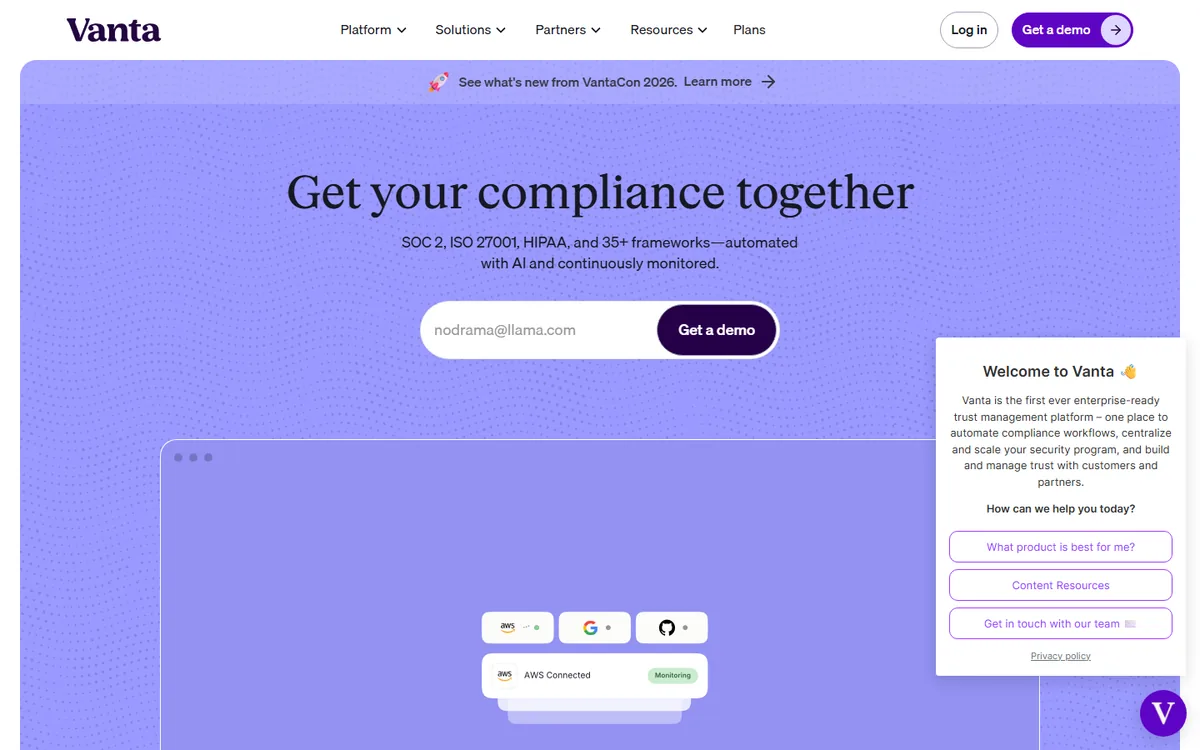
The Broadest Compliance Automation Platform for Teams That Want One Place for Many Frameworks
Vanta connects to your cloud, identity and ticketing tools, tests your controls continuously and collects evidence for frameworks such as SOC 2, ISO 27001 and HIPAA.
Vanta is the tool I see most often on shortlists, and the reason is simple: the integration list is long and the setup is guided. You connect your cloud provider, identity provider, HR system and code repositories, and Vanta maps what it finds to the controls of the frameworks you pick. Failing tests become tasks with an owner, and passing tests become evidence your auditor can view.
In client work, the real value shows up in the second framework. Once your policies, access reviews and vendor records exist, adding ISO 27001 or HIPAA reuses most of that evidence. The catch is that automation only covers what the tools can see. Policies, risk decisions and employee training still need a person, and I always tell clients to budget time for those.
What I Like About Vanta
- Long list of integrations, so most of your stack connects without custom work
- One set of controls maps to several frameworks, which saves repeat effort
- A trust center page lets customers see your security posture without a questionnaire
What I Don’t Like About Vanta
- Price available on request, so you cannot compare costs before a sales call
- Teams with unusual or legacy systems still collect some evidence by hand
Vanta Pricing
Vanta offers four plans: Essentials, Plus, Professional and Enterprise. No public price list; the pricing page asks you to request a demo for a personalized quote.
Vanta Reviews
- G2: 4.5 out of 5 star rating (from 2,916 user reviews)
Drata
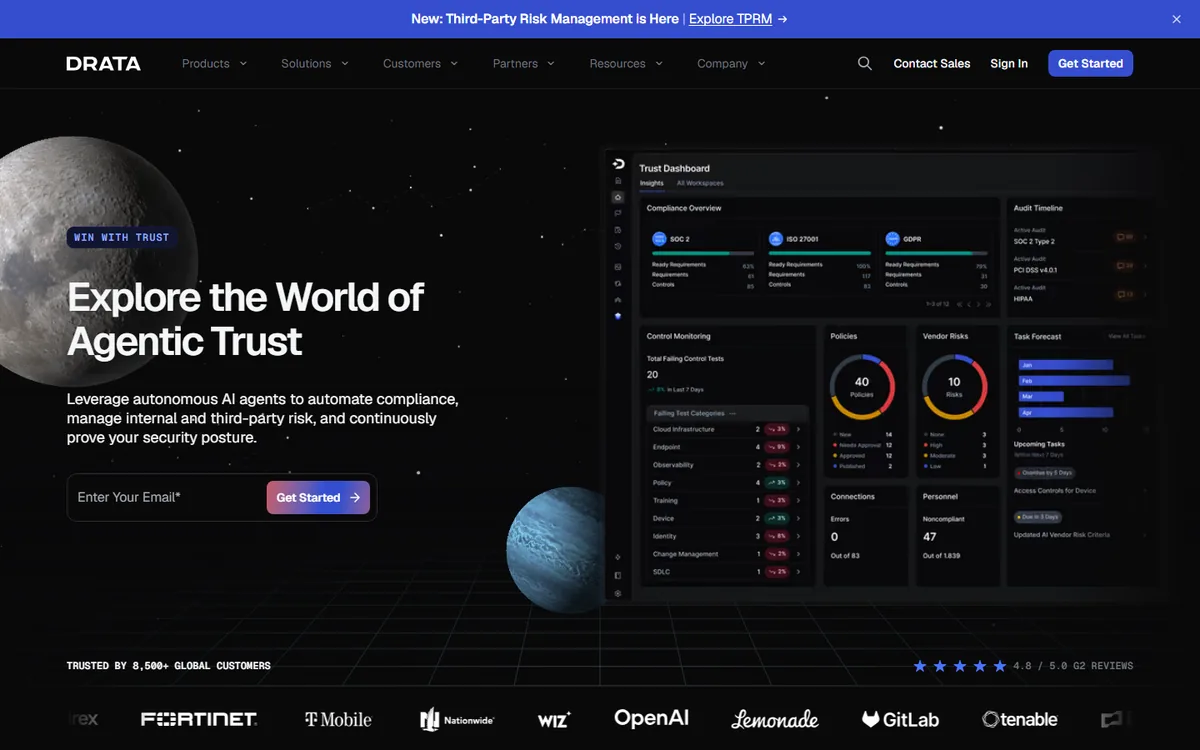
A Mature Automation Platform With Strong Monitoring and a Clean Auditor Experience
Drata monitors your controls around the clock, collects evidence from your connected systems and gives auditors a workspace to review it.
Drata is the closest rival to Vanta, and the two are often compared side by side. Drata is organized around products for Compliance, Trust and third-party risk, each with Foundation, Advanced and Enterprise tiers, so you can start with compliance and add trust or vendor risk later.
I like how Drata handles continuous monitoring. Controls that drift out of compliance raise alerts, which helps teams that go through an audit once a year but need to stay ready in between. The trade-off is the same as with every platform in this category: the tool shows you the gap, and your team still has to close it. Plan for owners on the engineering, HR and IT side before you buy.
What I Like About Drata
- Continuous control monitoring catches drift between audits
- The auditor workspace keeps evidence requests in one place
- Compliance, trust and vendor risk can be added step by step
What I Don’t Like About Drata
- No public price list, so budgeting starts with a sales conversation
- Setup takes real effort from IT and engineering in the first weeks
Drata Pricing
Drata lists Foundation, Advanced and Enterprise tiers for its Compliance and Trust products. The pricing page shows no dollar amounts; every plan leads to a demo or sales contact.
Drata Reviews
- G2: 4.7 out of 5 star rating (from 1,399 user reviews)
Secureframe
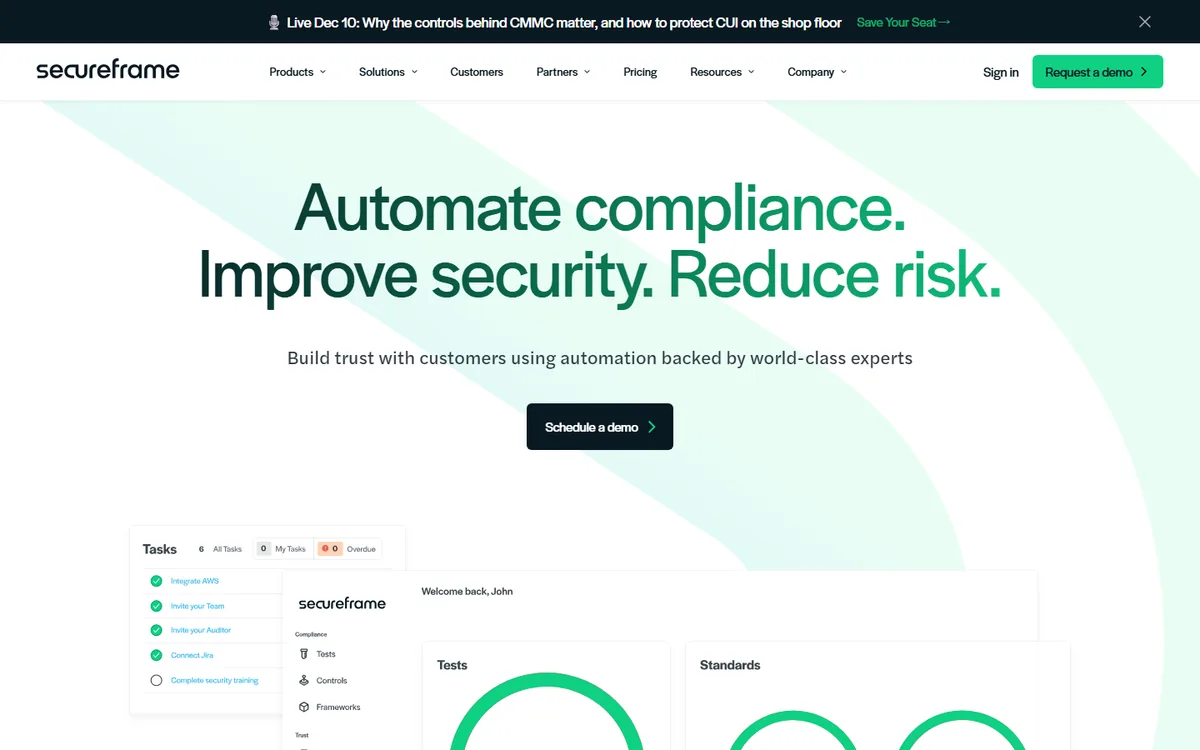
One of the Few Platforms That Publishes an Entry Price, With Wide Framework Coverage
Secureframe automates evidence collection and control monitoring for frameworks such as SOC 2, ISO 27001, HIPAA and PCI DSS, and adds support for government frameworks.
Secureframe sits in the same group as Vanta and Drata, with a few differences worth knowing. It publishes a starting price for its entry plan, which makes early budgeting easier, and it covers a wide set of frameworks, including ones used by contractors that sell to government.
When clients ask me which platform to start with, I look at the framework list first. If you know you will need more than one standard within two years, a platform with deep cross-mapping saves work. Secureframe handles that well, and it also offers personnel training and policy templates in the same product. As with the others, the policies still need editing to fit your company.
What I Like About Secureframe
- The entry plan has a published starting price
- Broad framework coverage, including options for government contractors
- Policy templates and training sit in the same product
What I Don’t Like About Secureframe
- Higher plans require a quote, so total cost is unclear until you talk to sales
- Policy templates need real editing before an auditor accepts them
Secureframe Pricing
Secureframe lists three plans: Fundamentals, Complete and Defense. Fundamentals starts at $7,500 per year; Complete and Defense have no published price and direct you to request a quote.
Secureframe Reviews
- G2: 4.7 out of 5 star rating (from 845 user reviews)
Thoropass
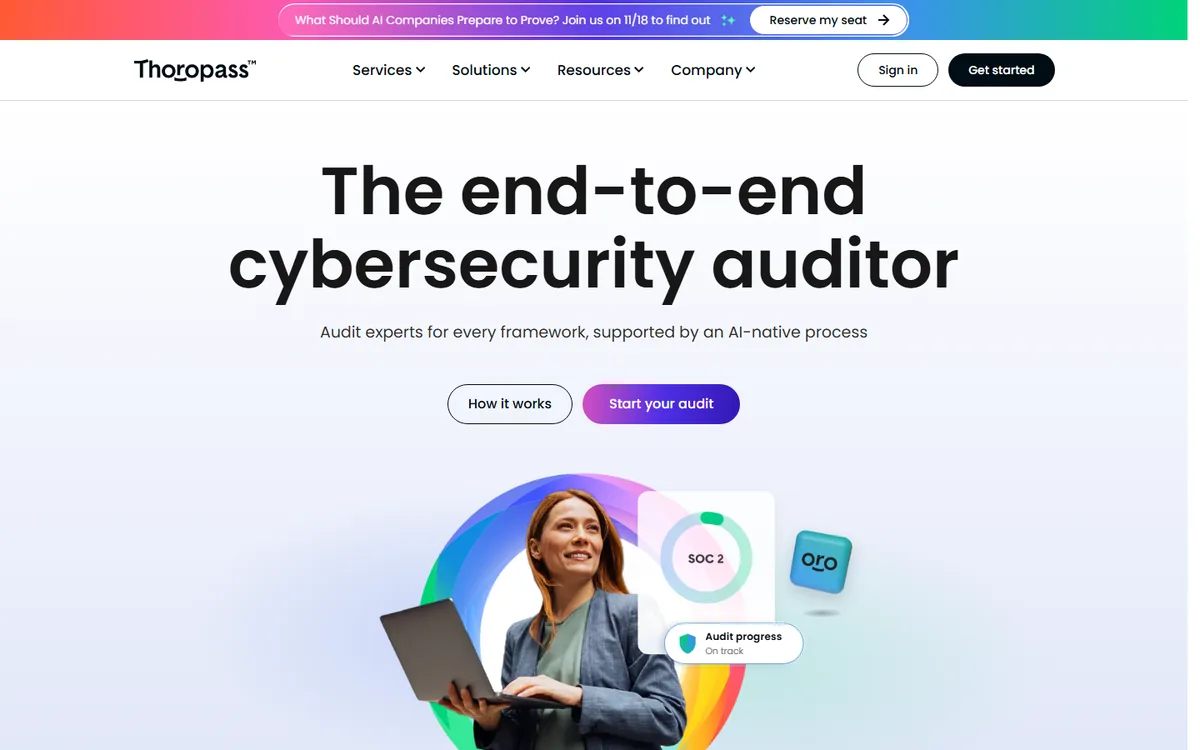
A Good Fit When You Want the Platform and the Audit Handled Together
Thoropass, formerly Laika, combines a compliance automation platform with audit services, so the same provider runs the software and the assessment.
Thoropass takes a different approach from most of the group. Instead of leaving you to find an auditor, it offers audit services inside the product, which can shorten the back-and-forth between tool and auditor.
That setup helps small teams without compliance staff, because one party owns the process from evidence to report. The flip side is less independence: if you prefer to choose your own audit firm, check that the platform supports it before you sign. Thoropass also supports several frameworks, so confirm that yours is covered and what the audit scope includes.
What I Like About Thoropass
- Platform and audit services come from one provider
- One point of contact simplifies the process for small teams
- Supports several common security frameworks
What I Don’t Like About Thoropass
- Pricing varies by framework, scope and services, and is not published
- Less choice if you want to hire your own audit firm
Thoropass Pricing
Thoropass does not publish plan names or prices. Its FAQ says pricing varies with the frameworks, audit scope, company size and services you need, and you receive a tailored quote.
Thoropass Reviews
- G2: 4.7 out of 5 star rating (from 587 user reviews)
Scrut Automation
A Highly Rated Option That Pairs Compliance Automation With Risk Management
Scrut automates evidence collection and control monitoring and adds risk management and vendor risk features in the same platform.
Scrut stands out for its G2 rating, which is the highest in this list on a large number of reviews. Reviewers often mention responsive support and a practical interface, and that matches what I hear from teams that use it.
The tool is a fit if you want risk registers and vendor reviews tied to the same controls you use for audits. I could not read its pricing page when I checked, so I cannot give you plan names or prices. Ask for a written quote that lists frameworks, integrations and the number of users, and compare it with a second vendor.
What I Like About Scrut Automation
- Strong user ratings, with support often praised
- Risk and vendor management sit next to compliance
- Supports several common frameworks from one set of controls
What I Don’t Like About Scrut Automation
- I could not confirm pricing publicly, so a sales call is needed
- Smaller partner ecosystem than the best-known platforms
Scrut Automation Pricing
I could not read Scrut's pricing page when I checked, so I cannot list plans or prices here. Ask the vendor for a written quote and check the pricing page directly.
Scrut Automation Reviews
- G2: 4.9 out of 5 star rating (from 1,342 user reviews)
Sprinto
A Startup-Friendly Platform With Plan Tiers That Grow With Your Team
Sprinto automates security controls, evidence collection and employee tasks for frameworks such as SOC 2 and ISO 27001.
Sprinto focuses on fast-moving companies that need a first framework quickly. It connects to cloud, code and HR tools, checks controls and assigns tasks to the people responsible.
I like platforms that make small teams productive, and Sprinto does that by keeping the task list short and clear. Its pricing page lists Foundation, Growth and Platform plans, with no dollar amounts. I could not read its G2 page when I checked, so I do not quote a rating here; read recent reviews yourself before you decide.
What I Like About Sprinto
- Clear task lists suit teams without a compliance lead
- Three plan tiers let you start small and add more later
- Covers the common first frameworks for SaaS companies
What I Don’t Like About Sprinto
- Price available on request
- I could not confirm its current G2 rating
Sprinto Pricing
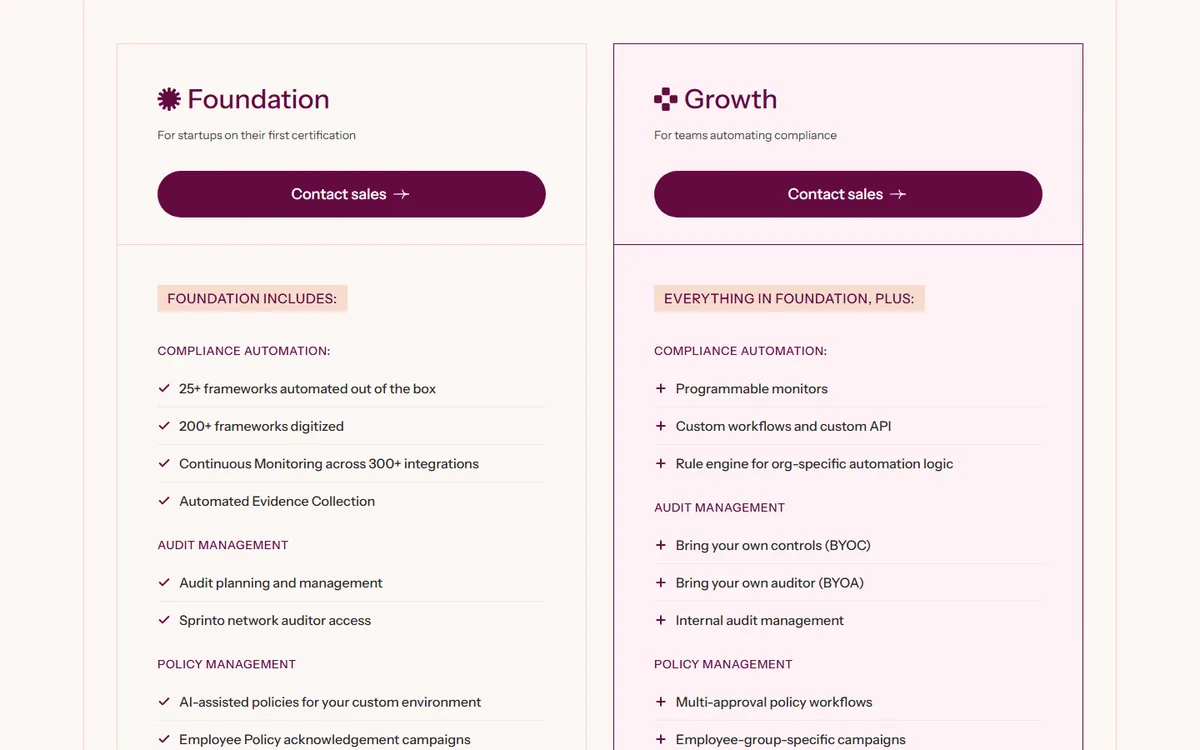
Sprinto lists three plans: Foundation, Growth and Platform. No prices are published; each plan leads to a sales contact, and a plan finder helps you choose.
Sprinto Reviews
- G2: Read user reviews on G2 (rating not confirmed when I checked)
Hyperproof
Best for Teams That Run Several Frameworks and Want Risk and Compliance in One Workspace
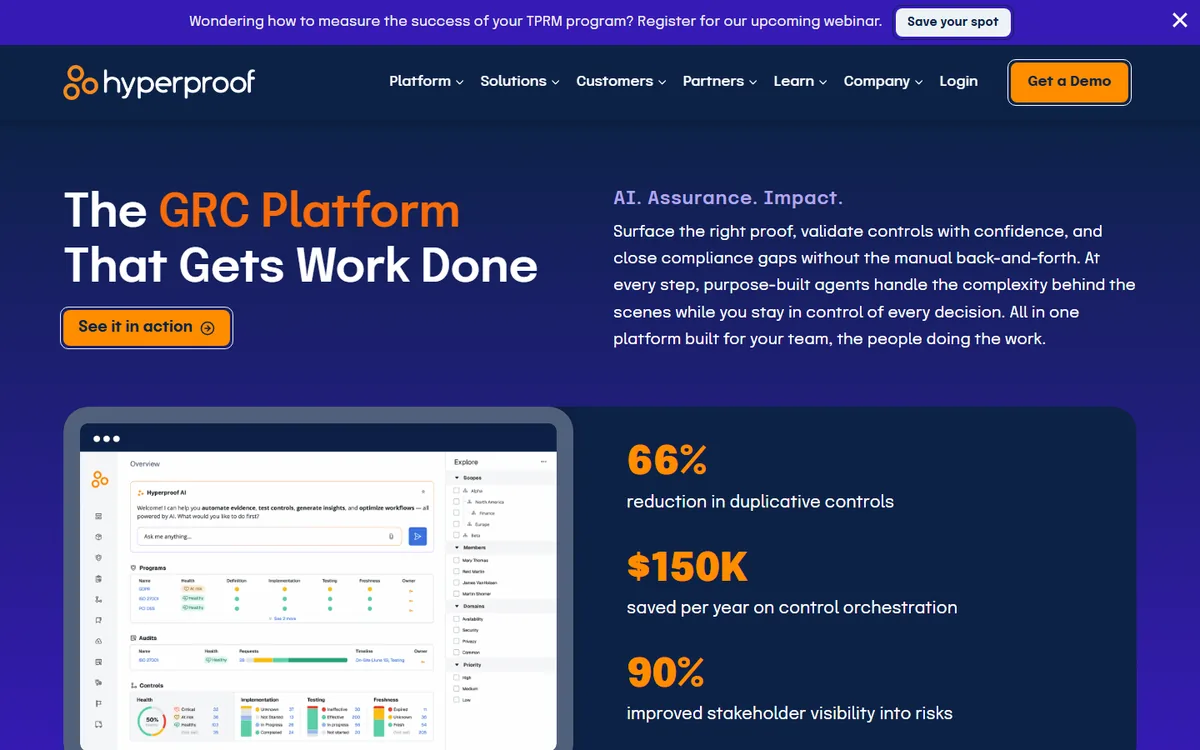
Hyperproof helps you map controls across frameworks, collect evidence, manage risks and track audit work in a single workspace.
Hyperproof leans toward companies with an existing compliance function that wants to run several programs without duplicating work. Its strength is cross-framework mapping: you document a control once and reuse the evidence.
In my experience it suits teams that already know what they need, not teams looking for a guided first audit. It requires more configuration than the startup-focused tools, which is a fair trade when you manage many frameworks. I could not read its pricing page when I checked, so confirm costs with the vendor.
What I Like About Hyperproof
- Strong cross-framework control mapping
- Risk register and audit tracking in the same workspace
- Fits an in-house compliance team that wants control over the setup
What I Don’t Like About Hyperproof
- More configuration than the startup-focused tools
- I could not read its pricing page, so costs need a quote
Hyperproof Pricing
I could not read Hyperproof's pricing page when I checked, so I cannot list plans or prices. Ask the vendor for a quote based on frameworks, users and integrations.
Hyperproof Reviews
- G2: 4.5 out of 5 star rating (from 229 user reviews)
Apptega
A Practical Choice When You Work From One Cybersecurity Framework and Want a Free Trial
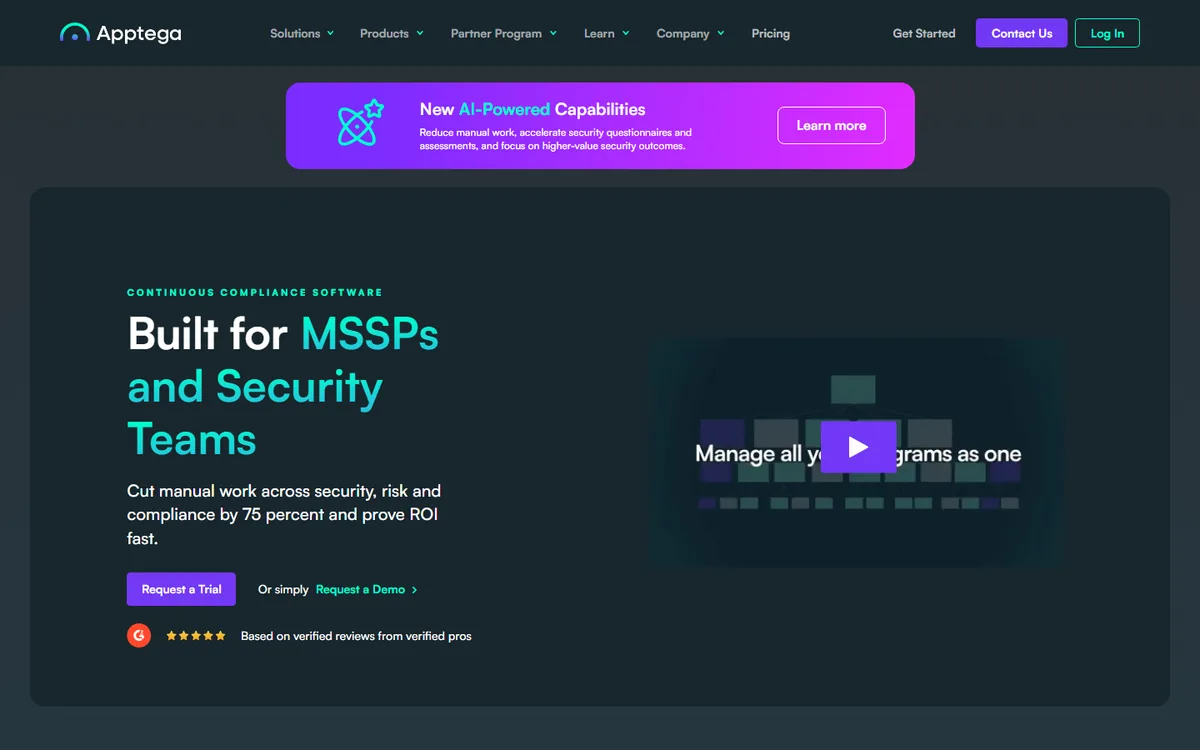
Apptega provides frameworks, assessments, control tracking and reporting for cybersecurity programs, and it is used by advisers as well as end customers.
Apptega is built around frameworks such as NIST and CIS, with assessment workflows and reports that show progress over time. That makes it a good fit if you want to measure maturity and show a board or a customer where you stand.
It is less about connecting to every system and collecting evidence automatically, and more about managing the program. For a company that already uses another tool for evidence, Apptega can still serve as the place where the framework and the roadmap live. Check which frameworks your plan includes before you commit.
What I Like About Apptega
- Framework-based assessments and progress reports
- The Essentials plan is offered as a free trial
- Works well for advisers who manage several clients
What I Don’t Like About Apptega
- Less focused on automatic evidence collection
- Plus and Premium prices are available only on request
Apptega Pricing
Apptega lists three plans: Essentials, Plus and Premium. Essentials is offered as a free trial (14 days, no credit card per the page). Plus and Premium prices are available on request.
Apptega Reviews
- G2: 4.7 out of 5 star rating (from 159 user reviews)
ZenGRC
A Traditional GRC Tool for Teams That Prefer Workflows Over Automated Monitoring
ZenGRC is a governance, risk and compliance platform that centralizes controls, risks, policies and audits.
ZenGRC takes the older, workflow-driven approach to GRC: you document controls, assign them, collect evidence and track audits in one system. It is less about automated tests against your cloud accounts and more about organizing the program.
That suits teams that run audits across many frameworks and want a single record of every control. It can feel heavier than the newer tools, and the G2 review count is the smallest on this list, so the sample is thin. Pricing was not checked, so ask for a quote and a reference customer of your size.
What I Like About ZenGRC
- Central place for controls, risks, policies and audits
- Workflow approach suits teams with an existing GRC process
- Useful when you run several audits a year
What I Don’t Like About ZenGRC
- Less automatic evidence collection than newer platforms
- Small review base, so ratings carry less weight
ZenGRC Pricing
I did not confirm ZenGRC's pricing when I checked, so I cannot list plans or prices here. Request a quote from the vendor.
ZenGRC Reviews
- G2: 4.4 out of 5 star rating (from 102 user reviews)
AuditBoard (Now Optro)
An Enterprise Platform for Internal Audit, Risk and Compliance Teams
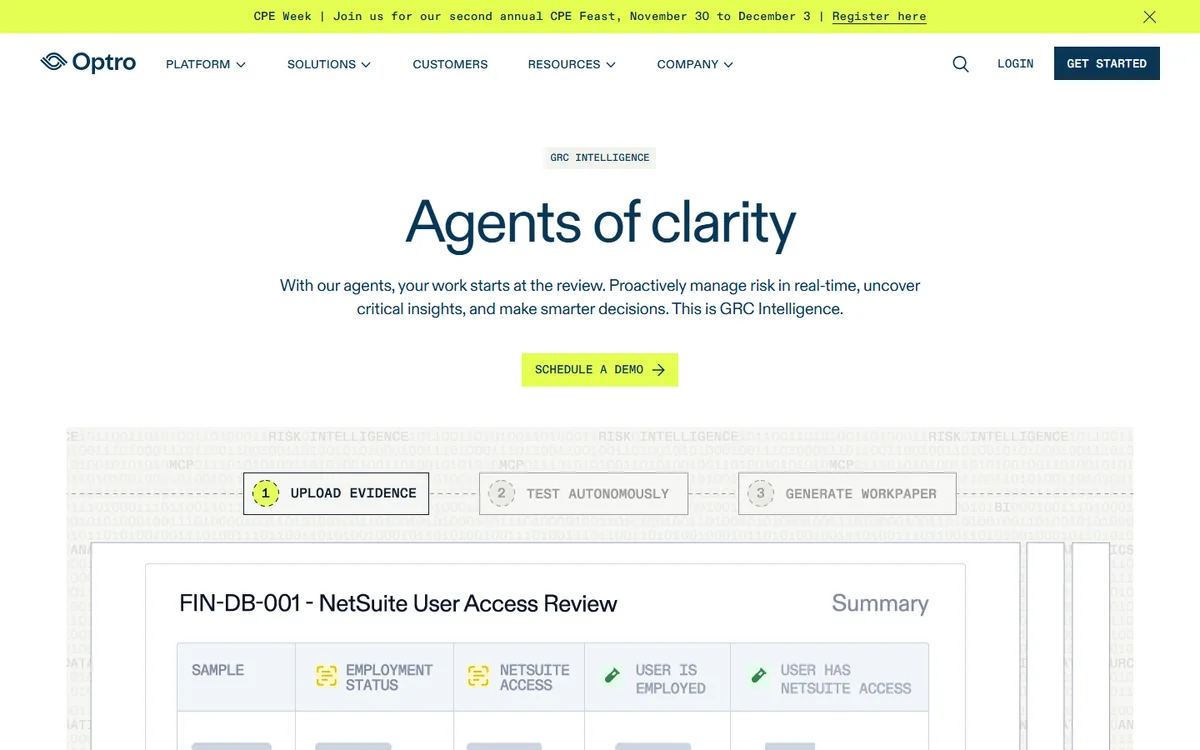
AuditBoard, listed on G2 as Optro, covers audit management, risk, compliance and security programs for larger organizations.
AuditBoard is the odd one in this list, because it is built for internal audit and risk teams at larger companies. If you run SOX testing, internal audit plans and an enterprise risk register next to your security compliance, it can cover all of it in one system.
That scope is also the reason it is not my first pick for a small company seeking its first SOC 2 report. The product is bigger and the buying process is longer. G2 now lists the product under the name Optro, so check the vendor's current name and offers before you request a demo.
What I Like About AuditBoard (Now Optro)
- Covers audit, risk and compliance for large programs
- High review volume on G2 with a strong rating
- Suits teams with a formal internal audit function
What I Don’t Like About AuditBoard (Now Optro)
- More than most small companies need
- Pricing was not confirmed, so a sales process is needed
AuditBoard (Now Optro) Pricing
I did not confirm pricing for AuditBoard when I checked, so I cannot list plans or prices. Contact the vendor for a quote.
AuditBoard (Now Optro) Reviews
- G2: 4.6 out of 5 star rating (from 1,670 user reviews)
Estimate the Return on a Compliance Tool
Before you pick a plan, check whether the numbers work for you. Enter the manual hours your team spends on evidence collection and reporting, plus the monthly price of the tool you are considering, and you will see what it could return in a year. Pair that number with the one in my cybersecurity compliance assessment guide, which shows where your gaps are.
Is the Tool Worth It for You?
Set the sliders to the work the tool would handle and the plan you have in mind.
How to Choose the Right Cybersecurity Compliance Tool
In my experience, fit with your frameworks and your team decides more than any feature list. Before you compare vendors, I suggest you answer four questions:
- Which framework do you need first, and which ones within two years?
- Which systems hold your evidence, and does the tool connect to them?
- Who on your team will own the tasks the tool creates?
- Do you want to pick your own audit firm, or buy the audit with the software?
If you are a small team with one framework, start with a platform with a clear entry plan such as Secureframe, Sprinto or Vanta. If you want the audit bundled, look at Thoropass. If you run several programs and a risk register, Hyperproof or AuditBoard fit better, and if you manage a framework like NIST for several clients, look at Apptega. A tool collects evidence, but it does not write your policies or decide your risk appetite, which is why a first cybersecurity compliance checklist helps before you buy. Before an auditor arrives, use my cybersecurity compliance audit steps to test what the tool shows you.
Not sure which framework applies to you at all? My cybersecurity compliance guide explains how the common ones differ.
Questions About Choosing Cybersecurity Compliance Tools
What Is the Best Cybersecurity Compliance Tool for a Small Company?
For most small companies, I would shortlist Vanta, Secureframe and Sprinto first. They guide you through a first framework such as SOC 2, connect to common cloud and HR tools and keep the task list manageable. Compare a written quote from at least two of them, and check which integrations your stack needs.
Does a Compliance Tool Make Me Compliant?
No. A tool collects evidence, runs tests and tracks tasks. Your policies, risk decisions, training and day-to-day habits still decide whether you meet a framework, and an independent auditor makes the final call on any report. Treat the tool as the system of record, not as the program.
Which Frameworks Do These Tools Usually Support?
Most platforms in this list cover SOC 2, ISO 27001 and HIPAA, and many add PCI DSS, GDPR and NIST-based frameworks. Support for government frameworks such as CMMC varies, so confirm your exact framework and level with the vendor in writing before you sign.
How Much Do Cybersecurity Compliance Tools Cost?
Most vendors do not publish prices. Among the tools I checked, Secureframe lists a starting price of $7,500 per year for its entry plan, while others ask you to request a quote. Costs usually depend on the frameworks, the number of employees and integrations, so get quotes on the same scope.
Can I Use More than One Tool?
Yes, but it adds work. Some companies use an automation platform for evidence and a framework tool for assessments and reporting. Keep one system as the source of truth for controls, so you do not maintain two versions of the same evidence.
How Long Does It Take to Set Up a Compliance Tool?
Connecting your systems often takes days. The slower part is the work around it: writing policies, assigning owners, fixing failed tests and training staff. Plan on weeks to a few months before a first audit, depending on your size and starting point.
When Should I Hire a Consultant Instead of Only Buying a Tool?
Hire help when you are unsure which framework applies, when your team has no compliance owner or when the tool shows many gaps and nobody knows the order to fix them. A consultant sets the scope and priorities, and the tool then keeps the evidence current.
Please note: pricing, plans and ratings change often. They were accurate at our last review; please verify them on the vendor sites before you buy. None of this is legal or financial advice.
Was this guide helpful?
Thanks for your feedback.
Odessa Whitfield
Odessa leads the Tidy editorial team and works with the compliance consultants to turn real client projects into practical guides on regulations, frameworks, policies and audit preparation. Before joining Tidy, she worked in compliance and risk roles, writing and maintaining policy sets for regulated organizations. Every article goes through a consultant who has done the work in practice, and she updates guides when a rule, framework or tool changes. She works remotely from the United States.