Quick Summary
- Think of GDPR cost in six parts: audit, data map, documents, vendors, training and tools.
- Year one is the heavy year, and later years usually cost a fraction of it.
- Fixes are the line most quotes leave vague, so ask about them first.
- Published consent tool prices start free and rise to about $120 a month, while large platforms quote by sales call.
Nobody can quote a standard price for GDPR compliance, because the work depends on how much personal data you hold, how many systems and vendors touch it and how much documentation already exists. When someone asks me what it costs, I answer with a formula and a range, then narrow the range after a short call. The same questions come up each time: what is the first-year bill, what does it cost to keep going and where do people overspend?
Below you get the formula, a worked example for a 30-person company, published prices for consent and privacy tools, the factors that move a quote and the costs that rarely appear in one. If you want a priced scope for your own business, start with my GDPR compliance consulting page. The figures here are planning ranges from my project work and not quotes.
The Cost Formula I Use
First-year cost is the sum of six items, plus a buffer for what the review turns up.
First-year cost = audit + data map + documents + vendor review + training + tools, plus 10 to 20% for fixes.
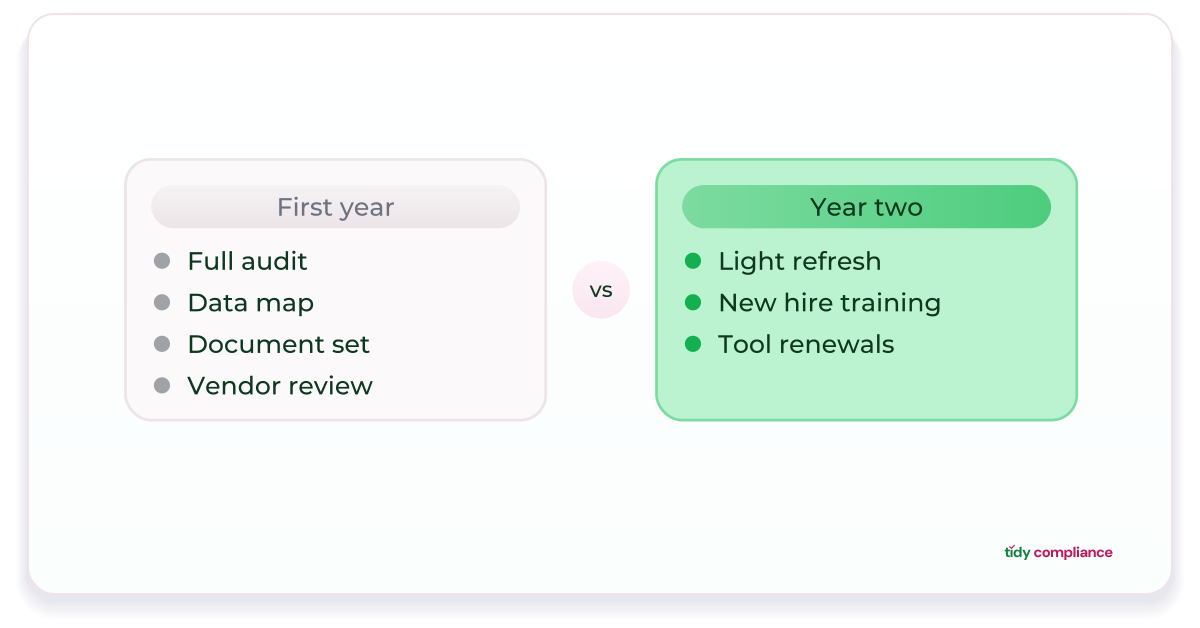
Year two is smaller. You refresh the data map, repeat training, renew tools, review new vendors and handle requests. In the projects I see, year two lands between a fifth and a third of year one for a company that stays about the same size. It climbs when you add products, countries or vendors.
What Each Part Typically Costs
These ranges cover small to mid-sized companies, in US dollars, for outside help. Using your own time lowers the cash cost and raises the hours. Larger groups with several entities sit above the ranges, and companies with good records sit below.
| Cost item | Typical range | What drives it |
|---|---|---|
| Audit and gap assessment | $3,000 to $12,000 | Entities, systems and number of interviews |
| Data map (records of processing) | $2,000 to $8,000 | Count of systems and processing activities |
| Privacy notices, policies, consent texts | $1,500 to $6,000 | Number of products, languages and audiences |
| Vendor review and agreements | $1,000 to $5,000 | Number of vendors and transfers outside the EU |
| Staff training | $500 to $3,000 | Headcount and number of role-specific sessions |
| Tools (consent, requests, records) | $300 to $3,000 a year | Websites, traffic and features |
| Outsourced privacy lead, if needed | $1,000 to $4,000 a month | Scope, hours and response times |
Fixes are the line that surprises people. The audit may find an old CRM that cannot delete records, or a cookie setup that fires tags before choice. Those jobs fall to your developers or your agency, and a privacy quote usually leaves them out.
A Worked Example: 30-Person Online Business
Here is the formula applied to an illustrative company with 30 staff, a web shop, a CRM, an email platform, payroll software and eight vendors. The figures are mid-range assumptions, not a client result.
| Item | Assumption | Amount |
|---|---|---|
| Audit | One entity, interviews with five owners | $4,500 |
| Data map | Twelve systems, nine processing activities | $3,000 |
| Documents | Privacy notice, cookie policy, retention rules | $2,500 |
| Vendor review | Eight vendors, agreements chased and filed | $2,000 |
| Training | One all-staff session, one for support and HR | $800 |
| Tools | Consent banner and request tracker | $600 |
| Subtotal | $13,400 | |
| Buffer for fixes (15%) | $2,010 | |
| First-year total | $15,410 |
In year two the same company refreshes the audit lightly, trains new hires, reviews new vendors and renews tools. That adds up to roughly $3,500 to $4,500 in this example. The shape holds for most businesses: a heavy first year and a lighter routine after it.
What Privacy Tools Cost
Tools cover the repetitive parts: consent banners, cookie scans, policy generators and request handling. Prices below were read from vendor pricing pages on the date of this update, and plans change, so confirm them before you budget.
| Tool | Published price | Note |
|---|---|---|
| CookieYes | Free, then $10, $25 and $55 a month per domain | Annual billing gives two months free |
| iubenda | From $5.99 a month per site billed yearly, up to $99.99 | Prices exclude VAT |
| Termly | Free, then $10 and $15 a month per website billed annually | Monthly billing costs more |
| Cookiebot | From $10 a month per domain, up to $120 | Free for one domain up to 50 subpages |
| Enzuzo | Free, then $29 and $79 a month, lower when billed annually | Free plan covers one domain |
Large platforms such as OneTrust and TrustArc did not show prices on the pages I read, so expect a sales call. My ranking of GDPR compliance tools compares features and review scores for nine options.
Six Factors That Move Your Budget
Every quote I review is shaped by the same six things. Know where you stand on each, and you can predict which end of a range you will land on.
- Size: more staff, entities and countries mean more interviews and records.
- Systems: every system with personal data adds to the map and the audit.
- Starting point: existing notices, agreements and a recent data map cut the work.
- Vendors: many processors mean more agreements, transfer checks and follow-up.
- Data type: health, children's or location data raises scope and care.
- Support model: a one-time project costs less upfront than a retainer.
Project, Retainer or Hourly
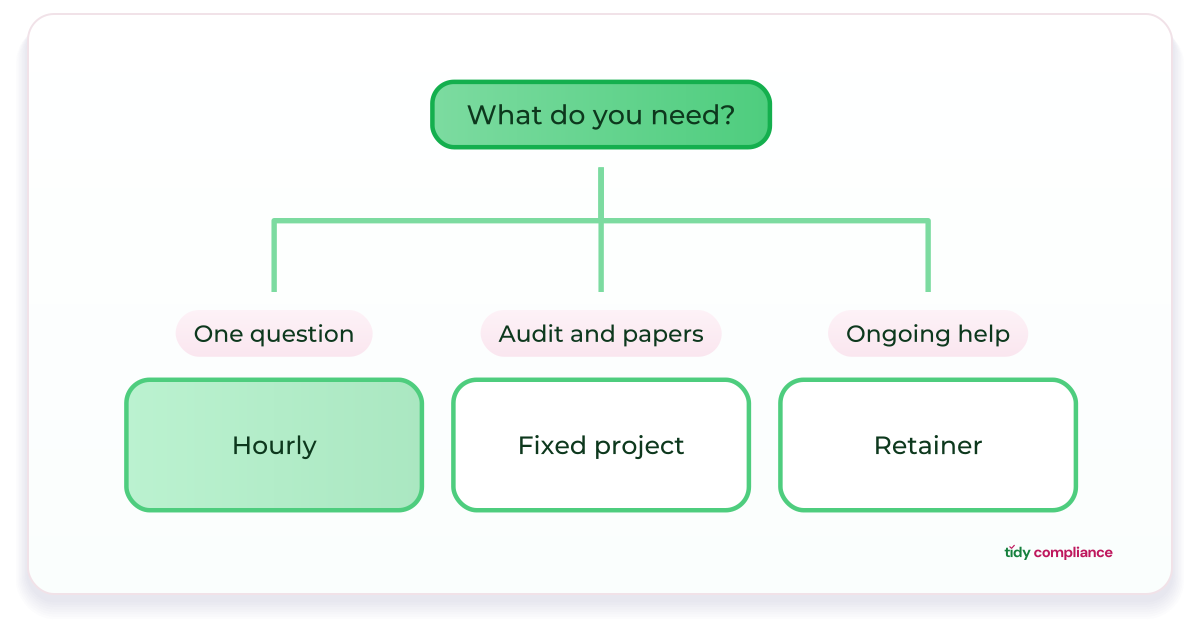
Consultants charge in three ways. A fixed project suits a clear scope such as an audit plus a document set. A retainer suits companies that want a standing contact for vendor questions, rights requests and product launches. Hourly work fits one-off questions and reviews, and it is hard to budget.
I usually advise a fixed price for year one and a small retainer afterward. Year one has defined deliverables. Year two is about keeping them current, and a set number of hours each month stops the program from drifting.
| Model | Best for | Watch for |
|---|---|---|
| Fixed-price project | Audit, data map and document set | Scope creep billed as extras |
| Monthly retainer | Ongoing questions, launches and requests | Unused hours with no carry-over rules |
| Hourly | Single reviews and second opinions | Open-ended bills without a cap |
What Different Companies Usually Spend
Cost follows complexity more than headcount. A ten-person consultancy with one CRM and a newsletter is a small project, often a lean audit, a short data map and a notice rewrite. A 60-person online retailer with a shop platform, a marketing stack and a support desk is a mid-sized one. A software company that processes customer data on behalf of other businesses sits higher, because customers will ask for agreements, security evidence and subprocessor lists.
Companies in regulated fields add more. Health, finance and education data raise the care needed and the number of questions a customer will ask. Whichever group you belong to, ask for a quote that lists the same six items, because it is the fastest way to see where one offer includes work that another leaves out.
- Solo and tiny teams: a lean data map, a notice, a consent banner and a vendor list.
- Online shops: consent, marketing lists, payment and shipping vendors, and retention of order data.
- Software providers: processor agreements, security evidence and a subprocessor register.
- Multi-country groups: transfers, local representatives where needed and several sets of notices.
Costs Nobody Puts in the Quote
Staff time is the largest hidden cost. Interviews, document reviews and cleanups take hours from people who already have full days. A small company should expect its operations lead to spend several hours a week during the audit month.
The second cost is development work. If your review finds a site that sets tracking tags before consent, or a CRM that cannot delete a person, someone must fix it, and that may be an agency billing separately. Ask for a rough estimate before you sign the privacy quote.
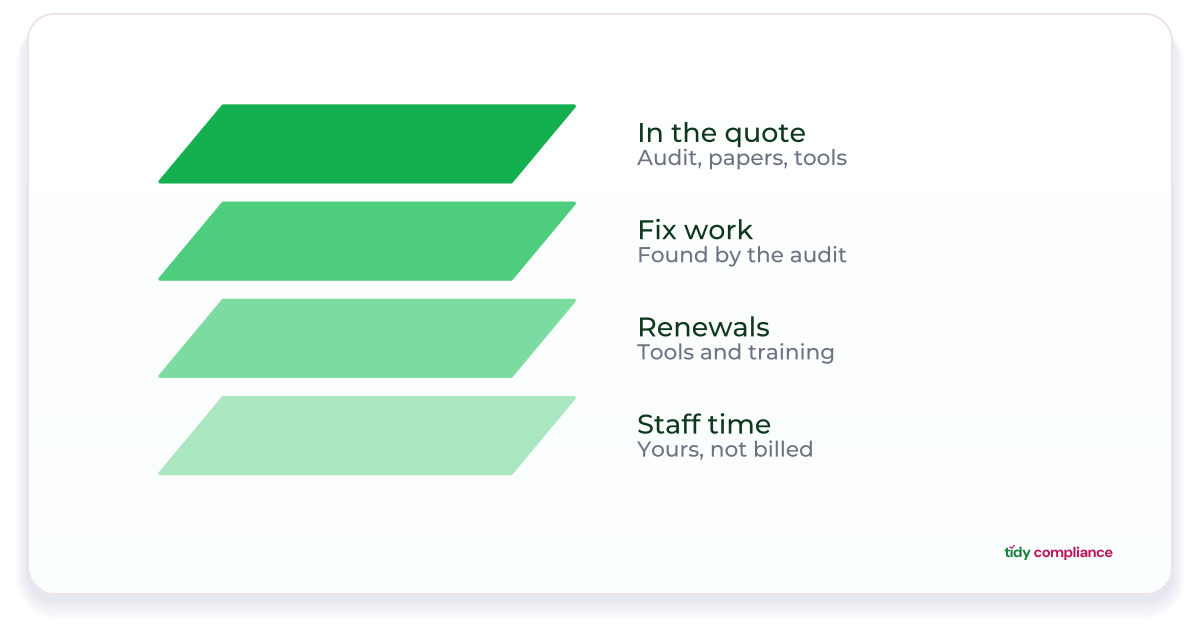
The third is renewal. Consent tools, request trackers and training platforms renew every year, and prices change at renewal. Put the dates in one calendar and drop what you no longer use. Cancelling an unused subscription is the easiest saving in the whole program.
What Non-Compliance Can Cost
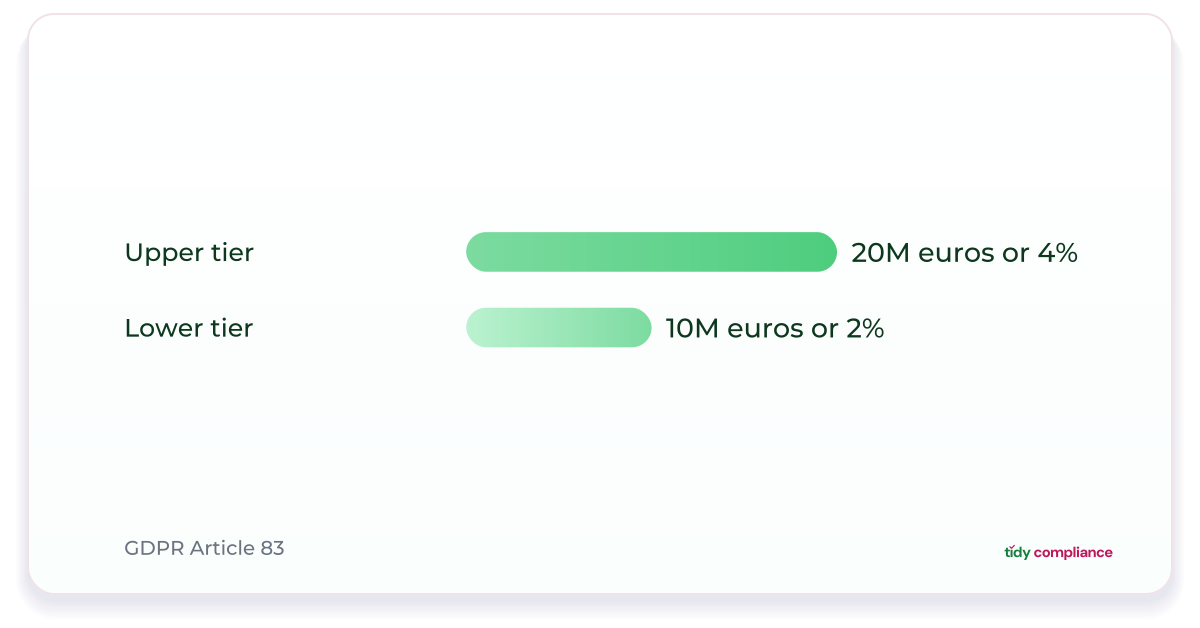
The regulation sets two fine tiers. The upper tier reaches 20 million euros or 4% of total worldwide annual turnover of the previous year, whichever is higher, and the lower tier reaches 10 million euros or 2%, per Article 83. Those are ceilings, and authorities weigh the case, but they explain why privacy gets board attention.
For a small company the bigger exposure is often indirect: a customer pausing a contract after a failed security questionnaire, time lost answering a complaint, or a forced cleanup under deadline. A rushed cleanup costs more than a planned one, and I treat compliance spend as risk reduction with a calendar.
Ways to Spend Less Without Cutting Corners
Do the inventory yourself, since it is mostly asking questions, and bring in help for the vendor review and the final scoring. Reuse notices and agreements you already have, and fix what the audit ranks highest before you buy tools. The steps in my guide to a GDPR compliance audit let you do the first phases in-house.
Small teams can start with a lean scope. The approach is in GDPR compliance for small business. Avoiding the usual errors also saves money, and my list of GDPR compliance mistakes shows where budgets leak.
How to Compare Quotes
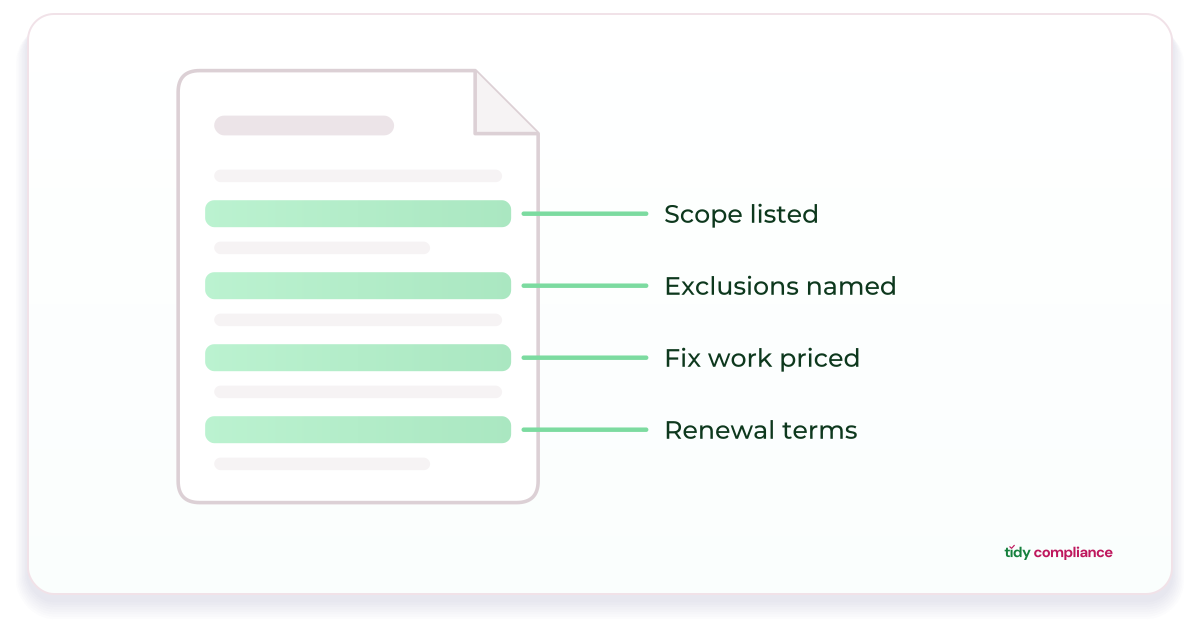
Ask each provider to list deliverables, hours, who does the work and what is excluded. Put the six cost items side by side, and look hard at fixes and year two, which are the lines most often left vague.
- Named deliverables, such as a dated data map and a ranked gap report
- A fixed price or a clear cap for each phase
- A price for year two
- A clear statement that legal advice comes from your counsel
- No promise of a result a regulator controls
Sources
GDPR Article 83: General conditions for administrative fines, CookieYes pricing, iubenda pricing, Termly pricing, Cookiebot pricing, Enzuzo pricing.
Questions About GDPR Compliance Costs
How Much Does GDPR Compliance Cost for a Small Business?
A first year often lands between about $8,000 and $20,000 for outside help with the audit, data map, documents, vendor review and training, plus tools and fixes. Your number depends on systems, vendors and your starting documents.
Is GDPR Compliance a One-Time Cost?
No. Year one has the most work, then you keep the data map current, train new staff, review vendors and handle requests. Plan a yearly budget on top of the first-year project.
Do I Need a Data Protection Officer, and What Does It Cost?
Only some organizations must appoint one, for example those whose core activities involve large-scale monitoring or special categories of data. Check Article 37 with your counsel. An outsourced officer or privacy lead often runs from about $1,000 to $4,000 a month.
Can Software Replace a Consultant?
Software handles consent banners, cookie scans, policy text and request tracking. It does not map your data, review vendors or decide your lawful bases. Most small companies pair a tool with a few consulting hours.
What Is the Most Expensive Part of GDPR Compliance?
Fixes, as a rule. Changing a website's tag setup, replacing a CRM that cannot delete records or renegotiating vendor terms can cost more than the audit that found them.
How High Can GDPR Fines Go?
The upper tier is up to 20 million euros or 4% of worldwide annual turnover, whichever is higher, and the lower tier is up to 10 million euros or 2%. Authorities weigh each case, so check actual decisions for context.
Are There Free Ways to Start?
Yes. You can write the data map yourself, use a free consent plan from a cookie tool and draft a first privacy notice with a generator. Have your counsel or a consultant review the result before you rely on it.
Disclaimer: This article is for general information only and isn’t legal, financial or tax advice. Treat figures as estimates from typical work and confirm details with your providers before you act.
Was this guide helpful?
Thanks for your feedback.
Odessa Whitfield
Odessa leads the Tidy editorial team and works with the compliance consultants to turn real client projects into practical guides on regulations, frameworks, policies and audit preparation. Before joining Tidy, she worked in compliance and risk roles, writing and maintaining policy sets for regulated organizations. Every article goes through a consultant who has done the work in practice, and she updates guides when a rule, framework or tool changes. She works remotely from the United States.