Quick Summary
- A healthcare compliance audit works best in seven steps, from scoping to proving that fixes held.
- Sampling real records tells you more than reading policies, because it shows what people actually do.
- Every finding needs a risk rating, an owner and a due date, or it will still be open next year.
- An internal audit finds problems cheaply, so run one before an outside party does.
An audit is the moment your compliance program meets reality. Policies say one thing, records say another, and the gap between them is your finding list. If you work with healthcare compliance consulting, a good share of the work is helping you run this review calmly, so the first surprise is yours and not a regulator's.
This framework walks through the seven steps I use for internal audits in clinics, pharmacies and healthcare service companies. It is general guidance, not legal advice, and the details of any external review depend on who is doing it and under which rules.
The Seven Steps at a Glance
| Step | Purpose | What you produce |
|---|---|---|
| 1. Scope | Decide what the audit covers and which period it examines | Audit charter |
| 2. Request | Collect the documents and data you will test | Document request list |
| 3. Criteria | Write the questions and tests for each area | Audit program |
| 4. Sample | Pull records and compare them with the criteria | Test results |
| 5. Interview | Check what staff say against what records show | Interview notes |
| 6. Rate | Score findings by risk and agree actions | Findings report |
| 7. Follow up | Prove that each action worked | Closure log |
Step 1: Set the Scope and the Period
A single audit cannot cover everything, so choose. Typical areas are privacy and security of patient information, billing and coding, credentialing and exclusion checks, vendor oversight, training and incident handling. Name the period you will examine, such as the last twelve months, and the locations that are in.
Write a half-page charter with the scope, the auditor, the dates and who receives the report. The charter protects you later, because it shows the audit was planned and independent. In my experience, audits without a written scope grow until nobody finishes them.
If you are building a full program and not only one audit, my guide to healthcare compliance management shows where audits fit in the yearly calendar.
Step 2: Request What You Will Test
Send a request list before the fieldwork starts. It should be specific: policies in force during the period, the latest risk analysis, training completion records, the vendor register with agreements, incident logs, access lists for the main systems and a list of all claims or encounters for the period.
Treat the quality of the response as data. If the vendor list takes a week to assemble, you have already learned something about oversight. If staff send three versions of the same policy, version control is the first finding.
Step 3: Write the Criteria Before You Look
Write the test for each requirement before you open a single record. A criterion has three parts: the requirement or policy statement, the evidence that would show it is met and the pass mark. For example, "every new employee completes privacy training within 30 days of hire" can be tested by comparing hire dates with completion dates and passing at 100 percent.
Where do the criteria come from? Your own policies, the rules that apply to you and the standards your payers or accreditors use. The HHS Office for Civil Rights publishes an audit protocol for the privacy, security and breach notification rules, and many auditors borrow its structure for internal reviews. Keep the criteria in one table, so the audit is repeatable next year.
Step 4: Sample Real Records
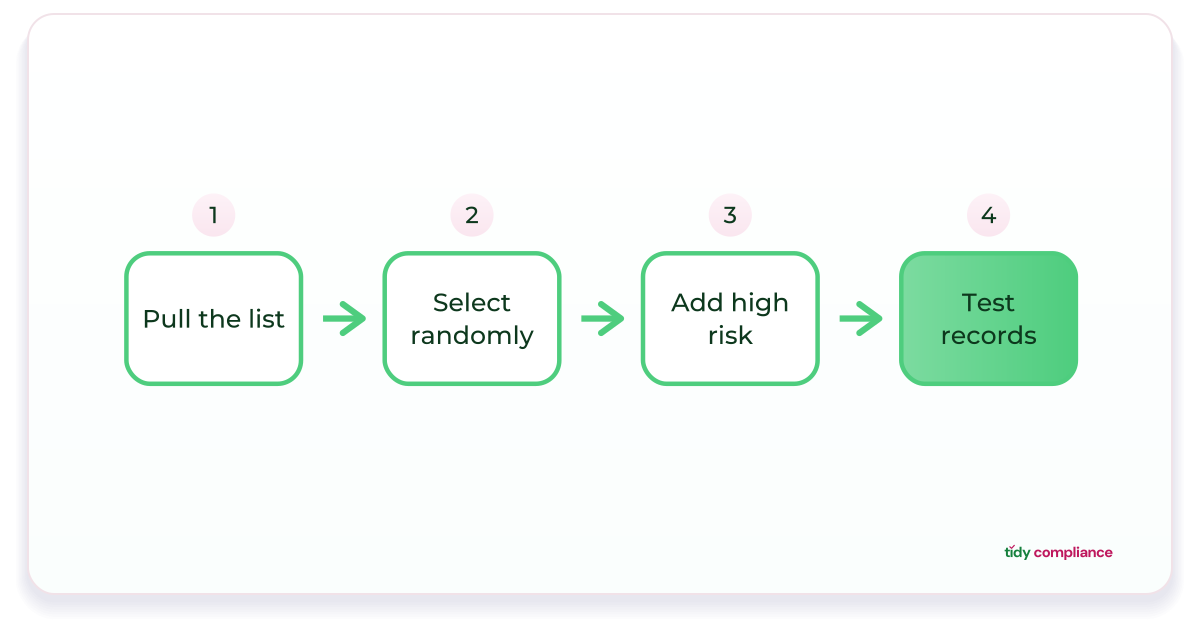
Reading policies tells you what is supposed to happen. Sampling records tells you what does. Choose samples from the whole period, not only the easy months, and include every location in scope. For small populations test everything. For larger ones pick a random sample large enough to be fair, and write down how you chose it.
A few examples show how this works in practice. For billing, pull a set of claims and compare the documentation with what was billed. For access, take the current user list of the records system and check each person against the staff roster. For vendors, choose five from the register and confirm that each has a current agreement on file. The healthcare compliance checklist lists the items you can turn into sample tests.
Choosing Sample Sizes
| Population | Approach | Why |
|---|---|---|
| Under 25 items | Test all items | A sample would be almost the whole group |
| 25 to 250 items | Select a random sample and add every high-risk item | Balances effort and confidence |
| Over 250 items | Random sample, stratified by location or provider | Shows whether one site or person drives the problem |
These ranges are a rule of thumb from my own practice, not a statistical standard. If the result will be used for a repayment or disclosure decision, ask your adviser whether a formal sampling method is required.
Step 5: Interview and Compare
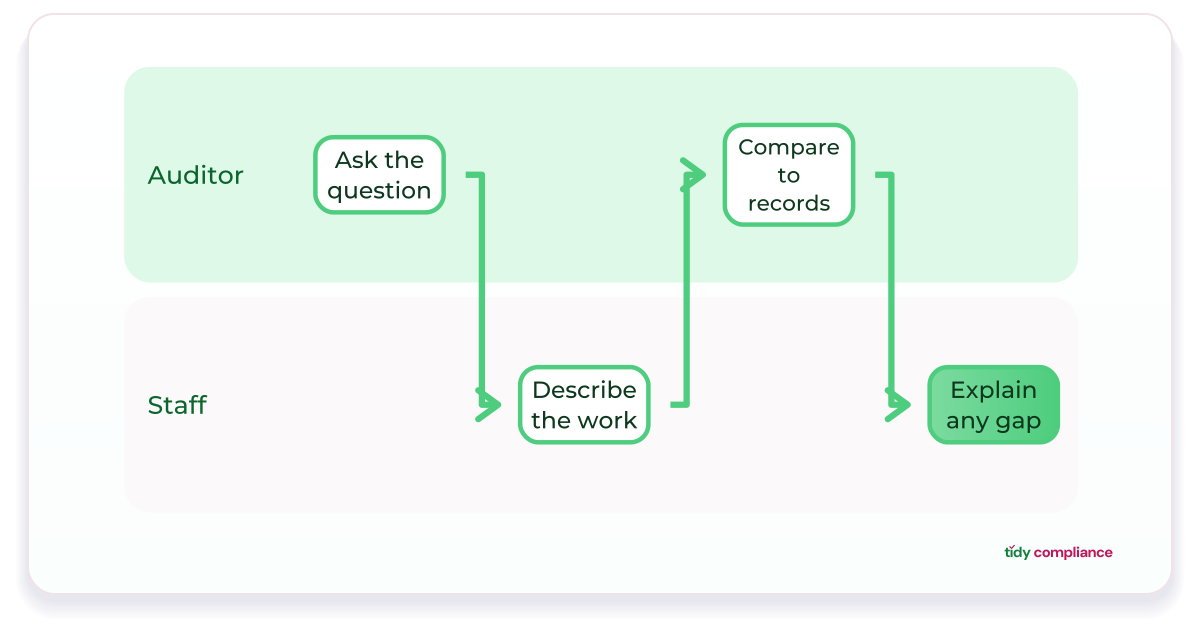
Talk to the people who do the work. Ask the front desk how they handle a request for records, ask the biller how they resolve a documentation question, and ask an administrator how access is removed when someone leaves. Then compare the answers with the policy and the records.
Consistency is what you want to see. When the policy, the records and the interview agree, you can be confident the control works. When they do not, ask a follow-up question and note it, without blame. People tell you more when they are not worried about being written up.
Step 6: Rate the Findings and Agree Actions
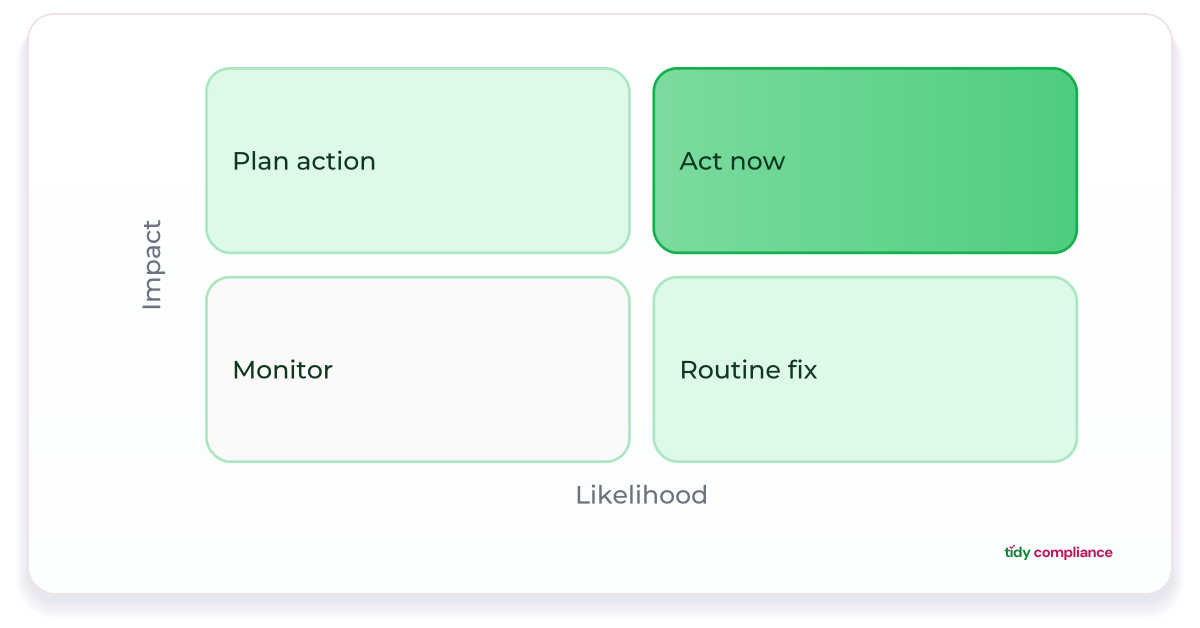
A finding is a gap between the criterion and what you saw, with a cause. Rate each one by likelihood and impact, and keep the scale simple, such as high, medium and low. High means a significant exposure that needs immediate action. Low means a housekeeping item.
| Rating | Example | Expected response |
|---|---|---|
| High | A vendor with access to patient records has no agreement | Action started within days, leadership informed |
| Medium | Training completion is under target in one department | Corrective action with a due date within the quarter |
| Low | A policy is missing its review date | Fix in the next scheduled review |
Discuss each finding with its owner before the report goes out, so facts are right and the action is realistic. The owner agrees to a date, and the report records it. If a finding raises a possible legal issue, pause and consult your counsel before you document further.
Step 7: Follow Up Until the Fix Is Proven
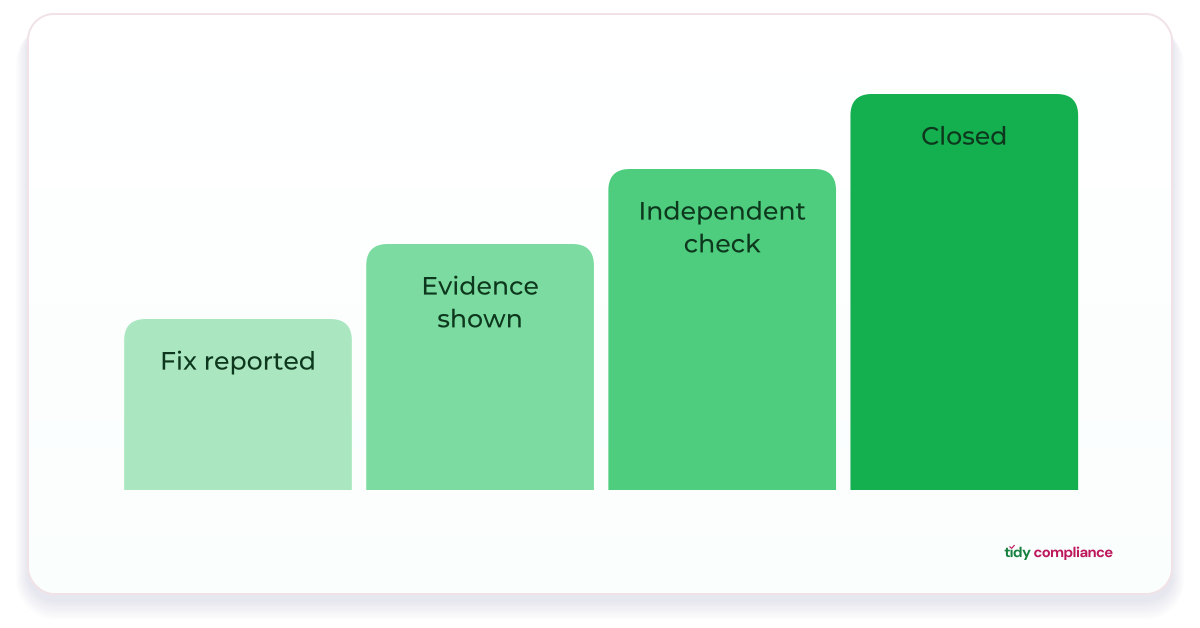
Most audits fail here. The report is delivered, everyone nods and nothing is checked again. A closure log fixes this. Each finding has a row, an owner, a due date, the evidence that the fix worked and the date someone verified it.
Verification should be independent of the owner and based on evidence, such as a new sample showing the control now works. Review the log at your monthly compliance meeting, and report overdue items to leadership. If you use a platform to track this, my ranking of healthcare compliance software shows which tools handle audit follow-up.
What a Useful Audit Report Looks Like
The report should be short enough that leadership reads it. I aim for a one-page summary on top: scope, period, number of findings by rating and the three issues that need a decision. The detail follows in a table with one row per finding.
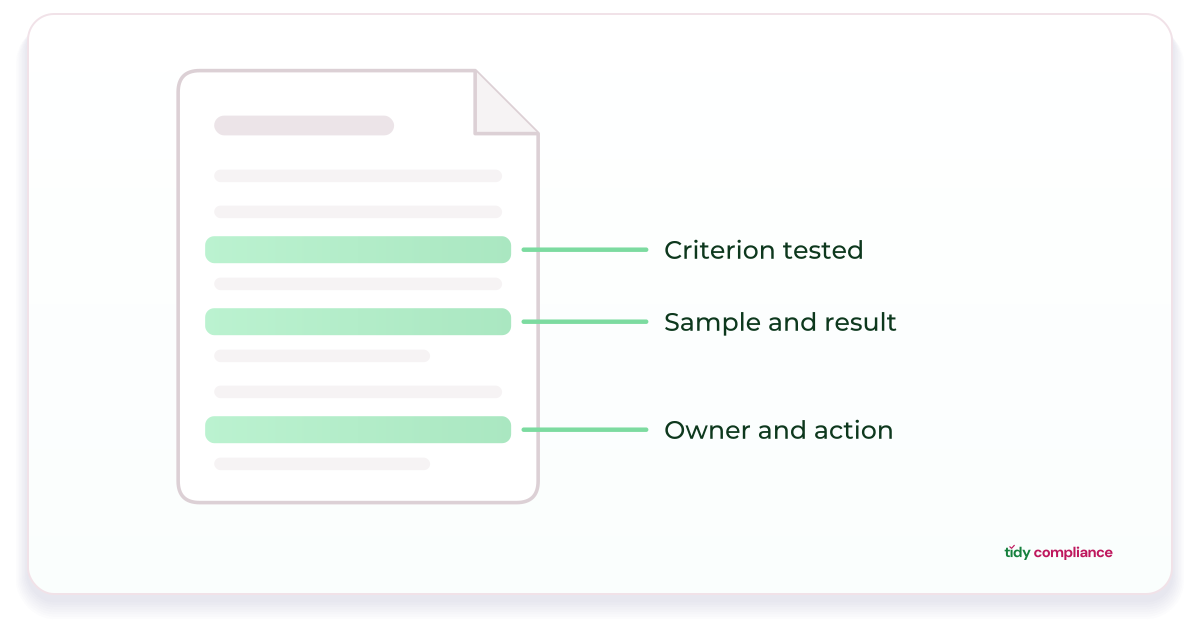
Each row holds the criterion, what was found, the sample size and result, the likely cause, the risk rating, the agreed action, the owner and the due date. Avoid long narrative paragraphs for each finding. A reader who wants more can open the working papers, which you keep for the same period as your other compliance records.
Include the good news too. If 98 of 100 sampled records were correct, say so. It shows the audit is balanced, and it tells you which controls to leave alone while you fix the weak ones.
Mistakes That Weaken an Audit
- Auditing your own work. The person who runs a process cannot rate it fairly.
- Testing only documents. A policy proves intent. Records prove behavior.
- Too many findings. A list of 80 items hides the five that matter. Group related items.
- No root cause. Fixing one record while the process stays the same brings the same finding back.
- No follow-up. If no one verifies the fix, the finding is still open.
For good habits that prevent many of these findings, read my list of healthcare compliance best practices.
How to Prepare Your Team for the Audit
Tell people what is coming and why. Staff who hear about an audit through rumor assume the worst and become guarded. Staff who hear that the goal is to find process gaps, not to judge individuals, give you better answers and spot problems early.
Give each department a date for its part, a contact in the audit team and a clear list of what you will ask for. Keep the fieldwork short and respect clinical schedules, since an audit that disrupts patient care will not be repeated willingly next year.
Should You Audit Yourself or Hire Help?
A small team can run a lean internal audit if it follows the steps above and keeps the auditor independent. Consider outside help when:
- Nobody on staff is independent of the area under review.
- A regulator, payer or accreditor has announced a review.
- The last audit found issues you could not close.
- You operate in several locations and need a consistent method.
Questions About Healthcare Compliance Audits
What Is a Healthcare Compliance Audit?
It is a structured review that compares what your organization does with what its policies and the applicable requirements say it should do. The result is a list of findings with risk ratings, owners and dates. An audit can be internal, run by an outside consultant or performed by a regulator, payer or accreditor.
How Often Should I Audit My Own Compliance?
Run a full internal review at least once a year, and smaller targeted reviews during the year on high-risk areas such as billing, access to records and vendors. Also review after a major change, such as a new system, a new location or a merger.
What Is the Difference Between an Audit and a Risk Analysis?
A risk analysis looks forward and asks what could go wrong and how likely it is. An audit looks at what happened and checks whether controls and records match the rules. A strong program uses both, and each one feeds the other.
Who Should Perform the Audit?
Someone independent of the work being checked. In a small practice that may be an outside consultant, since the person who runs billing should not audit billing. Larger organizations use an internal audit team or a mix of internal and external reviewers.
What Documents Should I Gather First?
Your policies and procedures, the organization chart, the latest risk analysis, training records, vendor list with agreements, incident logs and the previous audit report with its action plan. A complete request list at the start of the audit saves days later.
What Happens to the Findings?
Each finding gets a risk rating, an owner, a corrective action and a due date. Leadership reviews the list, and follow-up checks confirm each fix works. An audit without follow-up creates paper and not improvement.
Does an Internal Audit Replace Legal Advice?
No. An audit tells you where practice and rules differ. If a finding suggests a possible violation, ask a licensed attorney how to handle it before you take further action.
Sources
Disclaimer: This article is for general information only and isn’t legal, financial or tax advice. Treat figures as estimates from typical work and confirm details with your providers before you act.
Was this guide helpful?
Thanks for your feedback.
Odessa Whitfield
Odessa leads the Tidy editorial team and works with the compliance consultants to turn real client projects into practical guides on regulations, frameworks, policies and audit preparation. Before joining Tidy, she worked in compliance and risk roles, writing and maintaining policy sets for regulated organizations. Every article goes through a consultant who has done the work in practice, and she updates guides when a rule, framework or tool changes. She works remotely from the United States.