Quick Summary
- A missing or outdated risk analysis is the risk that hides all others.
- Unencrypted devices, shared logins and unsigned vendor agreements are cheap to fix.
- Breach notices run on a clock that starts at discovery, so plan before an incident.
- Rank risks by likelihood and impact, then fix the top few first.
Most HIPAA problems are not exotic. In the reviews and incident reports I see, the same eleven risks come up again and again, across clinics, billing companies and software vendors. If you work with a HIPAA compliance consulting partner or run your own program, this list tells you where to look first.
Each risk below says what goes wrong, what to avoid and what to do instead. The table gives you the short version, and the sections explain why it matters.
The 11 Risks at a Glance
| Risk | Typical result | First fix |
|---|---|---|
| 1. No current risk analysis | Findings and blind spots | Date and refresh the analysis |
| 2. Unencrypted devices | Notifiable loss of data | Full-disk encryption |
| 3. Shared logins | No accountability | Unique user IDs |
| 4. Missing vendor agreements | Exposure through vendors | Agreements before access |
| 5. Phishing | Account takeover | Multi-factor login and drills |
| 6. Impermissible access | Privacy violations | Minimum necessary and log review |
| 7. Slow patient access requests | Complaints and enforcement | Owner and tracking |
| 8. Untested backups | Long outage after ransomware | Quarterly restore test |
| 9. Weak documentation | Cannot prove compliance | One evidence folder |
| 10. Poor breach response | Late notices | Written plan and exercise |
| 11. Untrained staff | Avoidable mistakes | Role-based training |
Remedies are covered in more depth in my guides to HIPAA compliance best practices and the HIPAA compliance checklist.
1. No Current Risk Analysis
This is the risk I meet most. Organizations either never completed a risk analysis or did one years ago for a different system landscape. The Security Rule requires an accurate and thorough analysis, and reviewers ask for it early because every other safeguard should follow from it. Without one you cannot show why your controls fit your actual threats.
Avoid this: Treat the analysis as a finished-looking document with a date from three years ago. Do this: Redo it yearly and after any major system or vendor change, and link each risk to a plan item.
2. Unencrypted Laptops and Phones
Lost and stolen devices remain a classic cause of breach reports. A laptop left in a car or a phone left in a taxi is a notifiable event if the data is not encrypted. With encryption, the same loss is usually a nuisance, and under the breach rule properly encrypted data is generally treated as secured.
Avoid this: Rely on a password alone to protect a device that holds patient data. Do this: Turn on full-disk encryption, enforce screen locks and keep a device inventory you can wipe remotely.
3. Shared Logins and Stale Accounts
A shared front desk login means you cannot tell who opened a record, and a former employee with a working account is a breach waiting to happen. Audit logs only help if each action ties to a person. Small teams drift into shared accounts because they are quick, and the habit sticks.
Avoid this: Share credentials to save time or leave accounts open after someone leaves. Do this: Give each user a unique ID, review access every quarter and remove leavers on their last day.
4. Missing Business Associate Agreements
Vendors that touch patient data without a signed agreement leave you exposed. HHS has settled cases with organizations that shared data with vendors before agreements were in place. The risk grows as you add cloud tools, answering services and consultants, one by one.
Avoid this: Let a new vendor start work before the agreement is signed. Do this: Keep a vendor list, sign agreements before access begins and review each vendor yearly.
5. Phishing and Social Engineering
Email remains the easiest door into a healthcare organization. One staff member who enters a password on a fake page can expose a mailbox with years of patient messages. Technology helps, but people carry the load.
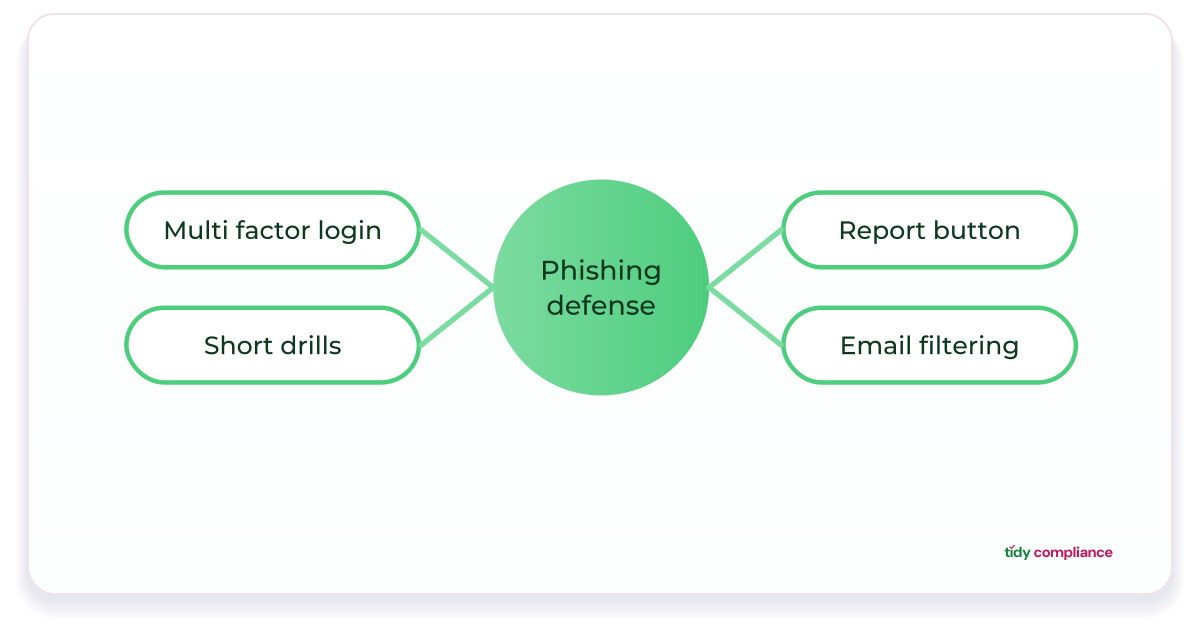
Avoid this: Run one training a year and assume that is enough. Do this: Add multi-factor login, short phishing drills and a simple way to report a suspicious email in one click.
6. Impermissible Access to Records
Snooping, looking up a neighbor or a celebrity, is a privacy violation even when nothing leaves the building. It shows up in audit logs, if anyone looks at them, and in patient complaints. Enforcement actions have followed cases of repeated access without a work reason.
Avoid this: Give wide access to every role and never check the logs. Do this: Limit access to the minimum necessary, review logs for unusual access and apply sanctions consistently.
7. Slow Response to Patient Access Requests
Patients have a right to see and receive a copy of their records. HHS has an enforcement initiative on this right, and its guidance says organizations must respond within 30 days, with a limited extension in some cases. Small practices lose time because requests land in the wrong inbox.
Avoid this: Let requests sit until someone remembers them. Do this: Name an owner, log every request with its date and set a reminder well before the deadline.
8. Untested Backups and Contingency Plans
Ransomware turns a backup from a nice thing into the whole recovery plan. Many organizations discover during an attack that the backup was incomplete, stored on the same network or never tested. Downtime then becomes a patient safety issue and a breach issue.
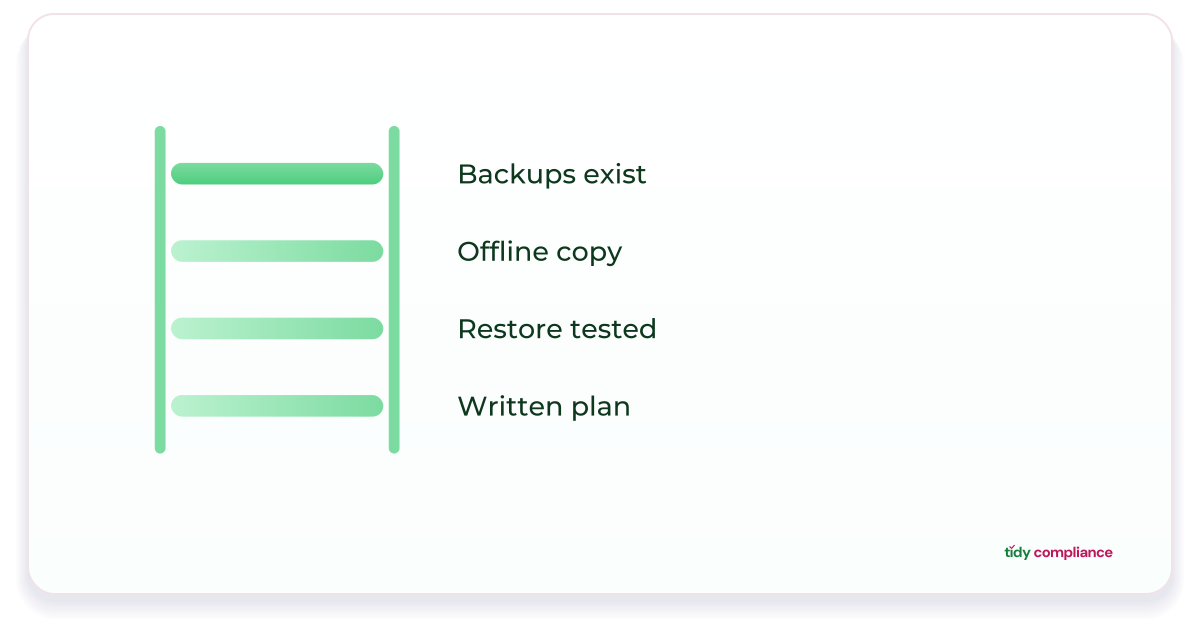
Avoid this: Assume the backup worked because the software said so. Do this: Keep an offline or separate copy, restore a sample each quarter and write down who does what during an outage.
9. Weak Documentation
If you cannot show it, a reviewer treats it as not done. HIPAA expects you to keep required documentation, including policies, assessments and records of actions, for six years. Teams that do the work but keep no records struggle in reviews.
Avoid this: Keep evidence in personal inboxes and on desktops. Do this: Use one shared folder with a clear structure, a retention schedule and a yearly review.
10. Poor Breach Response
The Breach Notification Rule sets deadlines, and notices to individuals are due without unreasonable delay and no later than 60 days after discovery. The clock starts at discovery, so a slow internal process uses time you do not have. Confusion over who decides what leads to late or incomplete notices.
Avoid this: Figure out the process after an incident happens. Do this: Write a response plan with named roles, run a tabletop exercise yearly and keep contact details for counsel and your insurer.
11. Untrained or Unaware Staff
Most incidents I see begin with a person doing something reasonable that the policy never explained: texting a lab result, emailing a spreadsheet to a personal account or leaving a screen open. Staff who do not know the rules cannot follow them, and an unsupported sanction policy makes things worse.
Avoid this: Hand over a policy binder on day one and hope for the best. Do this: Train by role at hire and once a year, test understanding and record completion.
Which Risks to Fix First
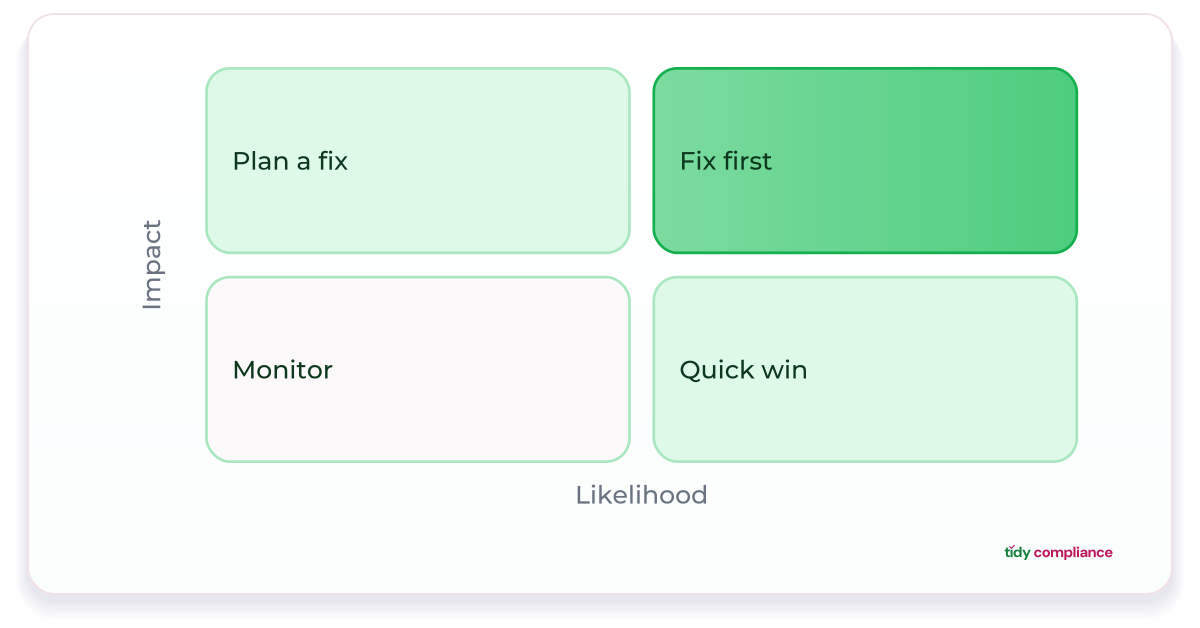
You may not fix all eleven at once. Rank by two questions: how likely is this at my organization, and how bad would it be? A clinic with laptops that travel should start with encryption. A software vendor with many customers should start with vendor and access controls. Everyone should start with the risk analysis, because it turns this generic list into your own list.
Budget matters as well. Many of the fixes cost little. If you are weighing spend, my breakdown of HIPAA compliance cost shows what each phase typically takes, and tools can speed up tracking, as compared in HIPAA compliance software. Smaller teams can use the leaner path in HIPAA compliance for small business.
How Small Risks Chain Into Big Incidents
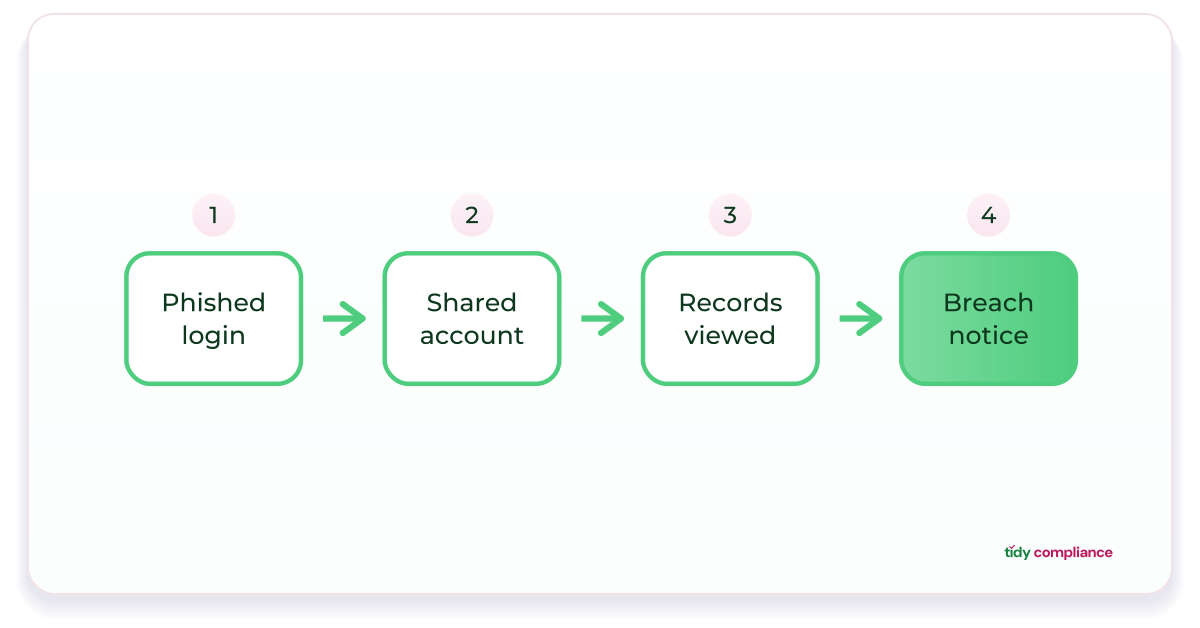
Single failures are rarely the whole story. A typical incident I see in client work starts with a phishing email that captures one password. Without multi-factor login the attacker reaches a mailbox. The mailbox holds attachments with patient data that should have been deleted. No one reviews logs, so the access runs for weeks. By the time it is found, the organization needs forensic help and notification letters, and the reviewer asks for a risk analysis that does not exist.
Each link in that chain has a cheap fix. That is why I advise teams to remove the easy risks first. Every one you remove shortens the chain. It also makes the harder items, such as a full vendor program, feel more manageable, because the program already has momentum and visible progress.
Near misses count as much as real incidents. A lost laptop that turned out to be encrypted, or a phishing email that a nurse reported in time, shows both what could have happened and what worked. Write those stories down in a short log, because they are the cheapest training material you will ever get and they show reviewers an honest program.
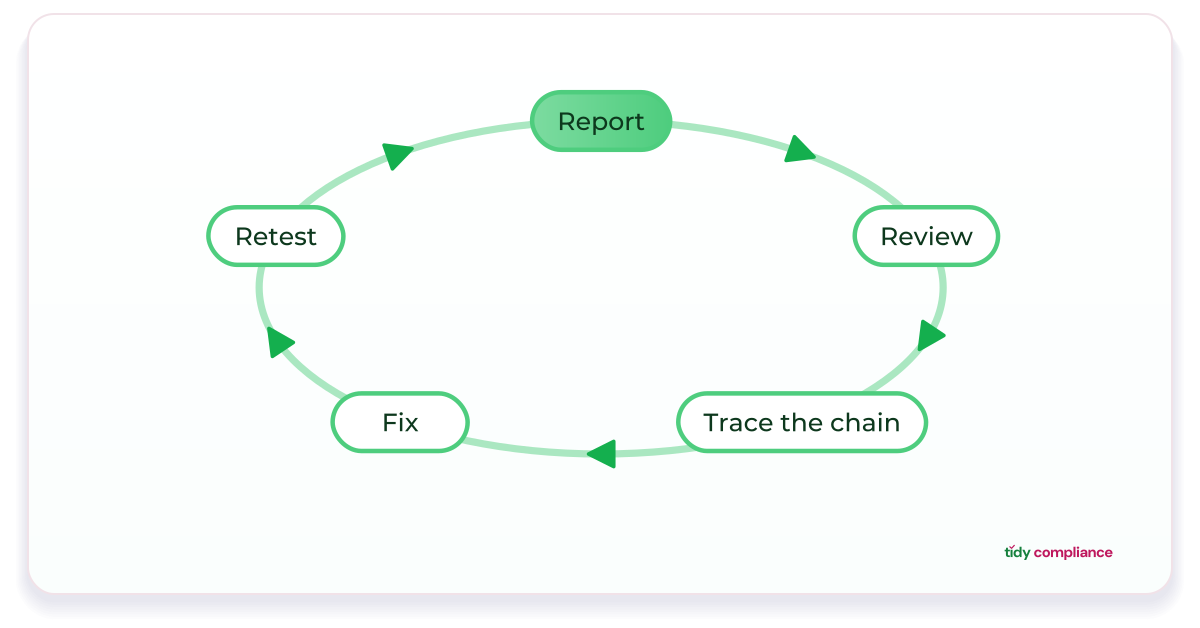
Review incidents and near misses once a quarter. Ask what chain of events led to each, and which control would have broken it. Write the answer into the risk plan. This habit turns bad days into improvement, and shows reviewers that your program learns.
How to Check Whether These Risks Apply to You
A quick self-check takes an hour. Pull up your last risk analysis, ask IT whether every laptop is encrypted, open the vendor list and count the agreements, look at the number of active accounts against the number of employees and ask who owns patient access requests. Wherever the answer is unclear, you have found a risk.
- Risk analysis dated within the last twelve months
- Encryption confirmed on every device that holds patient data
- One account per person, with leavers removed
- A signed agreement for every vendor that touches patient data
- A restore test from the last quarter
- A written breach response plan with named roles
Sources
HHS: Breach Notification Rule, HHS: Individuals' Right to Access Health Information, HHS: Resolution Agreements.
Questions About HIPAA Compliance Risks
What Is the Biggest HIPAA Compliance Risk?
In my experience it is a missing or outdated risk analysis, because it hides every other problem. Lost unencrypted devices, phishing and missing vendor agreements come next.
What Counts as a HIPAA Breach?
A breach is an impermissible use or disclosure of protected health information that compromises its security or privacy, unless a risk assessment shows a low probability of compromise. Your counsel and privacy officer decide how to classify an incident.
How Fast Do I Have to Report a Breach?
Notice to affected individuals is due without unreasonable delay and no later than 60 days after discovery. Breaches affecting 500 or more people also have notification duties to HHS and the media. Check the HHS guidance for the current requirements.
Does Encryption Remove My Breach Risk?
It reduces it a lot. Data that is properly encrypted is generally treated as secured under HHS guidance, so a lost device may not require notice. You still need strong keys, enforced settings and a device inventory.
Are Vendors Really My Responsibility?
You must have a business associate agreement with any vendor that handles protected health information for you, and business associates have their own direct obligations. You still need to choose vendors carefully and review them.
How Often Should I Review Risks?
At least yearly and whenever you add a system, change a vendor, open a location or have an incident. Keep the risk register as a living document.
Can a Consultant Remove These Risks for Me?
A consultant can find them, rank them and help you fix them, but your team keeps the daily controls. The aim is to make the controls routine, so the risks stay low after the project ends.
Disclaimer: This article is for general information only and isn’t legal, financial or tax advice. Treat figures as estimates from typical work and confirm details with your providers before you act.
Was this guide helpful?
Thanks for your feedback.
Odessa Whitfield
Odessa leads the Tidy editorial team and works with the compliance consultants to turn real client projects into practical guides on regulations, frameworks, policies and audit preparation. Before joining Tidy, she worked in compliance and risk roles, writing and maintaining policy sets for regulated organizations. Every article goes through a consultant who has done the work in practice, and she updates guides when a rule, framework or tool changes. She works remotely from the United States.