Quick Summary
- IT compliance means proving with evidence that your systems and processes meet the rules and contracts you answer to.
- Start with the framework your customers ask for, then map the others to one control set.
- A first program takes six to twelve months, including an evidence period before the audit.
- Run a readiness assessment before you book an audit, and keep the routine going afterward.
IT compliance means showing, with evidence, that your systems and practices meet the rules, standards and contract terms you answer to. The rules come from laws, from industry standards and from customers who want proof before they sign. The work is the same in each case: decide what applies, run the controls, keep the records.
This guide is the overview I give new clients before an engagement with our IT compliance consulting team. It starts with the basics, moves through frameworks, roles and costs, and ends with a plan you can follow. It explains concepts and options and does not tell you which law applies to you, which is a question for your counsel.
What IT Compliance Means
IT compliance covers the controls around your technology: who can access systems, how changes are made, how data is protected, how incidents are handled and how vendors are managed. A control is a rule plus a way of checking it. "Administrators use multi-factor authentication" is a rule, and a monthly report from your identity provider is the check.
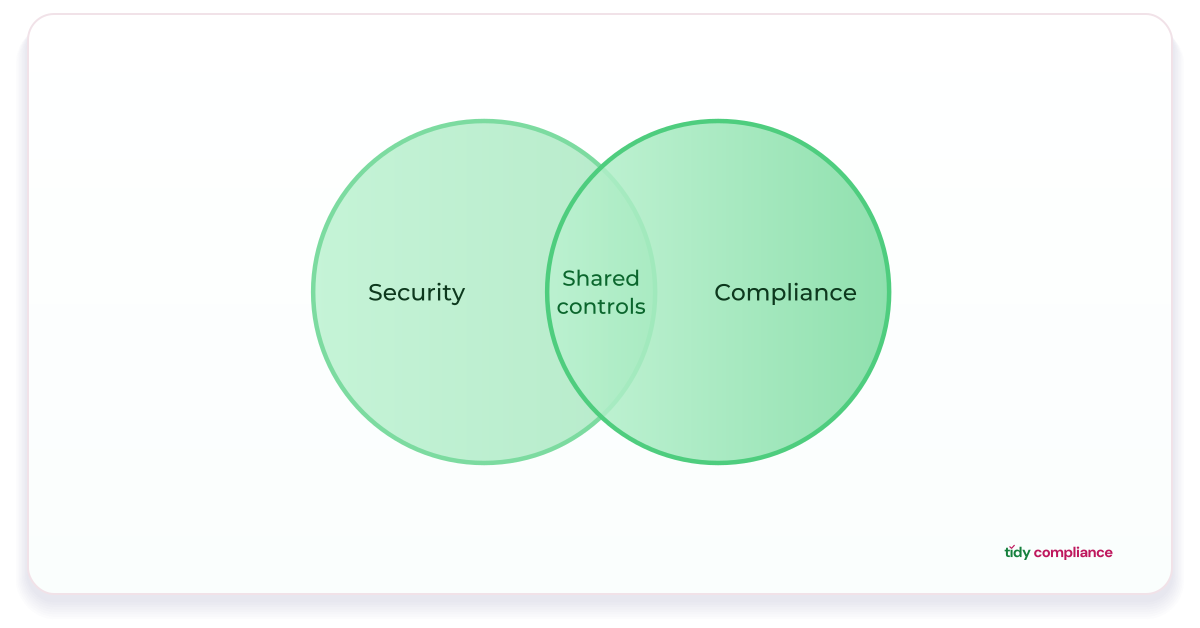
Compliance is different from security, though they overlap. Security reduces the chance and impact of an attack. Compliance proves that you follow a defined set of requirements. A company can be compliant and still breached, and secure but unable to prove it. You want both, and the same controls usually serve both.
Why It Matters to Your Business
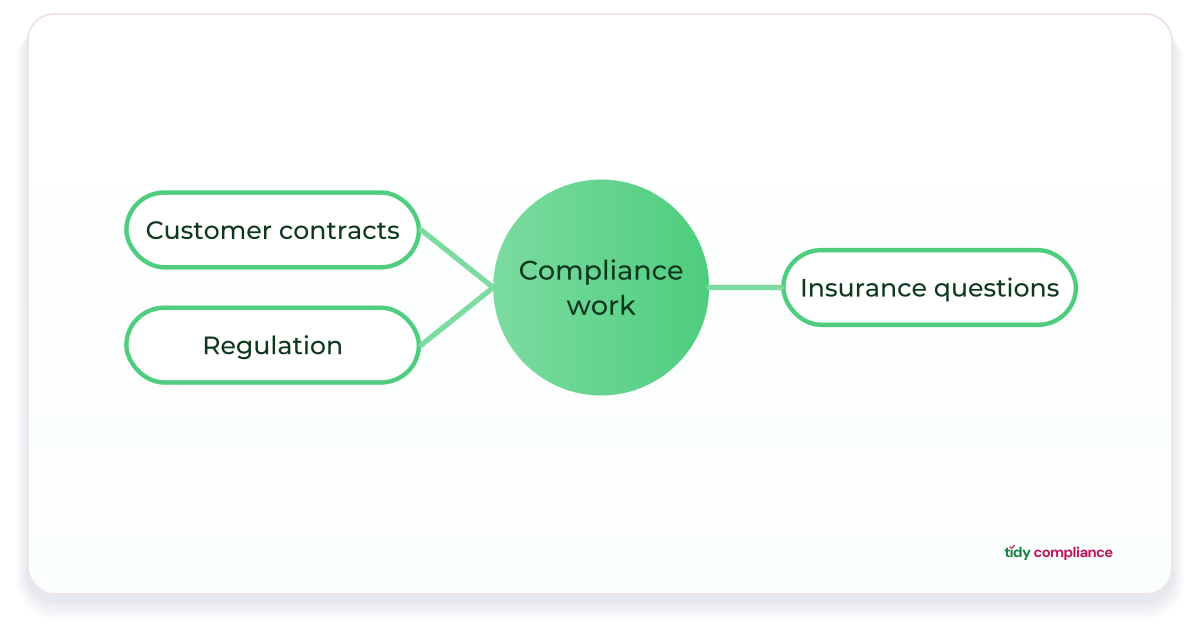
The first reason is revenue. Enterprise buyers ask for a SOC 2 report or an ISO 27001 certificate before they sign, and missing proof stalls deals. The second is regulation, such as the HIPAA Security Rule for health data or the PCI DSS requirements for card data. The third is insurance and risk: cyber insurers now ask detailed control questions before they quote.
The cost of doing it late is the real driver. Fixing a gap when a customer is waiting is slower and more expensive than fixing it on your own schedule. Most of the effort is the same either way.
The Main Frameworks Compared
Frameworks are structured sets of controls. Some are legal requirements, some are voluntary standards and some are attestation reports issued by independent auditors. Here are the ones I see most often.
| Framework | Who it concerns | What you get |
|---|---|---|
| SOC 2 | Service providers, especially software, selling to US businesses | An attestation report from a CPA firm on your controls |
| ISO/IEC 27001 | Organizations of any size, common with international customers | A certificate for your information security management system |
| PCI DSS | Anyone who stores, processes or transmits payment card data | Validation of compliance through a self-assessment or assessor |
| HIPAA Security Rule | Covered entities and business associates handling health data | No certificate: you document and prove compliance yourself |
| NIST Cybersecurity Framework | Any organization wanting a flexible, voluntary structure | A common language and profile for your risk work |
| CIS Controls | Teams that want a prioritized technical checklist | A practical set of safeguards |
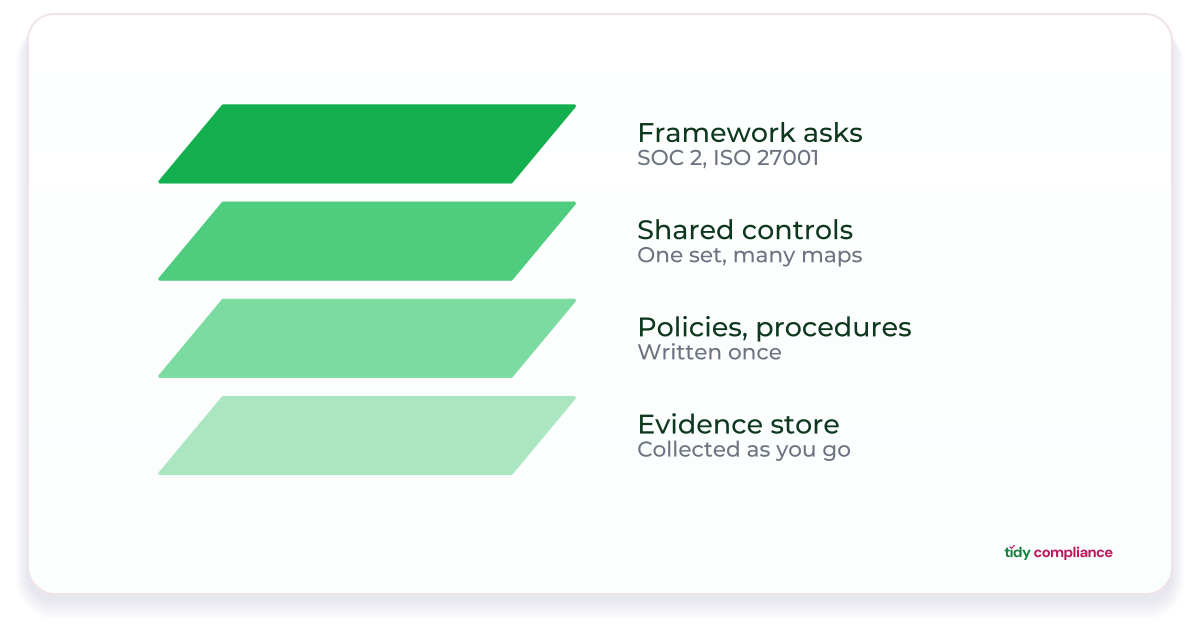
Many requirements overlap, so one control set can serve several frameworks. Pick the one with the most commercial or legal pressure first, then map the rest to it.
The Building Blocks of a Program
Every IT compliance program, whatever the framework, has the same parts. You can add detail as you grow, and you should not skip any of them.
Governance and Ownership
Someone must own the program and report to leadership. In small companies that is the head of IT or operations. In larger ones, a security or compliance lead. They keep the control matrix, the risk register and the calendar.
Risk Assessment
A risk assessment lists what could go wrong, how likely it is and how bad it would be. It decides where controls matter most. Frameworks such as ISO 27001 and the HIPAA Security Rule require one, and it is the basis for choosing safeguards.
Controls and Policies
Controls turn risks into daily habits. Policies state the rules, procedures describe the steps and records prove they ran. If you are unsure which controls to run, the IT compliance checklist lists ten core areas.
Evidence
Evidence is the proof: a ticket, a log export, a signed review, a training record. Good evidence has a date, an owner and a clear link to a control. Poor evidence is a screenshot of unknown origin.
Training and Culture
Controls are carried out by people, so they need to know what to do. Short, role-based training and visible leadership support make a difference.
From Zero to Audit-Ready
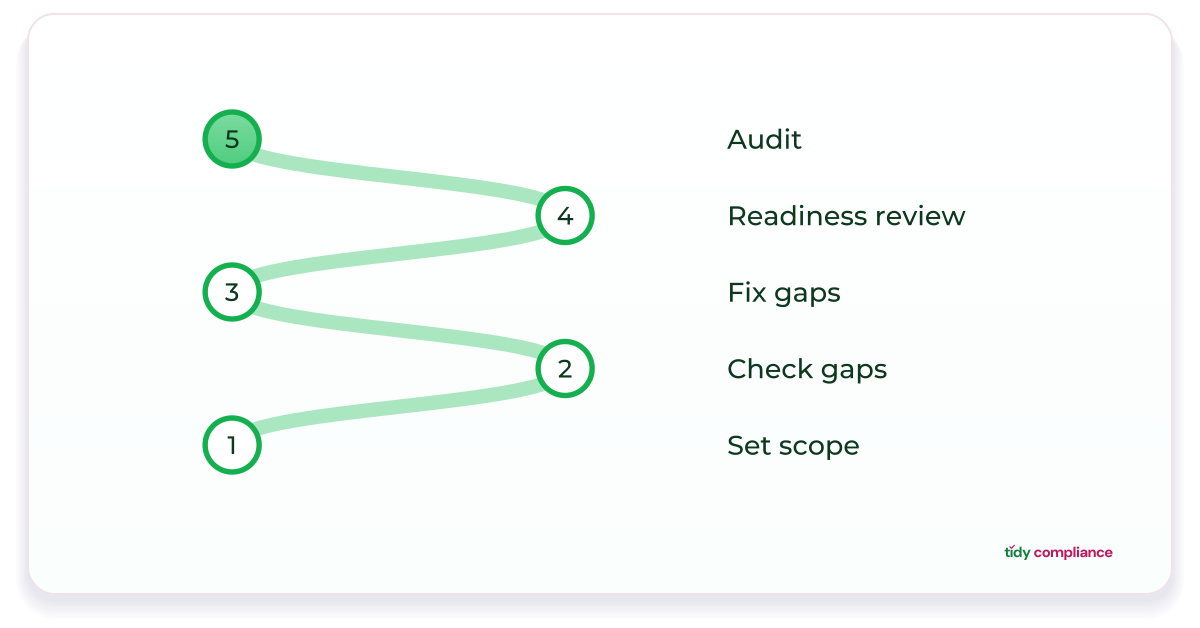
A realistic first program takes six to twelve months, depending on your size and starting point. The path below is how I plan it.
| Stage | Typical duration | Main output |
|---|---|---|
| Scope and framework choice | 2 to 3 weeks | Written scope and chosen framework |
| Readiness assessment | 3 to 6 weeks | Ranked gap list |
| Remediation | 2 to 6 months | Policies, controls and tooling in place |
| Evidence period | 3 to 12 months | Dated proof that controls ran |
| Audit or certification | 4 to 8 weeks | Report or certificate |
The readiness step is the one teams most often skip. My guide to the IT compliance assessment shows how to run it. Later, the IT compliance audit article describes what an auditor tests.
What It Costs
Costs fall into four groups: your own time, consulting, tooling and the audit fee. Time is the biggest and the one people underestimate. A small company can expect a part-time owner for a year. Tooling ranges from nothing to several thousand dollars a year, and audit fees depend on scope and the firm you choose. Get written quotes, because published ranges vary widely.
Software can reduce effort once your process is clear. Before you buy, read my ranking of IT compliance software and decide your scope first.
Mistakes Beginners Make
The first mistake is starting with a tool instead of a scope. The second is writing policies that describe an ideal company. The third is treating the audit date as the finish line. Compliance works as a yearly cycle, and each cycle is easier than the last if you keep the habits. I list them in IT compliance best practices.
Doing It In-House or With a Consultant
Teams with a security lead and some experience can run a first program themselves, especially for a single framework. Consultants help most with scoping, rating gaps objectively, writing policies quickly and preparing for the first audit. A good one hands over documents and habits, so you do not depend on them forever.
Who Does What
Compliance involves more people than the compliance owner. Leadership sets the risk appetite and funds the work. IT and engineering run technical controls and produce evidence. HR handles onboarding, offboarding, training and background checks. Legal reviews contracts and regulatory questions. Each group needs to know which controls it owns and when proof is due.
A short RACI table, with one row per control family, avoids most arguments. It shows who is responsible, who approves and who is only informed. Review it when you reorganize, because ownership drifts when teams change.
What Auditors Accept as Evidence
Auditors look for proof that is dated, attributable and complete. System-generated reports, exported configurations, approved tickets and signed reviews usually satisfy that. Screenshots can work if they show the date, the system and the user. Statements without records rarely do, however sincere.
| Control area | Strong evidence | Weak evidence |
|---|---|---|
| Access | Quarterly review signed by each manager, with removals ticketed | An email saying access was checked |
| Change | Tickets with approval, test notes and deployment date | A list of releases with no approvals |
| Backups | Restore test report with time and result | A dashboard showing a green icon |
| Training | Completion export with dates and course version | A slide deck and an attendance email |
Data Classification and Privacy
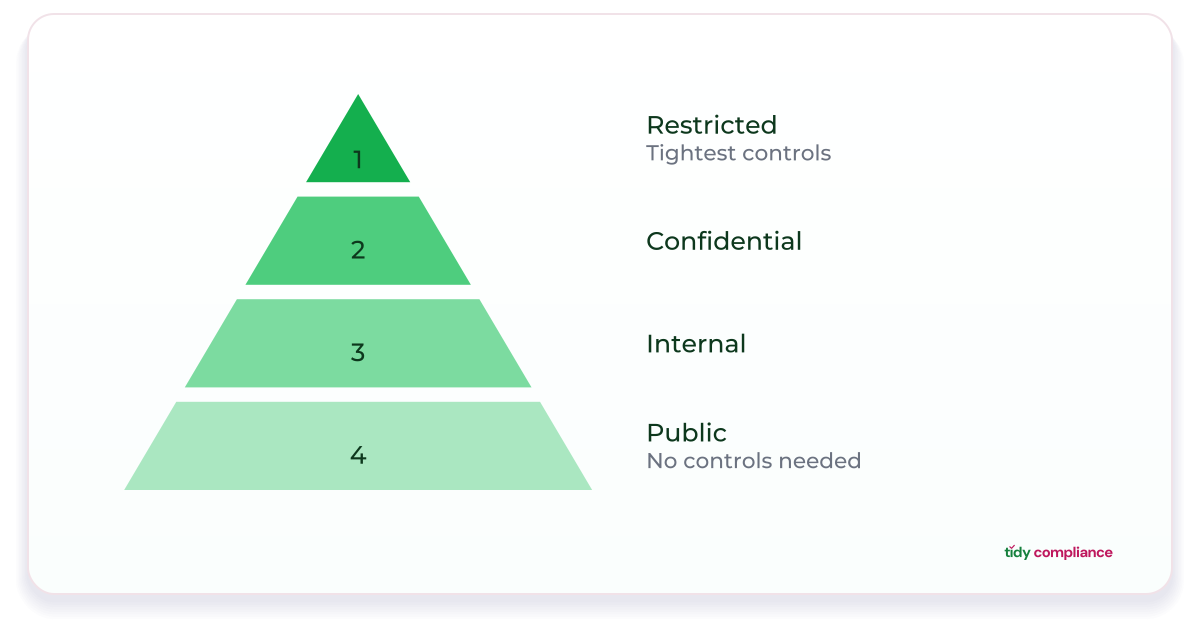
Many controls depend on knowing what data you hold. A short classification scheme, with levels such as public, internal, confidential and restricted, tells people how to handle each type. Restricted data, such as health records or card numbers, gets the strictest access, encryption and logging.
Privacy laws add duties on top, such as notice, access requests and breach notification. Which laws apply depends on where your customers and employees are, so ask your counsel. Your IT compliance program supplies the facts they need: where personal data lives, who can reach it and how long you keep it.
Where Tooling Fits
Compliance platforms connect to your cloud, identity provider and ticket system, pull evidence automatically and track control status. They help most when you run many controls, face several frameworks or have a small team. They help least when your process is unclear, because they automate whatever you have. Define scope and owners first, then judge tools by how well they match your controls.
One more point on expectations. Your first report or certificate will not be perfect, and it does not need to be. Auditors expect to see a program that is young, with gaps listed and owned. What worries them is a program that hides gaps. Be open about what is in progress, show the plan and keep the dates, and the second year will go far more smoothly than the first.
If you sell to larger customers, expect their security questionnaires to arrive before any report does. Keep a library of answers tied to your controls and update it after each review. Sales teams close faster when they can reply in a day, and the library doubles as a quick check that your written answers match what you really do.
Picking Your Starting Point
Start with the pressure you feel today. If a customer is waiting, pick the framework they named. If you have no deadline, a lighter structure such as the NIST Cybersecurity Framework gives you a foundation.
- Write down which customers, laws and contracts ask for proof.
- Choose one framework to lead with and map the others later.
- Name an owner and start a control matrix and an evidence folder.
- Run a readiness assessment before you book an audit.
Questions About IT Compliance
What Is IT Compliance in Simple Terms?
It is the work of proving that your technology and processes follow the rules, standards and contract terms that apply to you. You run controls, keep records and show them to an auditor or customer on request.
What Is the Difference Between IT Compliance and Cybersecurity?
Security reduces the chance and impact of attacks. Compliance shows that you follow a defined set of requirements. They overlap, and the same controls often serve both goals.
Which Framework Should a Small Company Start With?
Start with whatever your customers ask for. For US software and service providers that is often SOC 2, for international buyers often ISO 27001. Without pressure, the NIST Cybersecurity Framework is a good base.
How Long Does It Take to Become Compliant?
A first program usually takes six to twelve months, including remediation and an evidence period. Smaller scopes and strong existing habits can move faster.
How Much Does IT Compliance Cost?
Costs include your own time, consulting, tooling and audit fees. Your time is usually the largest part. Ask for written quotes, because prices vary a lot by scope and provider.
Do I Need a Compliance Officer?
Not always. A small company can name an owner in IT or operations. Larger organizations or regulated industries often hire a dedicated compliance or security lead.
Is IT Compliance a One-Time Project?
No. Controls run all year, and audits and certifications renew on a cycle. The first year takes the most effort, and later years mostly maintain the routine.
Sources
- NIST Cybersecurity Framework
- ISO/IEC 27001 information security standard
- PCI Security Standards Council
Disclaimer: This article is general compliance information and not legal advice. Requirements depend on your location, industry and facts, so confirm what applies to you with qualified counsel or the issuing authority.
Was this guide helpful?
Thanks for your feedback.
Odessa Whitfield
Odessa leads the Tidy editorial team and works with the compliance consultants to turn real client projects into practical guides on regulations, frameworks, policies and audit preparation. Before joining Tidy, she worked in compliance and risk roles, writing and maintaining policy sets for regulated organizations. Every article goes through a consultant who has done the work in practice, and she updates guides when a rule, framework or tool changes. She works remotely from the United States.