Quick Summary
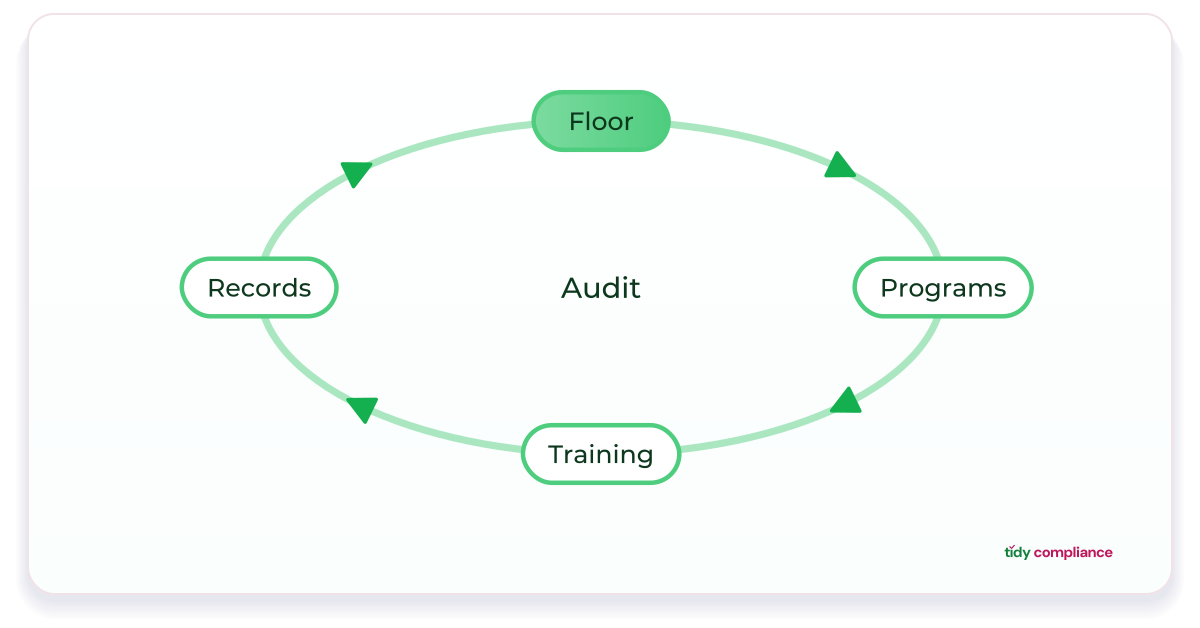
- An audit covers four areas: floor conditions, written programs, training and records.
- Rank findings with a simple score: severity times likelihood times exposure.
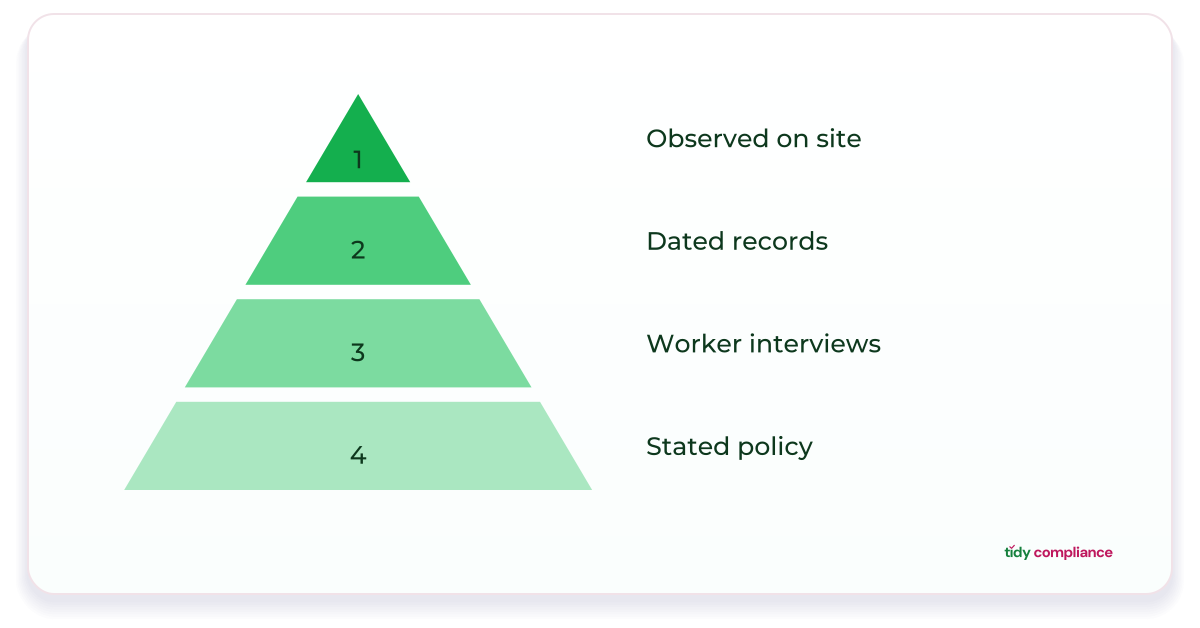
- Interview workers, watch tasks being done and compare records with what you see on the floor.
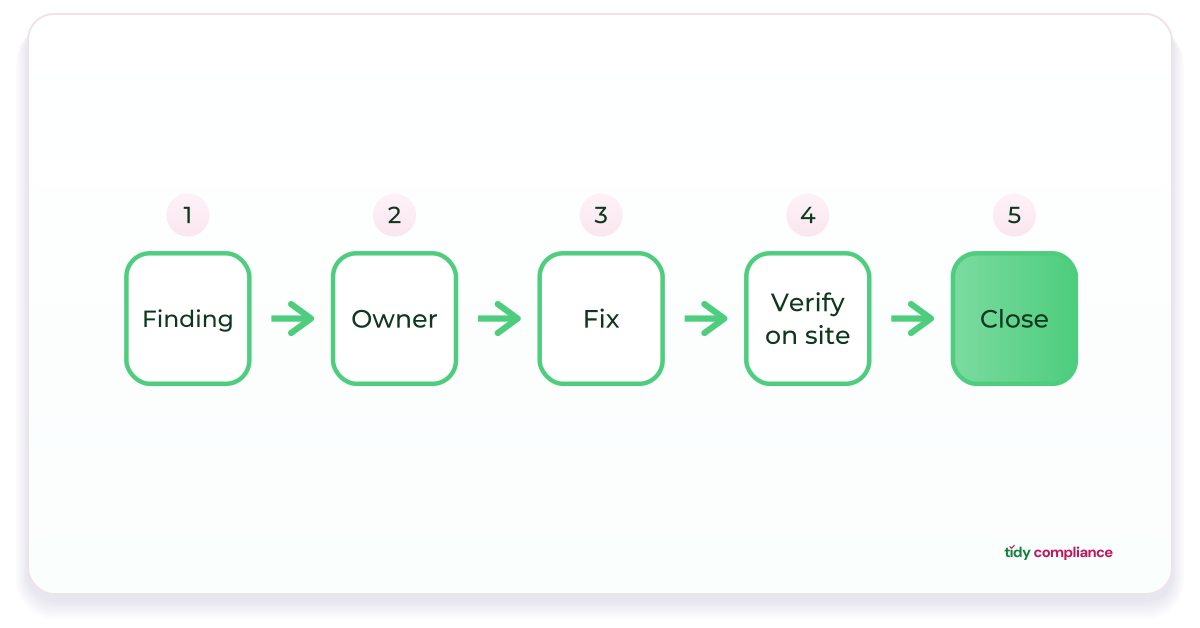
- Give each finding an owner and a date, verify fixes on site and repeat the audit yearly.
An OSHA compliance audit is a planned, documented review of your workplace, written programs, training and records against the standards that apply to you. It is different from an OSHA inspection, which is carried out by the agency. An audit is yours: you choose the timing, you control the findings and you fix them before anyone else sees them.
I run these as part of OSHA compliance consulting work, and the hardest part is never the walk. It is deciding what to review first and how deep to go. This article gives you a scope, a method and a simple formula I use to rank what to look at, so the limited hours go where the risk is.
Why Audit Before an Inspector Does
Self-audits find problems while they are cheap. A missing label costs a few dollars to fix, and the same label on an inspection report starts a longer conversation. An audit also gives you a record of good faith: dated findings, owners and fixes show that you look for problems and act on them.
An audit should be done by someone who can be honest about what they see. Insiders tend to miss the hazards they walk past every day, so many employers have a colleague from another site or an outside consultant do the walk. Questions about legal exposure or privilege belong with your counsel, so ask them before you start if the findings could matter in a dispute.
What to Review
A full audit covers four areas. You can audit them together or split them over a year.
| Area | What you review | Evidence to collect |
|---|---|---|
| Floor conditions | Guards, labels, storage, walkways, ladders, exits, housekeeping | Photos, inspection checklist |
| Written programs | Hazard communication, lockout/tagout, emergency plan, others that apply | Program documents with dates and owners |
| Training | Who needs what, who completed it and when it expires | Training matrix, sign-in sheets |
| Records | Injury and illness logs, summaries, incident reports and inspections | Logs and reports with dates |
Floor Conditions
The walkthrough is the heart of the audit. Take photos, note locations and ask workers how they do tasks, not how they are supposed to. Watch a task from start to finish and note shortcuts, because shortcuts reveal where procedures do not fit the work.
Written Programs
Read each program next to the equipment it describes. Check that it names an owner, matches the tasks, was reviewed in the last year and is available to the people who use it. A program everyone can quote is rare and a good sign.
Training and Records
Compare the training matrix with the roster and find people missing a required session. For records, check that incidents on the floor and entries in the log match. A near miss that nobody wrote down tells you that reporting is weak, and the numbers on paper look better than reality.
The Formula for Ranking What Matters
An audit produces more findings than you can fix in a week. To rank them, I use a simple score for each finding:
The maximum score is 75. As a working rule, findings above 40 get fixed immediately or the task stops until a control is in place. Findings between 20 and 40 get a dated plan within the month. Anything below 20 goes on the regular improvement list. The cutoffs are mine and not an OSHA standard, so adjust them for your industry.
A Worked Example
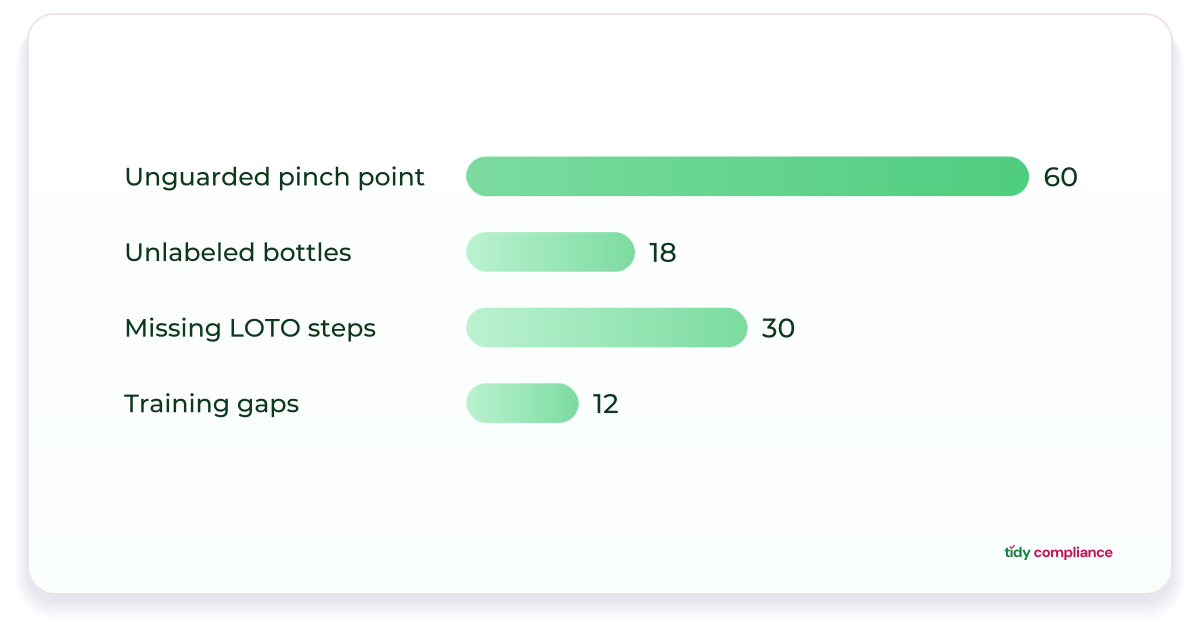
Take a warehouse audit with four findings. An unguarded conveyor pinch point could cause a serious injury (severity 5), is reachable by passersby (likelihood 4) and affects a whole shift (exposure 3). That scores 60 and gets fixed now. Unlabeled spray bottles in a cleaning closet score lower: severity 3, likelihood 3, exposure 2, so 18. They are simple to fix anyway.
| Finding | Severity | Likelihood | Exposure | Score | Action |
|---|---|---|---|---|---|
| Unguarded conveyor pinch point | 5 | 4 | 3 | 60 | Stop use until guarded |
| Missing lockout/tagout steps for one machine type | 5 | 3 | 2 | 30 | Write procedure and train within 30 days |
| Training record gaps for three forklift operators | 4 | 3 | 1 | 12 | Schedule training this month |
| Unlabeled spray bottles | 3 | 3 | 2 | 18 | Label and replace this week |
The formula does not replace judgment. A low score on a task where a single mistake can kill should still get attention. Use it to start the conversation, then check the ranking with the people who know the work.
How to Run the Audit
A day-long audit for one site follows a simple sequence. Agree the scope and the standards you are testing against. Collect documents in advance. Walk the site with a supervisor. Interview a few workers. Review records. Score findings. Close with a short meeting.
If you have not done a first pass, start with the OSHA compliance checklist. It covers nine areas quickly and gives you a sense of how much work a full audit will need.
Writing the Report and Fixing Findings
Keep the report short: scope, date, method, findings with photos, scores and recommended actions. Each finding needs an owner and a due date. Share it with the site manager first, then leadership.
Track fixes in a simple log and verify them on site. A fix is closed when someone has looked at it, not when someone says it is done. Review the log monthly until the high-scoring items are closed. Repeat the audit once a year, or after significant changes to equipment, tasks or headcount.
If you are new to the rules behind these standards, my OSHA compliance guide explains the basics. Software can help hold findings, assign actions and send reminders. If you are comparing options, see my ranking of OSHA compliance software. Smaller employers should also read OSHA compliance for small business, which shows how to scale the audit to a team of ten.
How Much Evidence Is Enough
You cannot check everything, so sample. For records, pull a month in each quarter and compare the log with incident reports, first aid entries and workers' compensation claims. For training, pick ten workers across roles and test their files against the matrix. For the floor, walk every area at least once and visit high-risk areas twice, at different times of day.
Shift matters. A day shift with the full management team behaves differently from a night shift with a skeleton crew. If you run more than one shift, audit more than one. The same goes for seasonal peaks, when temporary staff and overtime raise risk.
Typical Findings and Their Usual Causes
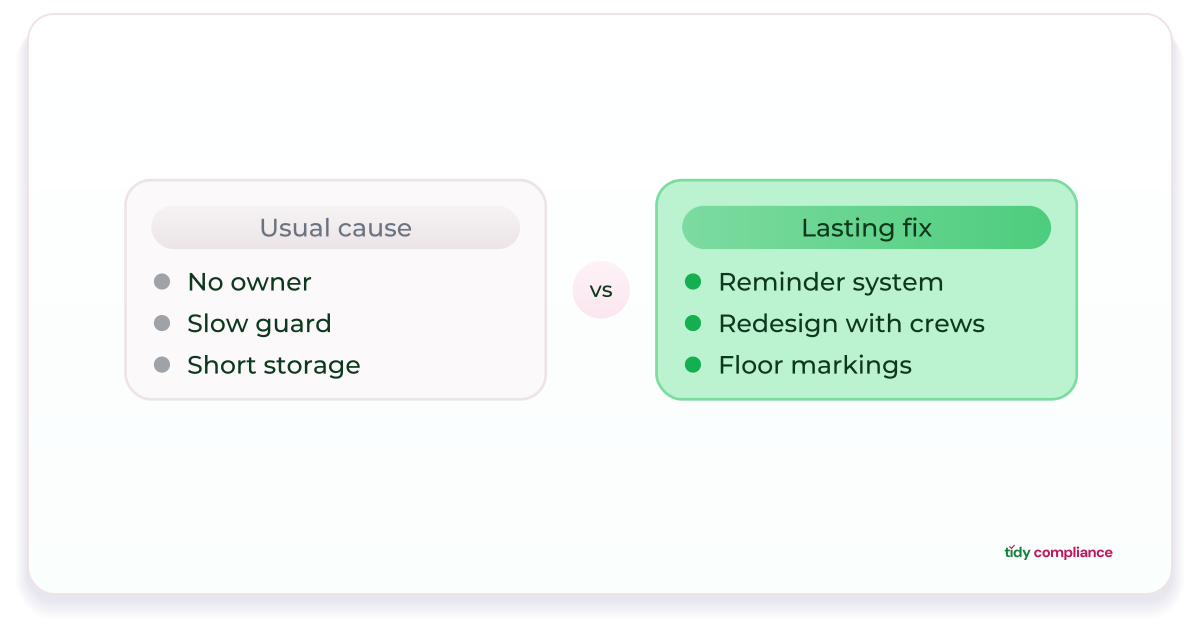
Findings repeat across employers, and so do their causes. A fix works better when it addresses the cause and not only the symptom.
| Finding | Usual cause | Lasting fix |
|---|---|---|
| Unlabeled containers | Decanting without a label routine | Pre-printed labels at the point of use |
| Bypassed guards | Guard slows the task or gets in the way | Redesign the guard with the operators |
| Expired training | No owner or reminder | Training matrix with automatic reminders |
| Incomplete injury log | Reporting seen as blame | Easy reporting and a clear no-blame message |
| Blocked exits | Storage space is short | Floor markings and a weekly check |
Notice that most fixes involve people and routines, not purchases. A guard that gets in the way will be removed again, no matter how many times you replace it, and the real fix is to involve the operators.
Closing the Loop With Management
An audit only helps if leadership acts on it. Present the top five findings in one page with the score, the cost of the fix and the owner. Ask for decisions, not applause: a budget for a guard, a day for training, a change of schedule. Report progress at the same meeting each month until high-scoring findings are closed.
Keep the final report, the fix log and the evidence of closure for as long as your counsel advises. They show a pattern of finding and fixing problems, which is what you want any reader to see.
A note on follow-up audits: after a major finding, return within a few weeks to confirm the fix on site. Photos help, but a short walk with the supervisor shows whether the control holds up on a busy day. If it does not, adjust the control, because the same hazard will come back wearing a different label next year.
Auditors also need access. Make sure they can reach every area, including roofs, mechanical rooms and night shifts, and that workers know the audit is about systems, not about blame. People who trust the process tell you what really happens, and that is the information an audit exists to find.
How to Choose an Auditor and Scope
Match the scope to your risk and your budget. A small employer can start with a floor walk and a records check. A site with heavy machinery, chemicals or work at height deserves a full audit. Choose an auditor who has worked in your industry, shows sample reports and separates findings from legal opinions.
- Agree the scope, the site list and the standards before the walk.
- Ask for a sample report and a list of the evidence the auditor will need.
- Make sure findings come with scores, owners and dates.
- Confirm how legal questions are handled with your counsel.
Questions About OSHA Compliance Audits
What Is an OSHA Compliance Audit?
It is a planned review of your workplace, written programs, training and records against the OSHA standards that apply to you. You run it yourself or with a consultant to find and fix gaps before an inspection.
What Is the Difference Between an Audit and an OSHA Inspection?
An audit is your own review, on your schedule. An inspection is carried out by OSHA or a state plan, and findings can lead to citations. The audit helps you prepare for the second.
How Often Should I Audit?
Once a year is common for a full audit, with a shorter walkthrough every month or quarter. Audit again after new equipment, new processes or a significant incident.
Who Should Perform the Audit?
Someone who knows the standards and can be objective: a colleague from another site, a safety professional or a consultant. Insiders often miss hazards they see every day.
Is My Audit Confidential?
It depends on how it is structured and where you are. If privilege matters to you, talk to your attorney before you start, and ask how the audit should be documented.
How Long Does an Audit Take?
A small site can be done in a day plus a day for the report. Multi-site audits take longer, mostly because of travel and records review.
Is the Priority Score an Official OSHA Method?
No. It is a practical ranking approach I use to decide what to fix first. OSHA does not require it, so adjust the scales and cutoffs for your operations.
Sources
Disclaimer: This article is general compliance information and not legal advice. Requirements depend on your location, industry and facts, so confirm what applies to you with qualified counsel or the issuing authority.
Was this guide helpful?
Thanks for your feedback.
Odessa Whitfield
Odessa leads the Tidy editorial team and works with the compliance consultants to turn real client projects into practical guides on regulations, frameworks, policies and audit preparation. Before joining Tidy, she worked in compliance and risk roles, writing and maintaining policy sets for regulated organizations. Every article goes through a consultant who has done the work in practice, and she updates guides when a rule, framework or tool changes. She works remotely from the United States.