Quick Summary
- OSHA compliance means meeting the safety and health requirements that apply to your work and being able to show it.
- Five duties appear almost everywhere: control hazards, write programs, train workers, keep records and respect worker rights.
- Know which set of standards applies to you: general industry, construction or another set.
- Build the base in a few months, then keep it running with monthly walkthroughs and a yearly audit.
OSHA compliance means meeting the workplace safety and health requirements set under the Occupational Safety and Health Act in the United States, and showing that you do. For most employers that boils down to finding hazards, controlling them, training people, keeping records and reporting serious incidents.
This guide is the overview I give new clients of our OSHA compliance consulting team. It starts with the basics, covers who is covered, the main standards and your duties, and ends with a practical plan. It explains concepts and does not interpret the standards for your situation, which is a job for OSHA, your counsel or a qualified safety professional.
What OSHA Is and What It Does
OSHA is the Occupational Safety and Health Administration, part of the US Department of Labor. It sets and enforces workplace standards and offers training, outreach and consultation. Some states run their own approved programs, which must be at least as effective as the federal one and sometimes add requirements.
The Act also carries a general duty: employers must provide a workplace free from recognized hazards that are likely to cause death or serious harm, even where no specific standard exists. That is why a hazard you know about and ignore is a problem even if no rule names it.
Who Is Covered
Most private-sector employers and their workers are covered, with some exceptions. Many federal agencies, state and local governments, the self-employed and certain industries fall under other rules or programs. Whether an exemption applies to you is a factual question, so check with OSHA or your counsel.
Size matters for some duties. For example, many employers with ten or fewer employees are partially exempt from routine injury and illness recordkeeping, although they still must report serious incidents. Small employers can find specific help in my notes on OSHA compliance for small business.
The Main Sets of Standards
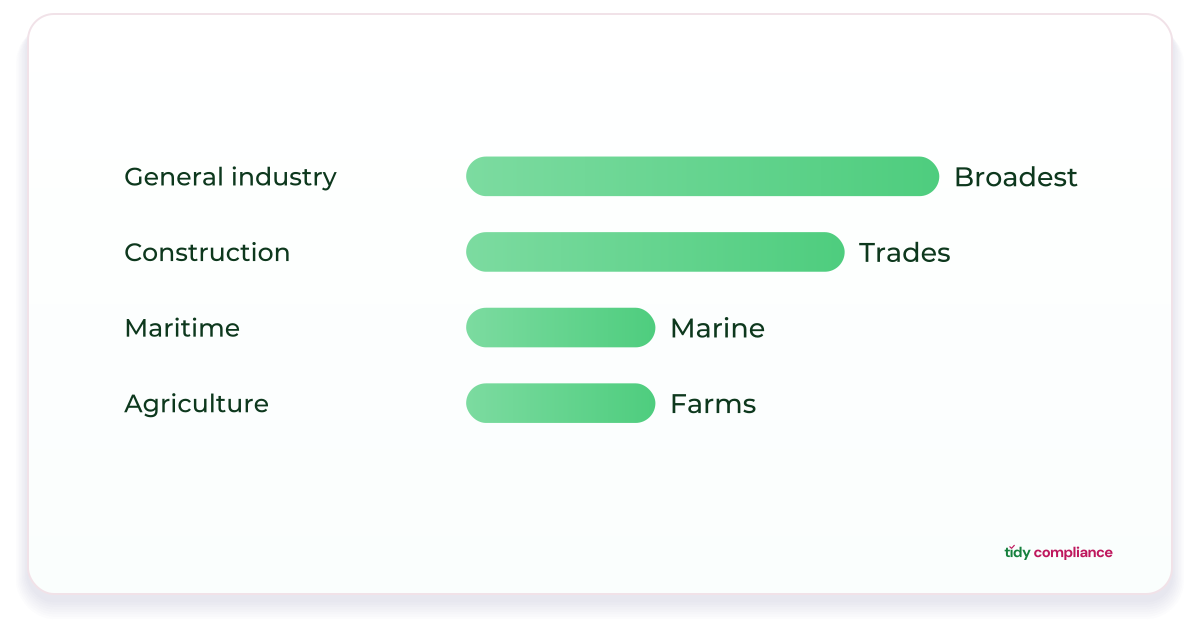
OSHA organizes its standards by type of work. Knowing which set applies to you is the first step.
| Set | Typical workplaces | Examples of topics |
|---|---|---|
| General industry | Manufacturing, warehouses, healthcare, offices, retail and most other workplaces | Hazard communication, machine guarding, lockout/tagout, emergency plans |
| Construction | Building, renovation, demolition and related trades | Fall protection, scaffolding, excavation, ladders |
| Maritime | Shipyards, marine terminals, longshoring | Cargo handling, confined spaces, vessel repair |
| Agriculture | Farms and related operations | Field sanitation, machinery, tractors |
Within each set, requirements range from broad rules to specific ones on noise, respiratory protection, confined spaces and more. OSHA publishes lists of the most frequently cited standards each year, and fall protection and hazard communication regularly appear near the top.
Your Core Duties as an Employer
The details differ by industry, but five duties appear in almost every workplace.
Find and Control Hazards
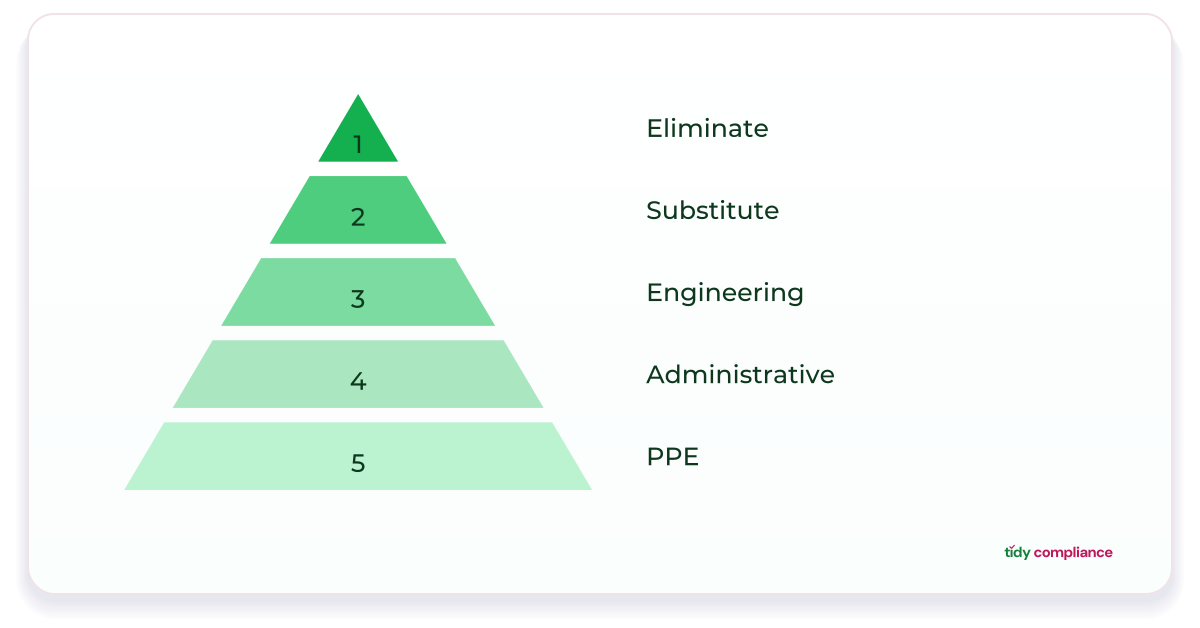
Walk your workplace, identify what could hurt someone and decide how to remove or reduce it. Controls work best in a simple order: remove the hazard, replace it with something safer, add engineering measures such as guards, change how work is done and only then rely on protective equipment.
Write Programs Where Required
Several standards expect written programs, such as hazard communication, lockout/tagout, respiratory protection and emergency action plans. A good program says who is responsible, what steps people follow and how often it is reviewed. The OSHA compliance checklist shows how to check yours.
Train Workers
Workers need training on the hazards of their tasks, in a way they understand. Keep records of who was trained, on what and when. Supervisors need training too, because they decide how work happens on the floor.
Keep Records and Report Serious Incidents
Many employers must keep injury and illness logs and a yearly summary. OSHA also requires reporting of a work-related fatality within eight hours and of an in-patient hospitalization, amputation or loss of an eye within 24 hours. Check current details on OSHA's recordkeeping page.
Respect Worker Rights
Workers have the right to a safe workplace, to raise concerns and to ask OSHA to inspect without retaliation. Make it easy to report hazards internally, and respond. A workplace where reporting is welcome finds problems before an inspector does.
What Happens in an OSHA Inspection
Inspections can follow a fatality, a serious injury, a worker complaint, a referral or a targeted program. A compliance officer usually presents credentials, holds an opening conference, walks the site, talks to workers and reviews records, then holds a closing conference. Findings may lead to citations, and employers have defined rights to respond.
Decisions about contesting a citation or negotiating belong with your attorney. What you can do ahead of time is have programs, training records and logs organized and a named contact ready. An OSHA compliance audit is the best way to find gaps before that day.
From Zero to a Working Safety Program
A small employer can build a solid base in a few months. The steps below are how I plan it.
| Stage | Typical duration | Main output |
|---|---|---|
| Identify applicable standards | 1 to 2 weeks | List of tasks and matching standards |
| Hazard assessment | 2 to 4 weeks | Hazard register with ratings and owners |
| Programs and controls | 1 to 3 months | Written programs, guards, labels |
| Training | 1 to 2 months | Training matrix and records |
| Recordkeeping and routines | Ongoing | Logs, monthly walkthroughs, yearly audit |
Tools and Help
OSHA provides free materials and a consultation service for small employers that is separate from enforcement. Software can store training records, track corrective actions and send reminders, but it cannot walk your site. If you are comparing options, read my ranking of OSHA compliance software.
Consultants help most with scoping standards, hazard assessments, program writing and audit preparation. A good one explains the reasoning, hands over editable documents and trains your people so you can run the routine.
Common Beginner Mistakes
The first is copying a template program without adapting it to your equipment. The second is training once and forgetting. The third is treating recordkeeping as paperwork, so logs fall behind. The fourth is waiting for an incident before looking for hazards. Each has the same fix: an owner, a calendar and proof.
Federal Rules and State Plans
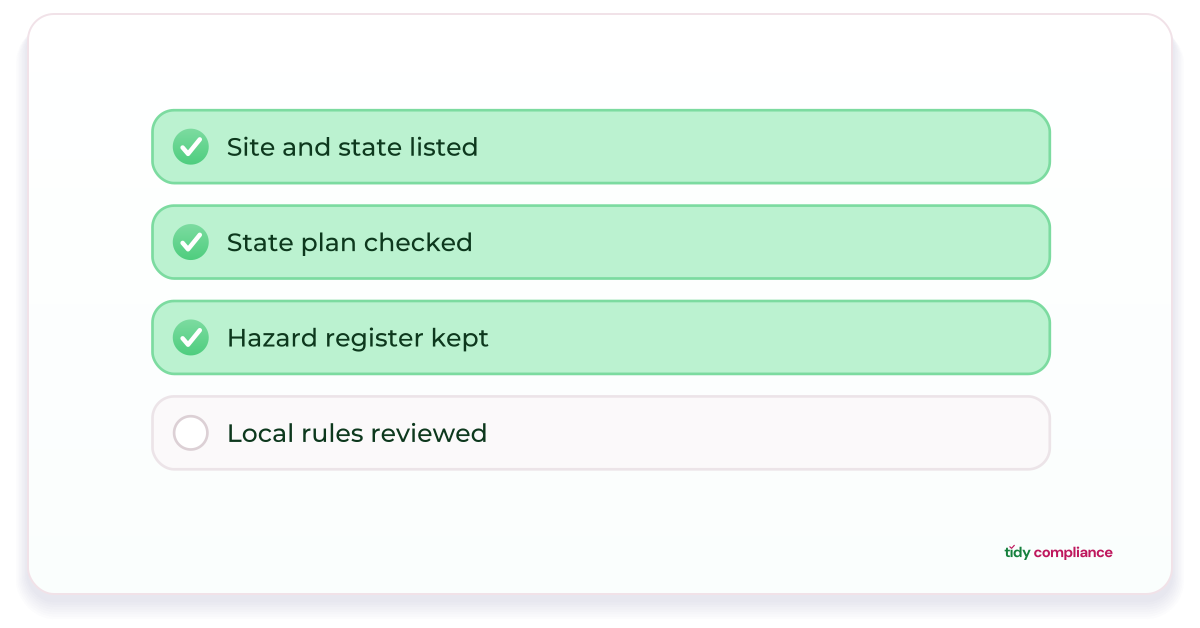
About half of US states run their own OSHA-approved programs, which cover private employers, public employers or both. State plans must be at least as effective as the federal program, and some add requirements, such as workplace violence or heat rules. If you operate in several states, check each one rather than assuming the federal rules are the whole picture.
Keep a simple table of your sites, the state, whether a state plan applies and any added rules. Update it when you open a site, and check the agency's current guidance rather than copying last year's answer.
Safety Culture Is Part of Compliance
Paperwork shows that you have a program, and culture shows whether it works. In workplaces with few incidents, supervisors stop unsafe work without argument, workers report near misses without fear and leaders ask about safety before output. These habits cannot be bought, but they can be built.
Start small. Open every meeting with a safety topic from the real work. Investigate near misses with the same care as injuries and share what was learned. Recognize people who raise hazards. Over a year, these habits change what workers tell you, and that makes every audit and inspection easier.
Measuring Progress
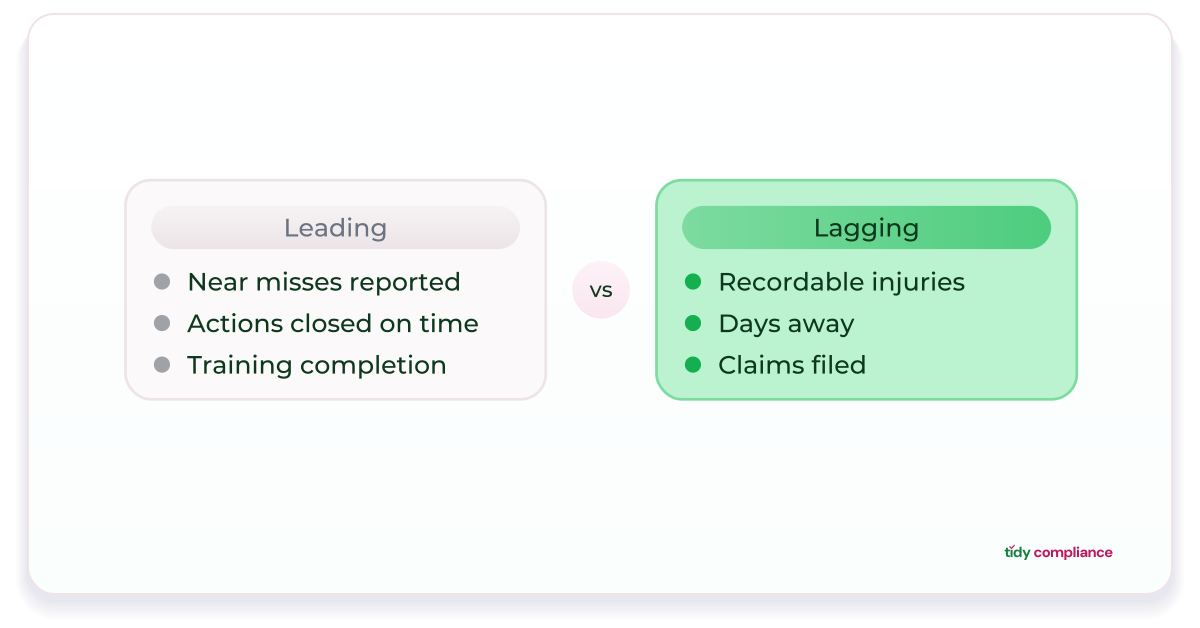
Track a few measures that you can act on: incidents and near misses reported, corrective actions closed on time, training completion and walkthrough findings per area. Lagging figures like injury rates matter, but leading ones tell you sooner whether the program is working.
| Measure | Type | What it shows |
|---|---|---|
| Near misses reported | Leading | Whether people speak up |
| Corrective actions closed on time | Leading | Whether findings turn into fixes |
| Training completion | Leading | Whether people are prepared |
| Recordable injuries | Lagging | Whether controls are working |
How the Rules Differ by Industry
A warehouse worries about forklifts, racking and lifting. A clinic worries about sharps, chemicals and patient handling. A restaurant has burns, slips and knives. An office has ergonomics, fire exits and electrical cords. The same five duties apply everywhere, but the hazards and the standards behind them change, so start from your real tasks and not from a generic list.
Mixed employers need to be careful. A manufacturer with a loading dock and an office has two sets of hazards, and a contractor on your site brings a third. Map hazards by area and keep one register per site.
Budget deserves a word too. Safety work costs time before it costs money: a few hours a week from a supervisor, training sessions and the occasional purchase such as guards, labels or ladders. Many fixes are cheap, and some are free, like clearing an exit. Ask your insurer as well, because many carriers offer loss-control visits and resources, and they know what incidents cost in your industry.
Last, keep paperwork simple. One folder per site with the hazard register, programs, training matrix, logs and audit reports is enough. If you cannot find a document in two minutes, it will not be found during an inspection either, so fix the filing system early.
If you employ seasonal or temporary workers, plan training before the peak starts. New people are involved in a large share of workplace incidents in many industries, so a short orientation on site rules, hazards and who to ask is time well spent. Pair each newcomer with an experienced colleague for the first shifts and record the sign-off.
Picking Your Starting Point
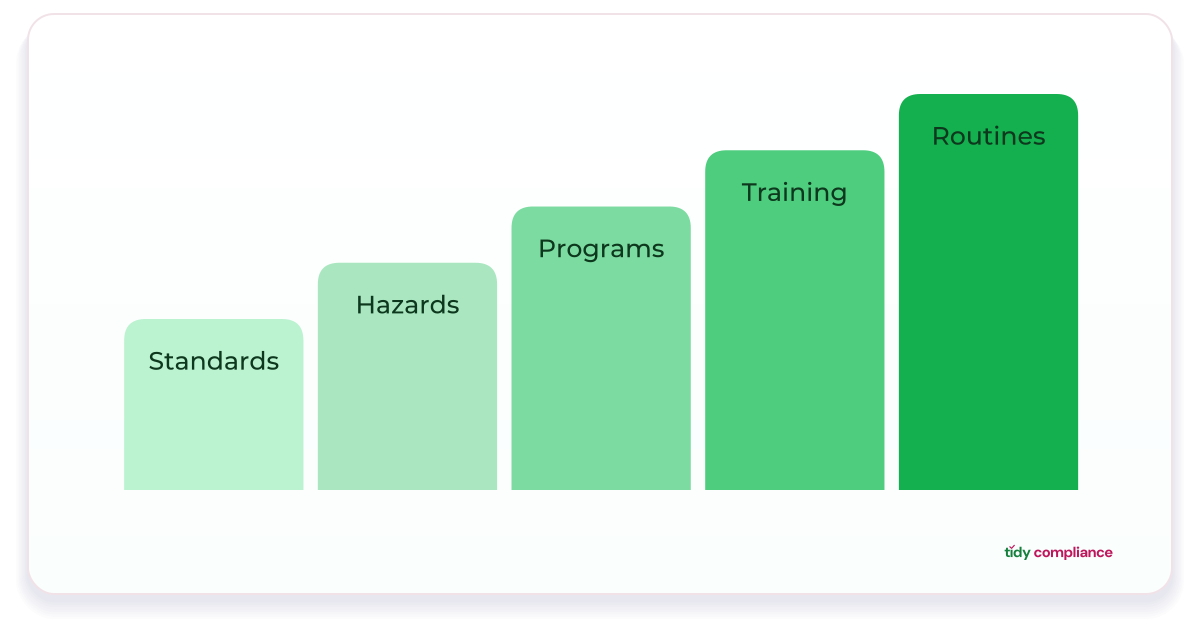
Start with the hazards that could cause serious harm and the standards with the strongest requirements for your work. Then build routines for training, records and walkthroughs.
- List your tasks and match them to the standards that apply.
- Walk the site and write a hazard register with owners.
- Write the programs your work requires and train workers on them.
- Set up injury records and a monthly walkthrough, then audit yearly.
Questions About OSHA Compliance
What Is OSHA Compliance in Simple Terms?
It is following the workplace safety and health requirements that apply to your business, and being able to show it. That means finding hazards, controlling them, training workers, keeping records and reporting serious incidents.
Who Must Comply with OSHA?
Most private-sector employers are covered, along with some public-sector employers under state plans. Some employers and industries have exemptions, so check with OSHA or your counsel.
Do Small Businesses Have to Follow OSHA Rules?
Yes, small employers are covered, although some recordkeeping duties differ by size and industry. OSHA also offers a free consultation service for small businesses.
What Are the Most Common OSHA Violations?
OSHA publishes lists of the most frequently cited standards each year. Fall protection and hazard communication regularly appear near the top. Check OSHA's current list for the latest ranking.
What Happens If OSHA Inspects My Workplace?
An inspector usually holds an opening conference, walks the site, talks to workers, reviews records and holds a closing conference. Citations can follow, and you have rights to respond. Ask your attorney about contesting any citation.
Do I Need a Written Safety Program?
Several standards require written programs, depending on your work. Even where no program is required, written procedures help your people and show that you manage hazards.
How Can I Get Started with OSHA Compliance?
List your tasks and the standards that apply, walk the site for hazards, write the required programs, train your workers and set up records and a monthly walkthrough. A consultant can speed up each step.
Sources
Disclaimer: This article is general compliance information and not legal advice. Requirements depend on your location, industry and facts, so confirm what applies to you with qualified counsel or the issuing authority.
Was this guide helpful?
Thanks for your feedback.
Odessa Whitfield
Odessa leads the Tidy editorial team and works with the compliance consultants to turn real client projects into practical guides on regulations, frameworks, policies and audit preparation. Before joining Tidy, she worked in compliance and risk roles, writing and maintaining policy sets for regulated organizations. Every article goes through a consultant who has done the work in practice, and she updates guides when a rule, framework or tool changes. She works remotely from the United States.