Quick Summary
- A good HR audit starts with a narrow scope, a file sample and a scoring rule, not with a giant checklist.
- Rank every gap by likelihood and impact, then fix the top of the list first.
- Wage and hour practices, worker classification and hiring records are where most audits find the most.
- Keep an audit trail of findings, owners and dates, so next year's audit starts from a baseline.
Most HR audits fail in one of two ways. They are so broad that nobody finishes them, or they are so friendly that they find nothing. In my work with HR compliance consulting clients, the audits that pay off are short, scored and honest about what they cannot judge.
Below is the formula I use. It has six steps, a scoring rule you can copy and a few places where I have seen audits go wrong. It is a practical method for finding gaps, not legal advice, so treat anything that looks like a violation as a question for your employment attorney.
The Six Steps at a Glance
The steps run in order, and each one produces something you can hand to the next. Skip the scoping step and the whole audit drifts.
| Step | What you do | What you end up with |
|---|---|---|
| 1. Scope | Pick locations, employee groups and risk areas | A one-page audit charter |
| 2. Collect | Gather policies, forms, payroll reports and a file sample | An evidence folder, indexed by area |
| 3. Test | Compare what your policy says with what the files show | A list of raw observations |
| 4. Score | Rate each observation for likelihood and impact | A ranked gap list |
| 5. Fix | Assign owners and dates, starting at the top | A remediation plan |
| 6. Record | Log results and set the date of the next review | A baseline for next year |
Step 1: Scope the Audit Before You Touch a File
Scope is a short document that answers four questions. Which locations are in? Which employee groups are in? Which risk areas are in? And what is out, on purpose? Writing the last answer down matters. I have watched an audit expand twice because someone remembered a contractor group halfway through.
For a first audit, I choose areas by cost of failure. Pay practices come first, because back pay can reach every employee in a group. Worker classification is next, since it decides who gets overtime and who gets a benefit. Then come hiring paperwork, leave administration and personnel records. Specialized areas such as safety programs or benefit plan filings can wait for round two.
Step 2: Collect Evidence in One Indexed Folder
Evidence sits in at least four places in most companies: the HR system, the payroll platform, a shared drive and managers' inboxes. Pull it into one folder with one subfolder per risk area, and add a short index that says what each file is and where it came from.
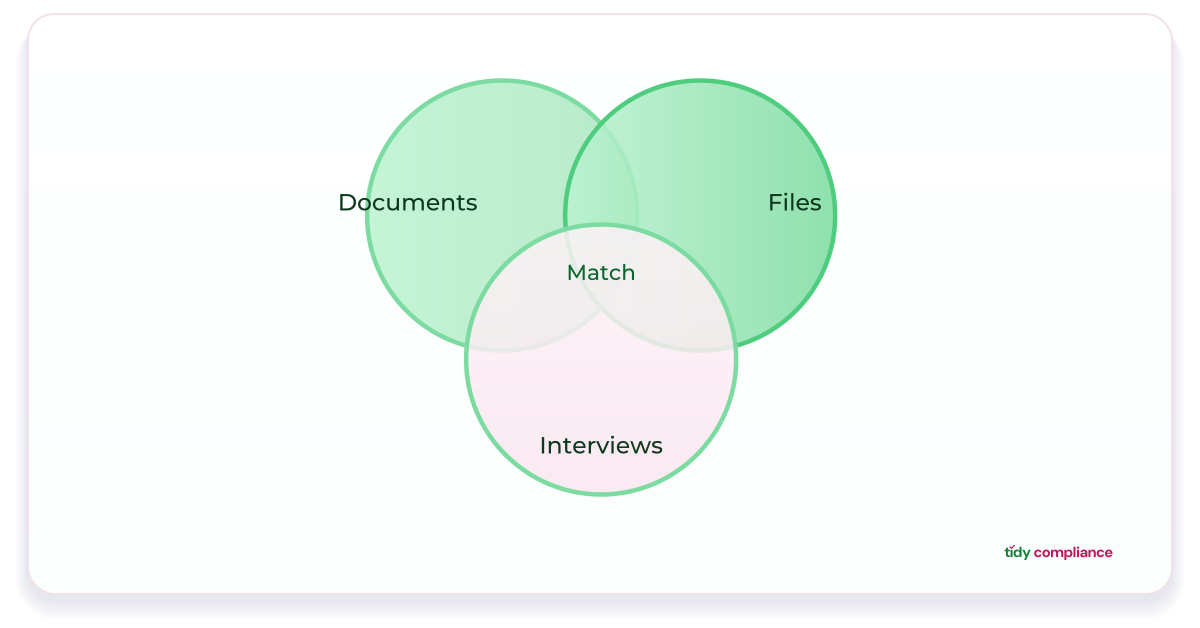
You need three kinds of evidence. Documents show what you say you do: handbooks, policies, job descriptions and offer letter templates. Reports show what the systems recorded: time records, pay registers and leave balances. Files show what happened to real people: hiring forms, acknowledgments, performance notes and separation records. Pull the sample for the third kind at random, and add every file with a known complication.
How Big Should the Sample Be?
For a team of under 50, I read every file hired in the past year, plus every file with a leave or a termination. For larger employers, a random 10 to 15 percent per location works as a start. The sample is a smoke detector. If it finds a pattern, such as missing forms in one office, you widen it to settle the question.
Step 3: Test What Your Policy Says Against What Happened
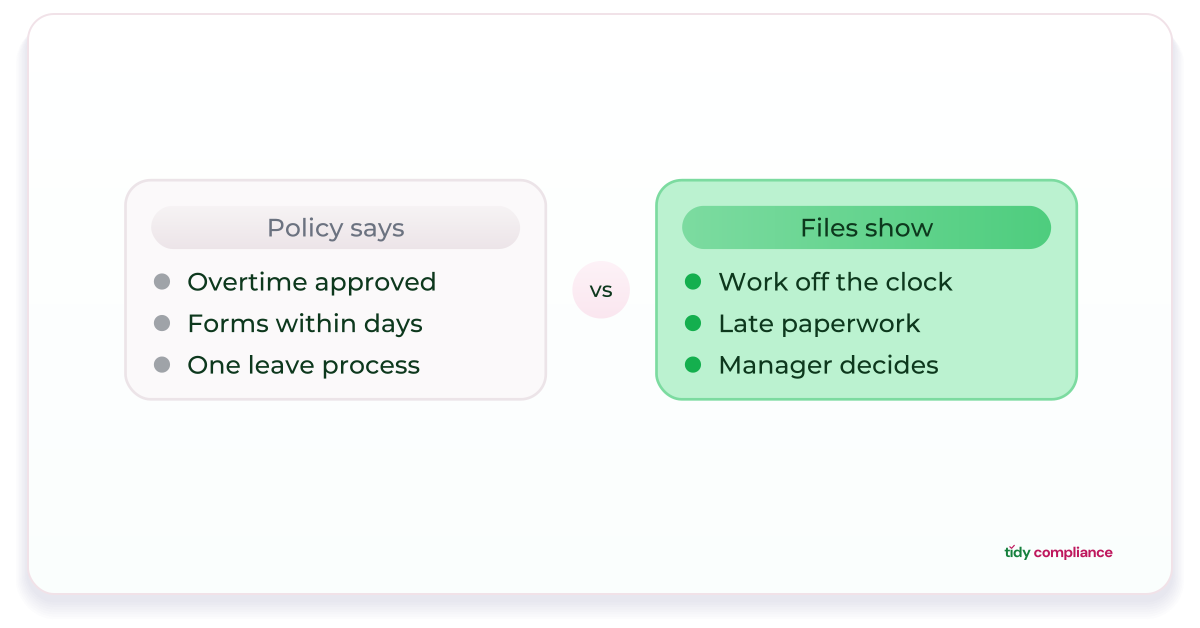
Testing means putting two columns next to each other: what the policy or rule says, and what the evidence shows. A gap sits wherever they differ. The most useful gaps are often not missing policies. They are policies that exist and are ignored.
Here are the tests I run most often, grouped by area. Use them as a starting list and add the rules that apply to your industry and states.
| Area | Test | Common finding |
|---|---|---|
| Wage and hour | Compare time records with pay for a sample of pay periods and check that exempt and non-exempt roles match their duties | Unrecorded work before or after shifts, or salaried roles with duties that look hourly |
| Classification | List contractors and read their working arrangement against the criteria that apply | Long-term contractors who work like employees |
| Hiring | Check that every file has the required forms, completed in time | Missing or late employment eligibility paperwork |
| Leave | Follow three leave cases from request to return and compare each with your policy | Notices sent late, or managers deciding without HR |
| Records | Check retention periods and who can open personnel and medical files | Medical notes in general personnel files |
| Policies | Compare the handbook with current practice and with the rules in each state you operate in | A handbook that is years old or written for a single state |
The wage and hour test deserves the most time. The U.S. Department of Labor publishes plain guidance on the Fair Labor Standards Act, and I would read its recordkeeping and overtime pages before sampling pay records. State rules often go further than federal ones, so check each state where you have people.
Step 4: Score Each Gap With a Simple Formula
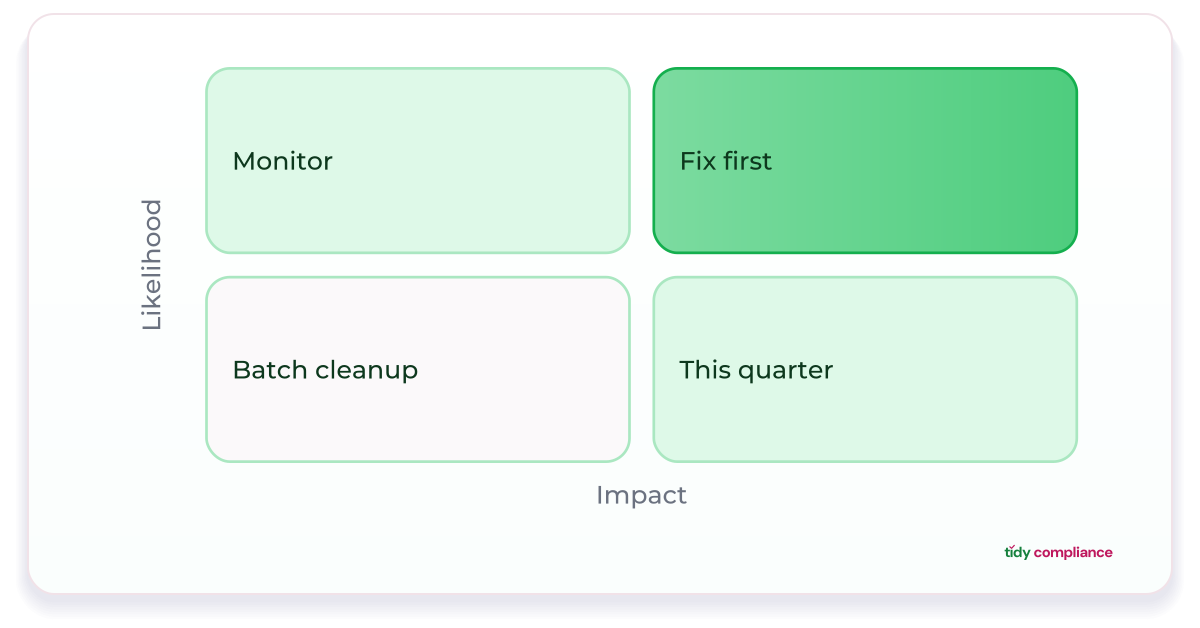
A raw list of 60 observations paralyzes teams. A score turns it into an order of work. I rate each observation on two scales from 1 to 5 and multiply.
Risk score = likelihood × impact. Likelihood asks how probable it is that the gap causes a problem, such as a complaint, an agency inquiry or an employee dispute. Impact asks how bad it would be, counting back pay, fines, legal fees, lost people and damage to your reputation. A gap that affects a whole group of employees gets a higher impact than a single file.
| Score | Rating | What it means for the plan |
|---|---|---|
| 15 to 25 | High | Fix first, ask your attorney about it, assign an owner this week |
| 8 to 14 | Medium | Fix within the quarter, with a named owner |
| 1 to 7 | Low | Batch into routine cleanup and review next year |
Two cautions. First, write findings in neutral words: "five of 30 files lack a signed acknowledgment" is a finding, "we violated the law" is a conclusion that belongs to counsel. Second, do not let a low likelihood hide a gap that touches everyone. A payroll rule that is wrong for every hourly employee is a high-impact item even if nobody has complained yet.
Step 5: Fix the Top of the List, With Owners and Dates
Every high and medium gap needs three things: a named person, a date and a definition of done. "Update the handbook" is not a task. "Rewrite the overtime section, get attorney review and send it to all managers by the 15th" is.
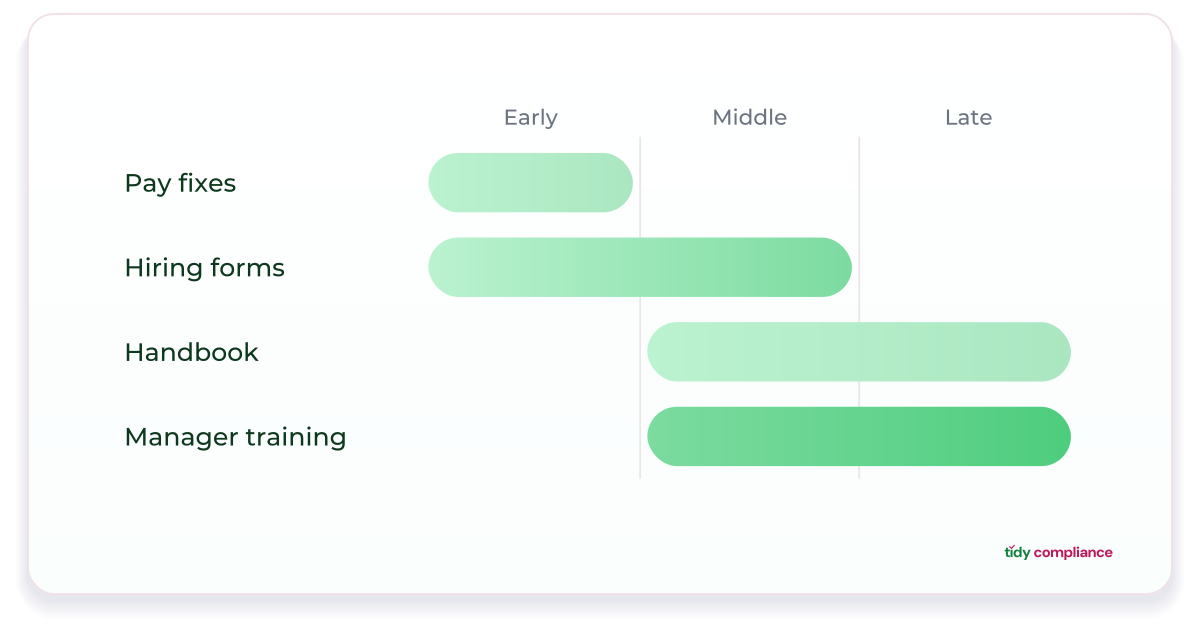
I sequence fixes by dependency. Pay and classification issues come first because they change the numbers everything else uses. Policy rewrites come next. Training follows the policy, so managers learn the new rule once, not twice. If you have software that tracks acknowledgments and training, my overview of HR compliance software shows what to look for before you buy anything.
Expect delays. In a typical audit I see, about a third of the fixes slip because the owner is busy or because one answer from counsel takes longer than planned. Build a two-week buffer into the plan and review it in a short meeting every month.
Quick Wins to Take in the First Week
- Collect missing signed acknowledgments and forms for current employees.
- Move medical and leave documents into a separate, restricted folder.
- Add a monthly time-record spot check for non-exempt teams.
- List every contractor with their start date and their working arrangement.
These four items take little effort and remove common findings. They also show leadership early progress, which helps when you ask for budget for larger fixes. My HR compliance checklist lists the recurring checks you can reuse for the monthly spot checks.
Step 6: Record the Result and Set the Next Date
The last step is the one most teams skip. Write a one-page summary with the scope, the number of gaps by rating, what you fixed, what is still open and the date of the next audit. Keep the gap list as a working document and update it as owners close items.
Over time this record becomes the proof that you take compliance seriously. If an agency asks about a practice, you can show when you reviewed it, what you changed and when you will check again. A short trend line, such as high gaps going from nine to three in a year, also gives leadership a reason to keep funding the work.
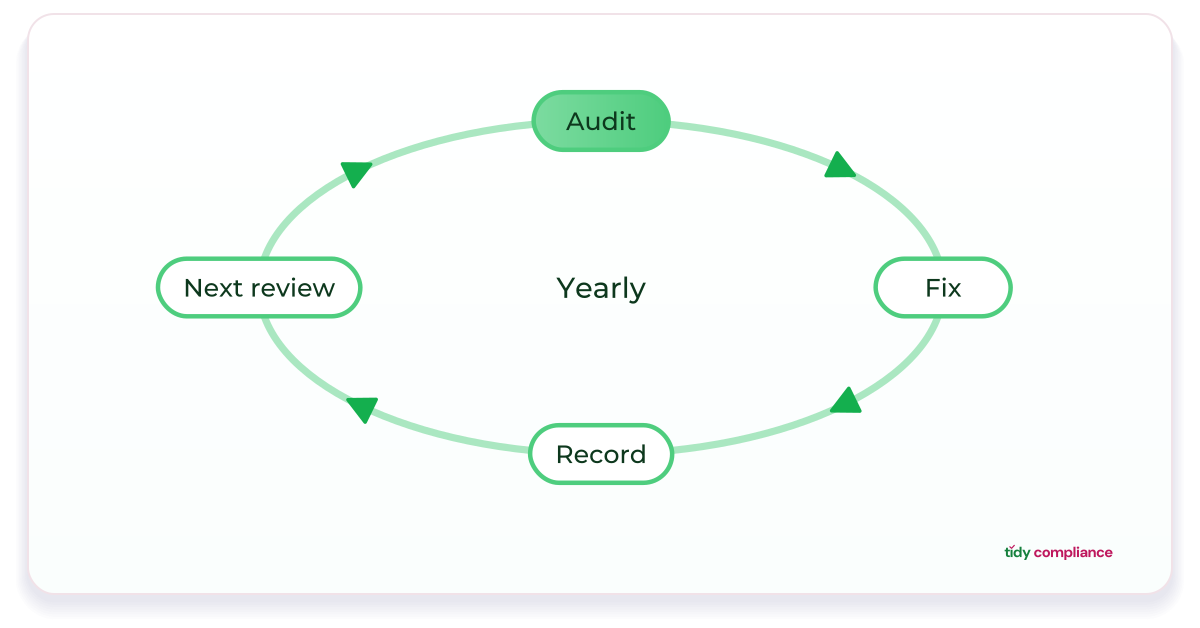
Smaller teams often wonder if this is too much overhead. It scales down well. My piece on HR compliance for small business shows a lighter version of the same loop, and the HR compliance best practices guide covers the habits that keep gaps from returning between audits.
Where Audits Go Wrong
I see the same four problems again and again. The first is auditing paper instead of practice. A handbook can be perfect while managers approve time off over text message. Interview two or three managers and ask them to walk you through a recent case.
The second is grading your own work. The person who built the process is the worst judge of it. The third is stopping at findings: a gap list with no owners is a report, not a program. The fourth is ignoring change. New states, new roles and new pay structures all create gaps that last year's audit could not see. Pay attention to the shifts I describe in HR compliance trends when you plan next year's scope.
How to Decide Between Doing It Yourself and Getting Help
Do it yourself if you have a small headcount, one or two states and someone in the business who can be independent of the process they review. Bring in outside help if you span many states, have had a complaint or inquiry, are preparing for a sale or financing, or simply cannot find the time. An outside reviewer also brings a library of findings from other clients, which speeds up testing.
Whichever route you choose, insist on the same outputs: a scope page, a scored gap list, a plan with owners and dates, and a record you can hand to the next reviewer.
Questions About Running an HR Compliance Audit
How Often Should I Run an HR Compliance Audit?
Run a full audit once a year and a short check on your highest-risk areas every quarter. Add an extra review after a big change, such as opening in a new state, passing a headcount threshold, switching payroll providers or changing how you classify roles. A yearly rhythm also gives you a trend line, which shows whether your gaps are shrinking.
Who Should Run the Audit, HR or an Outside Consultant?
Your HR team knows the processes best, but it also has the most to lose from a bad finding, so it tends to grade itself kindly. I suggest a mixed model: HR gathers the evidence and an independent person reviews it. That reviewer can be a consultant, a colleague from finance or a compliance officer who does not own the HR process.
What Is the Difference Between a Full Audit and a Mock Inspection?
A full audit checks every area against your policies and the rules that apply to you, and it produces a gap list. A mock inspection copies what an agency visit looks like: you hand over a defined set of records in a defined time and see what is missing. I use both, the audit first and the mock inspection once the big gaps are closed.
How Many Files Should I Sample?
For a small employer, review every file in the area at risk, or at least all files hired in the last year. For larger headcounts, I pull a random sample of 10 to 15 percent per location and add every file with a known issue, such as a leave of absence or a termination. If the sample shows a pattern, widen it before you conclude anything.
What Do I Do with Findings I Am Not Sure About?
Log them with a neutral description and a risk rating, then ask your employment attorney or the relevant agency guidance whether they are real gaps. An audit is not a legal opinion, and I would never rate a finding as a violation without that check. Keep sensitive audit notes in a restricted folder, and ask counsel whether you should run the audit under attorney direction.
How Long Does an HR Compliance Audit Take?
A focused audit of a small company can fit into a few weeks of part-time work. A multi-state employer with several locations needs longer, mostly because of file sampling and waiting on records from payroll and managers. The scoping step, which sets what is in and out, saves more time than anything else.
Should I Audit Every Law at Once?
No. Start with the areas where mistakes are expensive and common: wage and hour practices, worker classification, hiring paperwork, leave and recordkeeping. Add specialized areas, such as safety programs or benefits filings, in later rounds. A narrow audit that you finish beats a wide one that stalls.
Sources
- U.S. Department of Labor, Fair Labor Standards Act guidance
- U.S. Equal Employment Opportunity Commission, information for employers
- U.S. Citizenship and Immigration Services, Form I-9
Disclaimer: This article is for general information only and isn’t legal, financial or tax advice. Treat figures as estimates from typical work and confirm details with your providers before you act.
Was this guide helpful?
Thanks for your feedback.
Odessa Whitfield
Odessa leads the Tidy editorial team and works with the compliance consultants to turn real client projects into practical guides on regulations, frameworks, policies and audit preparation. Before joining Tidy, she worked in compliance and risk roles, writing and maintaining policy sets for regulated organizations. Every article goes through a consultant who has done the work in practice, and she updates guides when a rule, framework or tool changes. She works remotely from the United States.