Quick Summary
- The strongest HR compliance programs rely on a few habits repeated on a schedule, not on large one-off projects.
- Manager behavior in three moments, timekeeping, leave and complaints, drives most risk.
- A monthly pay-against-time sample and a yearly audit catch problems while they are small.
- Every policy needs an owner, a review date and a way for employees to ask questions.
HR teams that rarely face a claim do not know more law than everyone else. They repeat a short list of habits so often that the habits become the culture. In my HR compliance consulting work, the gap between a calm company and a stressed one is rarely a missing policy. It is whether anyone checks.
Here are the seven habits, each with a do and an avoid. They are general practices, not legal advice, and some rules vary by state, so check specifics with an employment attorney.
The Seven Habits Side by Side
| Habit | How often | Main risk it controls |
|---|---|---|
| Usable policies | Review yearly | Inconsistent decisions |
| Manager training | Twice a year | Claims that start in a single conversation |
| Pay against time check | Monthly | Back pay |
| Complete, separated records | Quarterly sample | Missing forms and privacy problems |
| Complaint handling | Every case | Escalation outside the company |
| Self-audit | Yearly | Unknown gaps |
| Change review | At each change | Rules that no longer fit |
1. Write Policies People Can Use
The best policies I see are short enough that a manager reads them in a coffee break. They name an owner, so someone is responsible for reviewing them, and they say what to do at the moment a situation arises. A leave policy that opens with legal definitions loses the manager before the first step.
Do this: Keep each policy to a page or two, in plain language, with an owner and a review date. Write what to do, who decides and where to ask.
Avoid this: Copying a template from another company, or writing rules you will not enforce.
2. Train Managers on the Three Risky Moments
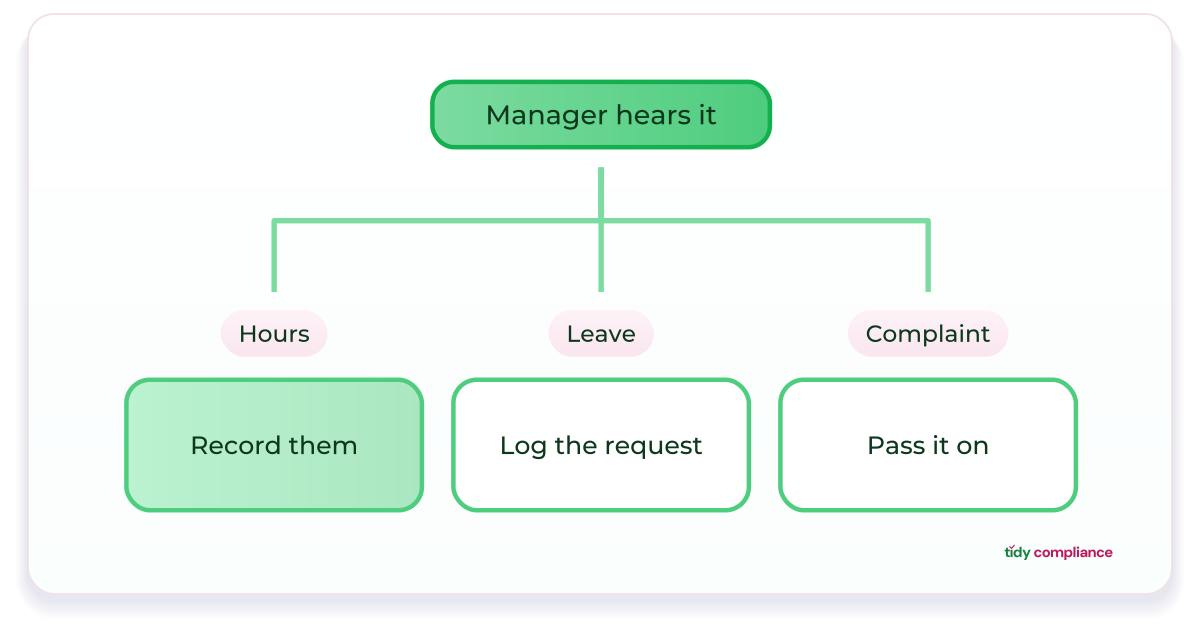
Most HR claims start with a manager's reaction in a single conversation. Managers do not need a law degree. They need a script for the moment, a rule for when to stop and a number to call. Role-play beats slides, because people remember what they said out loud.
Do this: Run a 45-minute refresher twice a year on recording hours, leave requests and complaints, using real cases from your company.
Avoid this: One annual slide deck that everyone clicks through.
3. Check Pay Against Time Every Month
Wage and hour errors grow quietly, because they repeat every pay period. A monthly sample catches a wrong setting or a bad habit within weeks, before it covers a year. Pay particular attention to short tasks before and after shifts and to roles that moved from hourly to salary.
Do this: Compare time records with the pay register for a random sample of employees and explain every mismatch in writing.
Avoid this: Trusting the payroll system because it has never complained.
4. Keep Records Complete and Separate
Records are what you show when someone asks. Complete files make an inquiry a routine task, and separated files lower the risk of exposing sensitive information to the wrong person. Review a sample of files each quarter and fix gaps as you find them.
Do this: Use one checklist per new-hire file and keep medical, leave and eligibility records in separate folders with limited access.
Avoid this: One drawer or folder that holds everything about a person.
5. Make Complaints Easy to Raise and Quick to Close
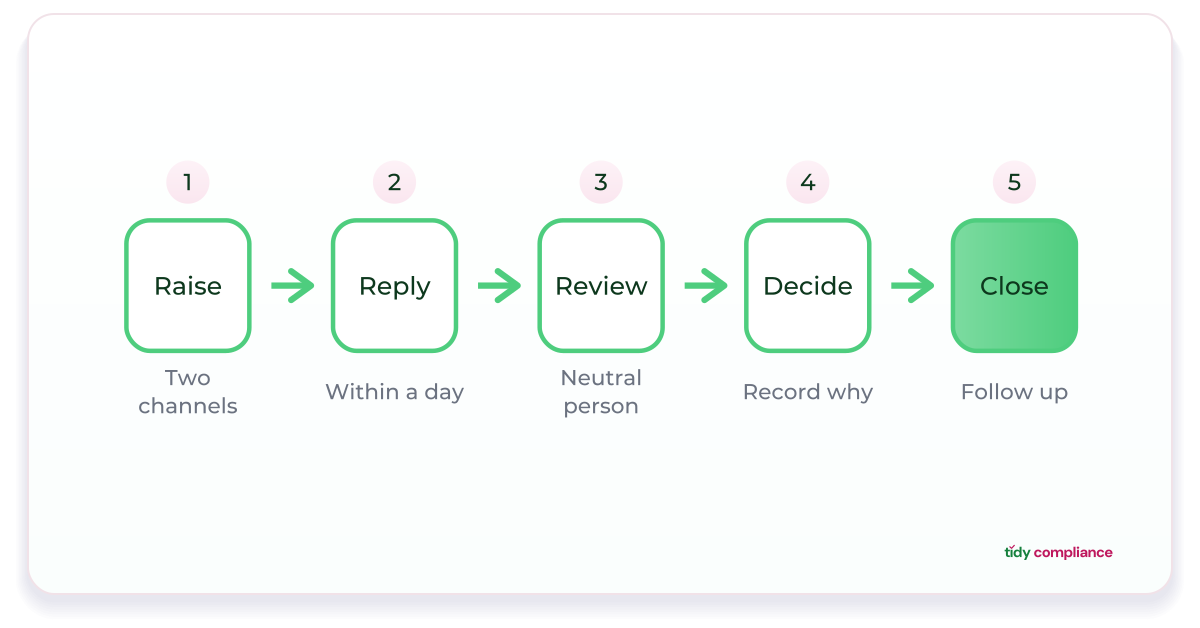
Employees who do not trust the process go outside it. A clear route, a fast first reply and a written outcome keep most issues inside the company. For anything that touches discrimination, safety or retaliation, involve your attorney early.
Do this: Offer at least two ways to raise a concern, reply within a day and record each step and the outcome.
Avoid this: Leaving complaints with the manager the complaint is about.
6. Audit Yourself Once a Year
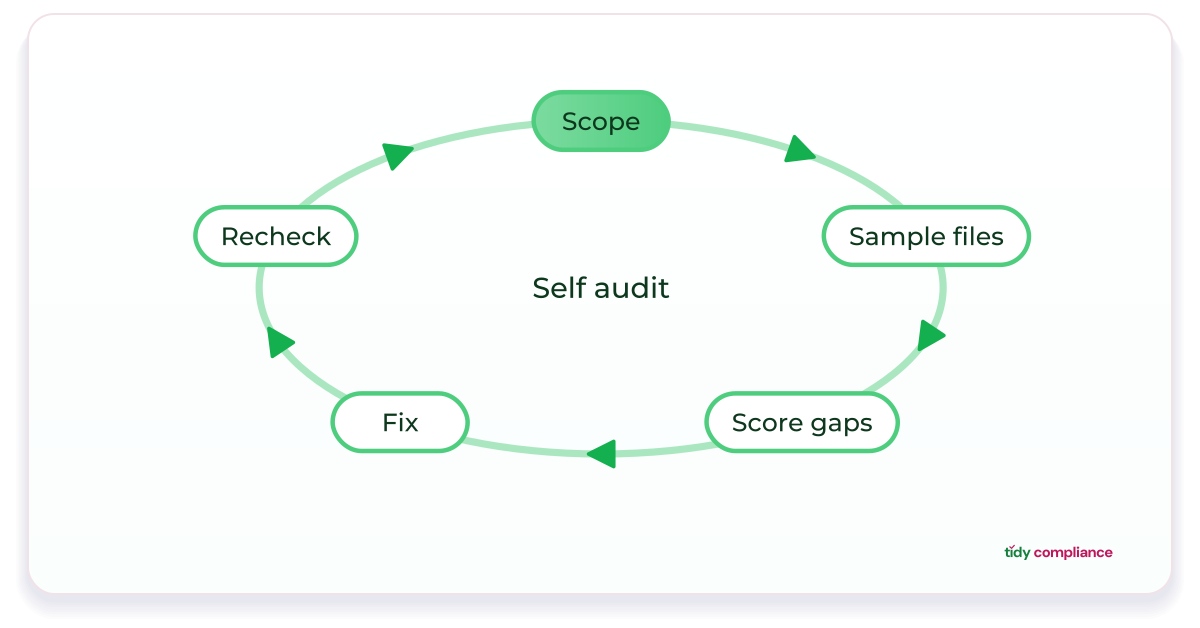
A yearly audit gives you a baseline and a trend. If you have never run one, start with my HR compliance audit method. Teams that audit every year tend to have fewer high-risk gaps each round, because the owners know the next review is coming.
Do this: Scope the audit, sample files, score each gap by likelihood and impact and track fixes to a date.
Avoid this: Waiting for an agency, a lawsuit or a sale to find out where you stand.
7. Review Rules When Your Business Changes
Rules differ by state and city, and many rules change as you grow. A short review at each change prevents the slow drift between your policy and the rules that now apply. Confirm the current status of any rule with an agency or your attorney before you act.
Do this: Reread your policies when you open in a new state, pass a headcount level, add remote staff or change how you pay.
Avoid this: Assuming a handbook written for one state works for all of them.
Why the Habits Stick in Some Companies and Fade in Others
Habits stick when three things are true. Someone owns each one by name. The habit sits on a calendar next to other work that matters, such as payroll or the monthly close. And leadership asks about it, even briefly, every quarter. When one of these three is missing, the habit fades within two or three busy months.
I see the same fade in the same places. The monthly pay check is the first to go, because nothing breaks the month it is skipped. Manager refreshers go next, because managers are busy. The fix is to make each habit small: a 30-minute pay sample, a 15-minute refresher at the start of an existing meeting. A small habit that happens beats a thorough one that does not.
Another reason habits fail is that nobody sees the benefit. Keep a short log of problems caught early, such as a wrong overtime setting found in the first month. When leadership reads that log, the next budget conversation gets easier.
Where Software Helps and Where It Does Not
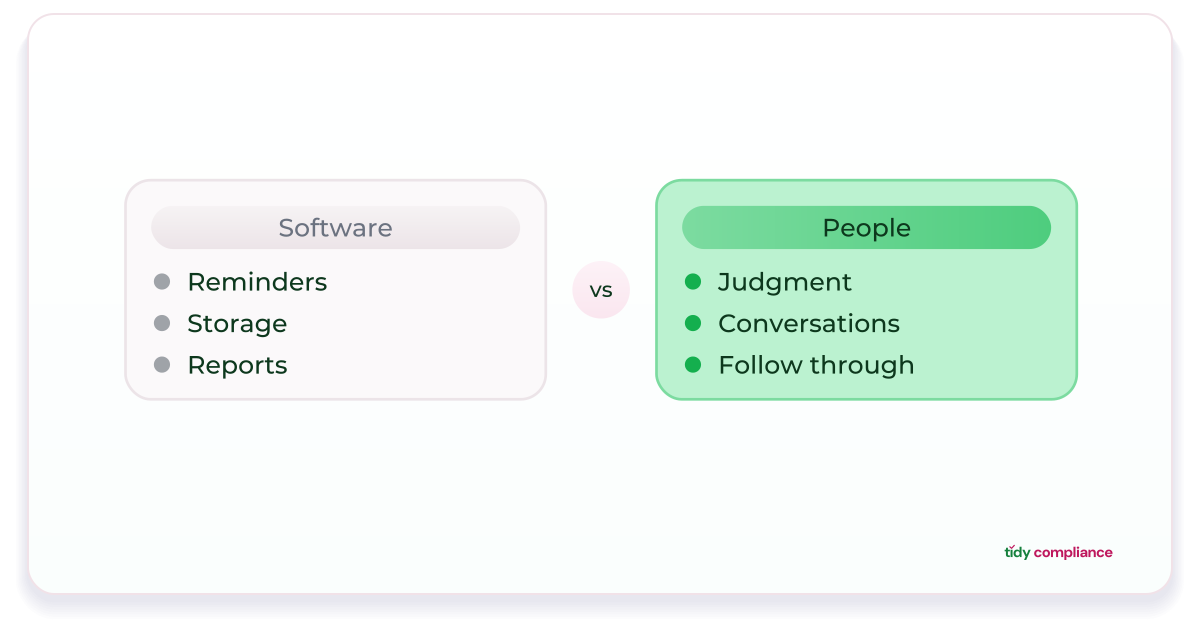
Tools make habits easier to keep. A platform can send reminders for reviews, collect acknowledgments, track training and store files with access limits. It cannot decide whether a role is exempt or whether a complaint needs outside counsel. I walk through the main options in my review of HR compliance software, including what to check before you sign.
A useful test is to ask what the tool does when a person forgets. If the answer is "sends a reminder and tells the owner's manager," it supports a habit. If the answer is "nothing," it only stores documents.
If You Run a Small Team
You can keep all seven habits with a few hours each month. Combine the manager training with a regular team meeting, run the pay check yourself and use a one-page audit. My guide to HR compliance for small business shows a lighter version, including a yearly calendar.
A Simple Order for Adopting the Habits
Adopt one habit per quarter. In the first quarter, name owners for policies and start the monthly pay check. In the second, run the first manager refresher and clean up records. In the third, set up the complaint route and review it with an attorney. In the fourth, run your first self-audit and write the change review into the calendar. By the end of the year all seven are in place, and each one has had time to settle before the next arrives.
Measure the Habits, Not Just the Outcomes
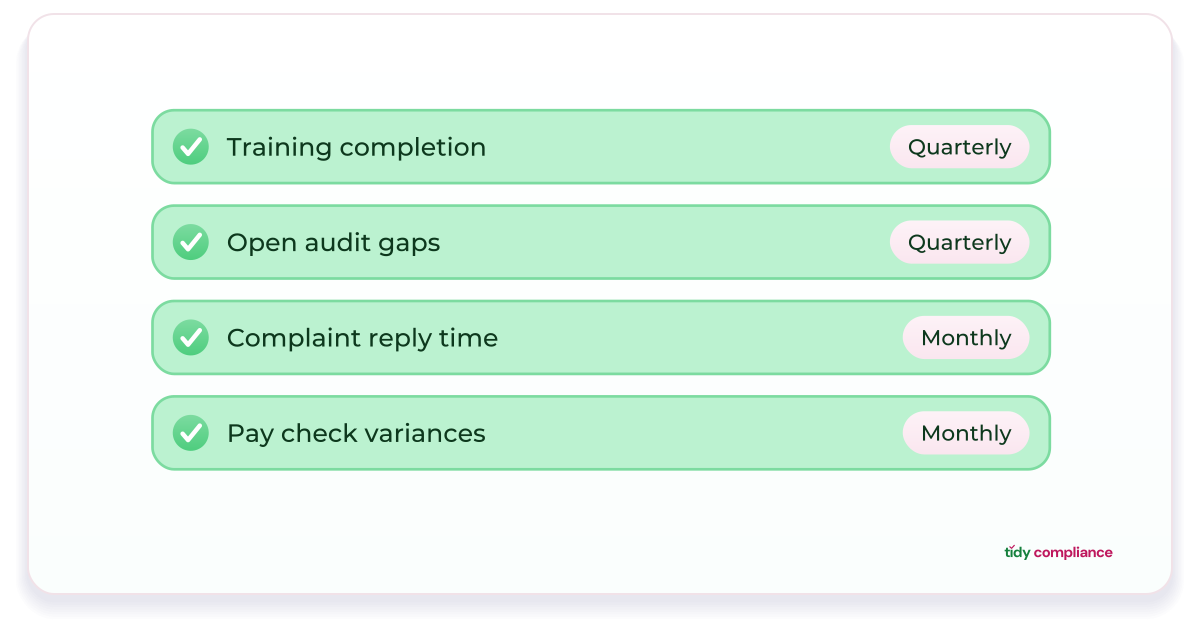
Claims and findings are lagging signals. By the time they show up, the problem is old. I prefer four leading measures, each of which you can pull from your systems in minutes:
- The share of new-hire files that are complete at the 30-day mark.
- The number of overdue training and acknowledgment items.
- The average time between a leave request and the written reply.
- The number of open audit gaps, by high, medium and low rating.
Report them to leadership each quarter on one page. Movement in the wrong direction tells you where to look. The HR compliance checklist turns the same signals into a list you can tick off monthly, and the scoring rule in the HR audit guide keeps the gap count honest.
Habits Need Updating Too
The habits stay the same, but their details change. Pay transparency, remote work across states and automated hiring tools all alter what a good policy says. Keep a short list of changes to watch and review it every quarter. I follow the main ones in HR compliance trends, and I always suggest you check the current status of a specific rule with the agency before changing a policy.
How to Choose Where to Start
Pick the habit that fits your biggest known gap. If you have never compared pay with time, start there. If managers make decisions on their own, start with training and a single point of contact. If you do not know your gaps, start with the audit. Then add one habit per quarter and put each on the calendar with an owner.
Questions About HR Compliance Best Practices
What Is the Single Most Useful HR Compliance Habit?
A monthly comparison of time records and pay for a small sample of employees. It is quick, it catches pay errors early and it forces managers to take timekeeping seriously. If I could ask a client to adopt only one habit, this would be it.
How Do I Get Managers to Follow HR Rules?
Make the rule short, give it a trigger and give managers one place to ask. A manager who knows exactly when to call HR, such as at a leave request or a complaint, follows the rule more often than one who has read a 40-page policy. Short refreshers twice a year help more than one long annual session.
Should Every Policy Have an Owner?
Yes. A policy with no owner is never reviewed. Name a person and a review date on the first page of every policy, and put the dates on one calendar so nothing goes stale.
How Long Should I Keep Personnel Records?
Retention periods depend on the type of record and on federal, state and local rules, and some are set by industry. Make a retention table for each record type after checking the minimum periods with your attorney, and apply it consistently.
Is Documenting Everything a Good Idea?
Document facts, decisions and dates, in plain words, close to the event. Do not document opinions or guesses about a person's motives. A short, factual note written the same day is worth more than a long summary written months later.
How Do I Handle a Complaint the Right Way?
Acknowledge it quickly, keep it as confidential as the situation allows, look at it with someone who was not involved, record the steps and tell the person what happens next. Ask your attorney about complaints that involve protected characteristics, safety or retaliation.
How Do I Know If My Practices Are Working?
Measure them. I track the share of new-hire files that are complete, the number of overdue training items, the time to answer a leave request and the number of open audit gaps. Move any of these in the wrong direction and you have a signal to act on.
Sources
- U.S. Department of Labor, Fair Labor Standards Act guidance
- U.S. Equal Employment Opportunity Commission, information for employers
Disclaimer: This article is for general information only and isn’t legal, financial or tax advice. Treat figures as estimates from typical work and confirm details with your providers before you act.
Was this guide helpful?
Thanks for your feedback.
Odessa Whitfield
Odessa leads the Tidy editorial team and works with the compliance consultants to turn real client projects into practical guides on regulations, frameworks, policies and audit preparation. Before joining Tidy, she worked in compliance and risk roles, writing and maintaining policy sets for regulated organizations. Every article goes through a consultant who has done the work in practice, and she updates guides when a rule, framework or tool changes. She works remotely from the United States.