Quick Summary
- More obligations now come from where employees work than from where the company sits.
- Pay transparency, AI in hiring and worker classification draw the most attention from agencies and courts.
- Automation helps with reminders and records, and judgment calls stay with people.
- Rules and dates change, so confirm the current status with the agency or your attorney before you act.
The pattern I see across clients is simple: more rules, in more places, with less time to follow them. A growing share of those rules comes from states and cities, not from Washington, which means a company with a few remote employees can face more requirements than one with a large office in a single state.
These nine trends are the ones I bring up most in HR compliance consulting conversations. I describe what is happening, why it matters and what to do now. I do not predict specific dates, because they change. Check the current status of any rule with the relevant agency or your employment attorney.
The Nine Trends in Brief
| Trend | What drives it | First step |
|---|---|---|
| 1. Multi-state compliance | Remote hiring | Map where each person works |
| 2. Pay transparency | State and local rules, employee expectations | Build salary bands |
| 3. AI in hiring | Wider use of screening tools | Keep a human reviewer |
| 4. Classification | Agency and court attention | Review contractors yearly |
| 5. Leave and scheduling | New state and local laws | Create a leave matrix |
| 6. Employee data privacy | Privacy laws, customer contracts | Limit and separate access |
| 7. Automation | Cheaper tools | Pilot on one process |
| 8. Accommodations and flexibility | More requests | Write one request process |
| 9. Continuous compliance | Leadership expectations | Build a scorecard |
1. Multi-State Compliance for Remote Teams
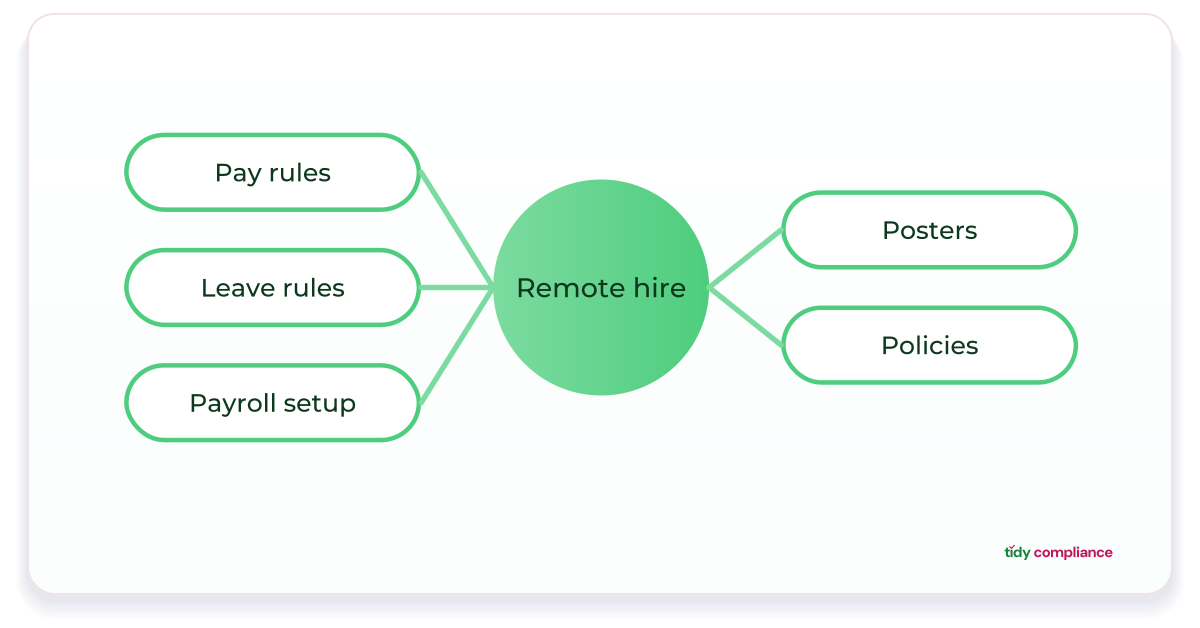
Remote work spread employees across state lines, and each state brings its own rules for pay, leave, notices and tax withholding. I see employers hire one person in a new state and learn about the extra rules months later. The trend is not a new law. It is the slow growth of obligations that come with each location.
Start with a simple map of where every person works, updated when someone moves. For each state, list what applies: minimum pay, overtime, leave, posting requirements and registration. A table like that is worth more than any general policy.
2. Pay Transparency and Pay Equity Reviews
A growing group of states and cities require pay ranges in job postings or limit questions about pay history, and the details vary by location. Employers respond by building salary bands and checking that people in similar roles are paid consistently.
Check the rules in each place you hire, and confirm the current status before you post. A pay review is useful even where no rule applies, because it shows you the gaps before an employee does. Ask your attorney whether to run it under privilege.
3. Oversight of AI in Hiring and Management
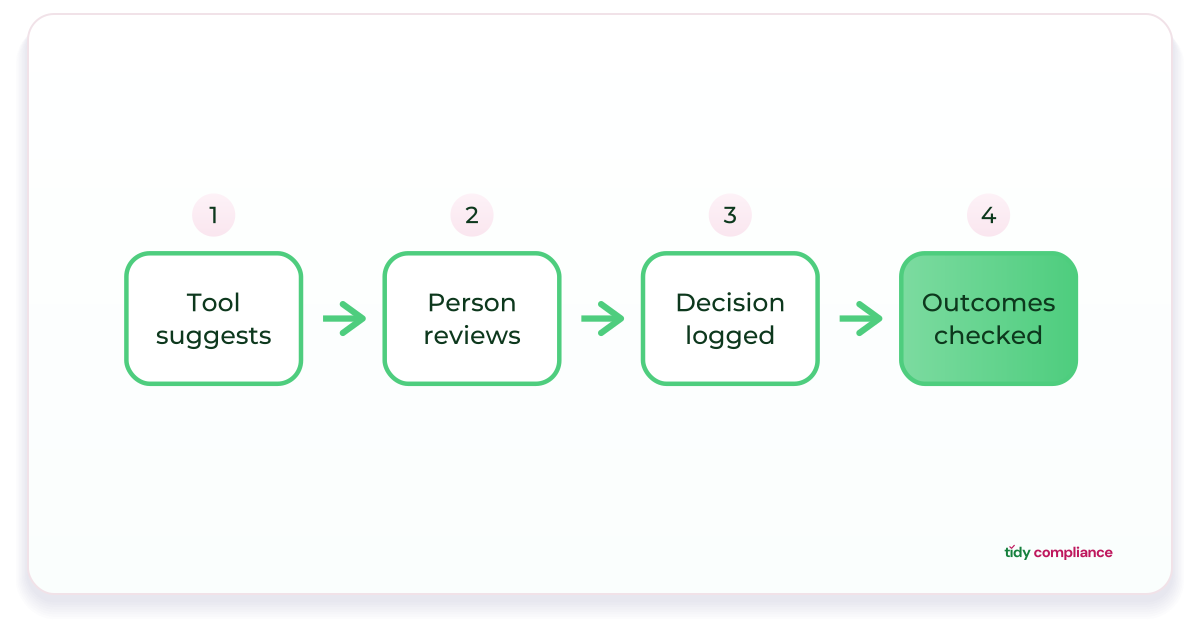
Resume screening, interview scoring and scheduling tools are now common, and some jurisdictions regulate or require audits of automated decision tools. Anti-discrimination law applies to results, whichever way the decision is made.
If you use a tool, I would keep a person in the loop for every decision that affects hiring or promotion, ask the vendor how it tests for bias, record what the tool does and review results by group. Treat vendor assurances as a starting point and not as proof.
4. Closer Attention to Worker Classification
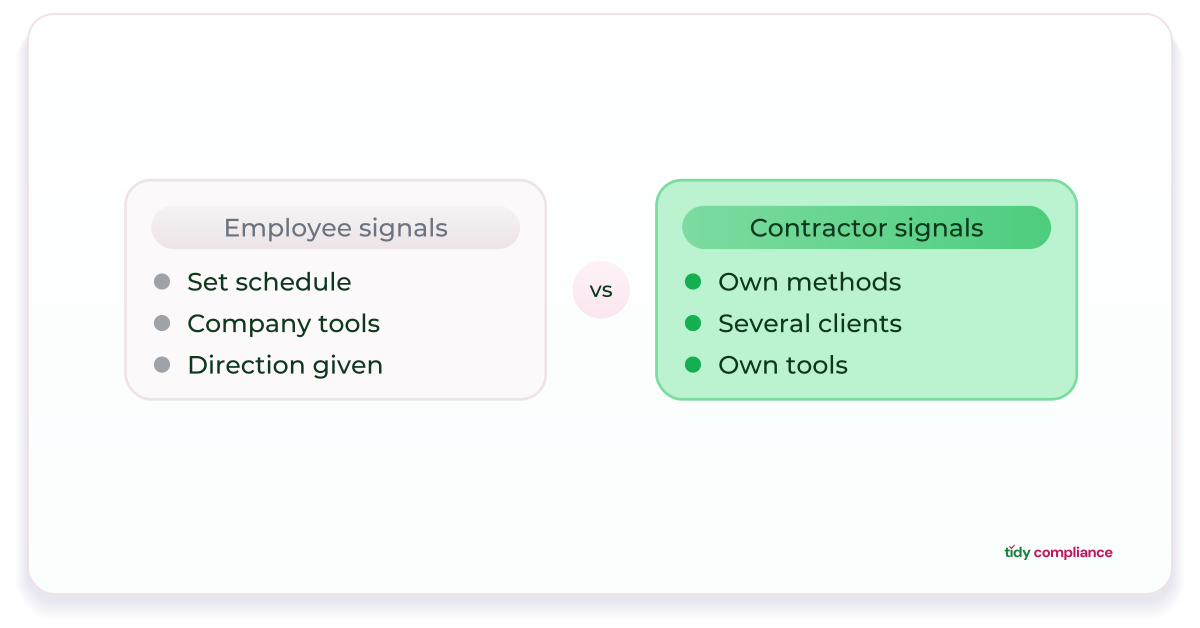
Whether a person is an employee or a contractor, and whether an employee is exempt from overtime, keeps drawing attention from agencies, courts and workers. The federal and state tests have shifted over time and differ between agencies.
Review your contractor list and exempt roles each year against the current tests, and document why each role fits. For the borderline ones, a short attorney review costs far less than a back-pay claim covering several years.
5. A Growing Patchwork of Leave and Scheduling Rules
Paid sick leave, family leave and predictable scheduling rules keep appearing at state and local level, with different eligibility, accrual and notice details. A national employer may now follow dozens of leave rules at once.
Most teams respond by building a leave matrix by location and routing every request through one person or system. Leave is also where manager mistakes are most common, so training matters as much as the matrix.
6. Employee Data and Privacy Obligations
HR holds some of the most sensitive data in the company: health details, background checks, bank accounts and ID numbers. State privacy laws, security expectations and customer contracts increasingly ask how you protect it.
Limit access, separate sensitive files, set retention periods and make sure every HR vendor has a security review. If your company is also working on information security frameworks, align the HR controls with them so you answer one set of questions.
7. Compliance Automation and Continuous Monitoring
Platforms now track acknowledgments, training, document expiry and policy reviews automatically and alert owners before deadlines. The change is from yearly checking to continuous monitoring.
It works best where tasks are repetitive and the rule is clear. It does not replace judgment. My comparison of HR compliance software covers what to test before you commit, including how a tool behaves when an owner ignores a reminder.
8. Accommodations, Wellbeing and Flexible Work
Employee requests for medical and religious accommodations, flexible schedules and remote work are more common, and each request has legal and fairness angles. Consistency is the main risk. Two similar requests with different answers invite a claim.
Write a short process: who receives requests, what information you can ask for, how you document the conversation and who decides. Train managers to forward requests, not to decide them alone.
9. HR Compliance as a Continuous Skill, Not an Annual Event
The last trend is a change in attitude. Leaders now expect compliance to show up in numbers, quarterly reviews and manager behavior, not in a yearly binder. Teams that keep a scorecard find problems earlier and spend less on fixes.
A scorecard can be small: audit gaps by rating, overdue training, complete files and time to answer leave requests. The HR compliance best practices guide shows how to build the habits behind those numbers.
How to Track Changes Without a Legal Team
You do not need a legal department to keep up. You need a short list of sources, a monthly slot and a change log. Pick the labor agency for each state where you have people, the U.S. Department of Labor for federal updates and one good employment law newsletter. Read them once a month and add anything that touches you to the log.
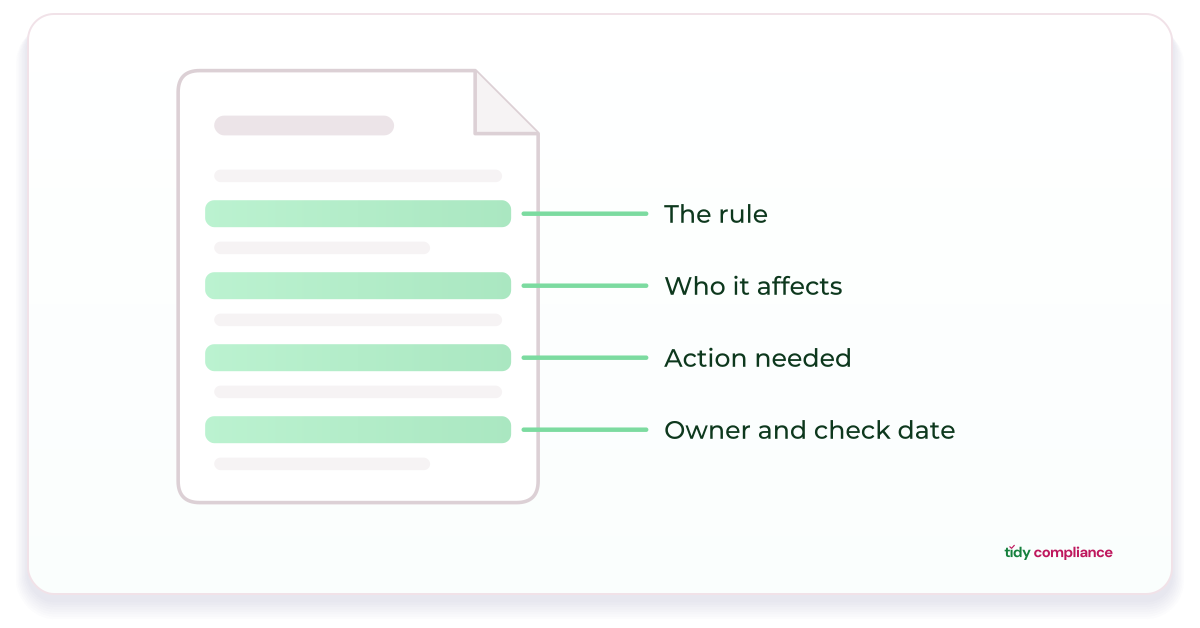
Each log entry needs four fields: the rule, who it affects, the action and the owner. Add a fifth when it matters, the date you confirmed the status with the agency or your attorney. Never act on a headline alone. Rules get proposed, delayed, challenged and changed, so a story about a new rule is a reason to check, not a reason to rewrite a policy.
A quarterly meeting of 30 minutes with HR, finance and the owner is enough to review the log. Finance matters because many of these trends, such as pay bands and leave accruals, change payroll settings. Bring the scorecard along and ask which trend added the most open items since last quarter.
Three Ways Employers Misread Trends
The first mistake is waiting for certainty. Employers who wait for a rule to be final often find that applicants, employees and customers already expect the practice. A pay range in a posting is the clearest example. The second is overreacting to headlines, which leads to policy rewrites for rules that never take effect. The third is treating a trend as a technology purchase. A tool for pay equity or hiring does nothing until someone owns the process around it.
A steady rhythm beats both extremes: check, log, decide and review.
What These Trends Mean for Smaller Employers
Smaller companies feel trends one and five first, because a single hire in a new state creates new duties overnight. The cure is routine, not size. My guide to HR compliance for small business has a calendar that covers the monthly checks, and the HR compliance checklist gives you the list to run through at each hire.
If you want to know where your own gaps are before the rules change again, run the six steps in my HR compliance audit article. It ranks your gaps by risk, so you can decide which trend to act on first.
Revisit the ranking each quarter. A trend that did not touch you in spring can touch you in autumn after one new hire in another state.
How to Decide What to Act On First
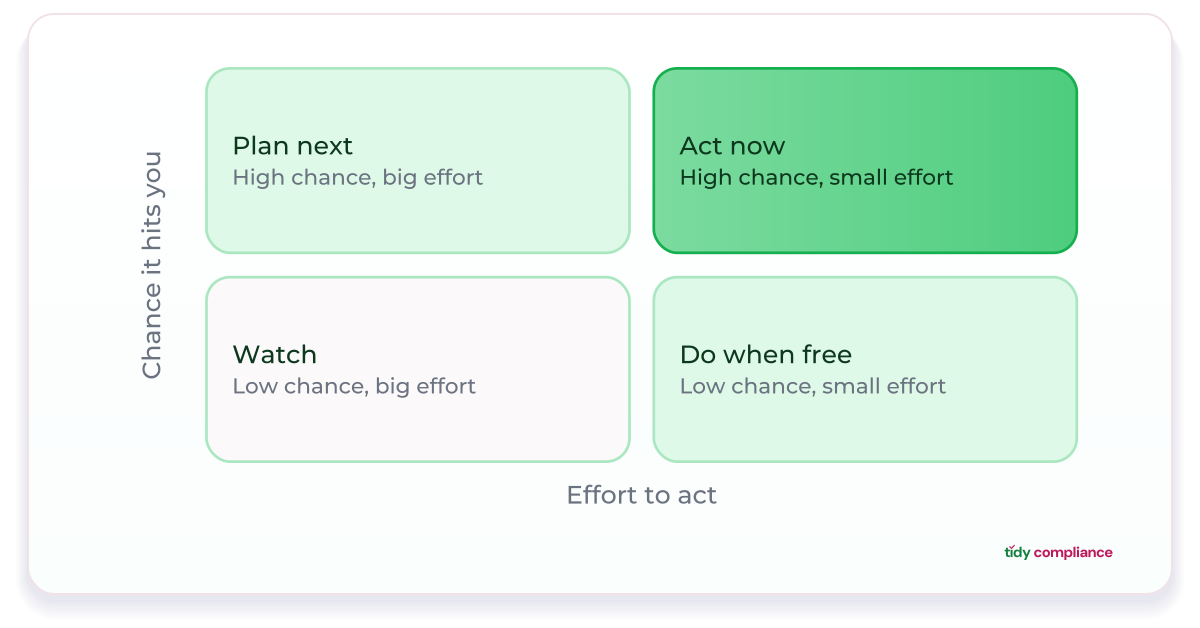
You cannot respond to all nine at once. I rank them with two questions: does it touch you now, and how costly is a miss? A company with remote hires in three states should start with trend one. A company using an AI screening tool should start with trend three. A company with contractors who work like staff should start with trend four.
Then set a quarterly review. Keep a change log with the rule, who it affects, the action and the owner. A simple log beats a long memo, because it turns news into tasks.
Questions About HR Compliance Trends
Which HR Compliance Trend Matters Most for Small Employers?
Multi-state rules. A single remote hire in another state can bring that state's pay, leave and notice rules into your business. Small teams feel it first because they rarely have a system that tracks where everyone works.
Are Pay Transparency Rules a Federal Requirement?
Federal law does not set one general rule, but a growing number of states and cities have their own pay range disclosure rules for job postings, with different triggers and details. Check each location where you hire, and confirm the current rule with the state agency or your attorney.
Can I Use AI to Screen Candidates?
Some places regulate automated hiring tools, and anti-discrimination law applies whether a person or a tool makes a decision. If you use one, I would keep a human reviewer, document what the tool does, test its results for bias and ask your attorney about local rules before you roll it out.
Will Worker Classification Rules Change Again?
The tests have changed over time, and agencies and courts keep refining them. I cannot tell you what comes next. I can tell you to review your contractor list every year against the current federal and state tests and to document your reasoning.
How Do I Keep Up with New Rules Without a Legal Team?
Pick two or three reliable sources, such as your state labor agency's updates and a reputable employment law newsletter, and put a monthly review on the calendar. Keep a short change log that lists the rule, who it affects, the action and the owner.
Is Compliance Automation Worth It?
It is worth it when the manual work is repetitive: reminders, acknowledgments, training tracking and record storage. It is not worth it as a substitute for decisions. I would pilot a tool on one process and check whether it saves time and reduces missed items before you expand.
How Often Should I Revisit My HR Compliance Plan?
Review it every quarter for changes and run a full audit once a year. Add an extra review when you enter a new state, change how you pay people or adopt a new HR tool.
Sources
- U.S. Department of Labor, Wage and Hour Division
- U.S. Equal Employment Opportunity Commission, information for employers
- U.S. Department of Labor, employee or independent contractor classification
Disclaimer: This article is for general information only and isn’t legal, financial or tax advice. Treat figures as estimates from typical work and confirm details with your providers before you act.
Was this guide helpful?
Thanks for your feedback.
Odessa Whitfield
Odessa leads the Tidy editorial team and works with the compliance consultants to turn real client projects into practical guides on regulations, frameworks, policies and audit preparation. Before joining Tidy, she worked in compliance and risk roles, writing and maintaining policy sets for regulated organizations. Every article goes through a consultant who has done the work in practice, and she updates guides when a rule, framework or tool changes. She works remotely from the United States.