Quick Summary
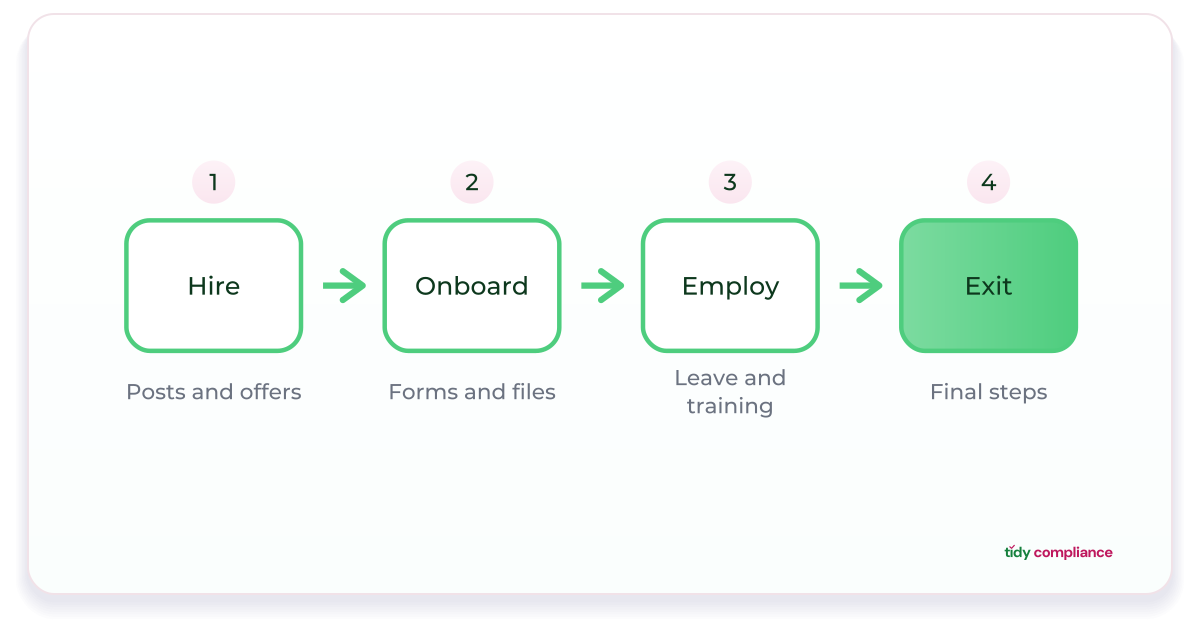
- Eight checks follow the employee lifecycle: hiring, onboarding, pay classification, handbook, leave, training, records and exits.
- Look for the actual document for each point, and mark it open if you cannot find it in ten minutes.
- Fix missing forms and acknowledgments first, then leave processes, then classification and the handbook.
- The checklist organizes your work and does not replace advice from your employment counsel.
HR compliance problems rarely start with a bad decision. They start with a missing form, an old handbook page or a manager who handled a leave request from memory. A checklist catches those small gaps while they are cheap to fix.
This one has eight points that follow an employee from the job post to the exit interview. I use a version of it at the start of every HR compliance consulting project, because it shows within an afternoon whether you need a light tidy-up or a proper review. It is a compliance aid, and it does not replace advice from your employment counsel on what the rules require for your situation.
How to Use This Checklist
Go through the eight points with the person who runs HR day to day and one manager who hires. For each point, find the actual document or record, and do not rely on memory. If you cannot find it in ten minutes, mark the point as open. Open items go on a list with an owner and a date.
| Check | What to verify | Where the proof lives |
|---|---|---|
| 1. Hiring | Job posts, interview questions and offer letters follow a consistent process | Applicant tracking system, interview guides |
| 2. Onboarding | Required forms are complete and filed on time | Personnel files, I-9 records |
| 3. Classification and pay | Each role is classified on purpose and paid as classified | Role list, payroll reports |
| 4. Handbook and policies | Documents are current and acknowledged | Handbook, signed acknowledgments |
| 5. Leave and accommodations | Requests follow a written, consistent process | Request log, policy, manager guide |
| 6. Training | Required training is assigned and completed | Learning system, completion list |
| 7. Records and retention | Files are complete, separated and kept for set periods | Retention schedule, file audit |
| 8. Discipline and exits | Decisions are documented and exits are handled consistently | Exit checklist, case notes |
The Eight Checks in Detail
Each check below says why it matters, how it goes wrong and what to look for.
1. Hiring and Job Postings
Hiring is where consistency counts most. Every candidate for the same role should see the same posting and answer the same core questions, and managers should know which topics are off limits. Written interview guides keep conversations on the job and make decisions easier to explain later.
The common gap is the manager who improvises. A friendly chat about family plans or age can create a problem the hiring team never intended. Short guidance for managers, and a place to store interview notes, solves most of it.
- Postings describe the real duties and requirements
- Interview guides exist for each role family
- Notes are kept for the retention period you set with your counsel
2. Onboarding Paperwork
New hires need the right forms on time. In the US that includes the Form I-9 for employment eligibility, tax withholding forms and any state-specific notices. Missing or late forms are among the most common findings in an HR review.
Check a sample of recent hires from start to finish. Compare the start date with the form dates, look for blank fields and confirm that the I-9 files are kept separate from general personnel files. A simple onboarding checklist in your HR system fixes most of it.
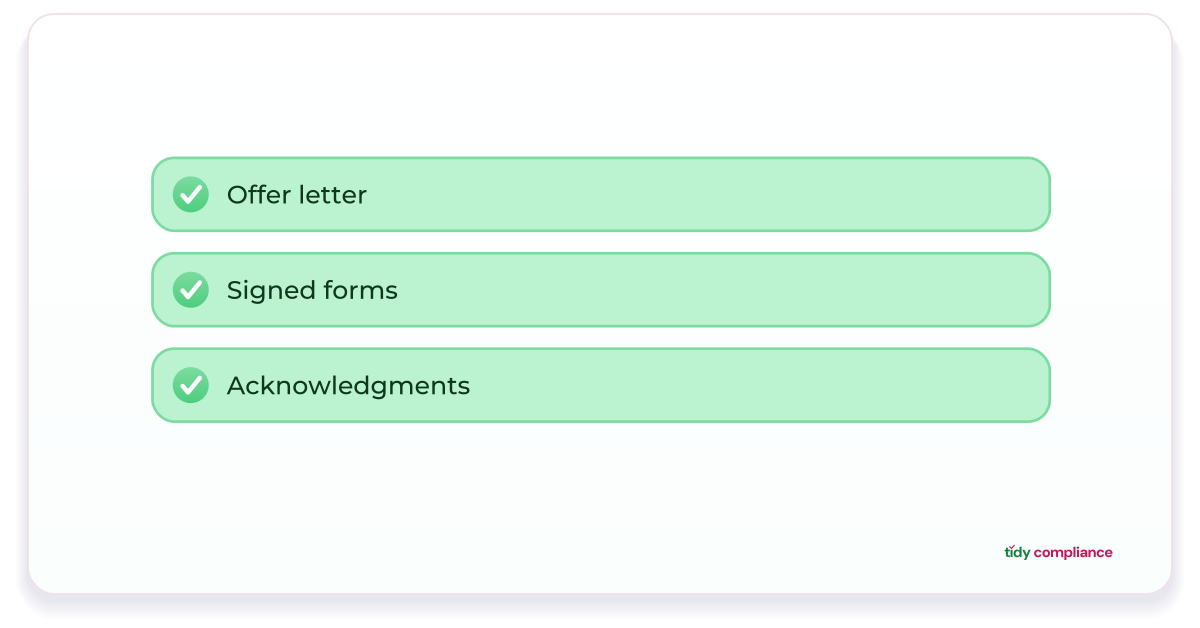
- A sample of recent hires has all forms complete and dated
- I-9 records are stored separately from other personnel files
- Each hire receives the required notices and policies
3. Worker Classification and Pay
Classification decides whether someone is an employee or a contractor, and whether an employee is exempt or non-exempt from overtime rules. Wrong classification can lead to back pay and penalties, and it is one of the areas regulators look at most.
Review each role on purpose. Job title does not decide classification, and neither does salary alone. Duties and the rules in your state matter. Where you are unsure, put the role on a list for review with your counsel and your payroll provider.
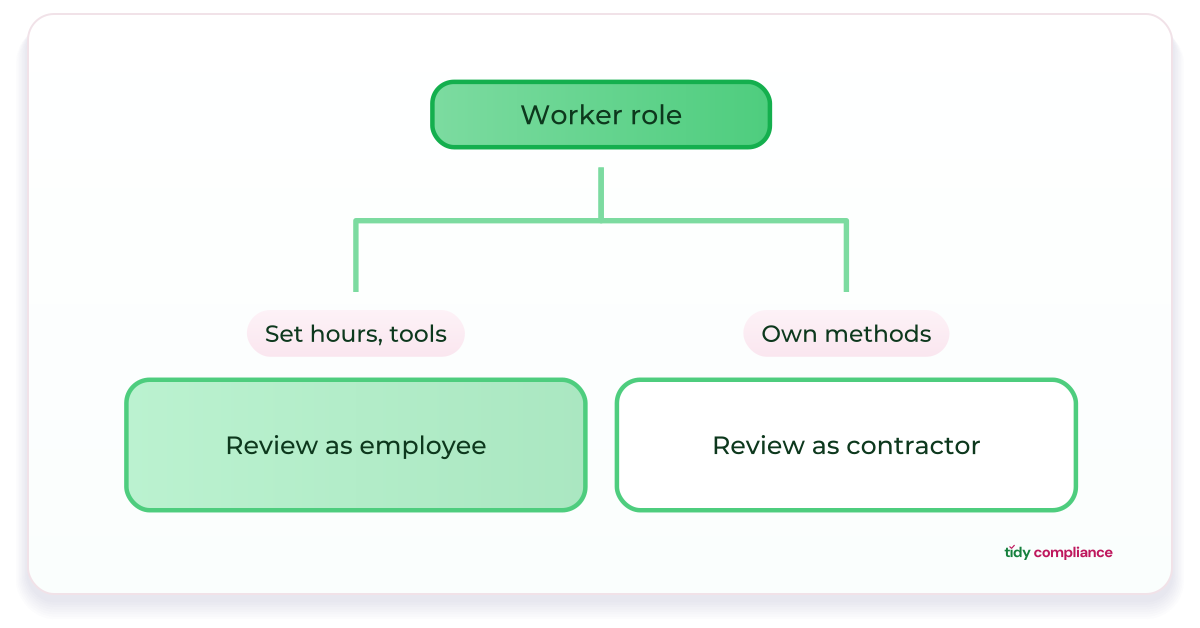
- Each role has a recorded classification with a reason
- Overtime and meal or rest break rules for your states are followed
- Contractors are reviewed at least yearly for how they really work
4. Handbook and Policies
A handbook is useful only if it matches how you operate. Check the date of the last update, whether it reflects the states where you have employees and whether managers know what it says. Policies on anti-harassment, equal opportunity, leave and complaints are the usual core.
Every employee should sign an acknowledgment, and you should keep the signed copy. When you change a policy, record what changed and when, and tell employees. Version history is something an auditor or insurer will ask for.
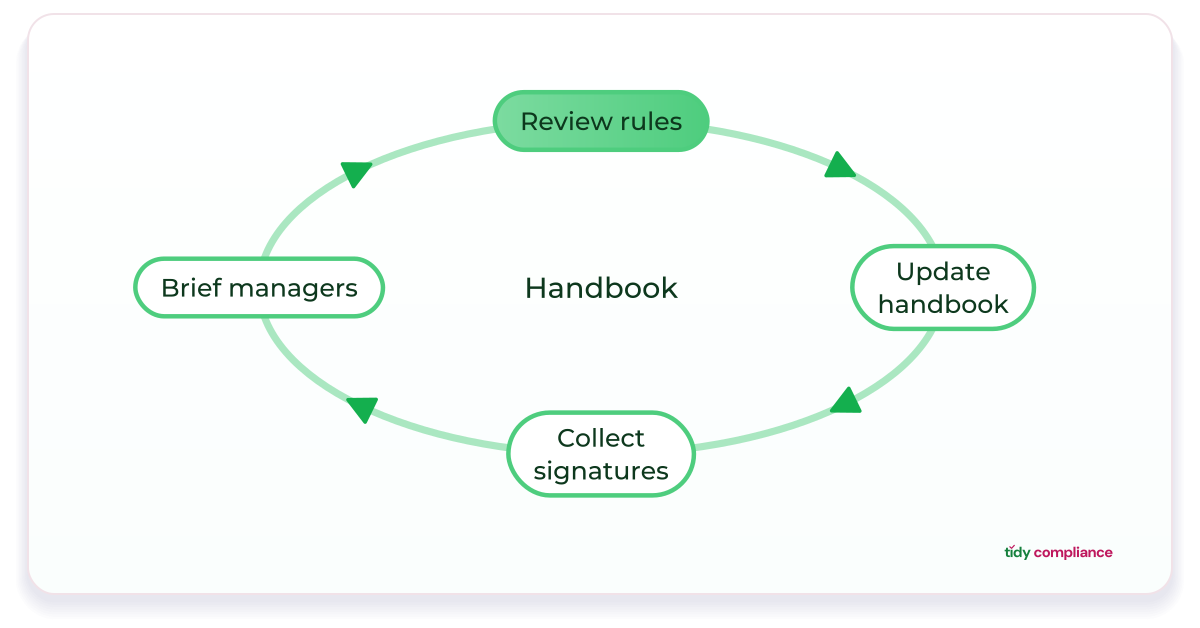
- The handbook was reviewed in the last twelve months
- State addenda exist where your employees work
- Signed acknowledgments are on file for each employee
5. Leave and Accommodations
Leave rules come from federal, state and sometimes local law, and they overlap. Many employers with fifty or more employees are covered by federal family and medical leave rules, and many states add their own paid leave or sick leave. Accommodation requests, for disability or religion, also need a clear process.
The risk here sits in the manager, who is often the first to hear the request. Give managers a one-page guide that says what to do, whom to tell and what not to say. Log every request and the response, because the log is your record.
- A written process exists for leave requests and accommodation requests
- Managers know to route requests to HR the same day
- Requests, decisions and dates are logged
6. Required Training
Training needs vary by state and industry, and typically include anti-harassment, safety and, in some industries, role-specific rules. Assign training by role, set deadlines and track completion. A slide deck that nobody finishes will not help you.
Short, role-based modules with a quiz work better than a long annual session. Keep completion records with dates and content versions, so you can show who learned what and when.
- A training matrix lists what each role must complete
- Completion records show dates for every employee
- New hires and newly promoted managers get training within a set time
7. Records and Retention
Keep personnel files complete and organized. Separate sensitive records, such as medical information and I-9 forms, from the general file and limit who can see them. Set retention periods by record type and follow them, including deleting records when the period ends if the rules allow.
Retention periods vary by record type and location, and some records have more than one requirement. Do not guess. Write a retention schedule with your counsel and then apply it, so that you can show a consistent practice.
- A retention schedule exists and is approved
- Medical and I-9 files are kept separately with limited access
- A sample of files is complete with no missing required items
8. Discipline and Exits
How you document discipline and terminations often decides whether a dispute stays small. Record the facts, the policy involved and what the employee was told, and apply the same approach to similar cases.
For exits, use a checklist: final pay timing for your state, return of equipment, removal of system access, benefits notices and an exit conversation where appropriate. Ask your counsel before any termination where risk is high.
- Discipline notes are factual, dated and consistent
- An exit checklist covers pay, access, equipment and notices
- High-risk exits are reviewed with counsel before action
Where Managers Fit In
Most items on this list pass through a manager at some point: the interview, the leave request, the warning, the exit. HR can write a perfect policy and still lose to a manager who has never read it. Hold a short briefing twice a year that covers the five situations that cause the most trouble: interview questions, leave and accommodation requests, hours worked and overtime, discipline notes and departures.
Give each manager a one-page guide, and ask for a signed acknowledgment that they read it. The guide should say what to do, whom to tell and how fast. Track attendance, so you can show who was briefed and when. When a manager is promoted, the briefing is part of the promotion checklist, not an afterthought.
Scoring Your Results
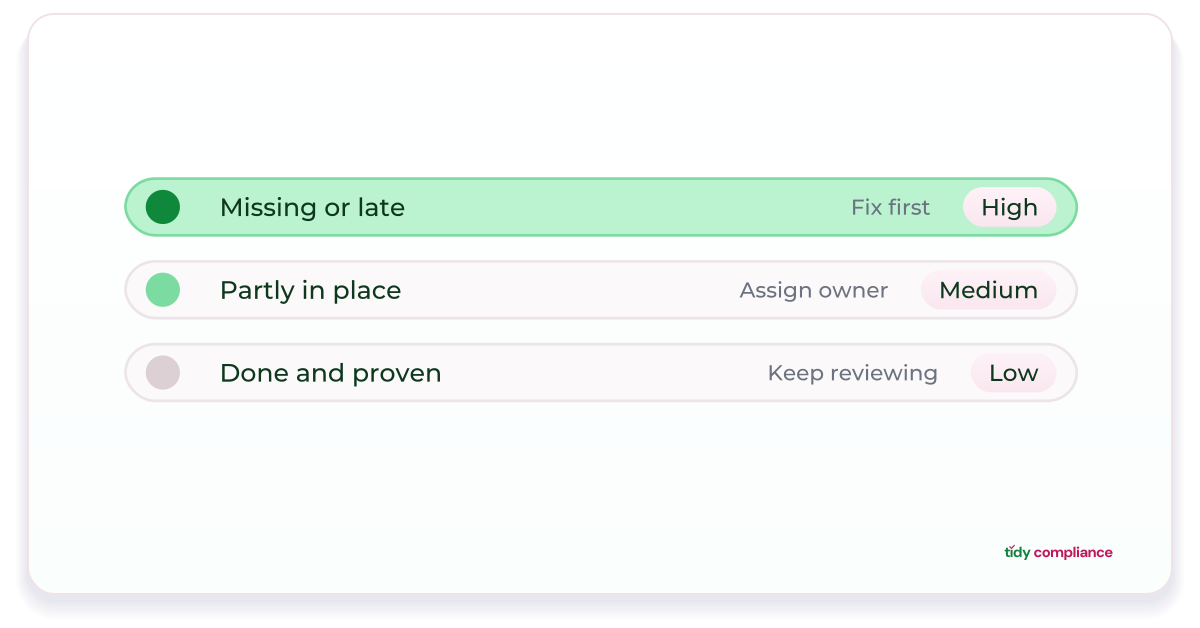
Mark each point green if you found complete proof, yellow if it exists but is outdated and red if it is missing. Five or more yellow or red points suggest a full HR compliance audit before the next audit, claim or client review.
Fix reds first, and assign an owner and date to every item. Many gaps take under an hour once someone owns them. The bigger projects, such as a new handbook or a records clean-up, go on a calendar.
Making It Work in a Small Team
Smaller employers often have no HR staff, and the checklist still applies. The owner or office manager holds the list, and one person handles records. My notes on HR compliance for small business show what to prioritize with limited time.
Software can hold records and send reminders, though it does not set policy. If you are comparing options, see my ranking of HR compliance software. To keep the habits going after the first pass, read about HR compliance best practices, and watch HR compliance trends so your checklist stays current.
How to Choose What to Fix First
Start with items that expose you to the most risk for the least effort. Missing onboarding forms and unsigned acknowledgments are quick. Classification and leave processes take thought and often need counsel.
- Fix missing required forms and acknowledgments this week.
- Write the leave and accommodation process and brief managers next.
- Schedule classification reviews and the handbook update with owners and dates.
- Repeat the checklist twice a year and after major growth.
Questions About the HR Compliance Checklist
What Is an HR Compliance Checklist?
It is a short list of HR areas and records you can use to check whether your practices and files meet the rules that apply to you. It helps you find gaps before an audit, a claim or a client review.
Is This Checklist Legal Advice?
No. It organizes the work and helps you find gaps. Requirements depend on your location, size and industry, so confirm what applies with your employment counsel or a qualified adviser.
How Often Should I Run the Checklist?
Twice a year works for most employers, and also after major changes such as hiring in a new state, a merger or a large increase in headcount.
Who Should Own HR Compliance in a Small Company?
One named person, often the owner, office manager or HR lead, should hold the list and the records. Give them authority to ask managers for documents and a calendar for reviews.
What Records Should I Keep for Each Employee?
Typical files include the application, offer letter, tax and eligibility forms, signed policies, training records, performance notes and leave records. Keep medical and I-9 records separate. Retention periods depend on the rules for each record type.
How Long Does a First Pass Take?
A small company can run the eight checks in an afternoon and spend a week collecting missing documents. Larger companies with several states take longer because evidence sits with more owners.
When Should I Bring in a Consultant?
When you do not know which rules apply, when your handbook is old, when you have employees in several states or when an audit or client review is coming. A consultant ranks the gaps and writes the missing documents.
Sources
Disclaimer: This article is for general information only and isn’t legal, financial or tax advice. Treat figures as estimates from typical work and confirm details with your providers before you act.
Was this guide helpful?
Thanks for your feedback.
Odessa Whitfield
Odessa leads the Tidy editorial team and works with the compliance consultants to turn real client projects into practical guides on regulations, frameworks, policies and audit preparation. Before joining Tidy, she worked in compliance and risk roles, writing and maintaining policy sets for regulated organizations. Every article goes through a consultant who has done the work in practice, and she updates guides when a rule, framework or tool changes. She works remotely from the United States.